Hellenic Mountains
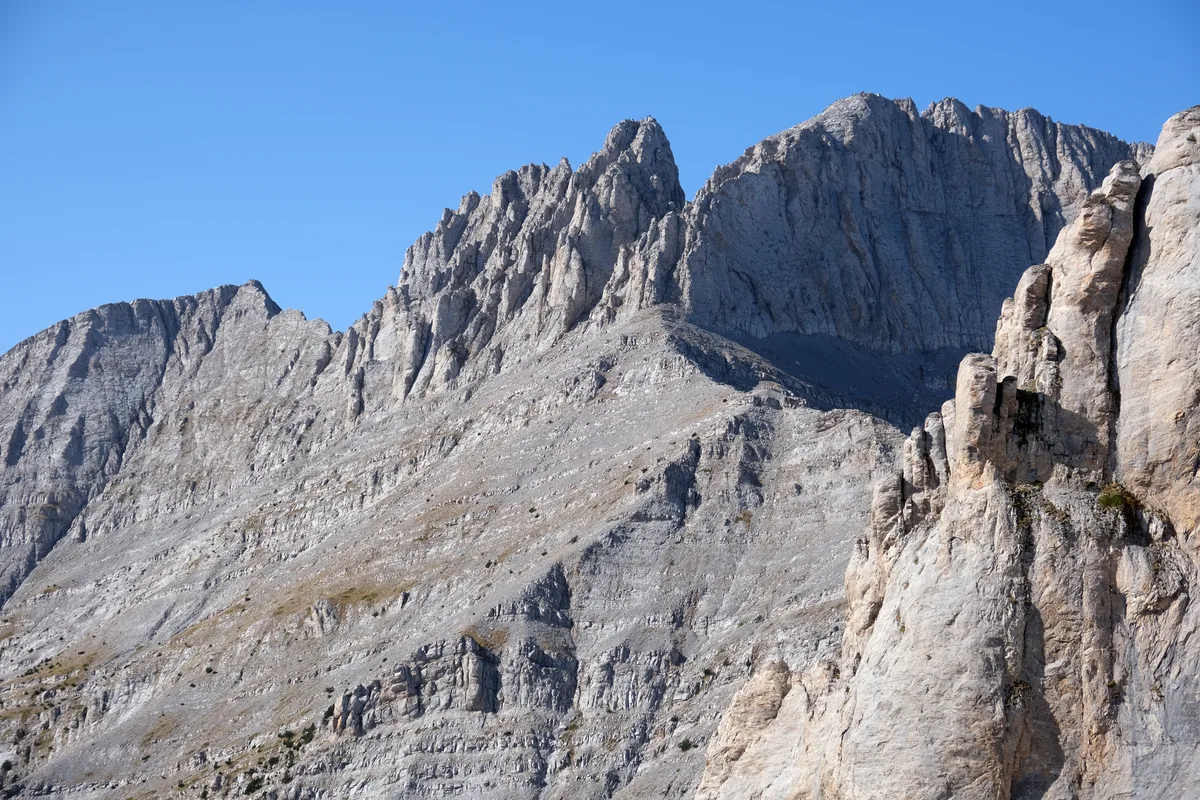
The southern continuation of the Dinaric Alps through Greece, encompassing the rugged limestone spine of the Pindus Range, the Peloponnese Taygetos, and the legendary Olympus Massif topped by Mytikas (2,918 m).
Peer Review: Senior Editorial Board & Historical Reviewers • Editorial Standards
Key Statistics & Topographic Figures
- Archive Classification
- RANGES
Mountainity Knowledge Corpus
- Verification Status
- Editorially Verified
Archival Standards
- Citation Standard
- Primary Source Verified
Alpine Research Desk
Defined Alpine Terminology & Concepts
- Archival Integrity
- The standard of verifying historical mountain facts, summit claims, and altitudes using primary expeditions journals and geodetic measurements.
Frequently Asked Questions: Hellenic Mountains
What historical significance does this range hold?
Hellenic Mountains represents an essential chapter in global mountaineering heritage, verified through contemporary expedition journals and archival sources.
How are the facts and records for Hellenic Mountains verified?
All records are checked against peer-reviewed journals, national alpine clubs, geodetic surveys, and the Mountainity Archival Integrity Policy.
Featured Summits in Hellenic Mountains
Browse Range Summits →
Mount Olympus
Mount Olympus is the highest mountain in Greece, culminating at Mytikas (2,918 m). Famous in Greek mythology as the home of the Twelve Olympian gods, the massif drops into deep gorges, alpine plateaus (Plateau of the Muses), and sheer limestone battlements overlooking the Aegean Sea.
Documented Sources & Archival Citations
- Official SurveyGeology of the Hellenic Mountain Chains and Olympus Massif ↗(Hellenic Institute of Geology and Mineral Exploration)
Supporting claim: Hellenic chain structure, limestone thrust sheets, and Mount Olympus (2,918m) relief.
Share Exploration
Global Mountain Intelligence
✓ Link copied to clipboard!