Cerro Torre West Face (Via dei Ragni)
The Via dei Ragni (Ragni Route) on the West Face of Cerro Torre is widely regarded as one of the world's most aesthetic, difficult, and prestigious mixed alpine ice climbs. Pioneered in January 1974 by Casimiro Ferrari, Daniele Chiappa, Mario Conti, and Pino Negri of the Ragni di Lecco, the route ascends 600 metres of vertical granite, sheer mixed gullies, and towering vertical rime-ice mushrooms (graded AI5+ M4).
Ascent line, technical cruxes & camp topography profile for Cerro Torre West Face (Via dei Ragni)
Mountain Safety & Conditions Disclaimer: High-altitude climbing, glacial travel, and technical ascents entail severe objective risks including avalanches, serac collapses, rapid weather collapse, and altitude illness. Historical route descriptions and summit claims on Mountanity reflect documented archival sources and must not be used as live operational safety assessments. Local regulations, permits, and physical glacial topography change continuously.
Peer Review: Senior Editorial Board & Historical Reviewers • Editorial Standards
Tactical & Camp Notes
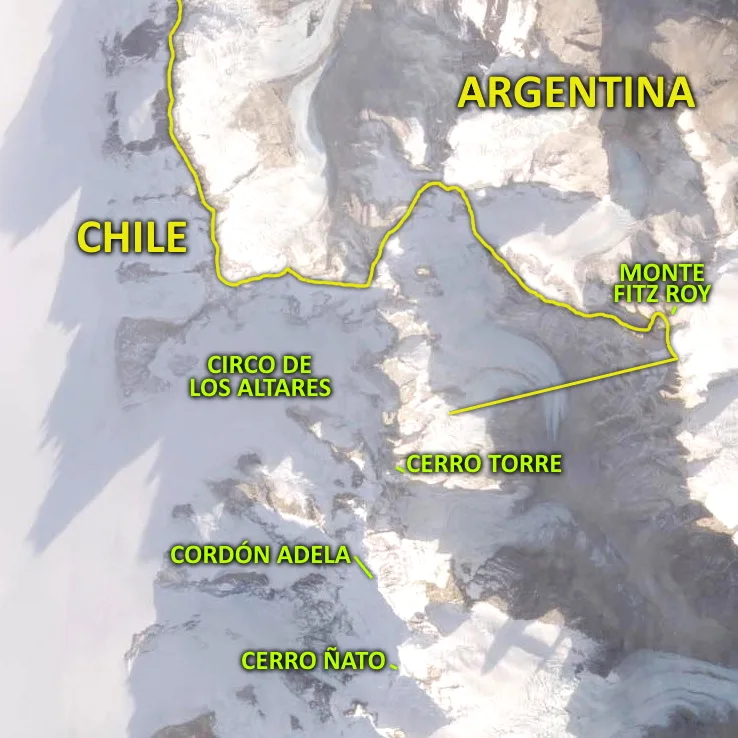
Approached across the Southern Patagonian Icefield through the Circo de los Altares, climbers establish high camps beneath the colossal west face. The climb tackles mixed granite runnels, the steep Col de la Esperanza, the Elmo ice mushroom, and vertical rime towers where climbers must hollow out tunnels through unprotectable frost feathers to attain the summit rime plateau.
Interactive Elevation Profile
Vertical profile, technical cruxes, and camp staging progression for Cerro Torre West Face (Via dei Ragni) on Cerro Torre.
Exposed snow and rock ledge on the approach ridge above the icefield.
Camp-by-Camp Topography
Key staging altitudes, technical cruxes, and terrain transitions for Cerro Torre West Face (Via dei Ragni).
Filo Rosso Bivouac
Exposed snow and rock ledge on the approach ridge above the icefield.
Col de la Esperanza
High glaciated notch separating Cerro Torre from Cerro Adela, staging point for summit push.
Cerro Torre Summit
Perilous mushroom-capped rime summit overlooking the Patagonian Icefield and Fitz Roy.
Topographic Location & Terrain Map
Cartographic datum, massif coordinates, and terrain context for Cerro Torre West Face (Via dei Ragni) on Cerro Torre.
Interactive Topographic Terrain Map
Click below to load live cartographic contours, glacier approaches, and geographic markers for Cerro Torre (49°17′36″ S, 73°05′52″ W).
Key Statistics & Topographic Figures
- Wall Height
- 600 metres (from Col de la Esperanza to summit)
- Technical Grade
- ED+ / AI5+ / M4 / 90° rime ice
- First Ascent Date
- January 13, 1974 (Ragni di Lecco team)
- Summit Elevation
- 3,128 m (10,262 ft)
- Approach
- Circo de los Altares (Southern Patagonian Icefield)
Archival Primary Source Quotations
“On the West Face of Cerro Torre, you do not just climb the ice; you burrow into the frozen soul of Patagonia.”
Defined Alpine Terminology & Concepts
- Rime Ice Tunnel
- A passage excavated directly through unconsolidated, overhanging frost feathers on Patagonian spires to bypass vertical roofs.
- Col de la Esperanza
- The high notch separating Cerro Torre from Cerro Adela on the west side, named 'Pass of Hope' by Walter Bonatti in 1958.
Frequently Asked Questions: Cerro Torre West Face (Via dei Ragni)
What is the Via dei Ragni (Ferrari Route) on Cerro Torre?
The Via dei Ragni is the historic 600-metre mixed and rime-ice route on the West Face of Cerro Torre, first ascended on January 13, 1974, by the Ragni di Lecco.
Who first climbed the Via dei Ragni on Cerro Torre?
Casimiro Ferrari, Daniele Chiappa, Mario Conti, and Pino Negri of the Ragni della Grignetta (Ragni di Lecco).
What is the climbing difficulty and grade of the Via dei Ragni?
Graded ED+ / AI5+ / M4 with 90° ice, requiring technical mixed climbing and tunneling through overhanging rime mushrooms.
Why is the 1974 Ragni ascent historic?
It is universally acknowledged as the first undisputed, definitive summit ascent of Cerro Torre in mountaineering history.
How do climbers approach the West Face of Cerro Torre?
Climbers cross the vast Southern Patagonian Icefield via Paso Marconi or Paso del Viento into the Circo de los Altares.
What is the "Elmo" pitch on the route?
The Elmo (Helmet) is a bulging 80-metre rime-ice mushroom that requires steep tunneling and vertical ice tool placement.
What are the main objective hazards on the West Face?
Collapsing rime ice feathers, horizontal icefield gales, frostbite, and extreme isolation from rescue services.
What gear is essential for the Via dei Ragni today?
Dual technical ice tools, ice screws, snow pickets, wings/flukes, and rime-burrowing implements.
Mountain Ascended


Cerro Torre
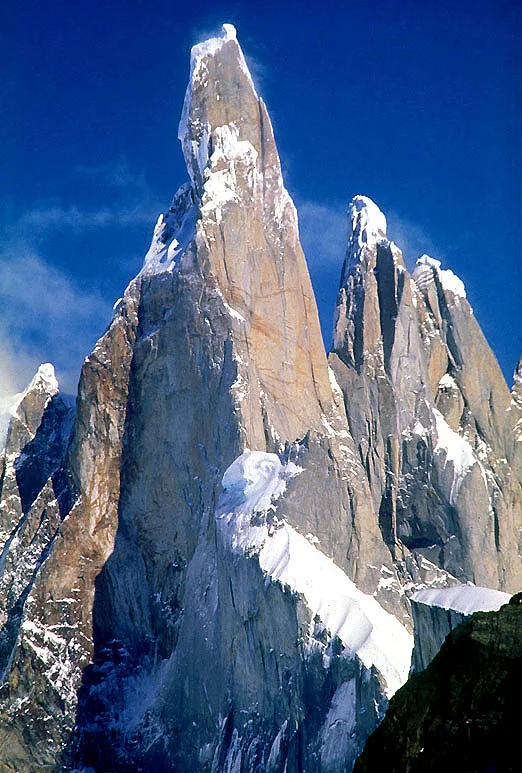
Cerro Torre is a world-famous granite spire rising to 3,128 meters in the Southern Patagonian Icefield on the Argentina-Chile border. Renowned for vertical sheer granite walls topped by monstrous rime-ice mushrooms formed by relentless Pacific winds, it is widely considered one of mountaineering's supreme technical challenges. Following fierce international debate over Cesare Maestri's disputed 1959 climb, Maestri returned in 1970 to drill hundreds of bolts using a gasoline compressor on the Southeast Ridge. In 1979, American pioneers Jim Bridwell and Steve Brewer completed the historic first definitive ascent of the Compressor Route to the summit.
Documented Expeditions on this Route (1)
Verified historical summits, siege campaigns, and pioneer attempts recorded on Cerro Torre West Face (Via dei Ragni).
1974 First Undisputed Ascent of Cerro Torre via the West Face
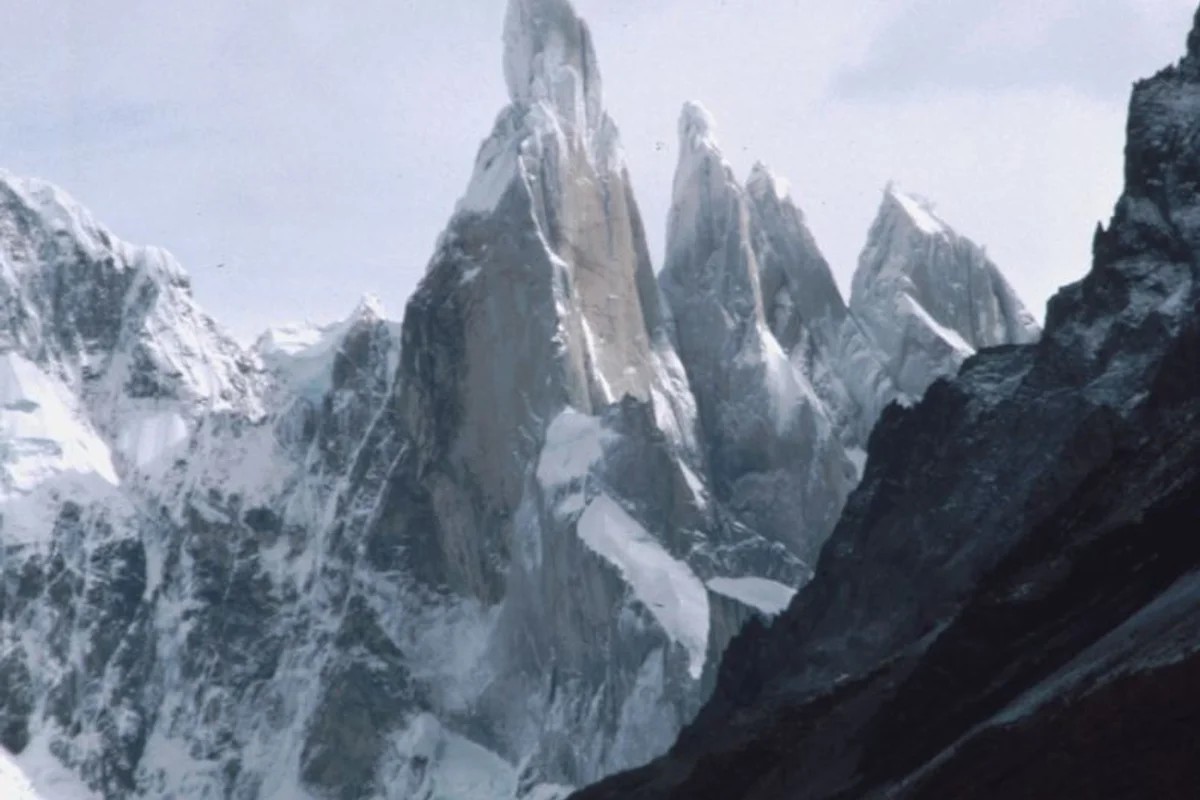
On January 13, 1974, Casimiro Ferrari led an Italian expedition from the Ragni di Lecco to complete the first undisputed summit ascent of Cerro Torre, climbing the sheer West Face and tunneling through terrifying rime ice mushrooms.
Documented Sources & Archival Citations
- American Alpine Journal: Cerro Torre West Face First Ascent(American Alpine Club)
Supporting claim: Detailed technical report of the 1974 Ragni di Lecco first ascent
Accessed/Documented: 1975 - Patagonia Vertical(Rolando Garibotti / Sidarta)
Supporting claim: Authoritative modern guidebook topo and grade analysis of the Via dei Ragni
Accessed/Documented: 2026