Mont Blanc 1786: The Epic Dawn of Alpinism on the Roof of the Alps
On August 8, 1786, Chamoniard crystal hunter Jacques Balmat and village physician Dr. Michel-Gabriel Paccard stepped onto the pristine dome of Mont Blanc (4,808m), conquering ancient superstitions and inaugurating modern mountaineering.
Mountain Safety & Conditions Disclaimer: High-altitude climbing, glacial travel, and technical ascents entail severe objective risks including avalanches, serac collapses, rapid weather collapse, and altitude illness. Historical route descriptions and summit claims on Mountanity reflect documented archival sources and must not be used as live operational safety assessments. Local regulations, permits, and physical glacial topography change continuously.
Peer Review: Senior Editorial Board & Historical Reviewers • Editorial Standards
For centuries, the glaciated peaks towering above the Chamonix Valley were spoken of only in hushed, fearful tones. Known across the Duchy of Savoy as Les Montagnes Maudites—the Accursed Mountains—their towering seracs and bottomless crevasses were believed by peasants and priests alike to harbor demons, dragons, and wandering spirits of the damned. To venture above the summer pastures was to invite divine wrath or certain death.
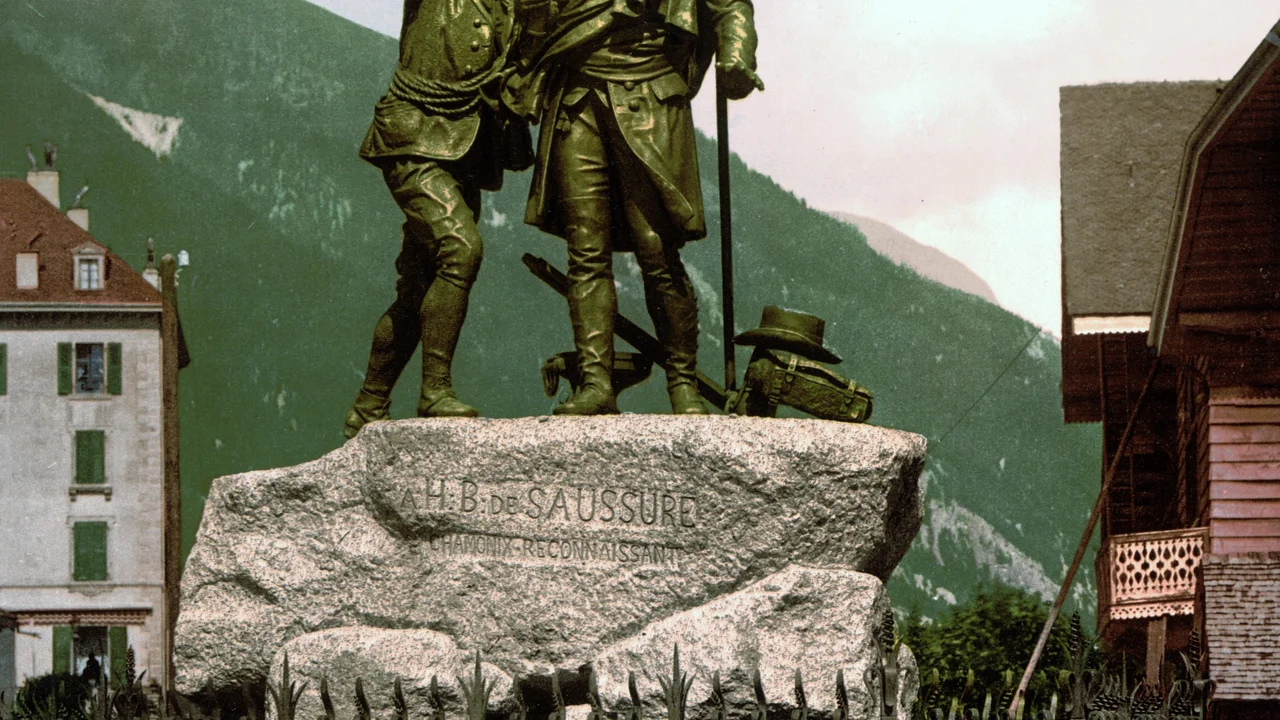
All of that began to change in 1760 when a wealthy, brilliant 20-year-old Geneva aristocrat and naturalist, Horace-Bénédict de Saussure, first visited Chamonix. Spellbound by the immense, snow-mantled dome of Mont Blanc (4,808 meters / 15,774 ft), de Saussure recognized that the highest point in Western Europe represented the ultimate natural laboratory for the emerging Enlightenment sciences of physics, meteorology, and geology. Unable to find a way up himself, he posted handbills in village churches across the valley, offering a substantial cash bounty to the first man who could discover a viable path to the summit.
For twenty-six years, the bounty went unclaimed. Local chamois hunters and crystal seekers made sporadic forays onto the glaciers, but every reconnaissance was turned back by the impassable labyrinth of crevasses and the sheer physical exhaustion caused by the thin alpine air.
The Village Doctor and the Crystal Hunter
The breakthrough came through an unlikely partnership between two Chamoniards of vastly different social stations. Dr. Michel-Gabriel Paccard, born in Chamonix in 1757, was a cultured country physician with a passion for botany, barometric science, and mountain exploration. Convinced that Mont Blanc could be climbed by an intelligent party carrying scientific instruments, Paccard spent years studying the upper glaciers through a telescope from his clinic window, mapping potential lines of weakness through the icefall of the Grands Mulets.
In June 1786, 24-year-old Jacques Balmat, a hardy peasant and crystal hunter with extraordinary endurance and an intimate knowledge of the valley’s highest rock crags, became trapped on the upper glacier overnight while scouting routes. Surviving an unplanned bivouac above 3,500 meters without blankets or shelter, Balmat proved that human beings could endure extreme sub-zero cold and high altitude without dying of supernatural curses. Recognizing each other’s indispensable strengths—Paccard’s scientific vision and strategic route-finding combined with Balmat’s raw mountaineering stamina—the two men agreed to attempt the mountain together in secret, avoiding the jealousy of rival local guides.
The Historical Assault: August 7–8, 1786
At 5:00 PM on Monday, August 7, 1786, Paccard and Balmat slipped quietly out of Chamonix. They carried primitive gear that modern climbers would find suicidal: heavy woolen jackets, leather boots studded with clumsy iron nails (creepers), long wooden alpenstocks with iron spikes, a barometer, a thermometer, and a compass. By nightfall, they reached the Montagne de la Côte, an isolated rocky ridge rising above the junction of the Bossons and Taconnaz glaciers, where they bivouacked beneath an overhanging boulder.
At 3:00 AM on August 8, the pair strapped on their iron creepers and entered the frozen wilderness of the Glacier des Bossons. Negotiating an intricate maze of yawning crevasses and unstable blue-ice seracs in the dim lantern light, they reached the colossal rock towers of the Grands Mulets at sunrise.
From the Grands Mulets, the route climbed steeply onto the Grand Plateau—an immense, blinding snow basin suspended at 4,000 meters. Here, under the blazing summer sun, the thin air began to take a brutal toll. With every hundred feet of elevation gained, the atmospheric pressure plummeted. Both men suffered agonizing headaches, dizziness, and intense nausea. Their skin burned under the unfiltered ultraviolet rays, and because they lacked protective goggles, the snow glare induced severe, burning snowblindness.
By early afternoon, villagers in Chamonix had gathered in the streets, training telescopes on the glittering white dome far above. Around 3:00 PM, Balmat, exhausted and suffering from the altitude, contemplated turning back. Paccard, driven by scientific determination, pressed forward, urging Balmat to keep moving step by agonizing step across the steep Petits Mulets and the final knife-edge snow ridge of the Bosses.
Summit and Triumph: 6:23 PM
At 6:23 PM on August 8, 1786, Jacques Balmat and Dr. Michel-Gabriel Paccard stepped onto the pristine summit dome of Mont Blanc. For the first time in human history, mortals stood upon the rooftop of Europe, looking out over a breathtaking panoramic sea of peaks stretching across France, Italy, and Switzerland all the way to the Mediterranean horizon.
Despite bone-chilling sub-zero winds and fading light, Paccard immediately unpacked his mercury barometer. He painstakingly recorded the atmospheric pressure at 16 inches and 14 lines, proving that air density dropped drastically at high altitude and providing the first empirical measurement of the summit’s true height. The two men spent thirty-four minutes on the summit, waving their hats toward Chamonix where watching villagers cheered in disbelief.
Realizing that descent in the dark across the crevasse-riddled glaciers was a life-or-death race, they plunged downward at 7:00 PM. Descending through the twilight and navigating by starlight, they negotiated the treacherous Grand Plateau and collapsed onto the safety of the Montagne de la Côte rock ledge at midnight. The following morning, August 9, they limped into Chamonix—exhausted, frostbitten, and temporarily blinded by the snow, but forever immortalized.
Restoring Historical Truth: The Bourrit Slander
In the immediate aftermath of the ascent, an unfortunate chapter of alpine revisionism occurred. Marc-Théodore Bourrit, a frustrated Geneva precentor who had repeatedly failed on Mont Blanc himself, wrote a sensationalized and widely circulated pamphlet based on Balmat’s illiterate recollections. Bourrit deliberately minimized Dr. Paccard’s role, falsely depicting the physician as a helpless invalid who had to be physically dragged to the summit by the heroic peasant Balmat.
Dr. Paccard, an aristocratic gentleman who refused to engage in public mudslinging, never defended himself in the popular press. For more than a century, the myth persisted that Balmat alone had conquered Mont Blanc. It was not until 1957, when British mountaineering historians T. Graham Brown and Sir Gavin de Beer published The First Ascent of Mont Blanc based on Dr. Paccard’s original handwritten climbing diary and contemporary witnesses, that full historical justice was restored. Dr. Michel-Gabriel Paccard was vindicated as the true intellectual mastermind, co-leader, and equal partner of the first ascent.
Today, the August 8, 1786 ascent by Balmat and Paccard is universally recognized as the official birth of modern mountaineering—the pivotal moment when humanity stepped beyond superstition into the sublime realm of the high mountains.
Key Statistics & Topographic Figures
- Category
- Historic Expeditions
Archival Subject
- Reading Time
- 12 min read
Narrative Length
- Key Mountain
- mont-blanc
Objective
- Ascent Route
- gouter-route
Topography
- Verification
- Editorially Verified
Archival Standard
Archival Primary Source Quotations
“In the mountains, truth is etched in ice and granite; every step requires unwavering respect for the heights.”
Defined Alpine Terminology & Concepts
- Summit Push
- The final continuous climbing effort from the highest established camp to the mountain apex and back.
- Death Zone Chronicle
- A verified, research-backed historical narrative documenting the human, technical, and environmental realities of an alpine expedition.
Frequently Asked Questions: Mont Blanc 1786: The Epic Dawn of Alpinism on the Roof of the Alps
What is the core chronicle and subject of "Mont Blanc 1786: The Epic Dawn of Alpinism on the Roof of the Alps"?
On August 8, 1786, Chamoniard crystal hunter Jacques Balmat and village physician Dr. Michel-Gabriel Paccard stepped onto the pristine dome of Mont Blanc (4,808m), conquering ancient superstitions and inaugurating modern mountaineering.
Which mountain peaks and routes are featured in "Mont Blanc 1786: The Epic Dawn of Alpinism on the Roof of the Alps"?
This narrative documents climbs on mont-blanc along the gouter-route in France.
Which documented expedition is chronicled in this story?
This historical chronicle captures the events of the 1786-balmat-paccard-mont-blanc, verified through contemporary journals and archival records.
Who authored and researched this archival chronicle?
Authored and researched by Mountainity Historical Research Desk, drawing on primary eyewitness testimonies, alpine club registries, and verified summit logs.
What makes this high-altitude chronicle historically significant?
Categorized under "Historic Expeditions", this chronicle preserves critical lessons in alpine leadership, survival, tactical speed, and human endurance in the death zone.
Related Mountains


Mont Blanc
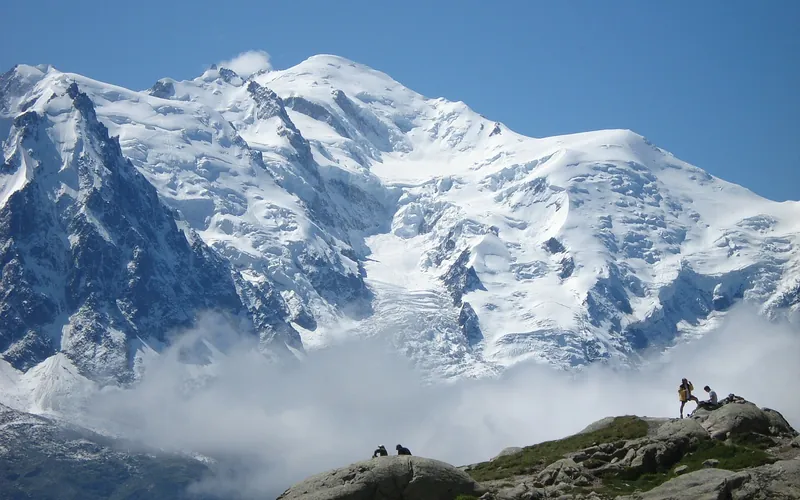
Mont Blanc (Monte Bianco), at 4,808 meters (15,774 ft), is the highest mountain in the Alps and Western Europe. Rising on the Franco-Italian watershed, this iconic glacier-draped granite massif is revered as the historic cradle of modern mountaineering following its celebrated first ascent in 1786. Featuring towering seracs, complex crevasse systems, and classic ridges like the Goûter and Bosses, it attracts climbers from around the globe.
Documented Sources & Archival Citations
- The First Ascent of Mont Blanc(T. Graham Brown and Sir Gavin de Beer / Oxford University Press)
Supporting claim: Definitive historical and documentary investigation establishing Dr. Paccard's equal leadership and achievement
Accessed/Documented: 1957 - Voyages dans les Alpes: Précédés d'un essai sur l'histoire naturelle des environs de Genève(Horace-Bénédict de Saussure / Samuel Fauche)
Supporting claim: Contemporary scientific chronicle of the alpine explorations and scientific observations on Mont Blanc
Accessed/Documented: 1779-1796 - The Alpine Journal Archive: The Early Ascents of Mont Blanc(The Alpine Club UK)
Supporting claim: Historical analysis of the Balmat-Paccard route and archival verification
Accessed/Documented: 2026