Mont Blanc
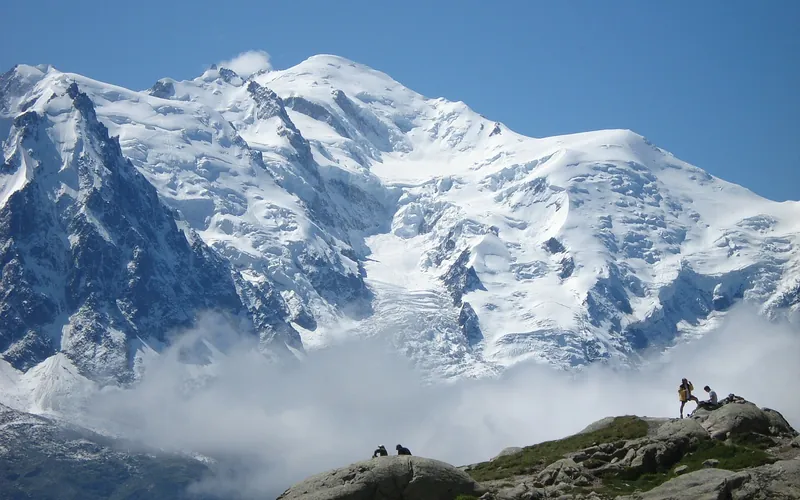
Mont Blanc (Monte Bianco), at 4,808 meters (15,774 ft), is the highest mountain in the Alps and Western Europe. Rising on the Franco-Italian watershed, this iconic glacier-draped granite massif is revered as the historic cradle of modern mountaineering following its celebrated first ascent in 1786.


Mountain Safety & Conditions Disclaimer: High-altitude climbing, glacial travel, and technical ascents entail severe objective risks including avalanches, serac collapses, rapid weather collapse, and altitude illness. Historical route descriptions and summit claims on Mountanity reflect documented archival sources and must not be used as live operational safety assessments. Local regulations, permits, and physical glacial topography change continuously.
Peer Review: Senior Editorial Board & Historical Reviewers • Editorial Standards
Geographical Setting & Topography
Graian Alps subrange, situated between the Chamonix Valley in Haute-Savoie, France, and Courmayeur in the Aosta Valley, Italy.
Historic First Ascent
Date: August 8, 1786
Ascent Team: Jacques Balmat and Dr. Michel-Gabriel Paccard
Key Statistics & Topographic Figures
- Official Elevation
- 4,808 m (15,774 ft)
Highest Peak in the Alps
- Topographic Prominence
- 4,696 m
Rank #11 globally
- First Ascent Date
- August 8, 1786
Jacques Balmat & Michel Paccard
- Mountain Range
- Graian Alps (Mont Blanc Massif)
Western Europe
- Geographic Coordinates
- 45°49′57″ N, 6°51′52″ E
France / Italy Frontier
- Standard Route
- Goûter Route (Voie Royale)
Refuge du Goûter / Bosses
Archival Primary Source Quotations
“The summit was reached at last; we were above everything, where no living creature had ever placed a foot before us.”
“I arrived on the summit at eleven o’clock. The air was clear and quiet; all the great chains of the Alps lay stretched below.”
Defined Alpine Terminology & Concepts
- Alpinism
- A style of mountaineering born in the European Alps characterized by self-sufficiency, technical skill on rock, snow, and ice, and lightweight ascents without siege tactics.
- Grand Couloir
- A 100-meter-wide vertical gully on the Goûter Route of Mont Blanc infamous for intense, hazardous rockfall funneling down from the Aiguille du Goûter.
- Arête des Bosses
- A graceful, exposed snow arête at 4,500m featuring two undulating ice humps ("Bosses") that forms the classic final approach to Mont Blanc’s summit dome.
Mont Blanc Mountain Weather Forecast
Detailed 14-Day Summit Window & Weather Timeline
Explore day-by-day summit push safety windows, wind shear analysis, and extended multi-day forecasts for Mont Blanc.
Explore Mont Blanc (4,808 m) in Interactive 3D
Inspect steep glacial walls, hanging seracs, ridge approaches, and elevation relief with 360° rotation and terrain tilt in WebGL.
Documented Climbing Routes (1)
Goûter Route (Voie Royale / Normal Route)
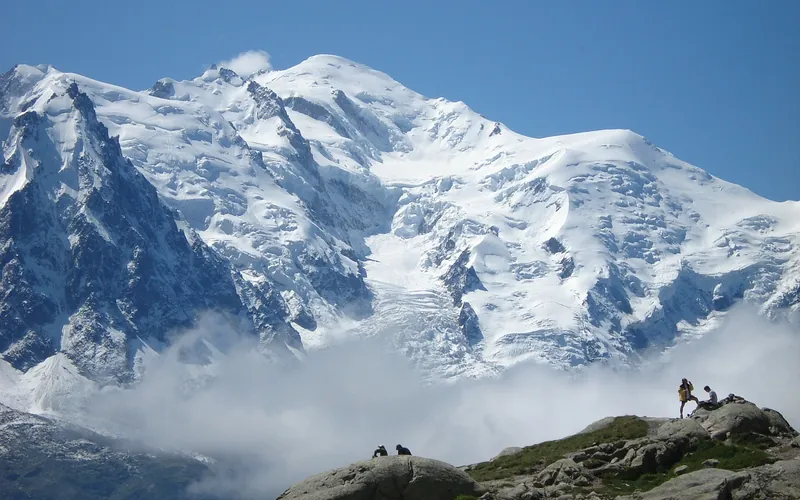
The Goûter Route, often called the Voie Royale, is the most frequented and classic line to the summit of Mont Blanc (4,808 m). Starting from the Tramway du Mont-Blanc terminus at Nid d'Aigle (2,372 m), climbers ascend past the Tête Rousse Glacier, traverse the notorious Grand Couloir, scramble up the steep Aiguille du Goûter to the Goûter Refuge (3,835 m), and complete the dawn push across the Dôme du Goûter and the exposed knife-edge Arête des Bosses to the summit dome.
Historical Expeditions (5)
1786 Balmat and Paccard Mont Blanc Expedition
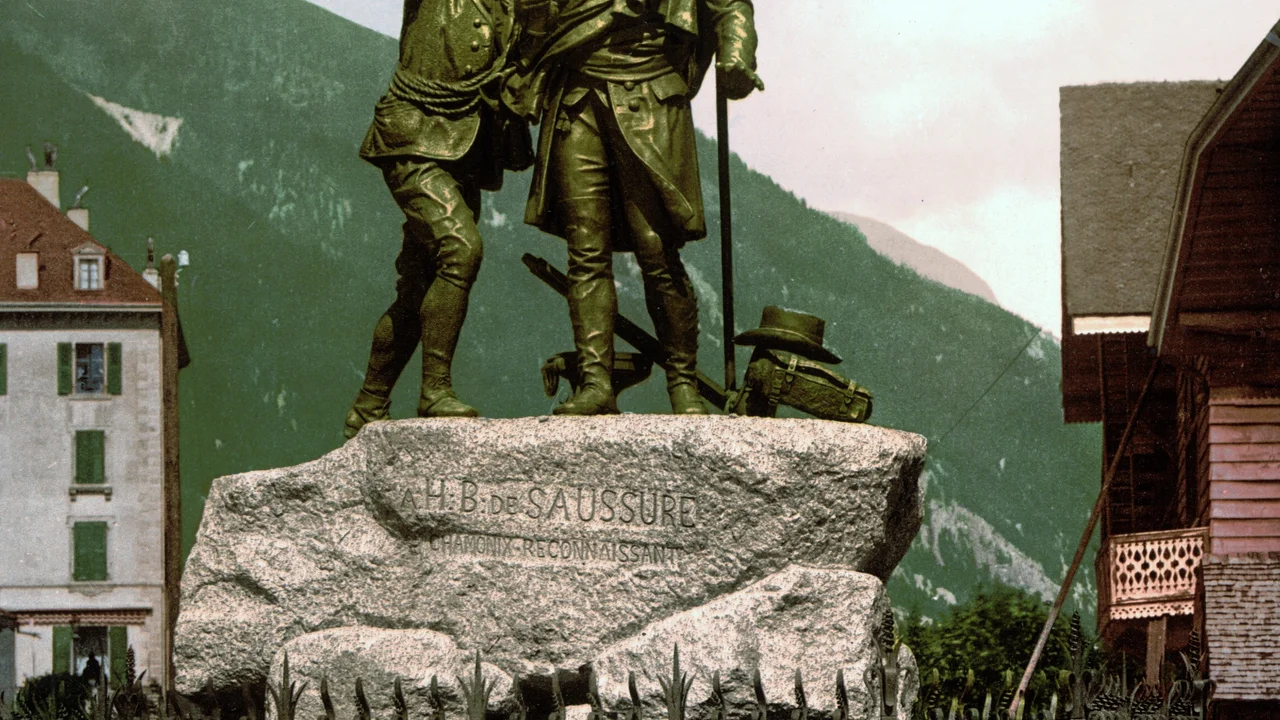
The momentous expedition by Chamoniard crystal hunter Jacques Balmat and physician Dr. Michel-Gabriel Paccard that achieved the maiden first ascent of Mont Blanc (4,808m) on August 8, 1786, establishing modern mountaineering.
1935 Pierre Allain Petit Dru North Face First Ascent
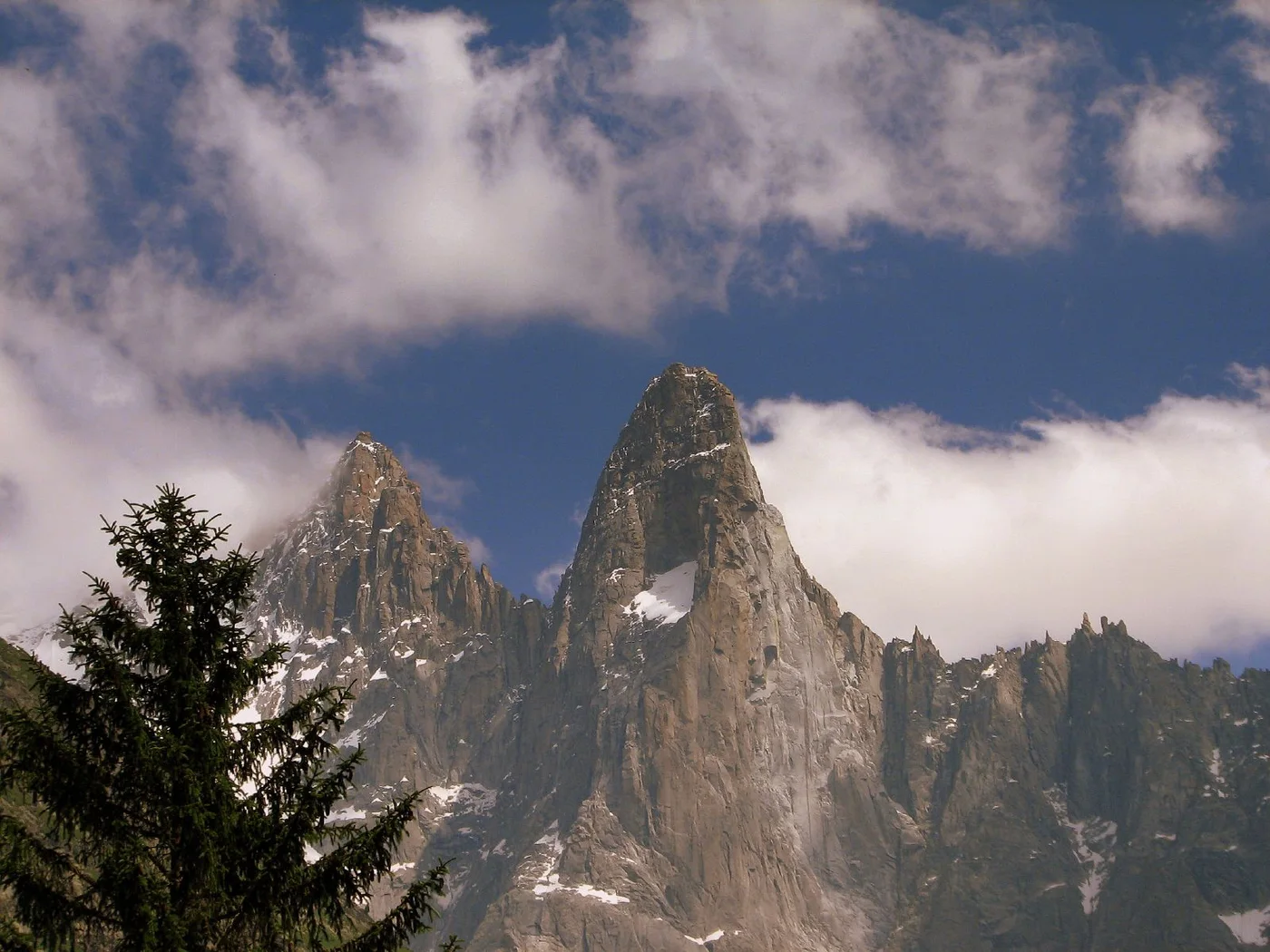
On July 31 and August 1, 1935, French climbing master Pierre Allain and Raymond Leininger made the historic first ascent of the vertical 850-meter North Face of the Petit Dru, solving one of the greatest alpine problems of the Mont Blanc massif through pioneering free-climbing technique.
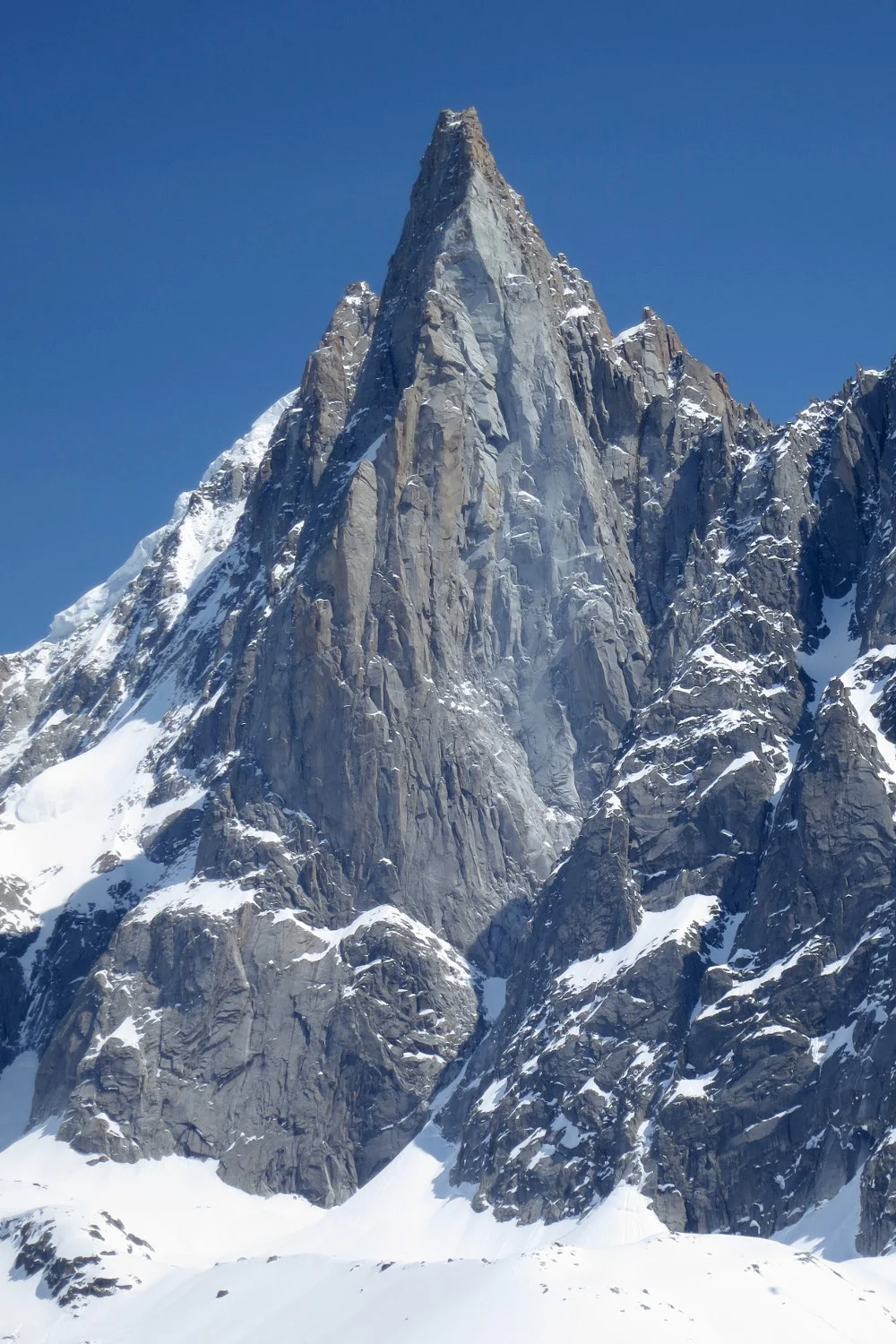
1952 Guido Magnone Petit Dru West Face First Ascent Expedition
In July 1952, French climbing pioneer Guido Magnone alongside Lucien Bérardini, Adrien Dagory, and Marcel Lainé achieved the historic first ascent of the vertical 1,000-metre West Face of the Petit Dru in Chamonix, pioneering expansion bolts and pendulums to revolutionize modern alpine big-wall climbing.
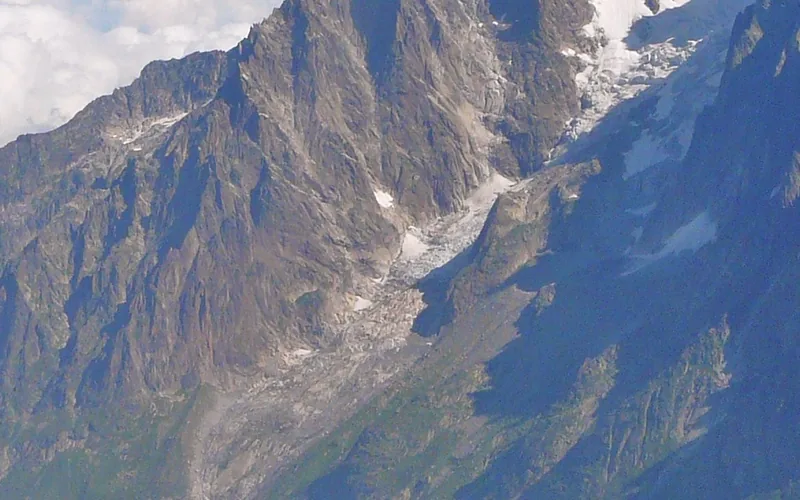
1955 Walter Bonatti Petit Dru Solo Expedition
Walter Bonatti completed one of the greatest solo rock climbing feats in alpine history between August 17 and 23, 1955, conquering the virgin Southwest Pillar of the Aiguille du Petit Dru alone over six grueling days.
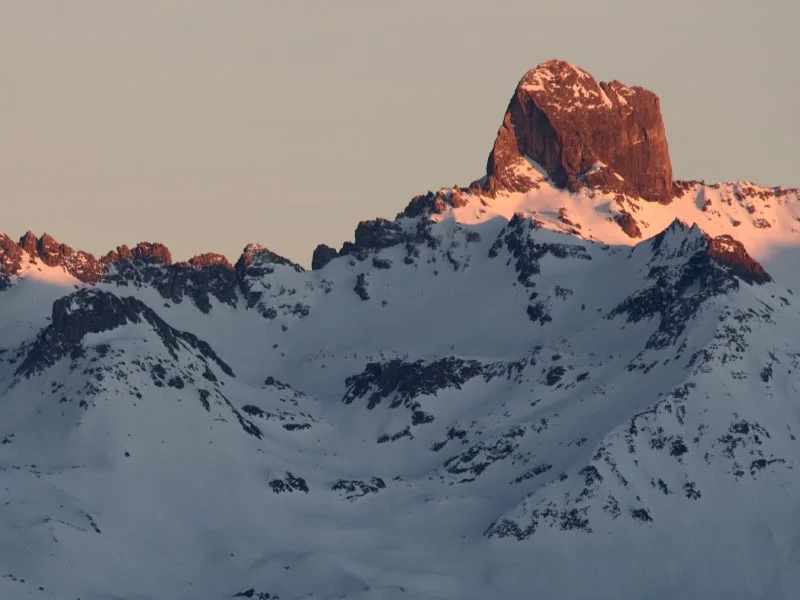
2011 Mireia Miró Varela Pierra Menta World Championship Victory
In March 2011, Catalan ski mountaineering prodigy Mireia Miró Varela paired with French champion Laëtitia Roux to dominate the grueling Pierra Menta four-day stage race in the French Alps, winning all four stages by a historic margin and establishing a new standard in alpine endurance racing.
Summit Chronicles & Stories (5)
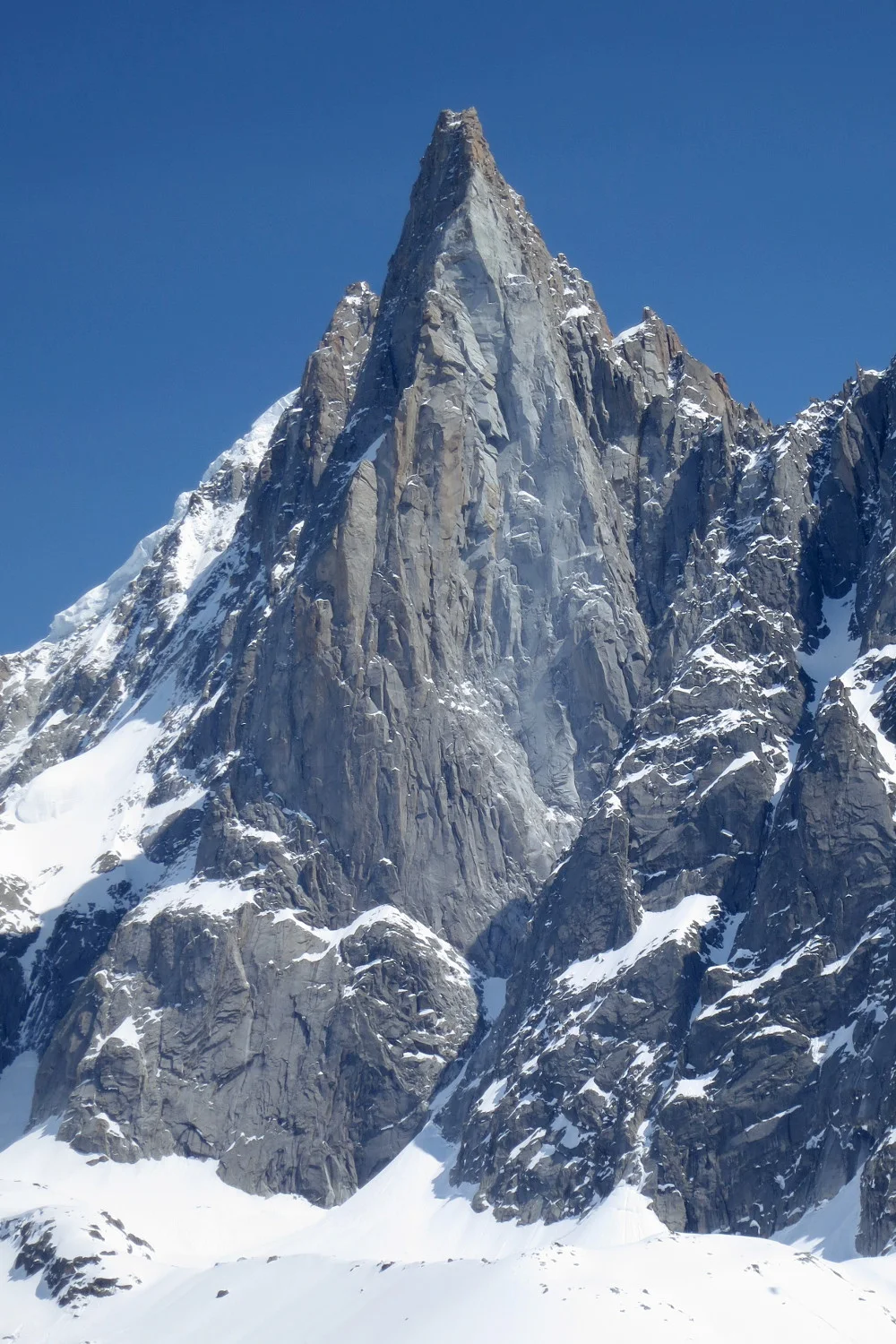
The Birth of Modern Technique: Pierre Allain on the North Face of the Petit Dru
In July 1935, Parisian bouldering pioneer Pierre Allain and Raymond Leininger made the historic first ascent of the vertical North Face of the Petit Dru in the Mont Blanc massif.
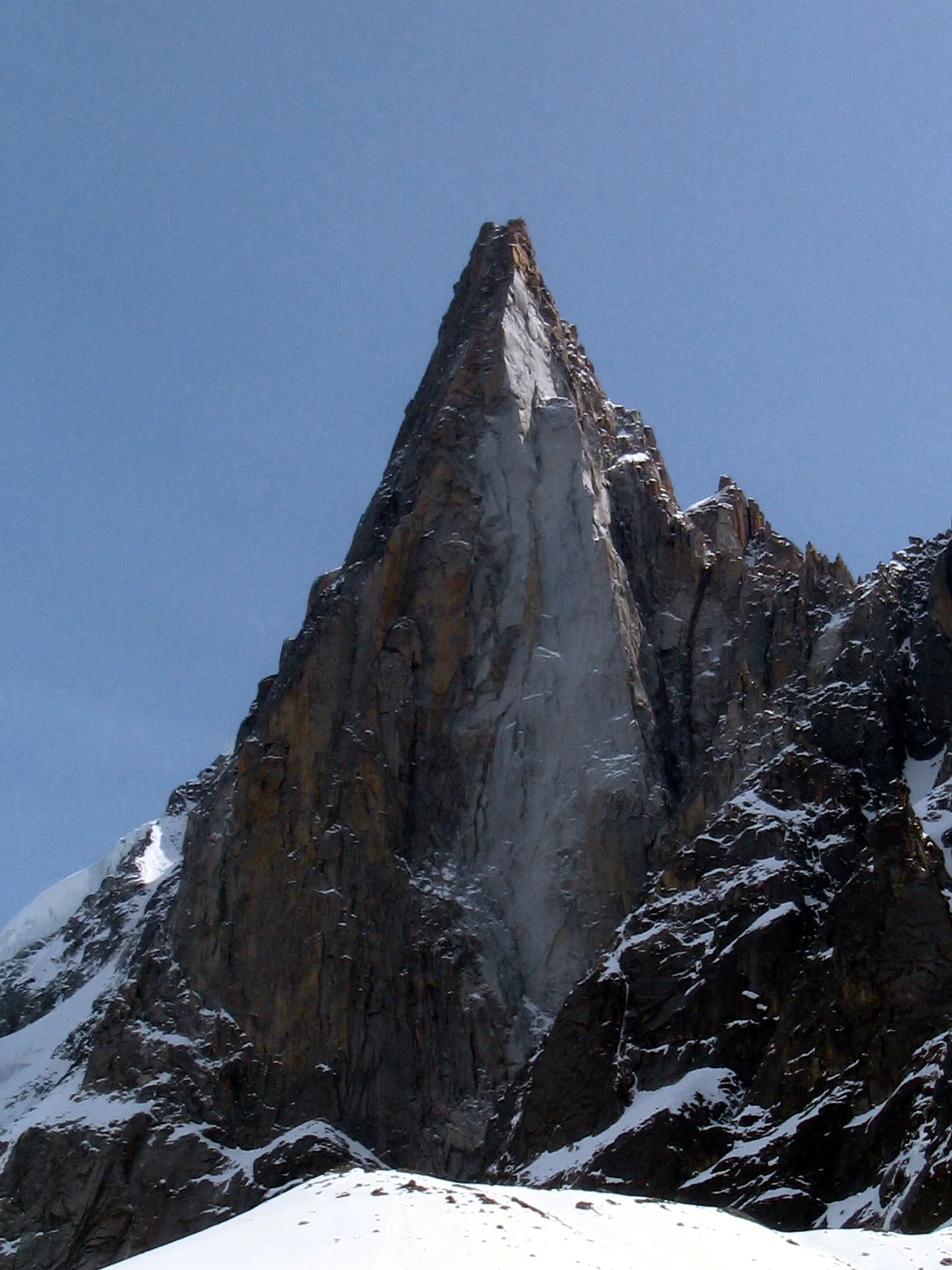
The Directissima Breakthrough: Guido Magnone on the West Face of the Dru
In July 1952, French climbing pioneer Guido Magnone and his partners conquered the sheer 1,000m West Face of the Petit Dru, opening the modern era of direct aid.
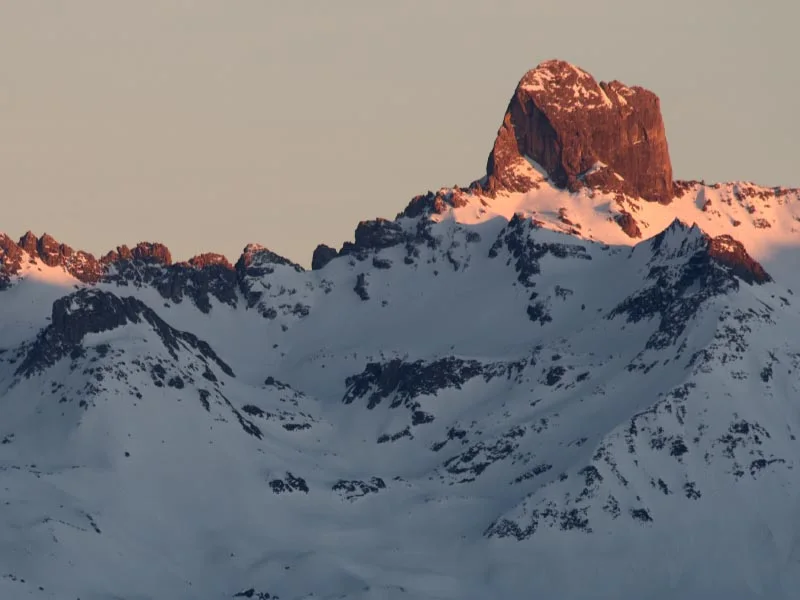
The Golden Sweep: Mireia Miró Varela's 2011 Pierra Menta Record
In March 2011, Catalan champion Mireia Miró Varela and partner Laëtitia Roux swept all four stages of the Pierra Menta, setting an enduring ski mountaineering record.
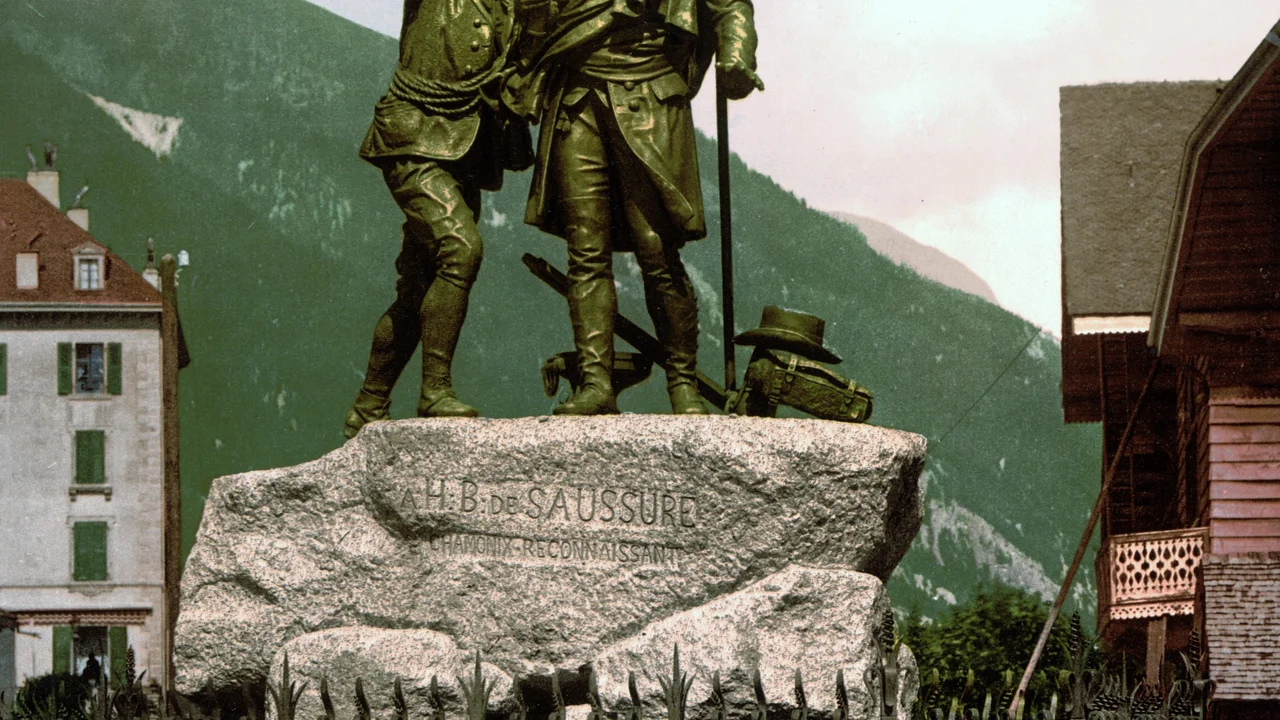
Mont Blanc 1786: The Epic Dawn of Alpinism on the Roof of the Alps
On August 8, 1786, Chamoniard crystal hunter Jacques Balmat and village physician Dr. Michel-Gabriel Paccard stepped onto the pristine dome of Mont Blanc (4,808m), conquering ancient superstitions and inaugurating modern mountaineering.
1955 Bonatti Pillar: Six Days Alone on the Petit Dru
How Walter Bonatti spent six solitary days pioneering the vertical Southwest Pillar of the Petit Dru in August 1955.
Frequently Asked Questions: Mont Blanc
What is the official elevation of Mont Blanc?
Mont Blanc stands at 4,808 meters (15,774 feet). France’s National Institute of Geographic and Forest Information (IGN) performs biennial surveys, noting variations between 4,807.8m and 4,810m depending on summit ice cap accumulation.
When was Mont Blanc first climbed and why is it historically significant?
Mont Blanc was first reached on August 8, 1786, by Jacques Balmat and Dr. Michel-Gabriel Paccard from Chamonix. This historic climb is universally recognized as the foundation of modern mountaineering and alpinism.
What is the standard climbing route up Mont Blanc?
The most popular route is the Voie Royale (Goûter Route), ascending from Nid d’Aigle past the Tête Rousse glacier, crossing the Grand Couloir, ascending the Aiguille du Goûter ridge, and following the Arête des Bosses to the summit.
What is the primary danger in the Grand Couloir of Mont Blanc?
The Grand Couloir (often called the "Bowling Alley") poses severe risk of rockfall caused by melting permafrost and warm daytime temperatures. Rocks frequently rocket down the 100-meter crossing during midday.
Documented Sources & Archival Citations
- Official Survey of Mont Blanc Elevation(Institut National de l'Information Géographique et Forestière (IGN))
Supporting claim: Official geodetic elevation survey 4,807.81m to 4,808.72m
Accessed/Documented: 2023 - The Alpine Journal Archive: The Early Ascents of Mont Blanc(The Alpine Club UK)
Supporting claim: Verified historical documentation of the 1786 Balmat-Paccard first ascent
Accessed/Documented: 2026