Guido Magnone
Guido Magnone (1917–2012) was an elite French mountaineer, sculptor, and big-wall pioneer who revolutionized technical rock climbing in the 1950s. On February 2, 1952, he made the historic first ascent of Cerro Fitz Roy in Patagonia alongside Lionel Terray. Later that year, he conquered the sheer West Face of the Petit Dru in Chamonix, introducing modern direct aid tactics.
Mountain Safety & Conditions Disclaimer: High-altitude climbing, glacial travel, and technical ascents entail severe objective risks including avalanches, serac collapses, rapid weather collapse, and altitude illness. Historical route descriptions and summit claims on Mountanity reflect documented archival sources and must not be used as live operational safety assessments. Local regulations, permits, and physical glacial topography change continuously.
Peer Review: Senior Editorial Board & Historical Reviewers • Editorial Standards
Biographical Record & Archival Chronicle
Guido Magnone was born on February 1, 1917, in Turin, Italy, before his family emigrated to France when he was a child. A gifted athlete who competed in water polo for France at the 1948 London Olympic Games, Magnone graduated from the École Nationale Supérieure des Beaux-Arts in Paris as an accomplished sculptor. Taking up rock climbing at Fontainebleau and the Mont Blanc massif at the relatively late age of thirty, Magnone applied his immense athletic strength and artistic vision to the most sheer, unclimbed granite walls of Europe.
In early 1952, Magnone joined the historic French Patagonia Expedition led by René Ferlet. Faced with the vertical granite monolith of Cerro Fitz Roy (3,405m) and violent Patagonian gales, Magnone and Lionel Terray forged a daring technical path up the south buttress. Utilizing expansion bolts and piton aid on sheer granite flakes, the duo reached the virgin summit on February 2, 1952, completing what was then considered the most technically difficult mountain ascent on Earth.
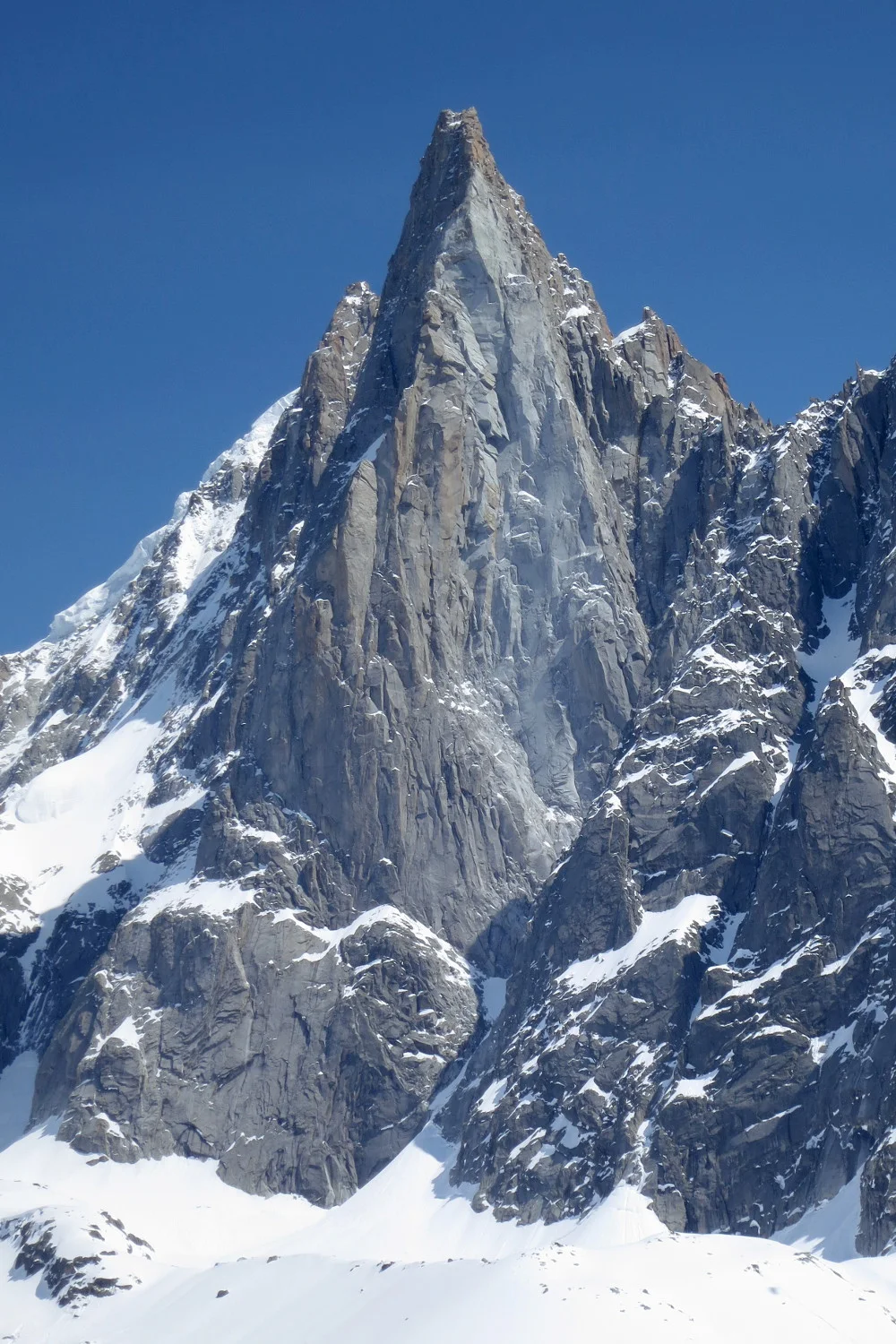
Returning to the Alps in July 1952, Magnone tackled another legendary 'impossible' problem: the 1,000-metre vertical West Face of the Petit Dru (Face Ouest des Drus) in the Mont Blanc massif. Climbing alongside Lucien Bérardini, Adrien Dagory, and Marcel Lainé, Magnone established the celebrated 'Magnone Route', employing bold pendulums and expansion bolts to breach vertical granite that had defeated previous generations.
In May 1955, Magnone joined the French national expedition to Makalu (8,485m), successfully reaching the summit as part of the team that placed all nine climbers on top of the world's fifth-highest peak. Magnone later served as president of the French Mountain Federation (FFME) and founded the Union des Centres de Plein Air (UCPA), dedicating his life to introducing hundreds of thousands of French youth to outdoor adventure and mountain arts. He passed away in Clamart, France, on September 24, 2012, at age ninety-five.
Notable Milestones & Ascents
- First ascent of Cerro Fitz Roy (3,405m) on February 2, 1952, with Lionel Terray via the Franco-Argentine Route
- First ascent of the 1,000m vertical West Face of the Petit Dru (Face Ouest) in July 1952
- Summited Makalu (8,485m) in May 1955 as part of the flawless French national expedition
- First ascent of the North Face of the Cima Grande di Lavaredo direct via the Comici route second French ascent
- Represented France in water polo at the 1948 London Olympic Games
- Co-founded the UCPA, revolutionizing outdoor sports education and mountain access for French youth
Key Statistics & Topographic Figures
- Archive Classification
- MOUNTAINEERS
Mountanity Knowledge Corpus
- Verification Status
- Editorially Verified
Archival Standards
- Citation Standard
- Primary Source Verified
Alpine Research Desk
Archival Primary Source Quotations
“Great things are done when men and mountains meet; this is not done by jostling in the street.”
Defined Alpine Terminology & Concepts
- Archival Integrity
- The standard of verifying historical mountain facts, summit claims, and altitudes using primary expeditions journals and geodetic measurements.
Frequently Asked Questions: Guido Magnone
What historical significance does this mountaineer hold?
Guido Magnone represents an essential chapter in global mountaineering heritage, verified through contemporary expedition journals and archival sources.
How are the facts and records for Guido Magnone verified?
All records are checked against peer-reviewed journals, national alpine clubs, geodetic surveys, and the Mountanity Archival Integrity Policy.
Associated Summits (3)


Makalu
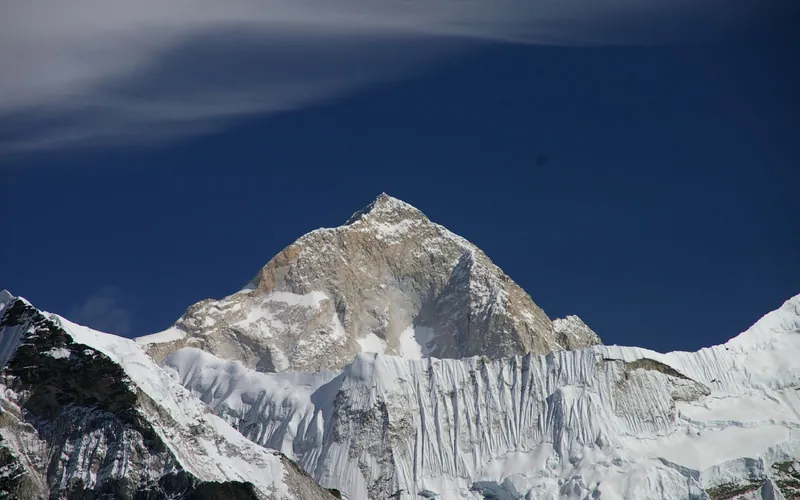
Makalu, at 8,485 meters (27,838 ft), is the fifth-highest mountain on Earth, located 19 km southeast of Mount Everest. An isolated four-sided granite pyramid, it is known for technical knife-edge ridges, severe exposure, and punishing weather, making it one of the most challenging eight-thousanders.


Mont Blanc
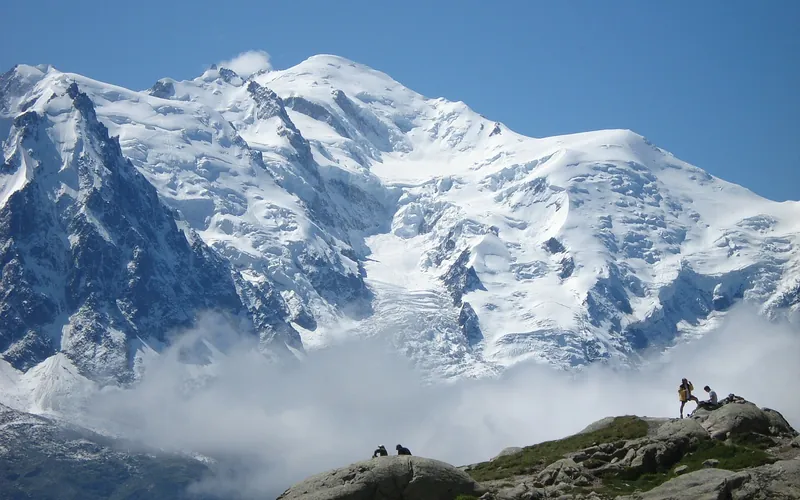
Mont Blanc (Monte Bianco), at 4,808 meters (15,774 ft), is the highest mountain in the Alps and Western Europe. Rising on the Franco-Italian watershed, this iconic glacier-draped granite massif is revered as the historic cradle of modern mountaineering following its celebrated first ascent in 1786. Featuring towering seracs, complex crevasse systems, and classic ridges like the Goûter and Bosses, it attracts climbers from around the globe.

Cerro Fitz Roy
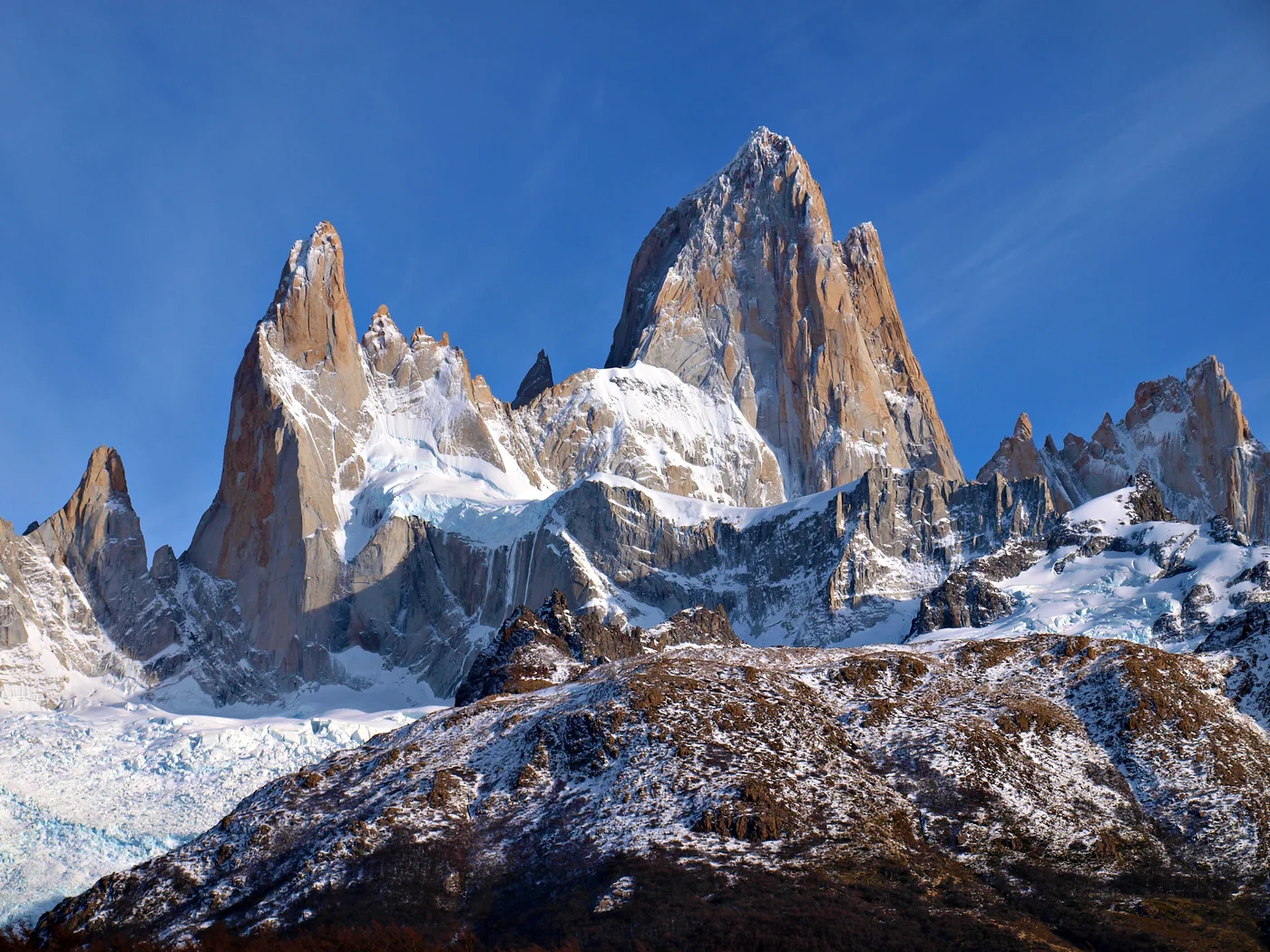
Cerro Fitz Roy, also known as Monte Fitz Roy or Cerro Chaltén at 3,405 meters (11,171 ft), is a world-renowned granite monolith situated in the Southern Patagonian Icefield near El Chaltén, Argentina. Revered for its vertical granite walls and notorious hurricane-force Patagonian storms, it is considered one of the most technically demanding alpine summits on Earth. French climbers Lionel Terray and Guido Magnone completed the legendary first ascent on February 2, 1952, establishing the historic Franco-Argentine Route.
Pioneered & Associated Routes (4)
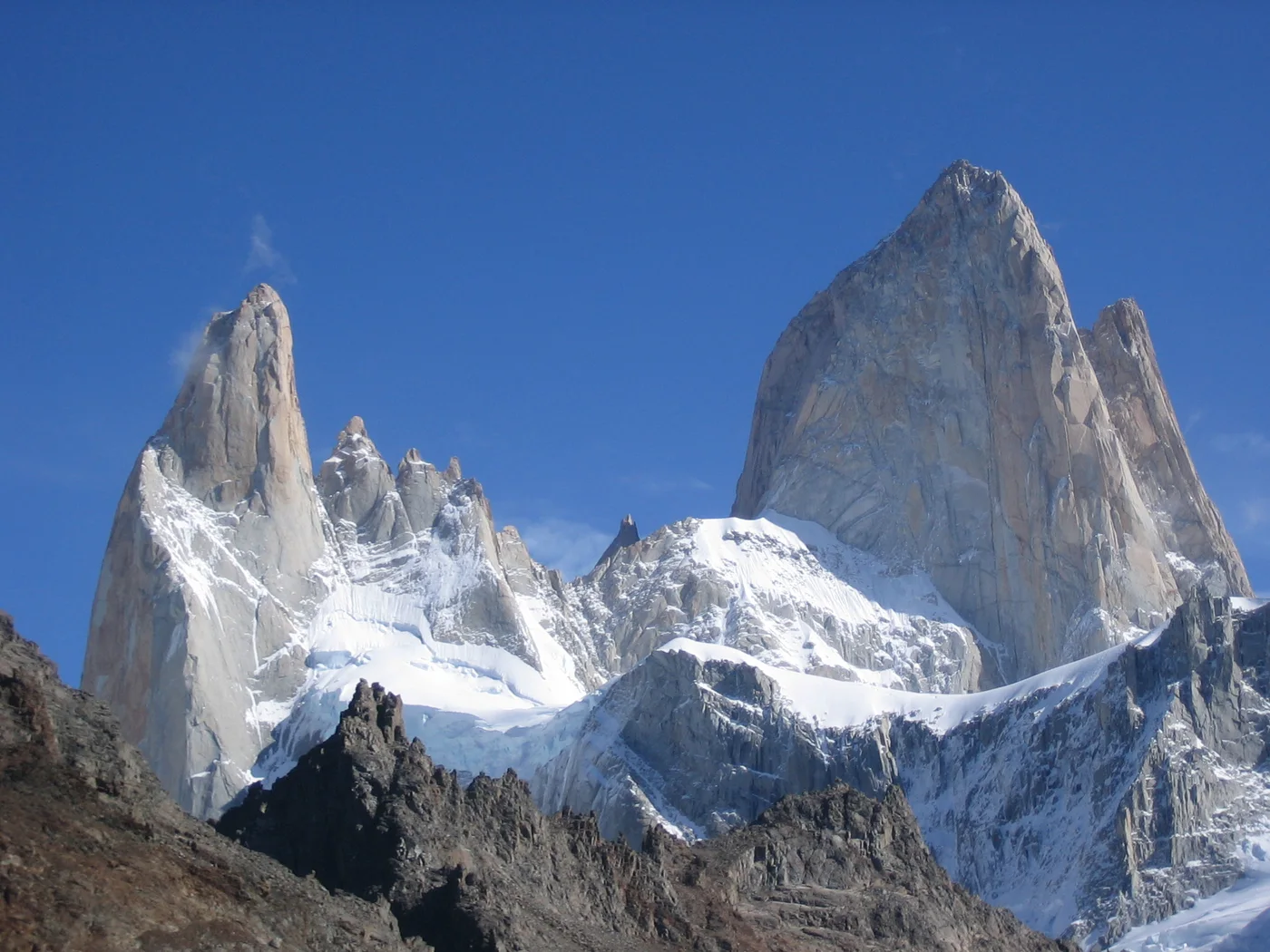
Franco-Argentine Route
The Franco-Argentine Route on Cerro Fitz Roy is the historic first ascent line on Patagonia's most iconic granite monolith. Pioneered in February 1952 by French climbers Lionel Terray and Guido Magnone, the route ascends the Brecha de los Italianos, traverses the south shoulder, and tackles sustained vertical granite cracks up to French 6c (5.11a) and A2 aid amid ferocious Patagonian winds.
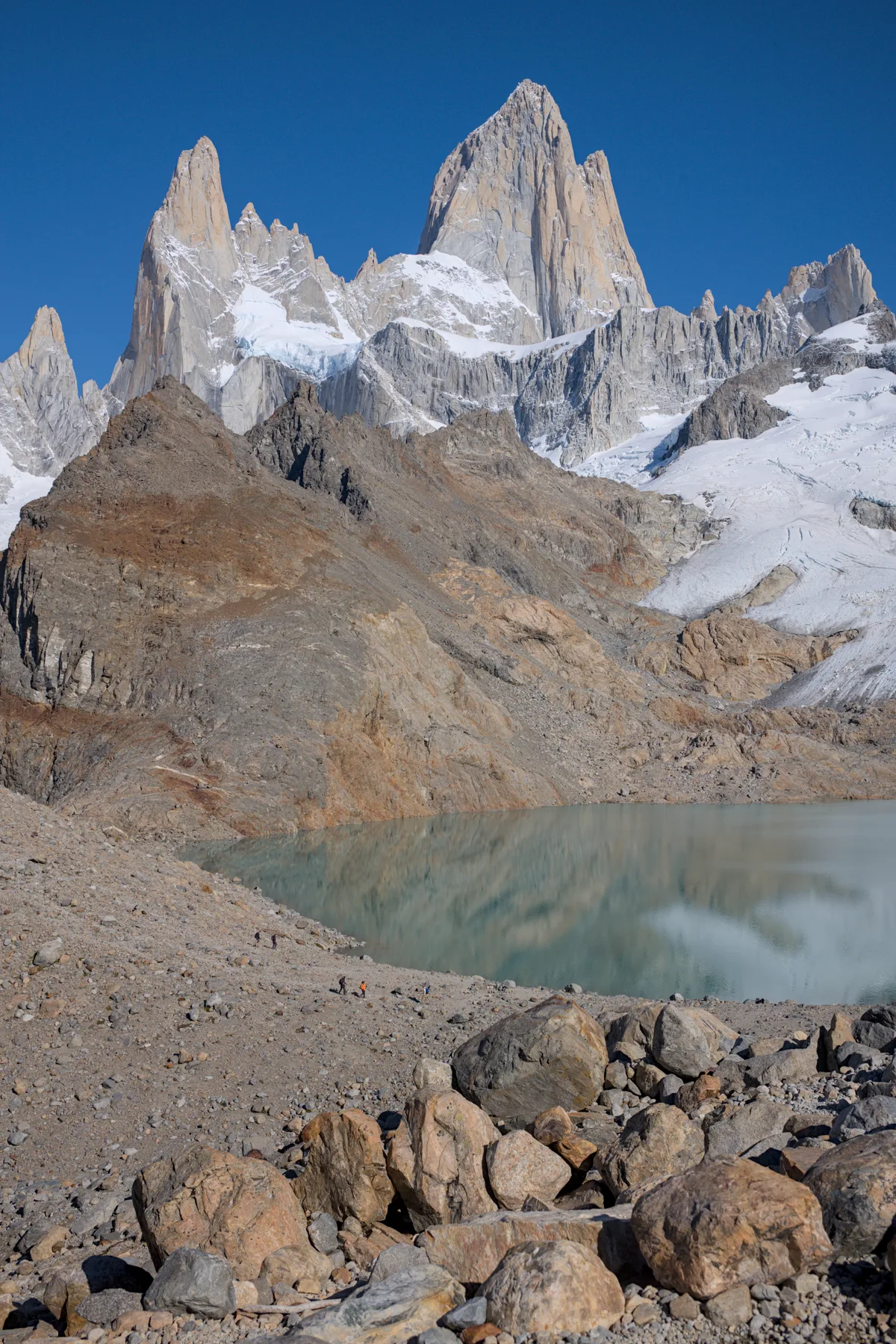
Fitz Roy Supercanaleta
The Supercanaleta on the Southwest Face of Cerro Fitz Roy (3,405 m) is one of the most legendary, direct, and imposing alpine ice lines in the world. Ascending an unbroken 1,600-metre vertical couloir of ice, snow, and mixed granite chimneys, it was first conquered in January 1965 in pure alpine style by Argentine mountaineering prodigies José Luis Fonrouge and Carlos Comesaña over two and a half days.
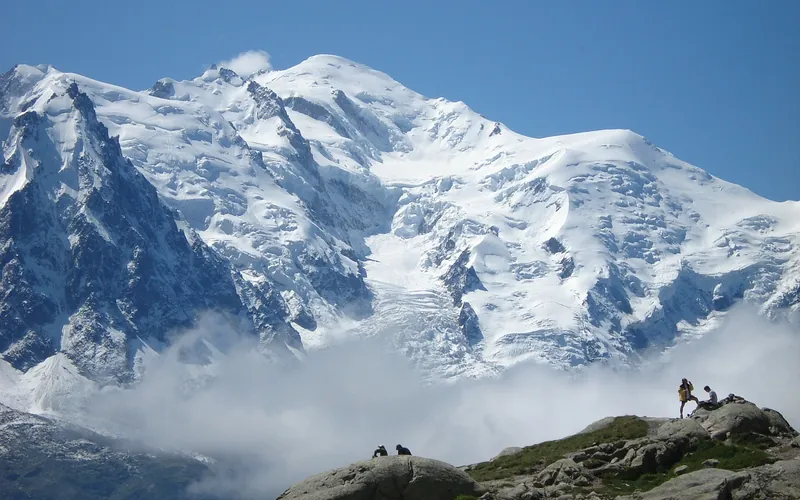
Goûter Route (Voie Royale / Normal Route)
The Goûter Route, often called the Voie Royale, is the most frequented and classic line to the summit of Mont Blanc (4,808 m). Starting from the Tramway du Mont-Blanc terminus at Nid d'Aigle (2,372 m), climbers ascend past the Tête Rousse Glacier, traverse the notorious Grand Couloir, scramble up the steep Aiguille du Goûter to the Goûter Refuge (3,835 m), and complete the dawn push across the Dôme du Goûter and the exposed knife-edge Arête des Bosses to the summit dome.
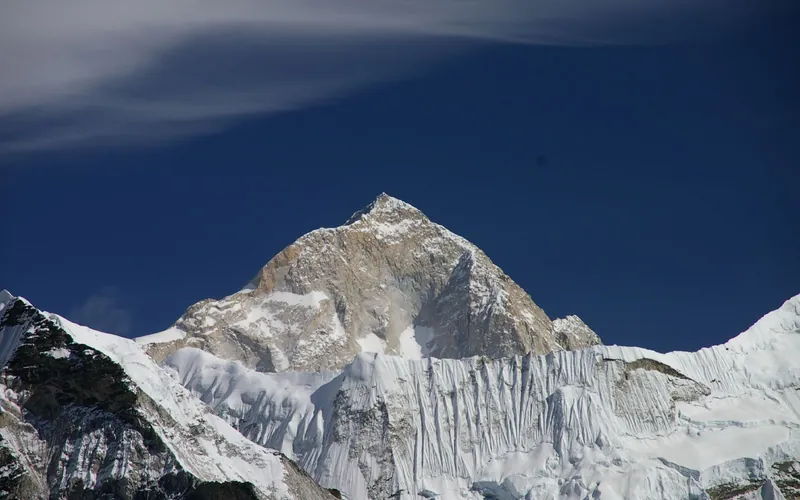
Makalu Northwest Ridge (French Route)
The Northwest Ridge is the classic pioneering line on Makalu, first opened by the historic French expedition of 1955. From Advanced Base Camp on the Chago Glacier, climbers ascend steep snow and ice fields to gain Makalu La (7,400m), a high, wind-blasted col connecting Makalu to Kangchungtse. Above Makalu La, the route climbs through the technical French Couloir—a mixed corridor of steep ice and broken granite—before emerging onto the exposed summit crest.
Documented Expeditions (2)
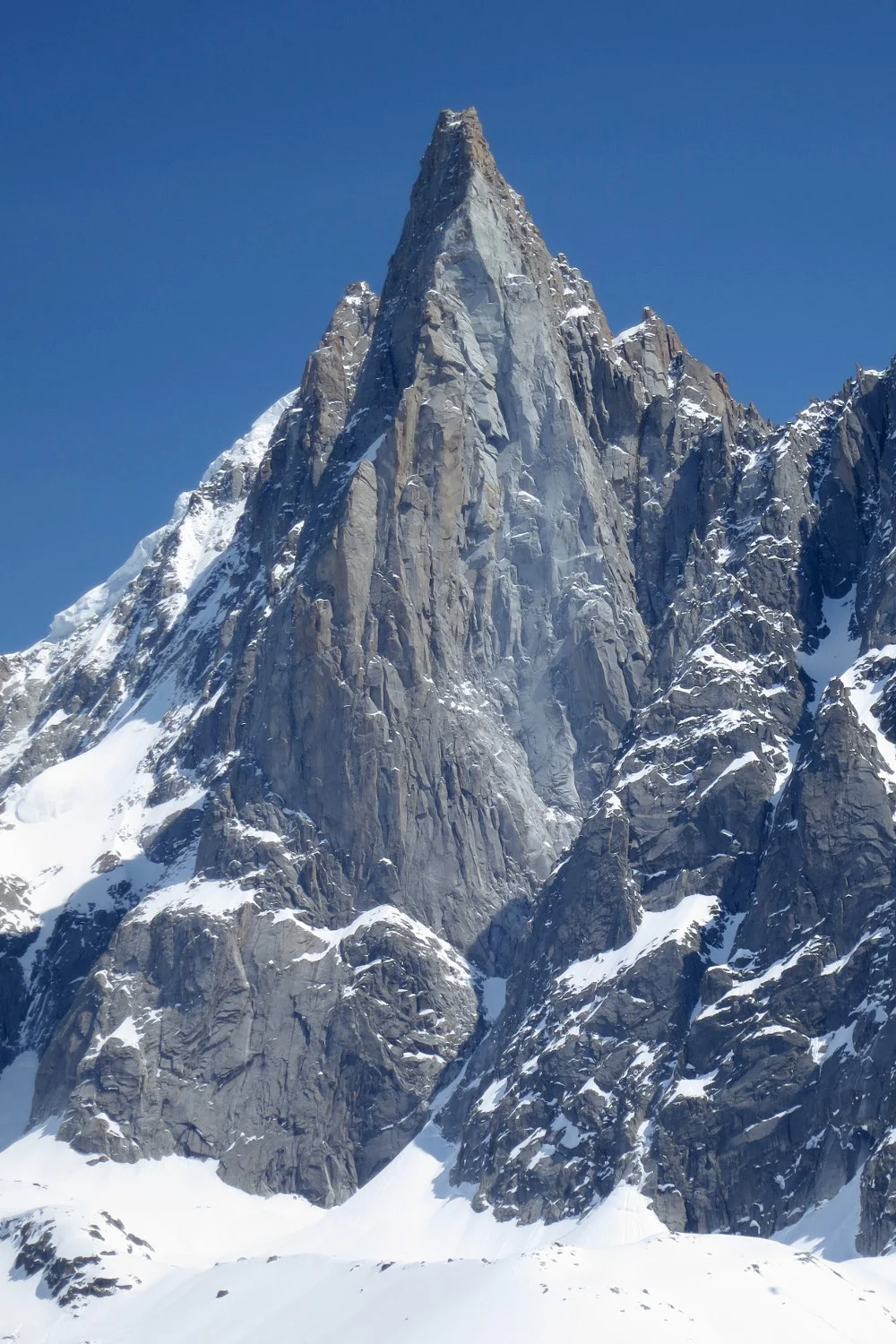
1952 Guido Magnone Petit Dru West Face First Ascent Expedition
In July 1952, French climbing pioneer Guido Magnone alongside Lucien Bérardini, Adrien Dagory, and Marcel Lainé achieved the historic first ascent of the vertical 1,000-metre West Face of the Petit Dru in Chamonix, pioneering expansion bolts and pendulums to revolutionize modern alpine big-wall climbing.
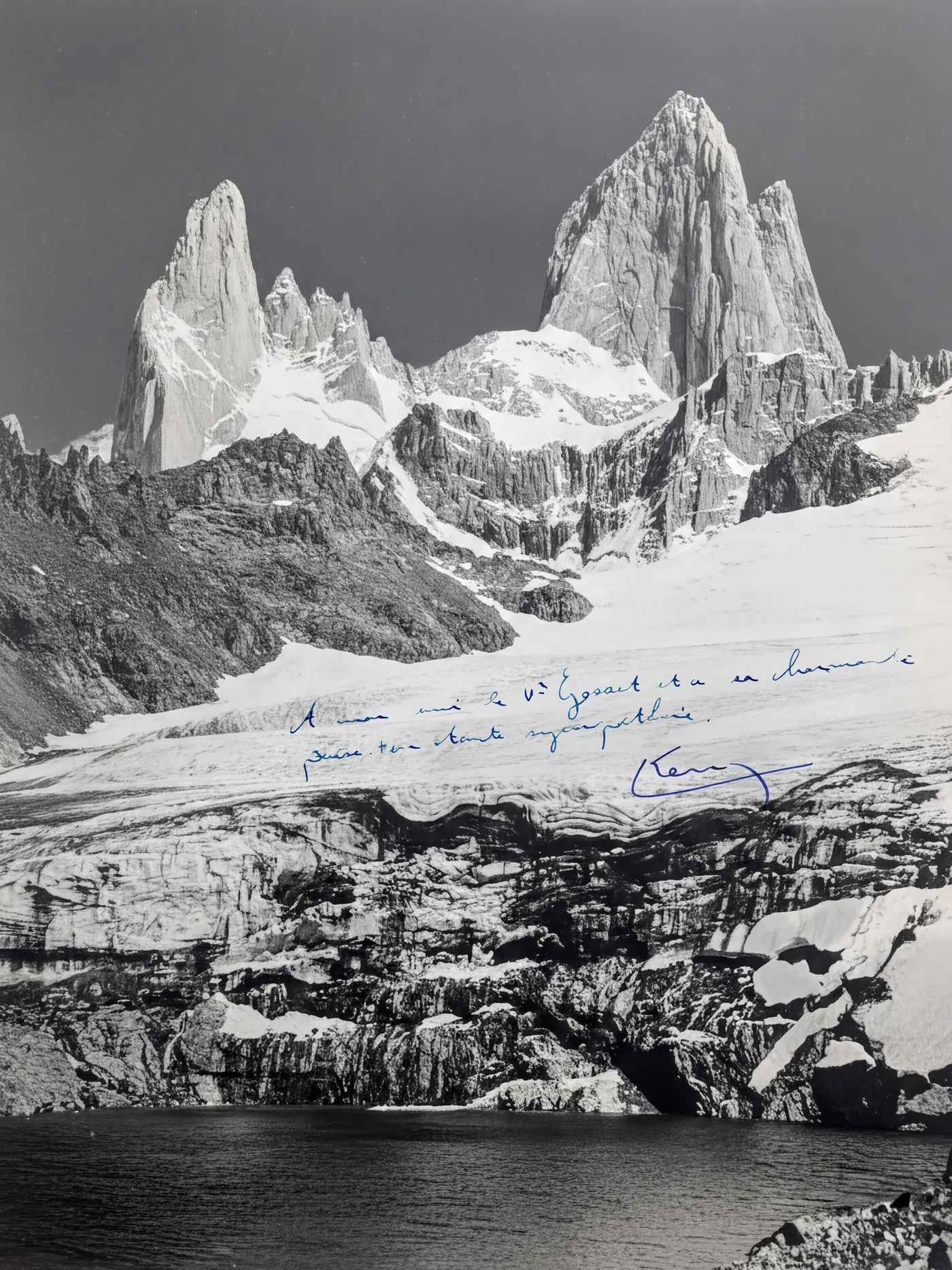
1952 French Patagonia Cerro Fitz Roy First Ascent Expedition
On February 2, 1952, French mountaineers Lionel Terray and Guido Magnone achieved the historic first ascent of Cerro Fitz Roy (3,405m) in Patagonia, overcoming ferocious storms, vertical granite cracks, and technical aid to conquer one of Earth's most formidable spires.
Associated Chronicles & Stories (2)
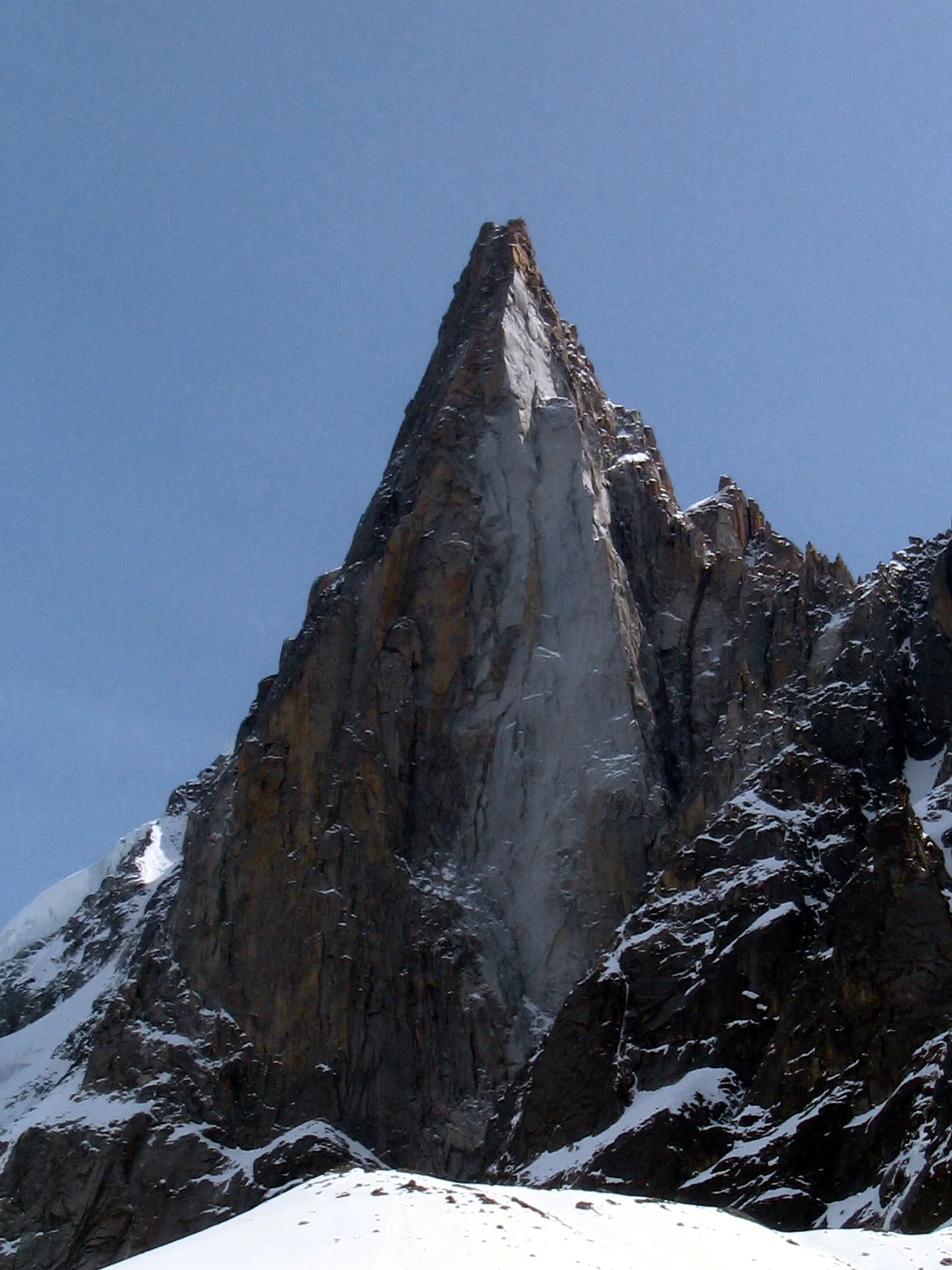
The Directissima Breakthrough: Guido Magnone on the West Face of the Dru
In July 1952, French climbing pioneer Guido Magnone and his partners conquered the sheer 1,000m West Face of the Petit Dru, opening the modern era of direct aid.
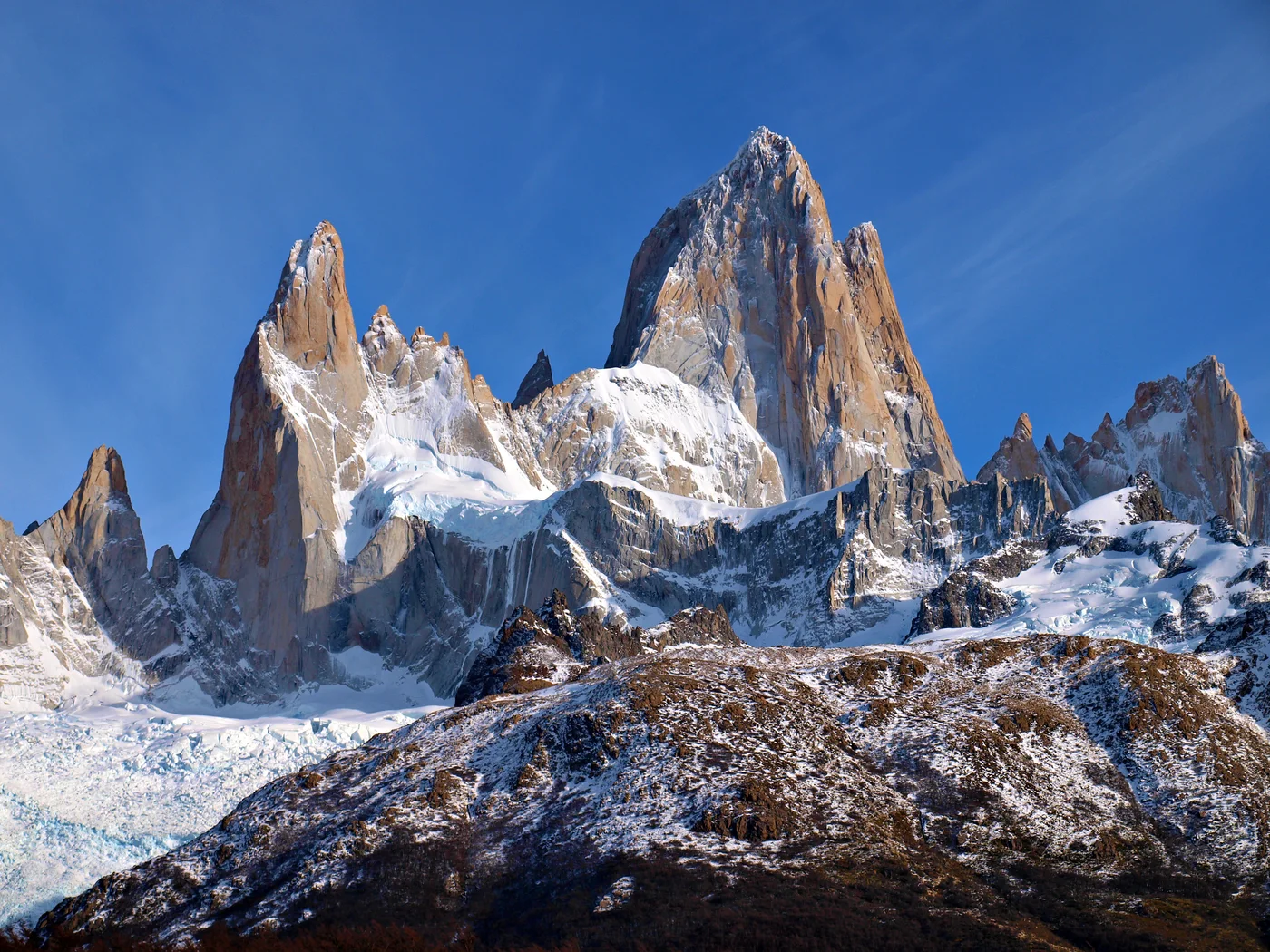
Conquest of the Patagonian Fang: Lionel Terray and Guido Magnone on Fitz Roy
In February 1952, French mountaineers Lionel Terray and Guido Magnone conquered the virgin summit of Cerro Fitz Roy in Patagonia via the historic Franco-Argentine Route.
Documented Sources & Archival Citations
- La Face Ouest des Drus(Guido Magnone / Arthaud)
Supporting claim: Firsthand technical account of opening the historic West Face route on the Petit Dru
Accessed/Documented: 1953 - American Alpine Journal: The Conquest of Mount FitzRoy(Guido Magnone / American Alpine Club)
Supporting claim: Official climb report and timeline of the 1952 first ascent of Cerro Fitz Roy
Accessed/Documented: 1953