Conquest of the Patagonian Fang: Lionel Terray and Guido Magnone on Fitz Roy
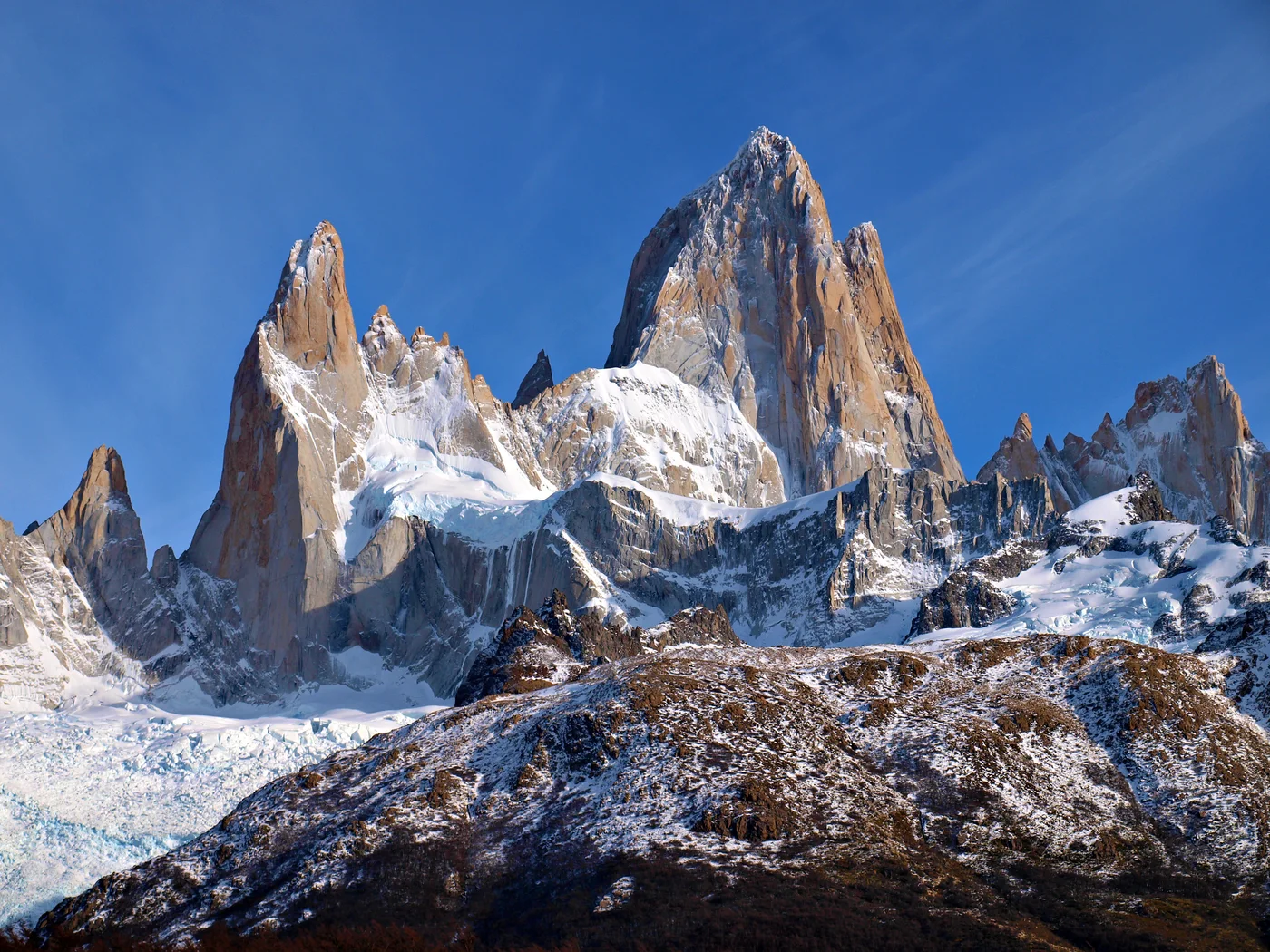
In February 1952, French mountaineers Lionel Terray and Guido Magnone conquered the virgin summit of Cerro Fitz Roy in Patagonia via the historic Franco-Argentine Route.
Mountain Safety & Conditions Disclaimer: High-altitude climbing, glacial travel, and technical ascents entail severe objective risks including avalanches, serac collapses, rapid weather collapse, and altitude illness. Historical route descriptions and summit claims on Mountanity reflect documented archival sources and must not be used as live operational safety assessments. Local regulations, permits, and physical glacial topography change continuously.
Peer Review: Senior Editorial Board & Historical Reviewers • Editorial Standards
In the early months of 1952, one of the most terrifying, untamed mountain citadels on Earth stood virtually untouched in the stormy wilderness of Patagonia: Cerro Fitz Roy (3,405m). Rising out of the desolate Southern Patagonian Icefield, Fitz Roy was an imposing monolith of sheer, vertical granite flanked by roaring glaciers and swept by relentless Pacific gales known as the Roaring Forties. Where Himalayan giants challenged climbers with extreme altitude, Fitz Roy presented a completely different, savage challenge: vertical big-wall technical difficulty under sub-polar storm conditions.
A small expedition organised by the French Mountaineering Federation under the leadership of René Ferlet arrived in Patagonia in December 1951. Among the team were two of France’s premier post-war climbing talents: Chamonix guide Lionel Terray, fresh from his heroics on Annapurna, and Olympic water polo player turned sculptor and big-wall ace Guido Magnone.
Tragedy at the River and the Brecha Battle
The expedition suffered a devastating blow early in the campaign. While attempting to establish a supply route across the swollen Fitz Roy River, team member Jacques Poincenot was swept away by glacial currents and drowned. Deeply shaken, the French climbers chose to honor their fallen comrade by pressing forward, establishing their base camp beneath the towering granite walls and naming the adjacent needle Aguja Poincenot.
For weeks, Terray and Magnone endured howling gales that flattened their tents and buried their equipment under deep drifts. Recognizing that normal alpine tactics were useless against Patagonian weather, the pair dug snow caves at the Brecha de los Italianos—a high col separating Fitz Roy from the surrounding spires.
The Historic Summit Assault
On February 1, 1952, a fleeting window of relative calm opened in the atmosphere. Racking their harnesses with hundreds of forged steel pitons, expansion bolts, and braided ropes, Terray and Magnone launched themselves onto the sheer south buttress.
Pitch after pitch demanded ferocious physical effort. Magnone led through overhanging granite chimneys choked with verglas, hammering pitons into hairline cracks while hanging from rope loops above thousands of feet of void. Terray followed with relentless strength, hauling heavy supply rucksacks and clearing frozen ropes. After a freezing bivouac on a tiny sitting ledge chopped into a snowfield, the pair pushed through the final crux headwall.
At 16:30 on February 2, 1952, Lionel Terray and Guido Magnone stood together on the snow-capped summit of Cerro Fitz Roy. Their triumph was celebrated globally as one of the most audacious, technically demanding mountaineering achievements in human history, unlocking the golden era of modern Patagonian big-wall climbing.
Key Statistics & Topographic Figures
- Category
- First Ascents & Golden Era Epics
Archival Subject
- Reading Time
- 15 min read
Narrative Length
- Key Mountain
- fitz-roy
Objective
- Ascent Route
- fitz-roy-franco-argentine
Topography
- Verification
- Editorially Verified
Archival Standard
Archival Primary Source Quotations
“In the mountains, truth is etched in ice and granite; every step requires unwavering respect for the heights.”
Defined Alpine Terminology & Concepts
- Summit Push
- The final continuous climbing effort from the highest established camp to the mountain apex and back.
- Death Zone Chronicle
- A verified, research-backed historical narrative documenting the human, technical, and environmental realities of an alpine expedition.
Frequently Asked Questions: Conquest of the Patagonian Fang: Lionel Terray and Guido Magnone on Fitz Roy
What is the core chronicle and subject of "Conquest of the Patagonian Fang: Lionel Terray and Guido Magnone on Fitz Roy"?
In February 1952, French mountaineers Lionel Terray and Guido Magnone conquered the virgin summit of Cerro Fitz Roy in Patagonia via the historic Franco-Argentine Route.
Which mountain peaks and routes are featured in "Conquest of the Patagonian Fang: Lionel Terray and Guido Magnone on Fitz Roy"?
This narrative documents climbs on fitz-roy along the fitz-roy-franco-argentine in Argentina.
Which documented expedition is chronicled in this story?
This historical chronicle captures the events of the 1952-terray-magnone-fitz-roy, verified through contemporary journals and archival records.
Who authored and researched this archival chronicle?
Authored and researched by Mountainity Historical Research Desk, drawing on primary eyewitness testimonies, alpine club registries, and verified summit logs.
What makes this high-altitude chronicle historically significant?
Categorized under "First Ascents & Golden Era Epics", this chronicle preserves critical lessons in alpine leadership, survival, tactical speed, and human endurance in the death zone.
Related Mountains
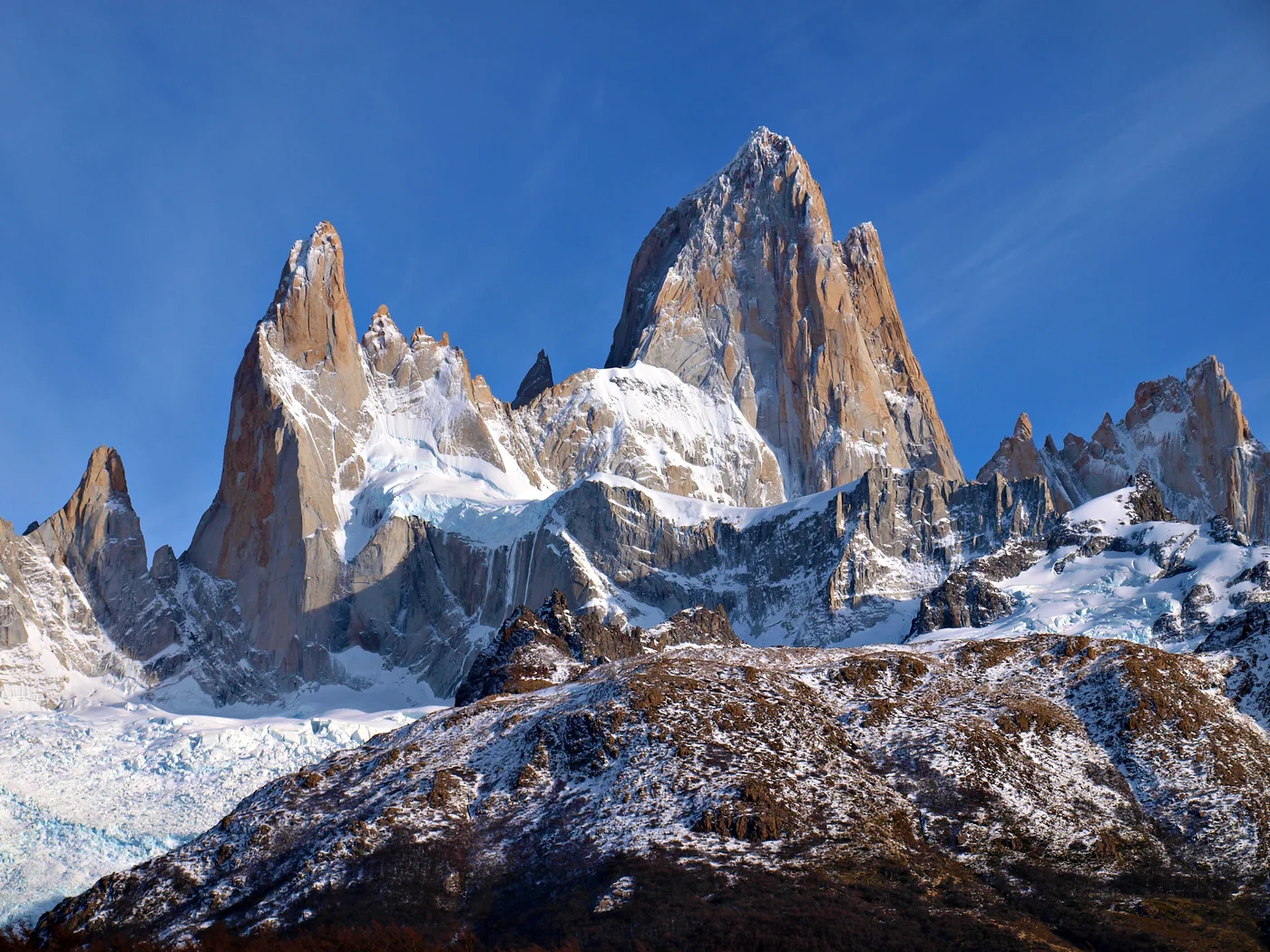


Cerro Fitz Roy
Cerro Fitz Roy, also known as Monte Fitz Roy or Cerro Chaltén at 3,405 meters (11,171 ft), is a world-renowned granite monolith situated in the Southern Patagonian Icefield near El Chaltén, Argentina. Revered for its vertical granite walls and notorious hurricane-force Patagonian storms, it is considered one of the most technically demanding alpine summits on Earth. French climbers Lionel Terray and Guido Magnone completed the legendary first ascent on February 2, 1952, establishing the historic Franco-Argentine Route.
Documented Sources & Archival Citations
- Conquistadors of the Useless(Lionel Terray / Victor Gollancz)
Supporting claim: Terray's classic memoir detailing the struggle against Patagonian gales on Fitz Roy
Accessed/Documented: 1963 - American Alpine Journal: The Conquest of Mount FitzRoy(Guido Magnone / American Alpine Club)
Supporting claim: Official technical report of the 1952 first ascent
Accessed/Documented: 1953