1952 Guido Magnone Petit Dru West Face First Ascent Expedition
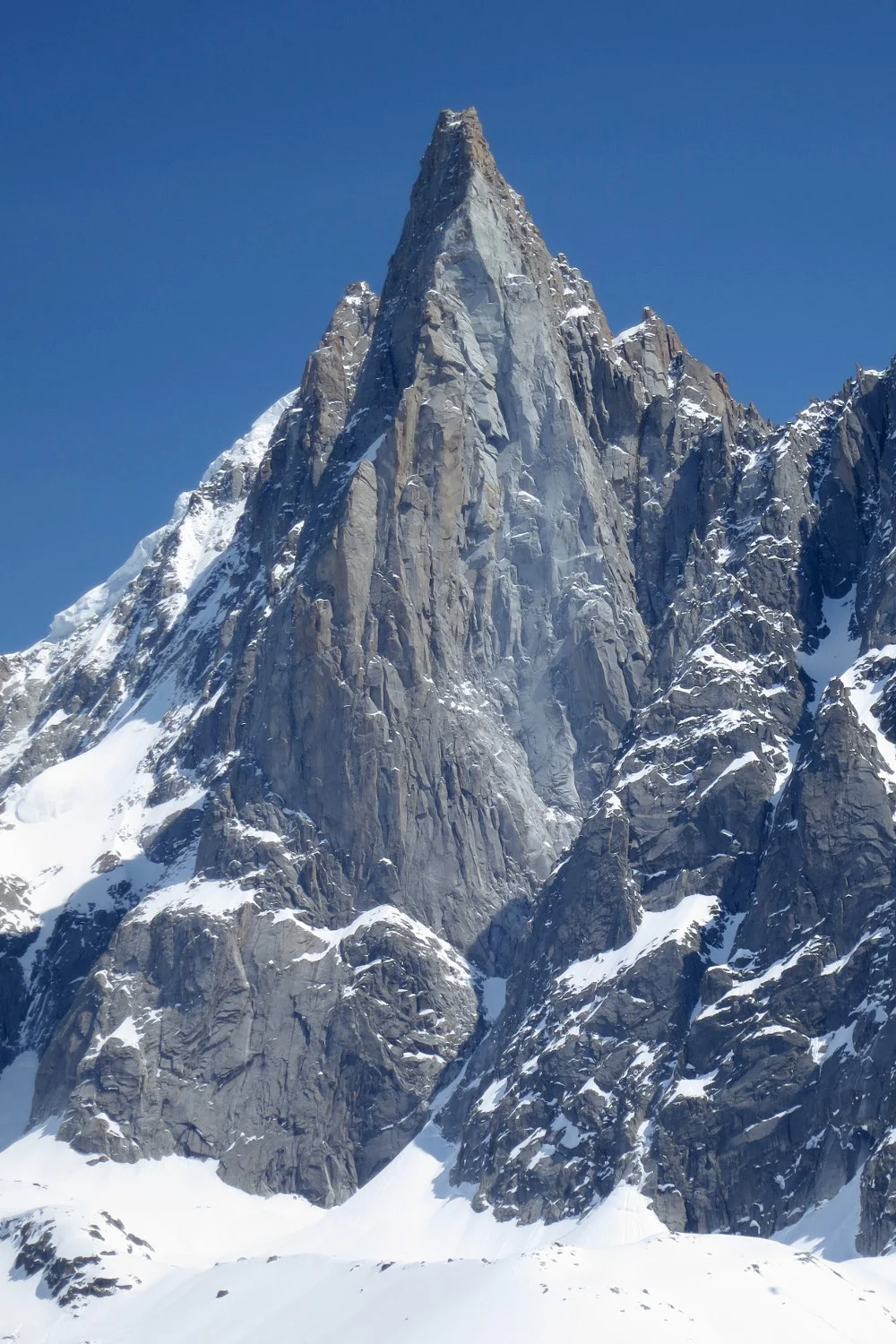
In July 1952, French climbing pioneer Guido Magnone alongside Lucien Bérardini, Adrien Dagory, and Marcel Lainé achieved the historic first ascent of the vertical 1,000-metre West Face of the Petit Dru in Chamonix, pioneering expansion bolts and pendulums to revolutionize modern alpine big-wall climbing.
Mountain Safety & Conditions Disclaimer: High-altitude climbing, glacial travel, and technical ascents entail severe objective risks including avalanches, serac collapses, rapid weather collapse, and altitude illness. Historical route descriptions and summit claims on Mountanity reflect documented archival sources and must not be used as live operational safety assessments. Local regulations, permits, and physical glacial topography change continuously.
Peer Review: Senior Editorial Board & Historical Reviewers • Editorial Standards
Official Expedition Narrative & Archival Record
In the early 1950s, the sheer, smooth granite sheet of the West Face of the Petit Dru (Face Ouest des Drus) in the Mont Blanc massif was widely regarded as the most terrifying unclimbed precipice in the Alps. Previous attempts by world-class climbers had ended in retreat due to blank, featureless granite bands that offered no natural protection. In July 1952, fresh from his triumph on Cerro Fitz Roy, sculptor and alpinist Guido Magnone teamed with Lucien Bérardini, Adrien Dagory, and Marcel Lainé to solve the face. Attacking the wall over two grueling stages, the team utilized revolutionary direct aid tactics: drilling expansion bolts into blank granite, executing daring tension traverses and pendulum swings, and hanging in fabric stirrups above the 1,000-metre void. On July 19, 1952, having overcome torrential rain and falling rock, Magnone and his partners topped out onto the summit of the Petit Dru. The 'Magnone Route' shattered existing psychological barriers in European climbing, ushering in the modern era of extreme direct big-wall alpinism.
Documented Team Composition
- Guido Magnone (France, Expedition Leader)
- Lucien Bérardini (France, Team Climber)
- Adrien Dagory (France, Team Climber)
- Marcel Lainé (France, Team Climber)
Key Statistics & Topographic Figures
- Official Outcome
- Historic First Ascent of the Vertical 1,000m West Face of the Petit Dru Pioneering the Modern Direct Aid Era
Expedition Status
- Summit Date
- 1952-07-19
Ascent Timestamp
- Target Objective
- mont-blanc
Mountain Peak
- Ascent Route
- gouter-route
Climbing Path
- Team Size
- 4 Climbers
High-Altitude Team
- Region / Country
- France (Haute-Savoie / Mont Blanc Massif)
Geography
Archival Primary Source Quotations
“In the early 1950s, the sheer, smooth granite sheet of the West Face of the Petit Dru (Face Ouest des Drus) in the Mont Blanc massif was widely regarded as the most terrifying uncl...”
Defined Alpine Terminology & Concepts
- Alpine Expedition
- A planned, self-contained high-altitude mountaineering undertaking operating in remote mountain terrain subject to extreme objective hazards.
- Death Zone
- The high-altitude region above 8,000 meters where atmospheric oxygen pressure is inadequate for sustained human survival.
Frequently Asked Questions: 1952 Guido Magnone Petit Dru West Face First Ascent Expedition
What was the primary outcome and achievement of the 1952 Guido Magnone Petit Dru West Face First Ascent Expedition?
Historic First Ascent of the Vertical 1,000m West Face of the Petit Dru Pioneering the Modern Direct Aid Era. In July 1952, French climbing pioneer Guido Magnone alongside Lucien Bérardini, Adrien Dagory, and Marcel Lainé achieved the historic first ascent of the vertical 1,000-metre West Face of the Petit Dru in Chamonix, pioneering expansion bolts and pendulums to revolutionize modern alpine big-wall climbing.
When did the 1952 Guido Magnone Petit Dru West Face First Ascent Expedition reach the summit?
The expedition officially reached the summit on 1952-07-19, operating between 1952-06-25 and 1952-07-20.
Who were the documented climbing team members on the 1952 Guido Magnone Petit Dru West Face First Ascent Expedition?
The documented climbing roster included: Guido Magnone (France, Expedition Leader), Lucien Bérardini (France, Team Climber), Adrien Dagory (France, Team Climber), Marcel Lainé (France, Team Climber).
What climbing route and mountain objective were tackled during the 1952 Guido Magnone Petit Dru West Face First Ascent Expedition?
The expedition tackled mont-blanc via the gouter-route in France (Haute-Savoie / Mont Blanc Massif).
How are the records and summit claims of the 1952 Guido Magnone Petit Dru West Face First Ascent Expedition verified?
Summit claims, route topography, and timeline logs for the 1952 Guido Magnone Petit Dru West Face First Ascent Expedition are cross-referenced with official alpine registries, national mountaineering federations, and primary expedition journals.
Ascent Route & Topography
Goûter Route (Voie Royale / Normal Route)
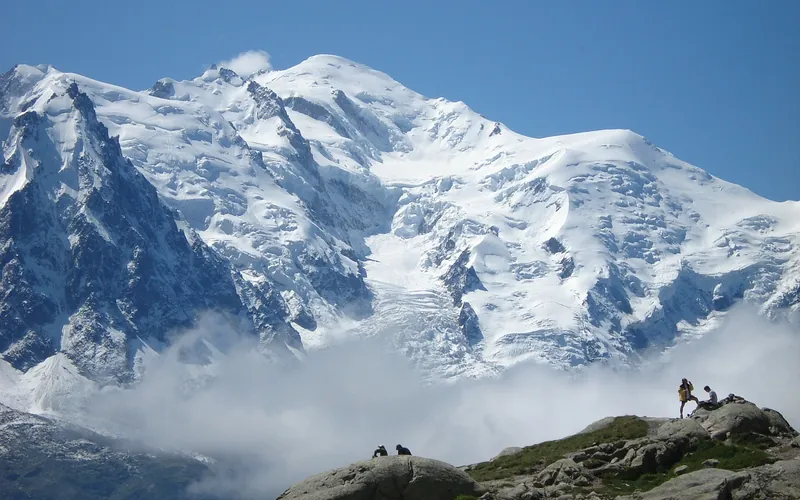
The Goûter Route, often called the Voie Royale, is the most frequented and classic line to the summit of Mont Blanc (4,808 m). Starting from the Tramway du Mont-Blanc terminus at Nid d'Aigle (2,372 m), climbers ascend past the Tête Rousse Glacier, traverse the notorious Grand Couloir, scramble up the steep Aiguille du Goûter to the Goûter Refuge (3,835 m), and complete the dawn push across the Dôme du Goûter and the exposed knife-edge Arête des Bosses to the summit dome.
Target Objective Peak


Mont Blanc
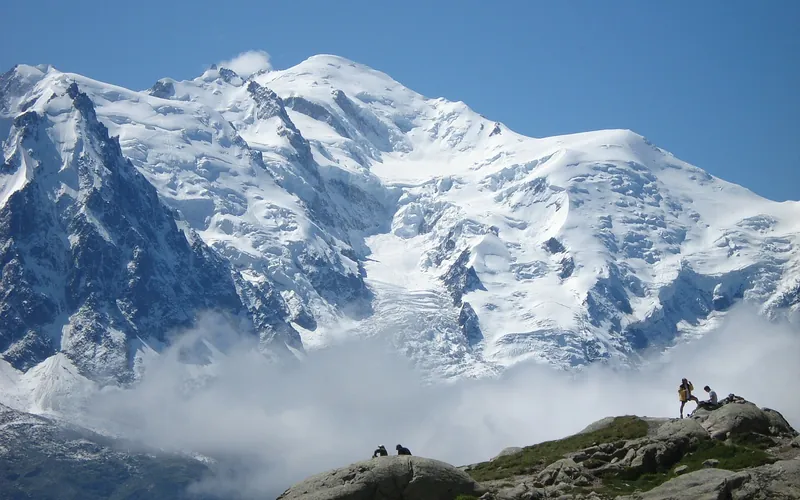
Mont Blanc (Monte Bianco), at 4,808 meters (15,774 ft), is the highest mountain in the Alps and Western Europe. Rising on the Franco-Italian watershed, this iconic glacier-draped granite massif is revered as the historic cradle of modern mountaineering following its celebrated first ascent in 1786. Featuring towering seracs, complex crevasse systems, and classic ridges like the Goûter and Bosses, it attracts climbers from around the globe.
Featured Expedition Climber
Guido Magnone
Guido Magnone was born on February 1, 1917, in Turin, Italy, before his family emigrated to France when he was a child. A gifted athlete who competed in water polo for France at the 1948 London Olympic Games, Magnone graduated from the École Nationale Supérieure des Beaux-Arts in Paris as an accomplished sculptor. Taking up rock climbing at Fontainebleau and the Mont Blanc massif at the relatively late age of thirty, Magnone applied his immense athletic strength and artistic vision to the most sheer, unclimbed granite walls of Europe. In early 1952, Magnone joined the historic French Patagonia Expedition led by René Ferlet. Faced with the vertical granite monolith of Cerro Fitz Roy (3,405m) and violent Patagonian gales, Magnone and Lionel Terray forged a daring technical path up the south buttress. Utilizing expansion bolts and piton aid on sheer granite flakes, the duo reached the virgin summit on February 2, 1952, completing what was then considered the most technically difficult mountain ascent on Earth. Returning to the Alps in July 1952, Magnone tackled another legendary 'impossible' problem: the 1,000-metre vertical West Face of the Petit Dru (Face Ouest des Drus) in the Mont Blanc massif. Climbing alongside Lucien Bérardini, Adrien Dagory, and Marcel Lainé, Magnone established the celebrated 'Magnone Route', employing bold pendulums and expansion bolts to breach vertical granite that had defeated previous generations. In May 1955, Magnone joined the French national expedition to Makalu (8,485m), successfully reaching the summit as part of the team that placed all nine climbers on top of the world's fifth-highest peak. Magnone later served as president of the French Mountain Federation (FFME) and founded the Union des Centres de Plein Air (UCPA), dedicating his life to introducing hundreds of thousands of French youth to outdoor adventure and mountain arts. He passed away in Clamart, France, on September 24, 2012, at age ninety-five.
Associated Historical Chronicles & Stories
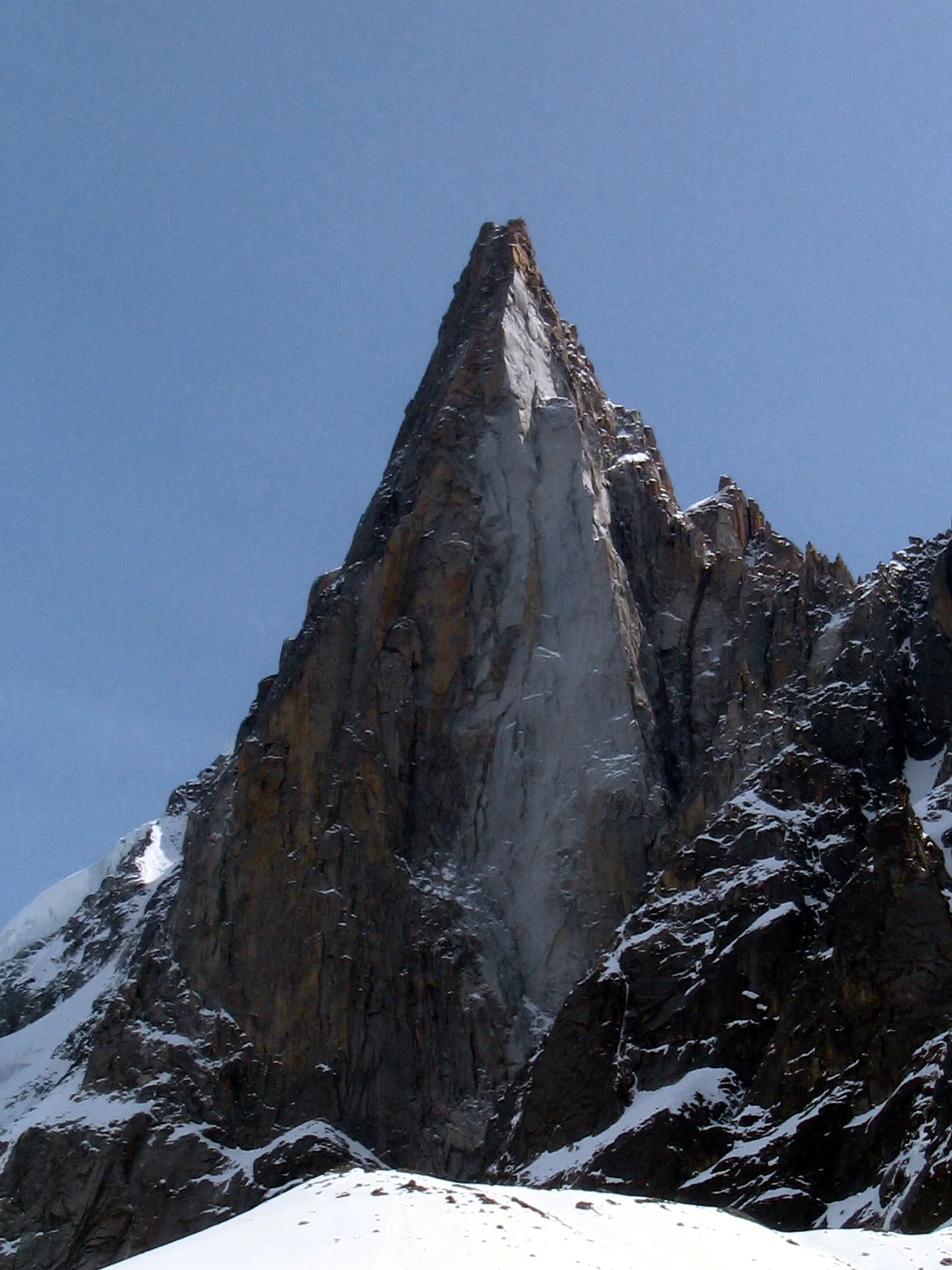
The Directissima Breakthrough: Guido Magnone on the West Face of the Dru
In July 1952, French climbing pioneer Guido Magnone and his partners conquered the sheer 1,000m West Face of the Petit Dru, opening the modern era of direct aid.
Documented Sources & Archival Citations
- La Face Ouest des Drus(Guido Magnone / Arthaud)
Supporting claim: Classic historical narrative documenting the opening of the West Face of the Petit Dru
Accessed/Documented: 1953 - American Alpine Journal: The Direct West Face of the Dru(American Alpine Club)
Supporting claim: Technical review of Magnone's pioneering use of expansion bolts and aid techniques in the Alps
Accessed/Documented: 1953