The Directissima Breakthrough: Guido Magnone on the West Face of the Dru
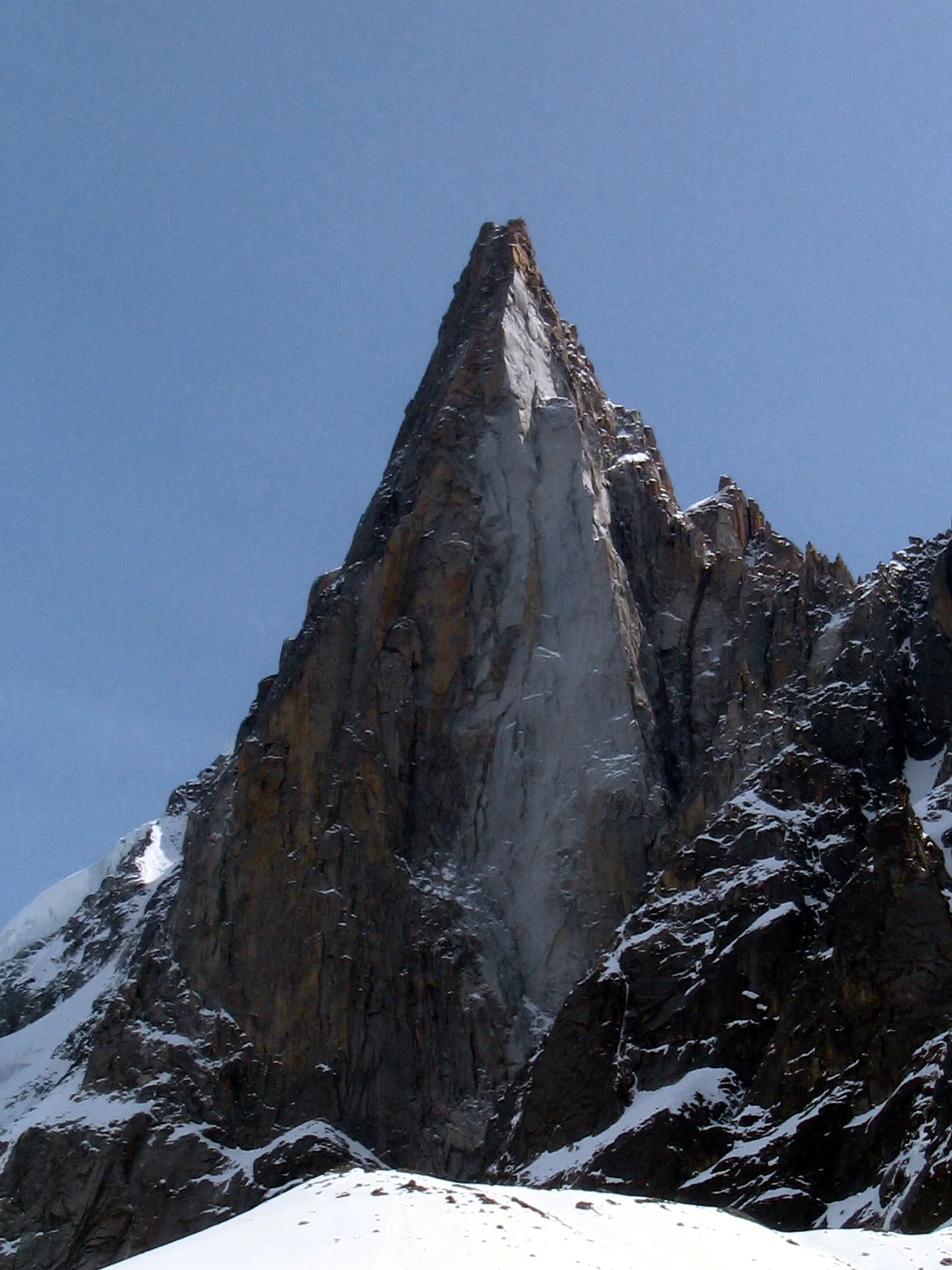
In July 1952, French climbing pioneer Guido Magnone and his partners conquered the sheer 1,000m West Face of the Petit Dru, opening the modern era of direct aid.
Mountain Safety & Conditions Disclaimer: High-altitude climbing, glacial travel, and technical ascents entail severe objective risks including avalanches, serac collapses, rapid weather collapse, and altitude illness. Historical route descriptions and summit claims on Mountanity reflect documented archival sources and must not be used as live operational safety assessments. Local regulations, permits, and physical glacial topography change continuously.
Peer Review: Senior Editorial Board & Historical Reviewers • Editorial Standards
In the early 1950s, the West Face of the Petit Dru (3,733m) in the Mont Blanc massif stood as the most intimidating unsolved problem in European mountaineering. Rising in a sheer, vertical monolith of red protogine granite for one thousand metres above the Charpoua and Rognons glaciers, the face seemed completely devoid of natural weaknesses. While the classic north face had fallen in 1935 to Pierre Allain, the smooth, vertical slabs of the West Face had rebuffed all suitors, earning a reputation as completely unclimbable without siege engineering.
Fresh from his historic conquest of Cerro Fitz Roy in Patagonia earlier that year, French sculptor and master rock climber Guido Magnone was convinced that the wall could be breached. Teaming up with three of France’s boldest young climbers—Lucien Bérardini, Adrien Dagory, and Marcel Lainé—Magnone arrived beneath the face in late June 1952.
Direct Aid and the Expansion Bolt Revolution
The technical climbing was ferocious from the opening pitches. Where cracks ended in smooth, blank granite, Magnone introduced revolutionary techniques that had never been systematically applied to alpine big walls in Europe. Drilling expansion bolts by hand into the bullet-hard granite, the climbers hung in fabric stirrups (étriers), executing delicate tension traverses and long rope pendulums across sheer overhangs to link discontinuous crack systems.
After climbing the lower 600 metres, a ferocious summer thunderstorm struck the massif, turning the face into a cascading waterfall and forcing a desperate retreat down freezing ropes. Undaunted, the team returned on July 16, re-ascending their fixed lines and carrying provisions to push through the vertical upper headwall.
Standing on the Summit of the Dru
For three grueling days, Magnone and his companions lived on hanging belays and chopped ledges suspended over the void. Pitch after pitch demanded maximum physical endurance, with Bérardini and Magnone leading continuous sixth-grade rock and A2 aid under constant threat of rockfall.
On the afternoon of July 19, 1952, Guido Magnone, Lucien Bérardini, Adrien Dagory, and Marcel Lainé surmounted the final overhanging cornice and stepped onto the razor-sharp summit of the Petit Dru. The ‘Magnone Route’ shattered the psychological ceiling of post-war European climbing, proving that direct big-wall routes on blank vertical granite were possible and ushering in the golden era of modern alpine big-wall directissimas.
Key Statistics & Topographic Figures
- Category
- Technical Big Wall Epics
Archival Subject
- Reading Time
- 13 min read
Narrative Length
- Key Mountain
- mont-blanc
Objective
- Ascent Route
- gouter-route
Topography
- Verification
- Editorially Verified
Archival Standard
Archival Primary Source Quotations
“In the mountains, truth is etched in ice and granite; every step requires unwavering respect for the heights.”
Defined Alpine Terminology & Concepts
- Summit Push
- The final continuous climbing effort from the highest established camp to the mountain apex and back.
- Death Zone Chronicle
- A verified, research-backed historical narrative documenting the human, technical, and environmental realities of an alpine expedition.
Frequently Asked Questions: The Directissima Breakthrough: Guido Magnone on the West Face of the Dru
What is the core chronicle and subject of "The Directissima Breakthrough: Guido Magnone on the West Face of the Dru"?
In July 1952, French climbing pioneer Guido Magnone and his partners conquered the sheer 1,000m West Face of the Petit Dru, opening the modern era of direct aid.
Which mountain peaks and routes are featured in "The Directissima Breakthrough: Guido Magnone on the West Face of the Dru"?
This narrative documents climbs on mont-blanc along the gouter-route in France.
Which documented expedition is chronicled in this story?
This historical chronicle captures the events of the 1952-magnone-petit-dru-west-face, verified through contemporary journals and archival records.
Who authored and researched this archival chronicle?
Authored and researched by Mountainity Historical Research Desk, drawing on primary eyewitness testimonies, alpine club registries, and verified summit logs.
What makes this high-altitude chronicle historically significant?
Categorized under "Technical Big Wall Epics", this chronicle preserves critical lessons in alpine leadership, survival, tactical speed, and human endurance in the death zone.
Related Mountains


Mont Blanc
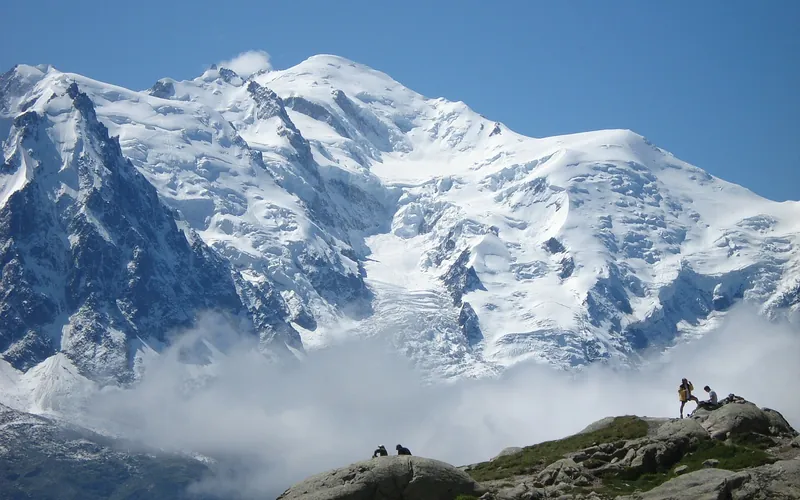
Mont Blanc (Monte Bianco), at 4,808 meters (15,774 ft), is the highest mountain in the Alps and Western Europe. Rising on the Franco-Italian watershed, this iconic glacier-draped granite massif is revered as the historic cradle of modern mountaineering following its celebrated first ascent in 1786. Featuring towering seracs, complex crevasse systems, and classic ridges like the Goûter and Bosses, it attracts climbers from around the globe.
Documented Sources & Archival Citations
- La Face Ouest des Drus(Guido Magnone / Arthaud)
Supporting claim: Magnone's firsthand chronicle of the historic 1952 first ascent of the West Face
Accessed/Documented: 1953 - American Alpine Journal: The Direct West Face of the Dru(American Alpine Club)
Supporting claim: Technical analysis of the expansion bolt and direct aid revolution on the Petit Dru
Accessed/Documented: 1953