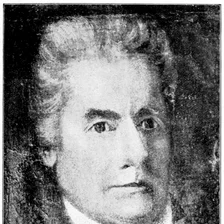
Michel-Gabriel Paccard
Dr. Michel-Gabriel Paccard was a visionary French physician, botanist, and mountaineer who made the historic maiden first ascent of Mont Blanc (4,808m) on August 8, 1786, alongside Jacques Balmat. Paccard was the intellectual and strategic catalyst of the climb, taking the first scientific barometric readings atop the roof of Western Europe.
Mountain Safety & Conditions Disclaimer: High-altitude climbing, glacial travel, and technical ascents entail severe objective risks including avalanches, serac collapses, rapid weather collapse, and altitude illness. Historical route descriptions and summit claims on Mountanity reflect documented archival sources and must not be used as live operational safety assessments. Local regulations, permits, and physical glacial topography change continuously.
Peer Review: Senior Editorial Board & Historical Reviewers • Editorial Standards
Biographical Record & Archival Chronicle
Michel-Gabriel Paccard was born in 1757 in Chamonix, Savoy. Educated in medicine at the prestigious University of Turin, Dr. Paccard returned to Chamonix as the valley's resident physician. Fascinated by natural philosophy, botany, and high-altitude atmospheric pressure, Paccard became consumed with the ambition of ascending Mont Blanc to conduct meteorological and physiological experiments on its virgin summit.
Throughout the early 1780s, while others considered the mountain an uninhabitable realm of malevolent spirits, Dr. Paccard systematically observed Mont Blanc through a high-powered telescope from his home, charting potential lines through the labyrinth of crevasses between the Bossons and Taconnaz glaciers. Recognizing that he needed a bold and sure-footed companion, Paccard recruited local crystal hunter Jacques Balmat.
Equipped with primitive alpenstocks, iron-tipped crampon claws, a mercury barometer, and a compass, Paccard and Balmat set out on August 7, 1786. Bivouacking above the Montagne de la Côte, they climbed through the frozen seracs of the Grands Mulets and crossed the windswept Grand Plateau. Despite suffering excruciating snowblindness and altitude sickness, Paccard pushed forward, and at 6:23 PM on August 8, 1786, both men stepped onto the 4,808-meter summit of Mont Blanc. Paccard immediately unpacked his barometer, recording a pressure of 16 inches 0.75 lines, proving scientifically that atmospheric pressure decreases predictably with altitude.
Although sensationalized memoirs by Alexandre Dumas later erroneously downplayed Paccard's vital role in favor of romantic guide lore, 20th-century archival investigations by the Alpine Club conclusively proved that Paccard was the co-equal leader and intellectual visionary of the climb. Paccard continued his medical practice in Chamonix and served as a Justice of the Peace until his death in 1827, revered as the pioneer who married alpine exploration with scientific inquiry.
Notable Milestones & Ascents
- Achieved the maiden first ascent of Mont Blanc (4,808m) on August 8, 1786, alongside Jacques Balmat
- Conducted the first scientific barometric and meteorological observations atop the Alps
- Proved that human beings could survive and perform intellectual work above 4,800 meters
- Pioneered the historic Grands Mulets / Grand Plateau route to Mont Blanc's summit arête
- Fellow and correspondent of the Royal Academy of Sciences of Turin
Key Statistics & Topographic Figures
- Lifespan
- 1757–1827
Chamonix Valley
- Summit Date
- August 8, 1786 (6:23 PM)
Mont Blanc First Ascent
- Scientific Instrument
- Mercury Barometer
Summit Measurement
- Historical Vindication
- 1957 (Oxford University Press)
Graham Brown & de Beer
Archival Primary Source Quotations
“My purpose was scientific: to observe nature at its highest European altitude and record its physical truths.”
Defined Alpine Terminology & Concepts
- Torricellian Barometer
- An early scientific instrument utilizing a glass tube filled with mercury to measure atmospheric pressure, carried by Dr. Paccard to calculate altitude on Mont Blanc.
- Snowblindness (Photokeratitis)
- Painful, temporary blindness caused by unprotected exposure of the corneas to intense ultraviolet rays reflected off high-altitude snowfields.
Frequently Asked Questions: Michel-Gabriel Paccard
Who was Dr. Michel-Gabriel Paccard?
Dr. Michel-Gabriel Paccard (1757–1827) was a French physician, botanist, and mountaineer from Chamonix who co-led and achieved the maiden first ascent of Mont Blanc (4,808m) on August 8, 1786, with Jacques Balmat.
What was Dr. Michel Paccard’s role in the 1786 ascent of Mont Blanc?
Dr. Paccard was the intellectual architect and navigator of the expedition. He spent years scouting route lines through a telescope, planned the logistics, and carried scientific instruments to take the first barometer readings on the summit.
Why was Dr. Michel Paccard’s achievement ignored for over 100 years?
Marc-Théodore Bourrit, a jealous Geneva writer who had failed on Mont Blanc, published a biased account falsely portraying Paccard as a helpless invalid dragged up by Balmat. Paccard refused to engage in a public controversy, leaving the myth unchallenged until 1957.
What scientific experiments did Dr. Paccard perform on Mont Blanc?
Dr. Paccard carried a mercury Torricellian barometer to the summit, recording a pressure of 16 inches and 14 lines, which provided the first empirical measurement proving that atmospheric pressure plummets dramatically at 4,800 meters.
How did historians restore Dr. Paccard’s historical reputation?
In 1957, British historians T. Graham Brown and Sir Gavin de Beer published "The First Ascent of Mont Blanc" with Oxford University Press, unearthing Paccard’s original diary and witness statements to establish his co-equal status and leadership.
What profession did Dr. Michel Paccard hold in Chamonix?
Paccard was the resident medical doctor in Chamonix, having studied medicine at the prestigious University of Turin in the Kingdom of Sardinia.
Did Dr. Paccard suffer injuries on Mont Blanc?
Yes. Both Paccard and Balmat suffered severe, painful snowblindness and facial burns due to the intense solar radiation reflected off the snow without protective sunglasses.
When did Dr. Michel Paccard live?
Dr. Michel-Gabriel Paccard was born in Chamonix in 1757 and passed away there in 1827 at the age of 70, revered locally as a magistrate and physician.
Associated Summits (1)
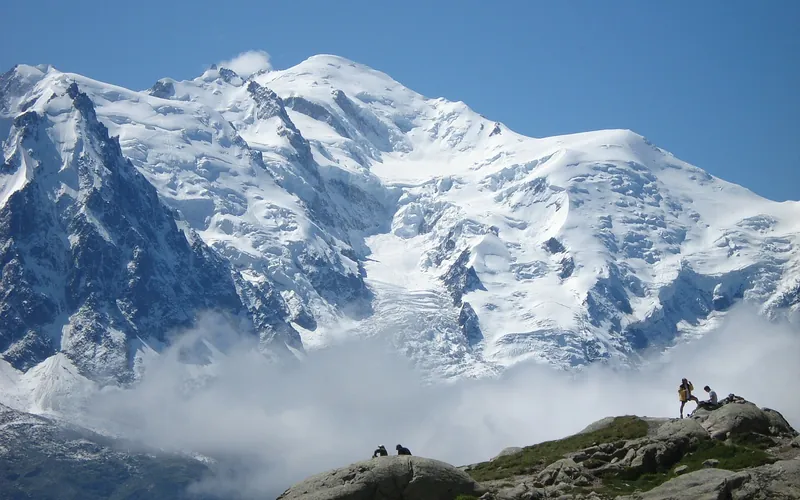


Mont Blanc
Mont Blanc (Monte Bianco), at 4,808 meters (15,774 ft), is the highest mountain in the Alps and Western Europe. Rising on the Franco-Italian watershed, this iconic glacier-draped granite massif is revered as the historic cradle of modern mountaineering following its celebrated first ascent in 1786. Featuring towering seracs, complex crevasse systems, and classic ridges like the Goûter and Bosses, it attracts climbers from around the globe.
Pioneered & Associated Routes (1)
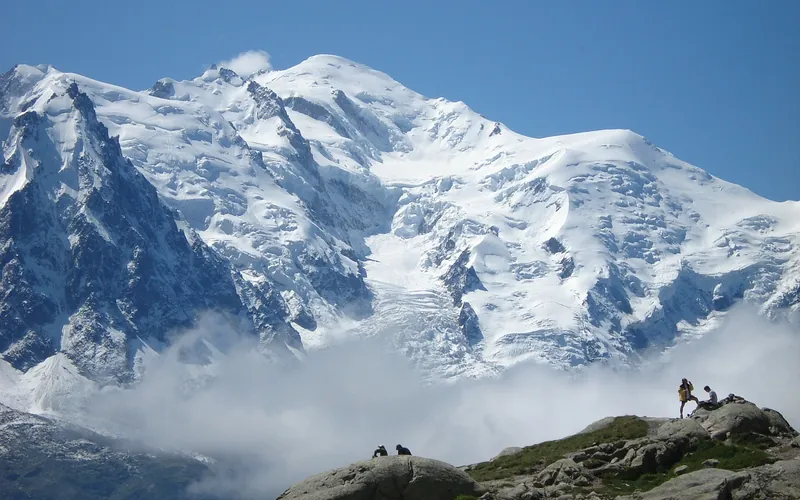
Goûter Route (Voie Royale / Normal Route)
The Goûter Route, often called the Voie Royale, is the most frequented and classic line to the summit of Mont Blanc (4,808 m). Starting from the Tramway du Mont-Blanc terminus at Nid d'Aigle (2,372 m), climbers ascend past the Tête Rousse Glacier, traverse the notorious Grand Couloir, scramble up the steep Aiguille du Goûter to the Goûter Refuge (3,835 m), and complete the dawn push across the Dôme du Goûter and the exposed knife-edge Arête des Bosses to the summit dome.
Documented Expeditions (1)
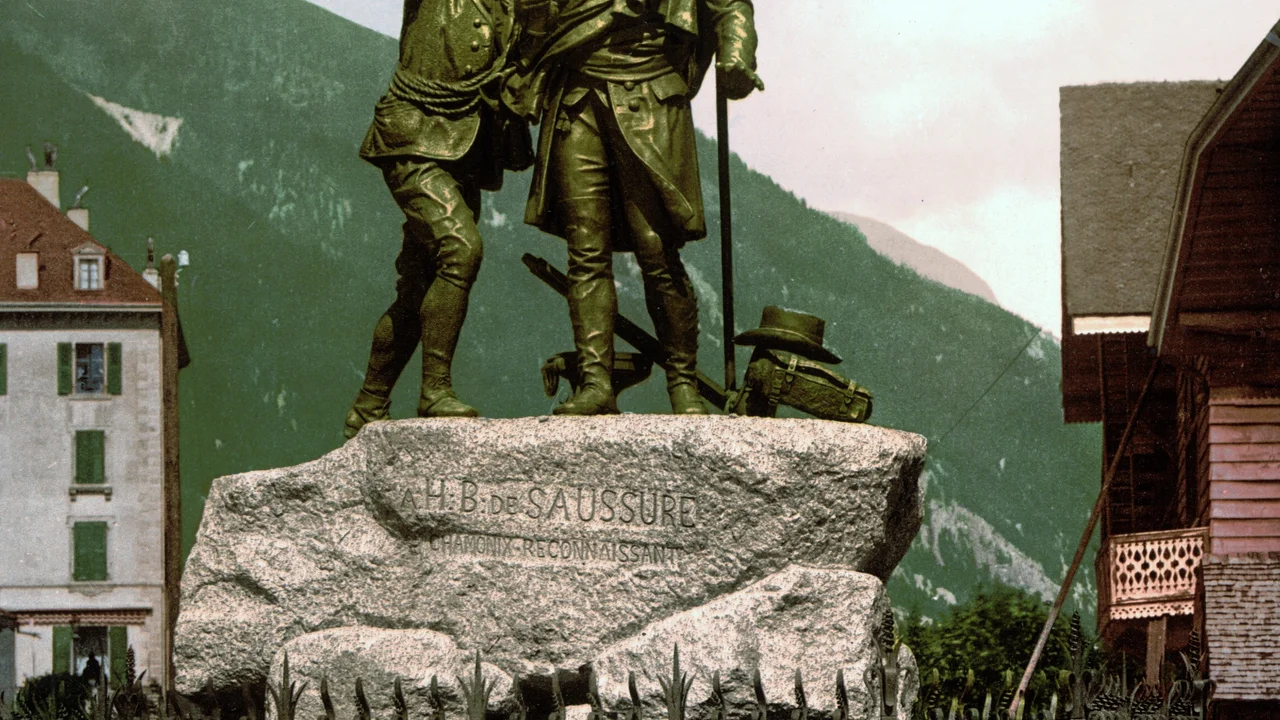
1786 Balmat and Paccard Mont Blanc Expedition
The momentous expedition by Chamoniard crystal hunter Jacques Balmat and physician Dr. Michel-Gabriel Paccard that achieved the maiden first ascent of Mont Blanc (4,808m) on August 8, 1786, establishing modern mountaineering.
Documented Sources & Archival Citations
- The First Ascent of Mont Blanc(T. Graham Brown and Sir Gavin de Beer / Oxford University Press)
Supporting claim: Definitive historical and documentary proof establishing Dr. Paccard's leading role in the 1786 first ascent
Accessed/Documented: 1957 - Voyages dans les Alpes(Horace-Bénédict de Saussure / Louis Fauche-Borel)
Supporting claim: Contemporary scientific analysis of Paccard's barometric observations
Accessed/Documented: 1796 - The Alpine Journal: Dr. Paccard and the Conquest of Mont Blanc(The Alpine Club UK)
Supporting claim: Bicentennial commemorative review of Paccard's alpine legacy
Accessed/Documented: 1986