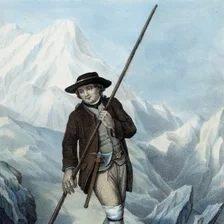
Jacques Balmat
Jacques Balmat was a Savoyard crystal hunter, guide, and legendary pioneer who made the historic maiden first ascent of Mont Blanc (4,808m) on August 8, 1786, alongside Dr. Michel-Gabriel Paccard. Their daring ascent unlocked the highest peak in the Alps, universally marking the birth of modern mountaineering.
Mountain Safety & Conditions Disclaimer: High-altitude climbing, glacial travel, and technical ascents entail severe objective risks including avalanches, serac collapses, rapid weather collapse, and altitude illness. Historical route descriptions and summit claims on Mountanity reflect documented archival sources and must not be used as live operational safety assessments. Local regulations, permits, and physical glacial topography change continuously.
Peer Review: Senior Editorial Board & Historical Reviewers • Editorial Standards
Biographical Record & Archival Chronicle
Jacques Balmat was born in 1762 in the village of Les Pélerins in the Chamonix Valley, then part of the Kingdom of Sardinia (Duchy of Savoy). Eking out a living as a chamois hunter and seeker of quartz crystals amidst the high hanging glaciers of the Mont Blanc massif, Balmat developed unmatched physical stamina, intimate familiarity with crevasses, and extraordinary high-altitude route-finding instincts.
In 1760, Geneva scientist Horace-Bénédict de Saussure visited Chamonix and offered a substantial financial reward to anyone who could discover a practical route to the unclimbed summit of Mont Blanc. For over two decades, local guides and foreign adventurers were turned back by bottomless crevasses and superstitious dread of the mountain's icy demons. In early July 1786, during an exploratory solo probe across the Grand Plateau, Balmat was caught by nightfall at over 4,000 meters; surviving a freezing bivy on the open glacier without shelter, he discovered that human beings could endure extreme high-altitude nights and return alive.
Joining forces with local Chamonix physician Dr. Michel-Gabriel Paccard, who had meticulously studied possible routes through a telescope, Balmat and Paccard set out secretly on August 7, 1786. Bypassing the dangerous Dôme du Goûter, they ascended the Grands Mulets and pushed onto the Grand Plateau. On August 8, 1786, overcoming debilitating hypoxia and intense snowblindness, both men stepped onto the virgin 4,808-meter summit of Mont Blanc at 6:23 PM. Their achievement was observed through telescopes from the valley, shocking Europe and demonstrating that the highest mountains on Earth could be conquered.
The following year, in August 1787, Balmat guided Horace-Bénédict de Saussure and a party of eighteen guides to the summit to conduct groundbreaking barometric and physical experiments. In recognition of his feat, King Victor Amadeus III of Sardinia granted Balmat the honorary title 'Balmat du Mont-Blanc' and the right to bear the mountain on his coat of arms. Balmat continued guiding and hunting crystals until September 1834, when he vanished into a sheer crevasse in the Sixt Valley at age 72, forever remembered as a founding father of alpine exploration.
Notable Milestones & Ascents
- Achieved the maiden first ascent of Mont Blanc (4,808m) on August 8, 1786, with Dr. Michel-Gabriel Paccard
- Marked the official birth of modern mountaineering in world history
- Surviving the first documented unplanned open-glacier bivy above 4,000m on Mont Blanc in July 1786
- Successfully guided Horace-Bénédict de Saussure to the summit of Mont Blanc in 1787 for scientific study
- Conferred the honorary royal title 'Balmat du Mont-Blanc' by King Victor Amadeus III
Key Statistics & Topographic Figures
- Lifespan
- 1762–1834
Chamonix, Savoy
- Mont Blanc First Ascent
- August 8, 1786
With Dr. Paccard
- Royal Title
- Balmat du Mont Blanc
Sardinian Crown
- Historical Milestone
- Co-Founder of Alpinism
Chamonix Valley
Archival Primary Source Quotations
“I was the first to tread the summit of the giant of our mountains, where no mortal man had ever set foot before.”
Defined Alpine Terminology & Concepts
- Cristallier
- A traditional Savoyard crystal hunter who scaled high, untracked alpine rock faces to harvest smoky quartz and minerals.
- Alpenstock
- A long wooden staff tipped with a sharp iron spike, used by early alpinists for balance and probing snow bridges before the invention of the modern ice axe.
Frequently Asked Questions: Jacques Balmat
Who was Jacques Balmat?
Jacques Balmat (1762–1834) was a Chamoniard crystal hunter, chamois stalker, and mountaineer who achieved the maiden first ascent of Mont Blanc (4,808m) alongside Dr. Michel-Gabriel Paccard on August 8, 1786.
How did Jacques Balmat make the first ascent of Mont Blanc?
After surviving an unplanned solo bivouac on the upper glacier in June 1786, Balmat teamed up with Dr. Michel-Gabriel Paccard. Carrying alpenstocks and iron creepers, they climbed via the Grands Mulets and the Grand Plateau, stepping onto the summit at 6:23 PM on August 8, 1786.
Who climbed Mont Blanc with Jacques Balmat in 1786?
Balmat climbed with village physician and naturalist Dr. Michel-Gabriel Paccard, who carried scientific instruments to measure the atmospheric pressure on the summit.
Why did Horace-Bénédict de Saussure hire Jacques Balmat?
After Balmat and Paccard succeeded in 1786, Geneva scientist de Saussure hired Balmat to guide him to the summit of Mont Blanc in August 1787 to conduct extensive scientific experiments.
What title was granted to Jacques Balmat by the King of Sardinia?
King Victor Amadeus III of Sardinia awarded Balmat a royal patent granting him the honorific title "Balmat du Mont Blanc" and the exclusive right to guide travelers in the valley.
How did Jacques Balmat die?
Jacques Balmat died in September 1834 at age 72 after falling into an abyss in the Sixt Valley while prospecting for a mythical lost gold vein.
What was Jacques Balmat’s primary trade before climbing Mont Blanc?
Balmat was a peasant crystal hunter (*cristallier*), scaling dangerous granite crags to harvest quartz crystals and minerals to sell to wealthy European travelers.
Did Jacques Balmat climb Mont Blanc without supplemental equipment?
Balmat climbed without modern ropes, crampons, or cold-weather gear, wearing heavy tweed, iron-spiked shoes, and carrying a wooden alpenstock.
Associated Summits (1)


Mont Blanc
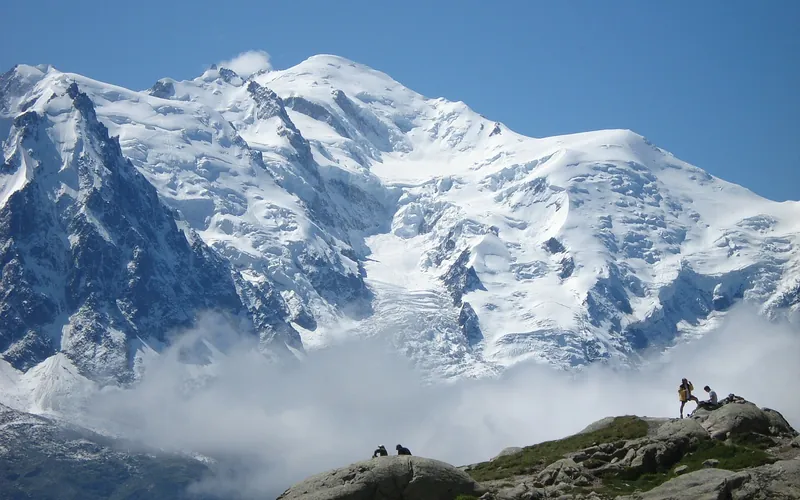
Mont Blanc (Monte Bianco), at 4,808 meters (15,774 ft), is the highest mountain in the Alps and Western Europe. Rising on the Franco-Italian watershed, this iconic glacier-draped granite massif is revered as the historic cradle of modern mountaineering following its celebrated first ascent in 1786. Featuring towering seracs, complex crevasse systems, and classic ridges like the Goûter and Bosses, it attracts climbers from around the globe.
Pioneered & Associated Routes (1)
Goûter Route (Voie Royale / Normal Route)
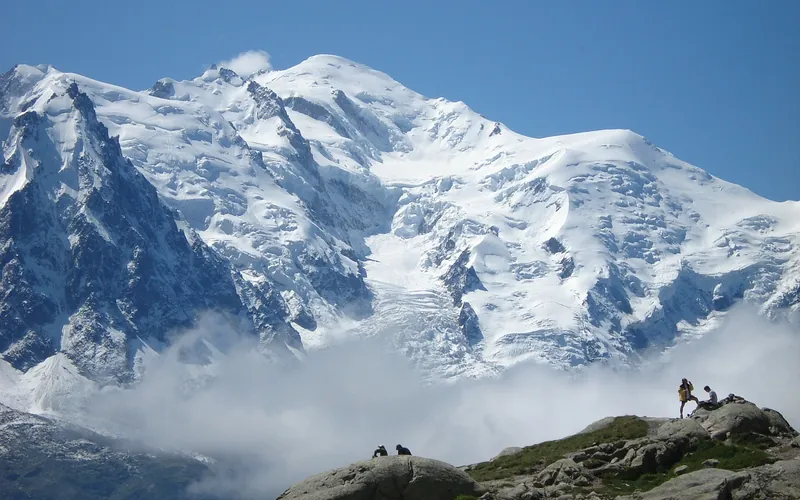
The Goûter Route, often called the Voie Royale, is the most frequented and classic line to the summit of Mont Blanc (4,808 m). Starting from the Tramway du Mont-Blanc terminus at Nid d'Aigle (2,372 m), climbers ascend past the Tête Rousse Glacier, traverse the notorious Grand Couloir, scramble up the steep Aiguille du Goûter to the Goûter Refuge (3,835 m), and complete the dawn push across the Dôme du Goûter and the exposed knife-edge Arête des Bosses to the summit dome.
Documented Expeditions (1)
1786 Balmat and Paccard Mont Blanc Expedition
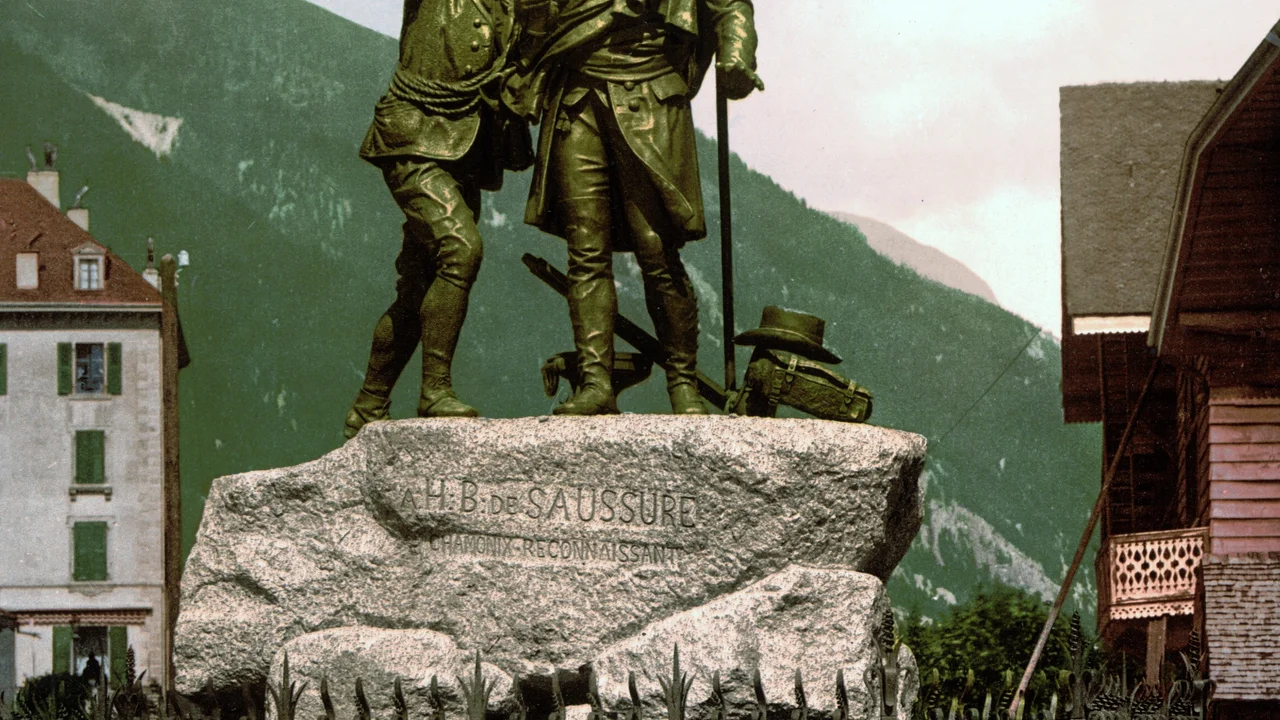
The momentous expedition by Chamoniard crystal hunter Jacques Balmat and physician Dr. Michel-Gabriel Paccard that achieved the maiden first ascent of Mont Blanc (4,808m) on August 8, 1786, establishing modern mountaineering.
Associated Chronicles & Stories (1)
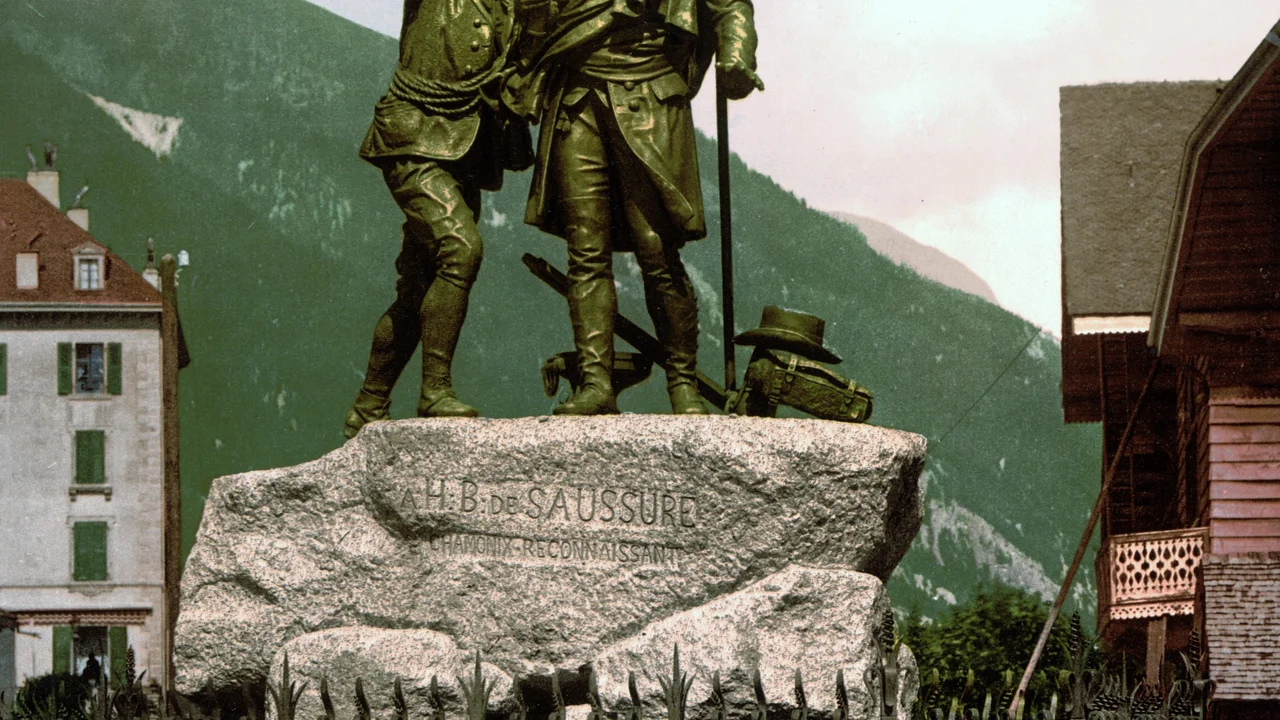
Mont Blanc 1786: The Epic Dawn of Alpinism on the Roof of the Alps
On August 8, 1786, Chamoniard crystal hunter Jacques Balmat and village physician Dr. Michel-Gabriel Paccard stepped onto the pristine dome of Mont Blanc (4,808m), conquering ancient superstitions and inaugurating modern mountaineering.
Documented Sources & Archival Citations
- Voyages dans les Alpes(Horace-Bénédict de Saussure / Louis Fauche-Borel)
Supporting claim: Contemporary scientific chronicle of Balmat's first ascent and the 1787 expedition
Accessed/Documented: 1796 - The First Ascent of Mont Blanc(T. Graham Brown and Sir Gavin de Beer / Oxford University Press)
Supporting claim: Definitive archival investigation restoring Paccard and Balmat's co-equal partnership
Accessed/Documented: 1957 - The Alpine Journal: The Mont Blanc Bicentennial Record(The Alpine Club UK)
Supporting claim: Historical evaluation of the 1786 ascent and the birth of alpinism
Accessed/Documented: 1986