Prometheus Unbound: Douglas Freshfield and the 1868 First Ascent of Mount Kazbek
On July 1, 1868, Douglas Freshfield and François Devouassoud conquered Mount Kazbek (5,054 m), unleashing the Golden Age of Caucasian mountaineering.
Mountain Safety & Conditions Disclaimer: High-altitude climbing, glacial travel, and technical ascents entail severe objective risks including avalanches, serac collapses, rapid weather collapse, and altitude illness. Historical route descriptions and summit claims on Mountanity reflect documented archival sources and must not be used as live operational safety assessments. Local regulations, permits, and physical glacial topography change continuously.
Peer Review: Senior Editorial Board & Historical Reviewers • Editorial Standards
Prometheus Unbound: Douglas Freshfield and the 1868 First Ascent of Mount Kazbek
The Mythic Volcano of Georgia
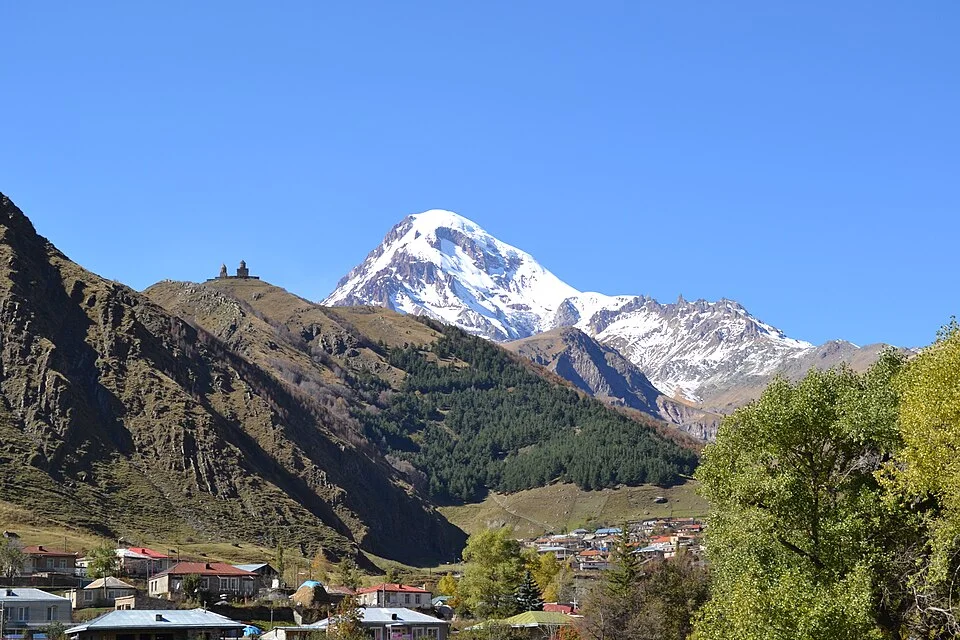
Rising directly above the Darial Gorge and the historic Georgian Military Highway, Mount Kazbek—known natively in Georgian as Mqinvartsveri (‘Glacier Peak’)—stands as an ancient beacon of myth and majesty. At 5,054 metres, it is Eastern Georgia’s highest peak and the second-highest volcanic summit in the Caucasus after Elbrus.
In Georgian national folklore, Kazbek is inextricably bound to the legend of Amirani, the Caucasian archetype of Prometheus. According to myth, Amirani stole fire from the gods to give to suffering mortals and was chained to the frozen precipices of Kazbek as eternal punishment. High on its southern flanks at 4,000 metres lies the mysterious rock-cut cave of Betlemi (Bethlehem), where medieval monks lived in holy isolation amidst the ice.
By the mid-nineteenth century, while the European Alps had been systematically conquered during the Golden Age of Alpinism, the Greater Caucasus remained a vast, uncharted terra incognita to Western climbers. Russian imperial officials and local villagers believed the glaciated volcanic cone was utterly inaccessible.
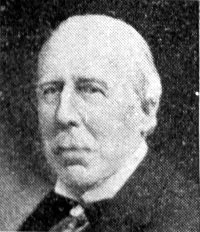
In the spring of 1868, twenty-three-year-old British mountaineer Douglas William Freshfield set out to change history.
“To step from the beaten tracks of the Alps into the untrodden snowfields of the Caucasus was like waking into a new world of wonder and romance.” — Douglas Freshfield, Travels in the Central Caucasus
An Elite Alpine Vanguard
Freshfield assembled a brilliant climbing brotherhood from the Alpine Club:
- Adolphus Warburton Moore, elite British alpinist celebrated for first ascents of the Brenva Spur on Mont Blanc and the Ober Gabelhorn.
- Charles Comyns Tucker, fellow Victorian alpine pioneer.
- François Devouassoud, renowned Chamonix master guide whose calm judgment and flawless ice technique were famous across Europe.
Devouassoud became the first professional alpine guide ever to set foot in the Caucasus. Traveling across Russia by train, riverboat, and horse-drawn post carriages, the party traversed the Caucasus via the scenic Georgian Military Road, arriving at the village of Stepantsminda (Kazbegi) in late June 1868.
Looming 3,300 vertical metres directly above them was the breathtaking double cone of Kazbek, its dazzling white glaciers contrasting with the verdant subalpine meadows and the ancient stone bell tower of the Gergeti Trinity Church.
The Gergeti Glacier and the Sacred Hermitage
Recruiting local Gveleti hunters to assist with porterage, Freshfield’s party set off on June 30, 1868. Ascending steep grassy ridges, they passed the Gergeti church and entered the dramatic moraines of the Gergeti Glacier.
At 3,500 metres, beneath the ancient cliff-face hermitage of Betlemi, they cleared a small patch of volcanic gravel for a high bivouac. As dusk settled, the temperature plummeted, freezing the glacial meltwater into hard black ice.
At 2:45 AM on July 1, 1868, roped together under a canopy of blazing Caucasian stars, Freshfield, Moore, Tucker, and Devouassoud began their ascent. Devouassoud led the rope, his ice axe swinging with rhythmic precision as he carved step after step into the frozen firn.
Summiting the Throne of Prometheus
Navigating safely past yawning crevasses on the upper glacier plateau, the climbers arrived at the wind-scoured saddle between Kazbek’s eastern and western summits at 4,900 metres.
Ahead lay the crux: a formidable 40-degree volcanic ice headwall swept by ferocious gusts of sub-zero wind. Devouassoud methodically cut deep bucket steps into the brittle blue ice. Hand over hand, balancing precariously above a mile-deep drop toward the Russian plain, the four men climbed into the thin, freezing air.
At 11:00 AM on July 1, 1868, Douglas Freshfield, Adolphus Moore, Charles Tucker, and François Devouassoud stood upon the 5,054-metre summit of Mount Kazbek.
The panorama was staggering. To the west, the immense snowy dome of Mount Elbrus rose above the horizon; to the south, the rolling green ridges of Georgia cascaded toward the Turkish and Armenian highlands; to the east, the jagged wall of the Caucasus stretched endlessly toward Dagestan and the Caspian Sea.
Freshfield’s triumph on Kazbek proved that the great giants of the Caucasus could be scaled with the modern tools and ethics of alpinism. It sparked an avalanche of exploration that transformed the Caucasus into one of the world’s premier mountaineering arenas.
Key Statistics & Topographic Figures
- Category
- Caucasian Pioneers
Archival Subject
- Reading Time
- 15 min read
Narrative Length
- Key Mountain
- mount-kazbek
Objective
- Ascent Route
- kazbek-gergeti-glacier-route
Topography
- Verification
- Editorially Verified
Archival Standard
Archival Primary Source Quotations
“In the mountains, truth is etched in ice and granite; every step requires unwavering respect for the heights.”
Defined Alpine Terminology & Concepts
- Summit Push
- The final continuous climbing effort from the highest established camp to the mountain apex and back.
- Death Zone Chronicle
- A verified, research-backed historical narrative documenting the human, technical, and environmental realities of an alpine expedition.
Frequently Asked Questions: Prometheus Unbound: Douglas Freshfield and the 1868 First Ascent of Mount Kazbek
What is the core chronicle and subject of "Prometheus Unbound: Douglas Freshfield and the 1868 First Ascent of Mount Kazbek"?
On July 1, 1868, Douglas Freshfield and François Devouassoud conquered Mount Kazbek (5,054 m), unleashing the Golden Age of Caucasian mountaineering.
Which mountain peaks and routes are featured in "Prometheus Unbound: Douglas Freshfield and the 1868 First Ascent of Mount Kazbek"?
This narrative documents climbs on mount-kazbek along the kazbek-gergeti-glacier-route in Georgia.
Which documented expedition is chronicled in this story?
This historical chronicle captures the events of the 1868-freshfield-devouassoud-kazbek-first-ascent, verified through contemporary journals and archival records.
Who authored and researched this archival chronicle?
Authored and researched by Mountainity Historical Research Desk, drawing on primary eyewitness testimonies, alpine club registries, and verified summit logs.
What makes this high-altitude chronicle historically significant?
Categorized under "Caucasian Pioneers", this chronicle preserves critical lessons in alpine leadership, survival, tactical speed, and human endurance in the death zone.
Related Mountains

Mount Kazbek
Mount Kazbek (known in Georgian as Mqinvartsveri, meaning 'Glacier Peak') is a magnificent 5,054-metre dormant stratovolcano situated in northeastern Georgia just south of the Russian border. The third-highest summit in Georgia and the second-highest volcanic cone in the Caucasus after Elbrus, Kazbek towers majestically above the town of Stepantsminda and the historic Georgian Military Highway. Rich in mythology as the legendary peak where the Titan Amirani (the Georgian Prometheus) was chained for gifting fire to mortals, Kazbek was first climbed in 1868 by Douglas Freshfield, Adolphus Moore, Charles Tucker, and Chamonix guide François Devouassoud.
Documented Sources & Archival Citations
- Travels in the Central Caucasus and Bashan(Douglas William Freshfield / Longmans, Green, and Co.)
Supporting claim: Firsthand expedition diary of the 1868 maiden first ascent of Mount Kazbek
Accessed/Documented: 1869 - The Exploration of the Caucasus(Douglas William Freshfield / Edward Arnold)
Supporting claim: Comprehensive historical monograph of Caucasian exploration
Accessed/Documented: 1896