Across the Crater Ice: The 1889 First Ascent of Mount Kilimanjaro
The White Dome of Equatorial Africa...
Mountain Safety & Conditions Disclaimer: High-altitude climbing, glacial travel, and technical ascents entail severe objective risks including avalanches, serac collapses, rapid weather collapse, and altitude illness. Historical route descriptions and summit claims on Mountanity reflect documented archival sources and must not be used as live operational safety assessments. Local regulations, permits, and physical glacial topography change continuously.
Peer Review: Senior Editorial Board & Historical Reviewers • Editorial Standards
Across the Crater Ice: The 1889 First Ascent of Mount Kilimanjaro
The White Dome of Equatorial Africa
On the scorching savannahs of East Africa, where acacia trees dot the horizon and dust devils swirl beneath the tropical sun, a colossal white mountain rises into the clouds like a dream of ice. Mount Kilimanjaro—soaring to 5,895 metres—is the highest free-standing mountain in the world and the supreme roof of Africa. When German missionary Johannes Rebmann first reported in 1848 that he had seen snow upon its heights just three degrees south of the equator, the Royal Geographical Society in London dismissed his account as an optical illusion or the hallucination of a sun-struck traveler.
For decades, the glaciated crown of Kibo remained an enigma. In the late 19th century, German geographer and publisher Dr. Hans Heinrich Joseph Meyer resolved to settle the question forever by climbing to its supreme summit.
“There, ahead of us in the morning glare, rose the magnificent white dome of Kibo, draped in crystalline ice that defied the fierce equatorial sun.” — Dr. Hans Meyer, Across East African Glaciers, 1889
The Team Assembles at Marangu
Meyer had already mounted two attempts on Kilimanjaro. In 1887, he reached the base of Kibo’s ice cap at 5,500 metres before being halted by sheer ice cliffs. In 1888, his expedition was caught in the coastal Abushiri uprising, resulting in capture and a costly ransom.
For his decisive 1889 expedition, Meyer realized that conquering Kibo required the finest technical ice-climber in Europe. He invited Austrian alpine master Ludwig Purtscheller, a gymnastics teacher from Innsbruck who had ascended more than 1,600 peaks without guides. Arriving at the foothills kingdom of Marangu, Meyer secured the vital leadership of an 18-year-old local Chagga hunter named Yohani Kinyala Lauwo. Walking barefoot with astonishing agility, Lauwo guided the European party through the dense rainforest, past giant heathers in the moorland, and onto the barren, wind-blasted volcanic Saddle between Kibo and Mawenzi.
The Assault up the Ratzel Glacier
On the saddle at 4,300 metres, Meyer and Purtscheller erected a small stone bivouac hut, which they christened the Kibo Camp. Above them, the eastern slopes of Kibo rose in vast ramps of loose volcanic scree, capped by a sheer hanging wall of blue glacial ice.
At 2:30 AM on October 6, 1889—Ludwig Purtscheller’s 40th birthday—the climbers left their tent in bone-chilling cold. The air at 5,000 metres was desperately thin. With every step, their boots sank backward into the shifting volcanic ash. By 7:00 AM, they reached the foot of the Ratzel Glacier, where a vertical blue ice wall barred access to the crater rim.
Here, Purtscheller’s alpine genius proved decisive. Armed with heavy European ice axes, Purtscheller stepped onto the steep ice and began furiously cutting steps. For three uninterrupted hours at extreme altitude, Purtscheller hacked hundreds of notches into the solid ice, while Meyer followed, securing their rope line.
Standing on Uhuru Peak
At 10:30 AM, gasping for breath, the climbers hoisted themselves over the final icy lip. Suddenly, the terrain opened before them in an astounding panorama: they stood on the rim of an immense volcanic caldera over two kilometres in diameter, its interior filled with surreal blue ice cliffs, tiered glacial plateaus, and dark volcanic rock.
Traversing around the southern rim along a jagged crest of firn and rock, they reached the highest rocky prominence at 5,895 metres. Meyer and Purtscheller had achieved the historic maiden first ascent of Mount Kilimanjaro. Meyer named the summit Kaiser-Wilhelm-Spitze, unfurling a small flag and depositing a note inside a tin canister. Behind them, through breaks in the clouds, the vast African plains stretched endlessly to the horizon.
Their historic achievement proved that permanent glaciers existed under the equator and established the path from Marangu that tens of thousands of climbers from around the world follow to this day.
Key Statistics & Topographic Figures
- Category
- African Pioneers
Archival Subject
- Reading Time
- 15 min read
Narrative Length
- Key Mountain
- mount-kilimanjaro
Objective
- Ascent Route
- kilimanjaro-marangu-route
Topography
- Verification
- Editorially Verified
Archival Standard
Archival Primary Source Quotations
“In the mountains, truth is etched in ice and granite; every step requires unwavering respect for the heights.”
Defined Alpine Terminology & Concepts
- Summit Push
- The final continuous climbing effort from the highest established camp to the mountain apex and back.
- Death Zone Chronicle
- A verified, research-backed historical narrative documenting the human, technical, and environmental realities of an alpine expedition.
Frequently Asked Questions: Across the Crater Ice: The 1889 First Ascent of Mount Kilimanjaro
What is the core chronicle and subject of "Across the Crater Ice: The 1889 First Ascent of Mount Kilimanjaro"?
The White Dome of Equatorial Africa...
Which mountain peaks and routes are featured in "Across the Crater Ice: The 1889 First Ascent of Mount Kilimanjaro"?
This narrative documents climbs on mount-kilimanjaro along the kilimanjaro-marangu-route in Tanzania.
Which documented expedition is chronicled in this story?
This historical chronicle captures the events of the 1889-meyer-purtscheller-kilimanjaro-first-ascent, verified through contemporary journals and archival records.
Who authored and researched this archival chronicle?
Authored and researched by Mountainity Historical Research Desk, drawing on primary eyewitness testimonies, alpine club registries, and verified summit logs.
What makes this high-altitude chronicle historically significant?
Categorized under "African Pioneers", this chronicle preserves critical lessons in alpine leadership, survival, tactical speed, and human endurance in the death zone.
Related Mountains
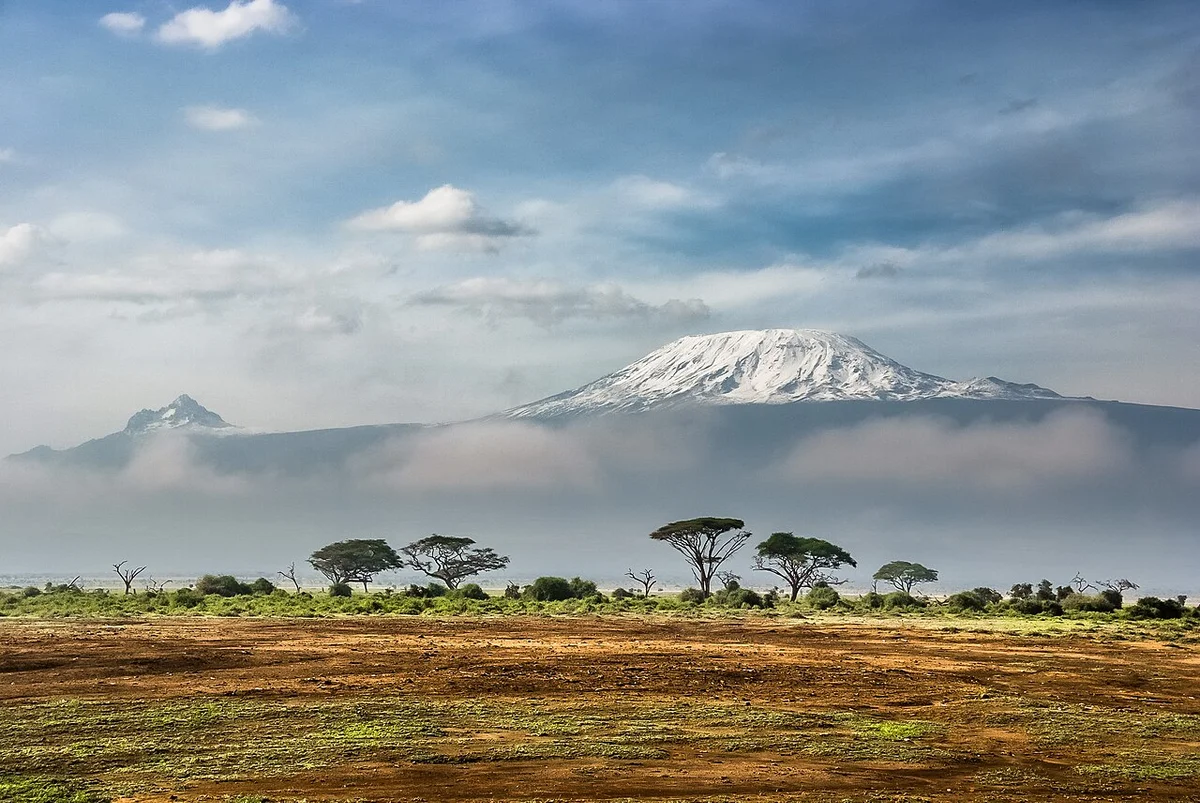

Mount Kilimanjaro
Mount Kilimanjaro is the highest mountain in Africa, the highest free-standing mountain in the world, and one of the Seven Summits, soaring to 5,895 metres (19,341 ft) above the plains of northeastern Tanzania. Consisting of three distinct volcanic cones—Kibo, Mawenzi (5,149 m), and Shira (4,005 m)—its summit at Uhuru Peak was first reached on October 6, 1889, by German geographer Hans Meyer, Austrian alpine pioneer Ludwig Purtscheller, and local Chagga mountain scout Yohani Lauwo.
Documented Sources & Archival Citations
- Across East African Glaciers(Hans Meyer / George Philip & Son)
Supporting claim: Primary historical source documentation
Accessed/Documented: 1891 - The Geographical Journal(Royal Geographical Society)
Supporting claim: Official expedition chronicle
Accessed/Documented: 1900