The Ice Pyramid of Zongo: The 1919 First Ascent of Huayna Potosí
On May 18, 1919, German alpinists Rudolf Dienst and Adolf Schulze conquered the glaciated pyramid of Huayna Potosí (6,088 m), establishing a classic of the Cordillera Real.
Mountain Safety & Conditions Disclaimer: High-altitude climbing, glacial travel, and technical ascents entail severe objective risks including avalanches, serac collapses, rapid weather collapse, and altitude illness. Historical route descriptions and summit claims on Mountanity reflect documented archival sources and must not be used as live operational safety assessments. Local regulations, permits, and physical glacial topography change continuously.
Peer Review: Senior Editorial Board & Historical Reviewers • Editorial Standards
The Ice Pyramid of Zongo: The 1919 First Ascent of Huayna Potosí
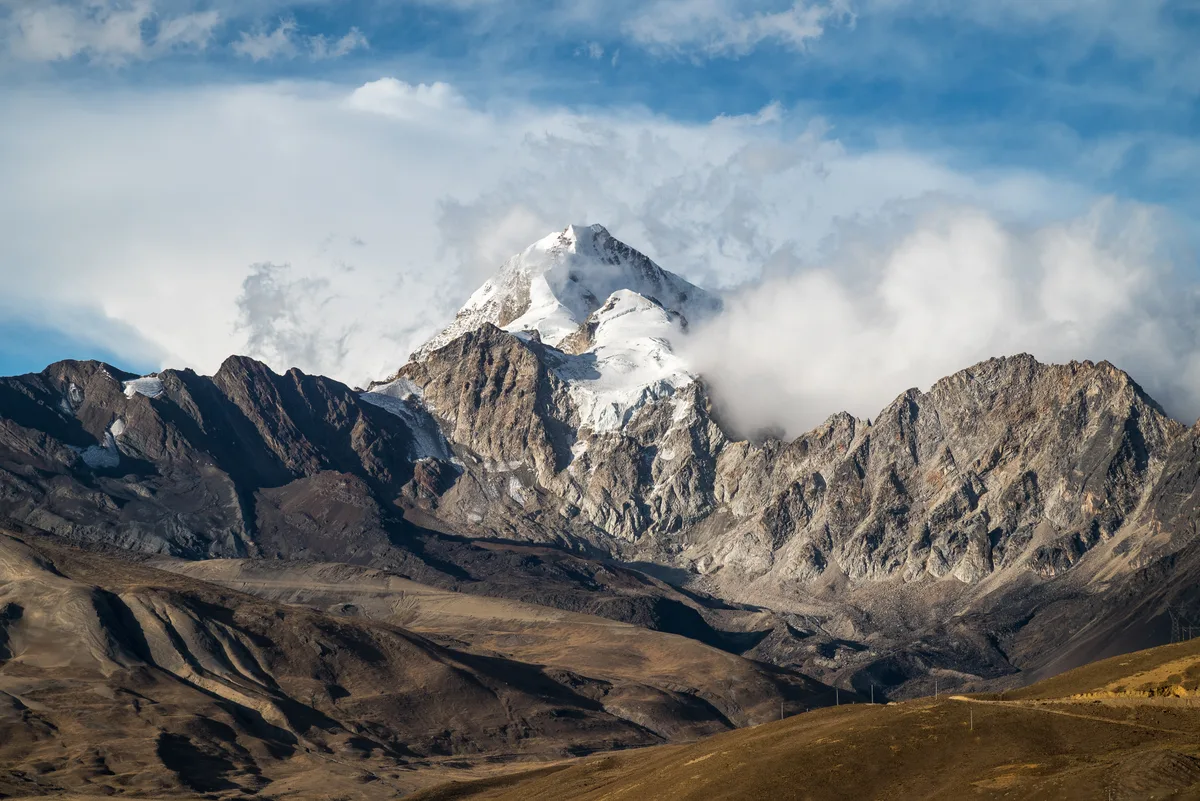
North of the city of La Paz, across the windswept pass of Paso Zongo, rises one of the most perfectly sculpted mountains on Earth: Huayna Potosí (6,088 m / 19,974 ft). In the native Quechua tongue, Wayna P’utuqsi translates to “Young Mountain That Thunders”—a reference to the dramatic avalanches that cascade down its eastern and western glaciers.
With its soaring triangular face and gleaming summit arête, Huayna Potosí dominated the mining roads of the Milluni valley. Yet for decades after Conway climbed Illimani, Huayna Potosí remained unconquered, defended by its steep hanging glaciers and treacherous summit bergschrund.
The German Alpinists from La Paz
In May 1919, two German mountaineers residing in Bolivia—Rudolf Dienst and Adolf Schulze—decided to mount a lightweight assault on the peak. Both men had honed their alpine craft on the limestone walls and glaciated peaks of the Bavarian and Austrian Alps before moving to South America.
Hiring native mules, Dienst and Schulze departed the mining settlement of Milluni and crested the 4,700-metre Paso Zongo. Establishing a primitive camp on the rocky lateral moraines near the tongue of the eastern glacier, they surveyed the upper face through binoculars, identifying a line through the fractured ice plateau toward the high col between the northern and southern summits.
Breaching the Bergschrund
At 4:00 a.m. on May 18, 1919, Dienst and Schulze began their summit assault. The cold on the open glacier was bitter, but conditions were ideal: the snow was frozen into ringing, crystalline firn that held their 10-point crampons securely.
Threading carefully through a maze of gaping crevasses, the pair gained the upper snow plateau beneath the summit pyramid. Here they encountered the primary defense of Huayna Potosí: an enormous, gaping bergschrund cleft in the glacier, backed by an intimidating 55-degree wall of brittle ice.
Schulze anchored firmly into the snow with his wooden-handled ice axe, paying out the rope as Dienst led the technical pitch. Cutting step after step into the sheer ice wall, Dienst pulled himself over the overhanging lip onto the upper crest.
Triumph on the Knife-Edge Arête
From the top of the ice wall, the route narrowed into a terrifying knife-edge arête of wind-carved firn. To the east, the mountain dropped thousands of feet toward the Yungas cloud forest; to the west, sheer quartzite precipices plunged toward the Milluni reservoir.
Moving one at a time with total concentration, Dienst and Schulze balanced along the exposed snow crest. At mid-morning, they reached the narrow summit pinnacle of Huayna Potosí at 6,088 metres.
Looking out across the Cordillera Real, they beheld an unforgettable panorama: to the south, the colossal massif of Illimani; to the north, the sharp needles of Condoriri; and to the west, the deep blue waters of Lake Titicaca shimmering across the Altiplano.
Their successful return to Paso Zongo marked the conquest of one of the finest peaks in South America and established the standard route that would introduce generations of global alpinists to the magic of the high Bolivian Andes.
Key Statistics & Topographic Figures
- Category
- Andean Pioneers
Archival Subject
- Reading Time
- 14 min read
Narrative Length
- Key Mountain
- huayna-potosi
Objective
- Ascent Route
- huayna-potosi-french-route
Topography
- Verification
- Editorially Verified
Archival Standard
Archival Primary Source Quotations
“In the mountains, truth is etched in ice and granite; every step requires unwavering respect for the heights.”
Defined Alpine Terminology & Concepts
- Summit Push
- The final continuous climbing effort from the highest established camp to the mountain apex and back.
- Death Zone Chronicle
- A verified, research-backed historical narrative documenting the human, technical, and environmental realities of an alpine expedition.
Frequently Asked Questions: The Ice Pyramid of Zongo: The 1919 First Ascent of Huayna Potosí
What is the core chronicle and subject of "The Ice Pyramid of Zongo: The 1919 First Ascent of Huayna Potosí"?
On May 18, 1919, German alpinists Rudolf Dienst and Adolf Schulze conquered the glaciated pyramid of Huayna Potosí (6,088 m), establishing a classic of the Cordillera Real.
Which mountain peaks and routes are featured in "The Ice Pyramid of Zongo: The 1919 First Ascent of Huayna Potosí"?
This narrative documents climbs on huayna-potosi along the huayna-potosi-french-route in Bolivia.
Which documented expedition is chronicled in this story?
This historical chronicle captures the events of the 1919-dienst-huayna-potosi-first-ascent, verified through contemporary journals and archival records.
Who authored and researched this archival chronicle?
Authored and researched by Mountainity Historical Research Desk, drawing on primary eyewitness testimonies, alpine club registries, and verified summit logs.
What makes this high-altitude chronicle historically significant?
Categorized under "Andean Pioneers", this chronicle preserves critical lessons in alpine leadership, survival, tactical speed, and human endurance in the death zone.
Related Mountains
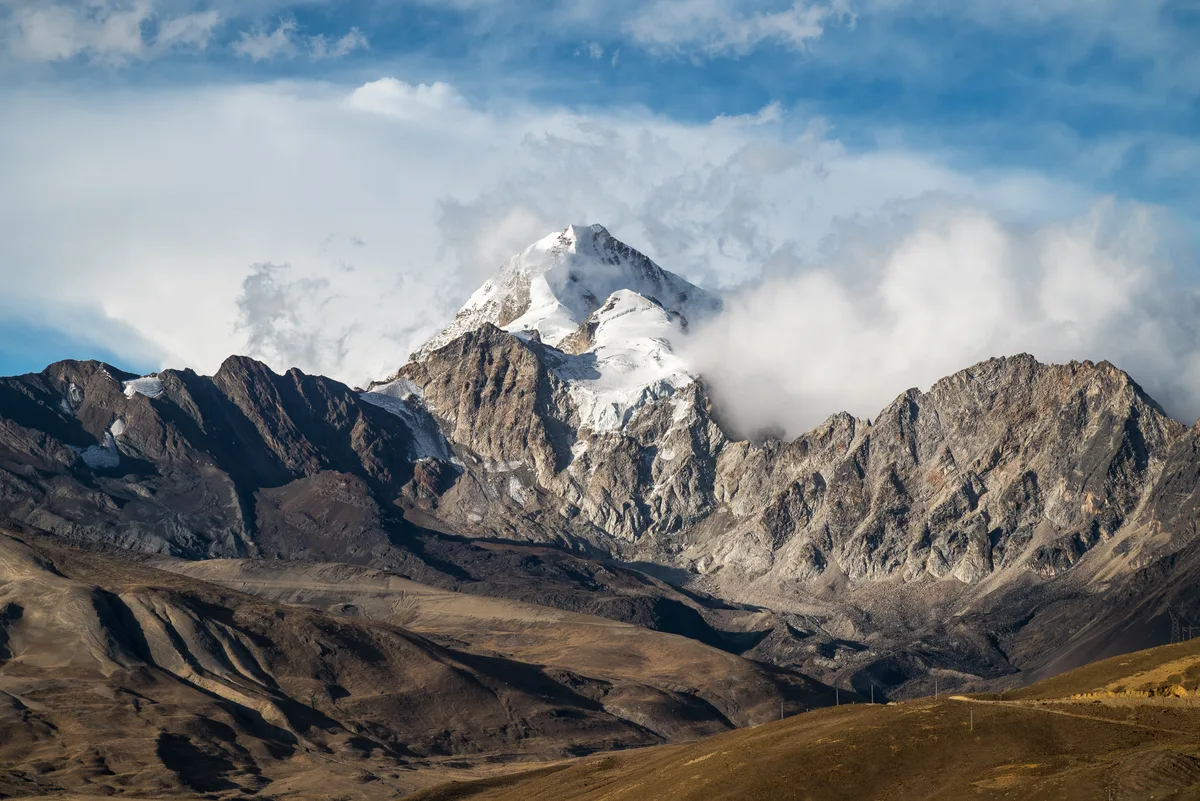

Huayna Potosí
Huayna Potosí is a stunning 6,088-metre glaciated pyramid in the Cordillera Real of Bolivia, widely regarded as one of the most aesthetic peaks in South America. First climbed in 1919 by German mountaineers Rudolf Dienst and Adolf Schulze, the peak features classic glacier ramps, steep summit bergschrunds, and formidable 1,000-metre technical ice walls on its west face. It stands directly north of La Paz near the Zongo Pass.
Documented Sources & Archival Citations
- Zeitschrift des Deutschen und Österreichischen Alpenvereins: Erstbesteigungen in Bolivien(DÖAV)
Supporting claim: Primary expedition record and technical route documentation of the 1919 first ascent
Accessed/Documented: 1922 - The Bolivian Andes: Cordillera Real Climbing Guide(Alain Mesili / Los Amigos del Libro)
Supporting claim: Historical review of early German alpine ascents in the Zongo Pass region
Accessed/Documented: 1980