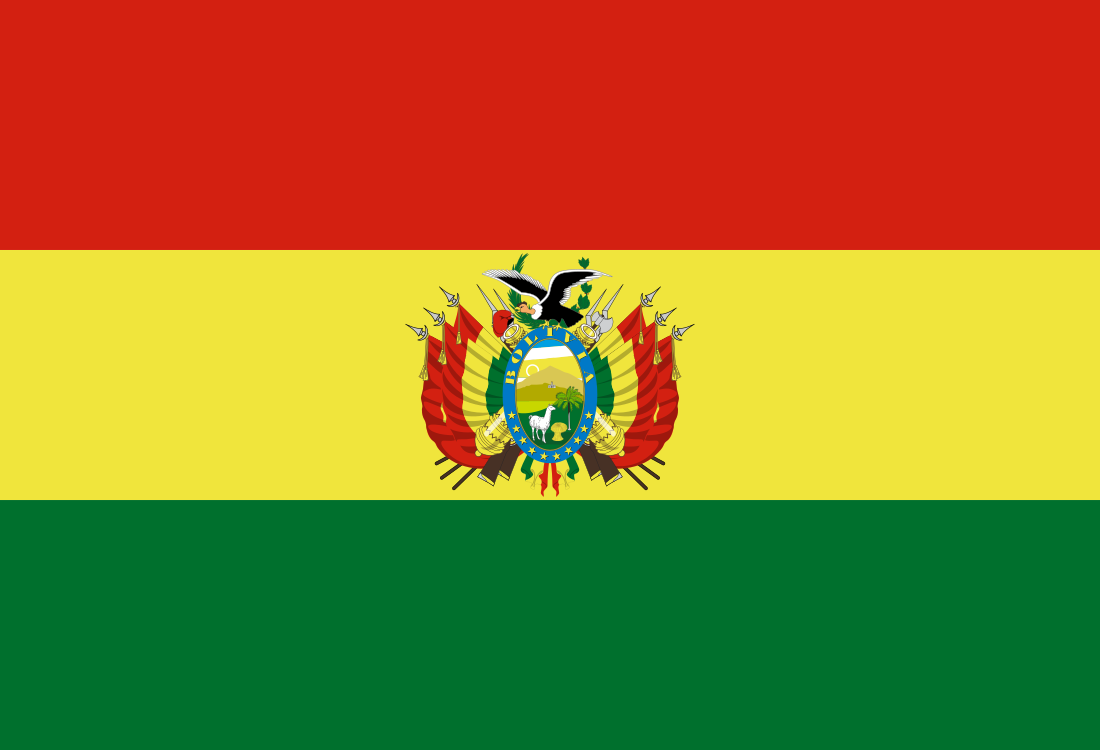
Bolivia
Bolivia is home to the majestic Cordillera Real and the soaring volcanic massifs of the Western Andes, featuring glaciated giants like Nevado Sajama, Illimani, and Huayna Potosí overlooking the vast Altiplano.
Peer Review: Senior Editorial Board & Historical Reviewers • Editorial Standards
Key Statistics & Topographic Figures
- Archive Classification
- COUNTRIES
Mountanity Knowledge Corpus
- Verification Status
- Editorially Verified
Archival Standards
- Citation Standard
- Primary Source Verified
Alpine Research Desk
Mountain Peaks in Bolivia
Technical profiles, elevations, and ascent histories for summits located in or spanning Bolivia.
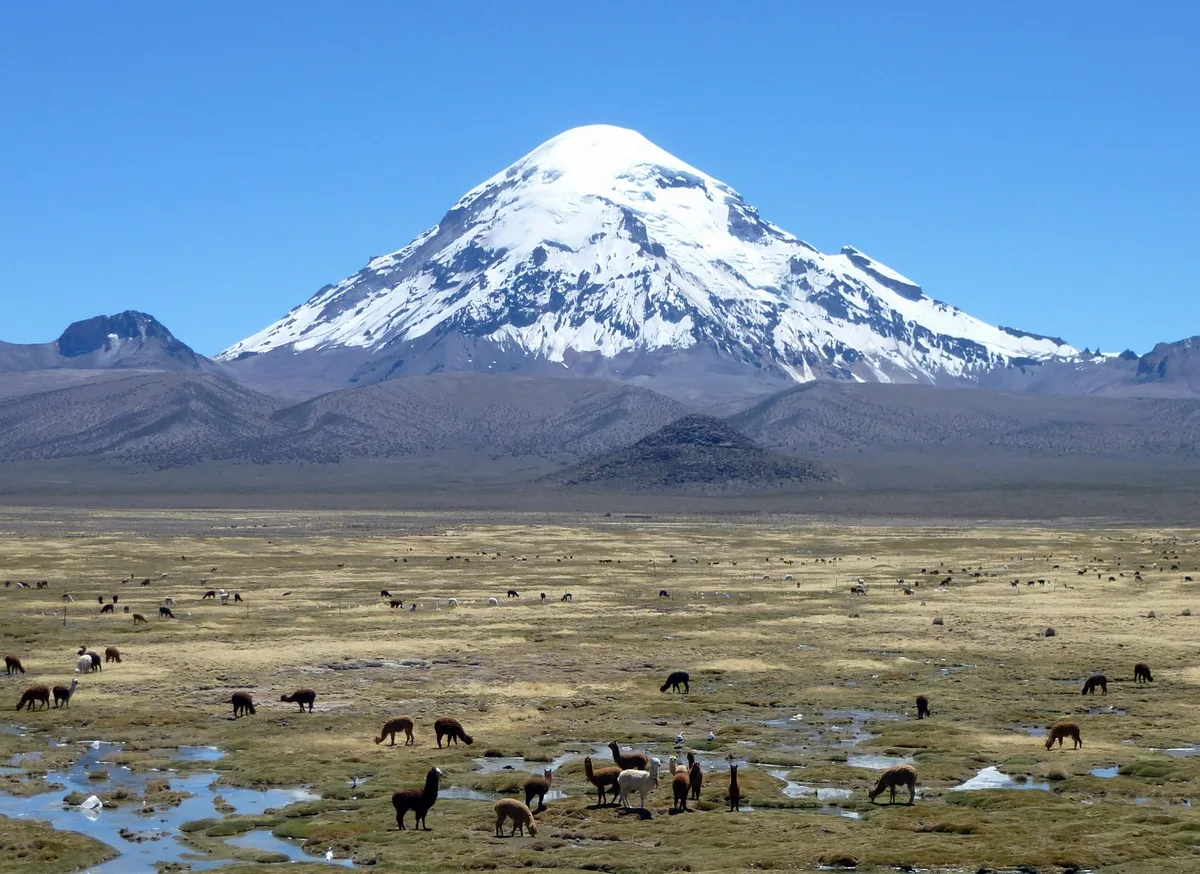
Nevado Sajama
Nevado Sajama is an immense 6,542-metre extinct stratovolcano and the highest mountain in Bolivia, rising majestically above the arid high plains of Sajama National Park. First climbed in October 1939 by Austrian alpinist Joseph Prem and fellow climber Wilfrid Kuehm, the mountain features vast fields of ice penitentes, sub-zero winds, and rare high-altitude Polylepis dwarf forests along its flanks. Sajama stands as an isolated giant near the Chilean frontier.
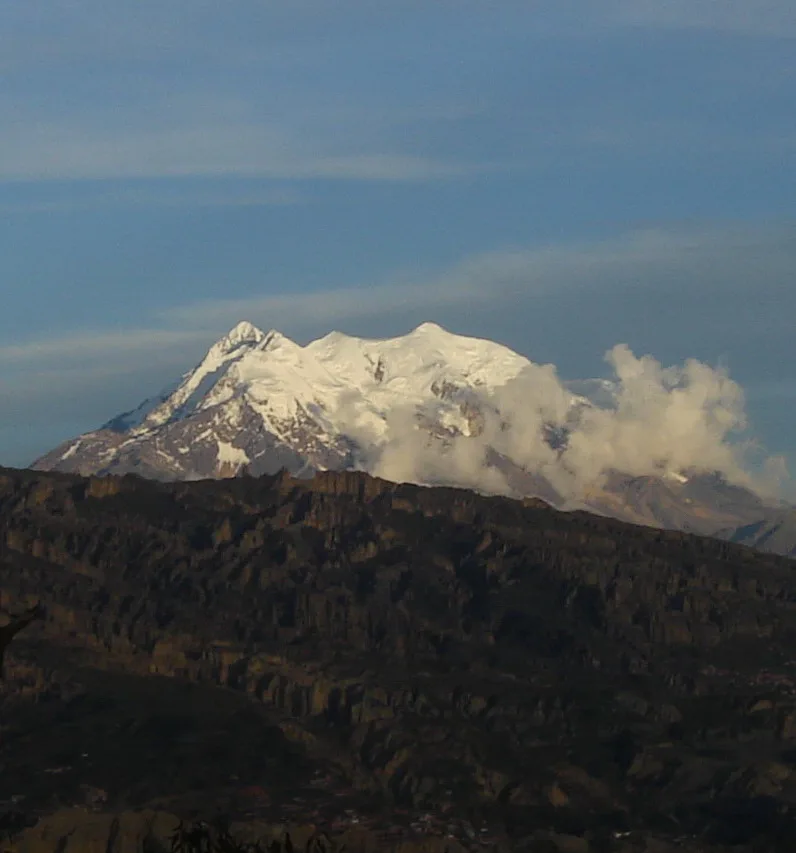
Illimani
Nevado Illimani is the iconic 6,438-metre monarch of the Cordillera Real, towering dramatically over the city of La Paz and the Bolivian Altiplano. First climbed in September 1898 by British explorer Sir William Martin Conway alongside Swiss guides Antoine Maquignaz and Jean-Antoine Pellissier, the mountain features four distinct summits linked by knife-edge glaciated ridges. Its immense southern and eastern faces drop precipitously toward the Amazon basin.
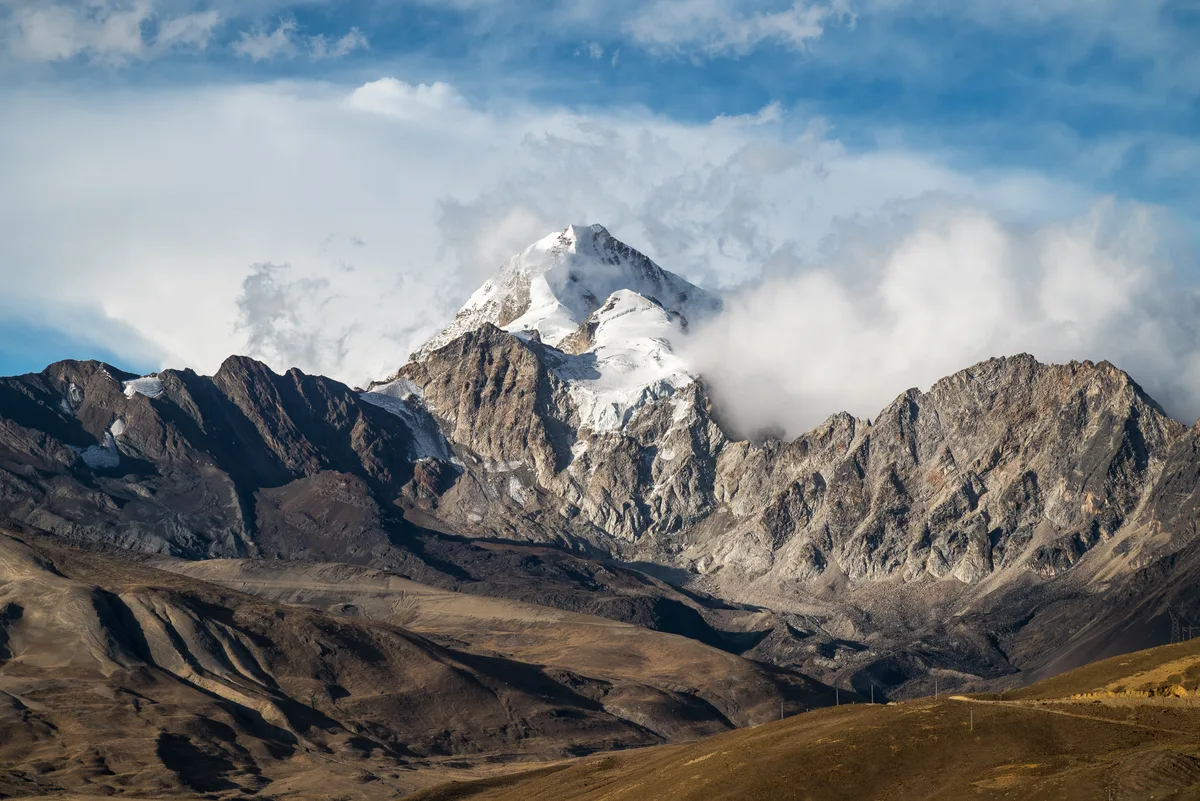
Huayna Potosí
Huayna Potosí is a stunning 6,088-metre glaciated pyramid in the Cordillera Real of Bolivia, widely regarded as one of the most aesthetic peaks in South America. First climbed in 1919 by German mountaineers Rudolf Dienst and Adolf Schulze, the peak features classic glacier ramps, steep summit bergschrunds, and formidable 1,000-metre technical ice walls on its west face. It stands directly north of La Paz near the Zongo Pass.
Mountain Ranges Spanning Bolivia
Geographic mountain massifs, regional topography, and glaciated chains within Bolivia.
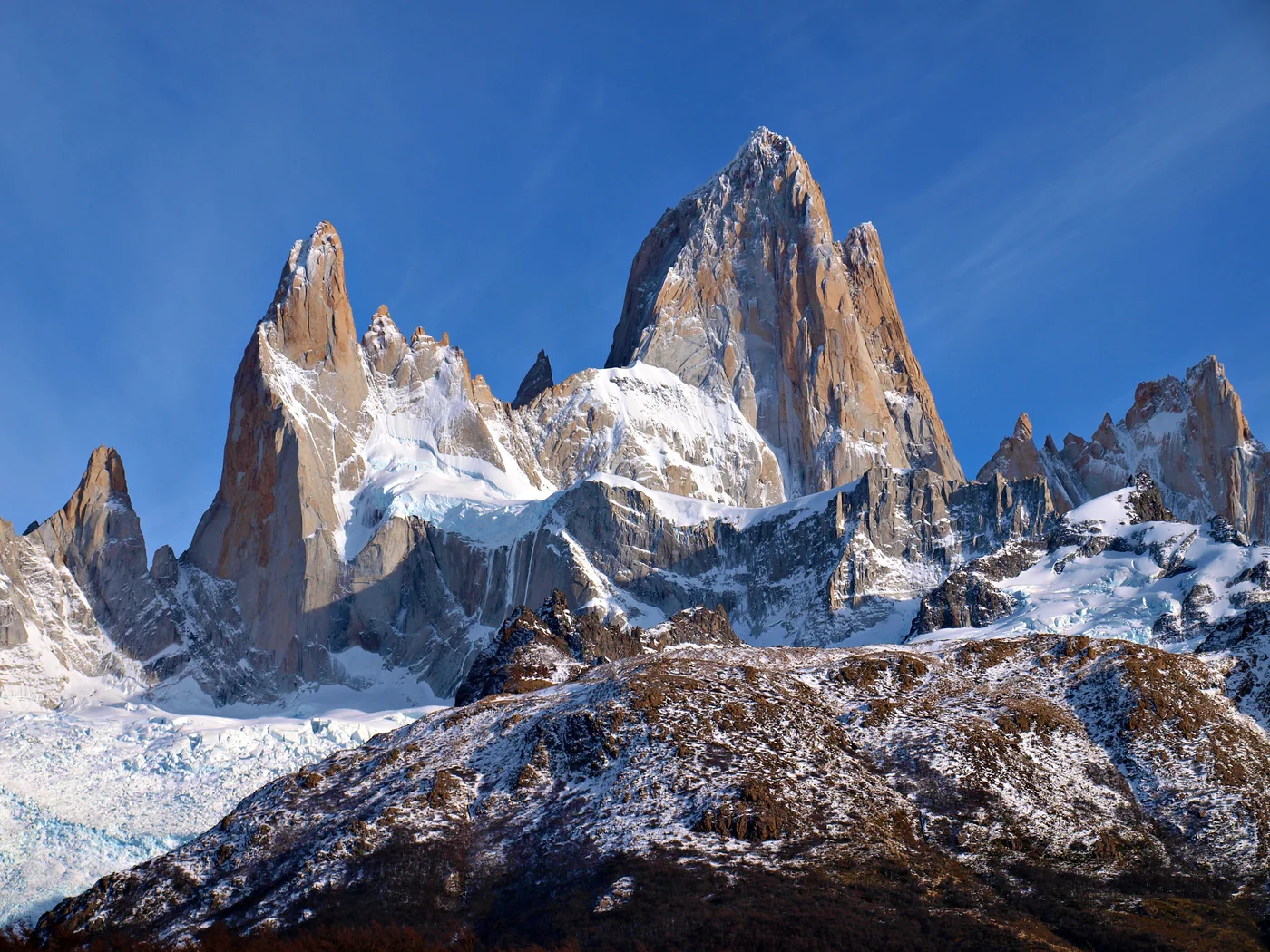
Andes
The Andes form the longest continental mountain range on Earth, stretching over 7,000 kilometres along the western margin of South America. Renowned for soaring glaciated volcanoes, high Altiplano plateaus, and the sheer wind-blasted granite spires of Patagonia, the range contains legendary alpine challenges including Aconcagua and Cerro Fitz Roy.
Documented Climbing Routes
Classic lines of ascent, technical difficulties, and objective hazards across Bolivia's summits.
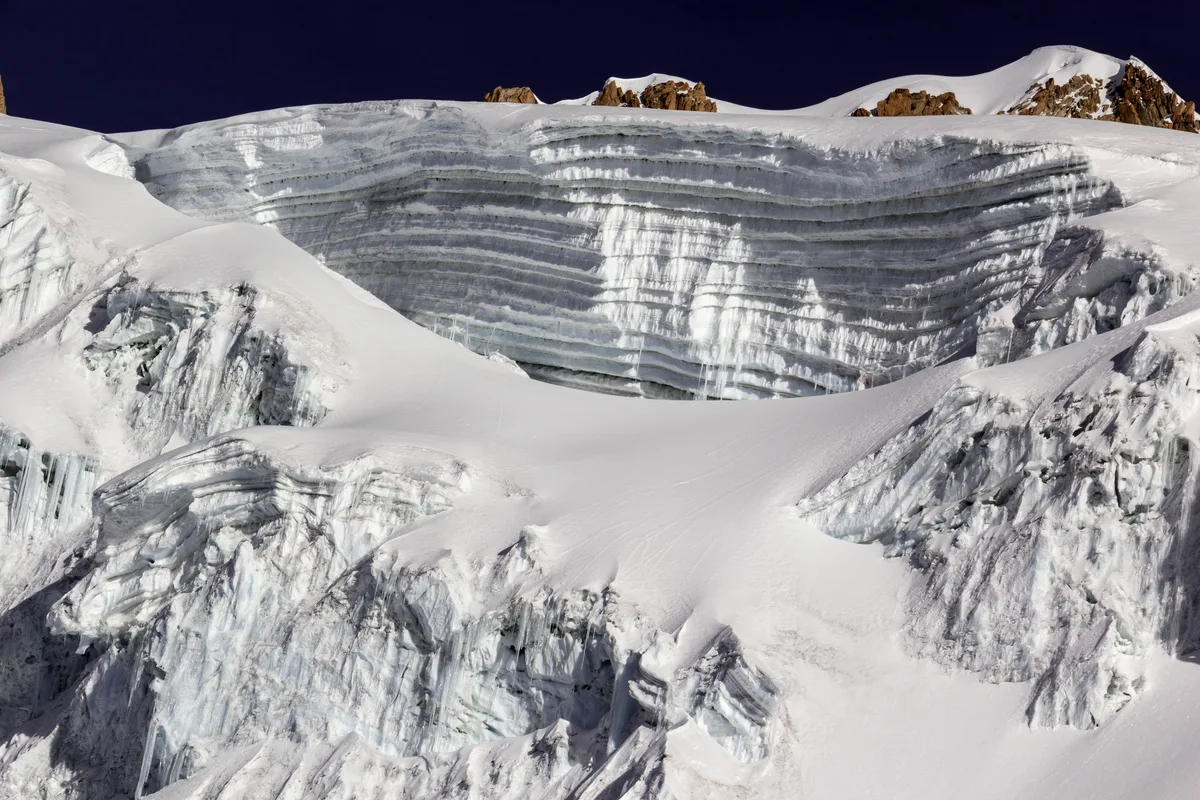
Huayna Potosí French Route (Southeast Face)
The French Route on Huayna Potosí is an exhilarating technical ice direct ascending the peak's southeast wall to 6,088 metres in the Cordillera Real. First climbed in the 1970s by French-Bolivian alpine pioneer Alain Mesili and companions, this direct variant surmounts a continuous 300-metre ice wall sloping between 55 and 70 degrees, bypassing the crowded normal route to deliver a thrilling and pure alpine experience.
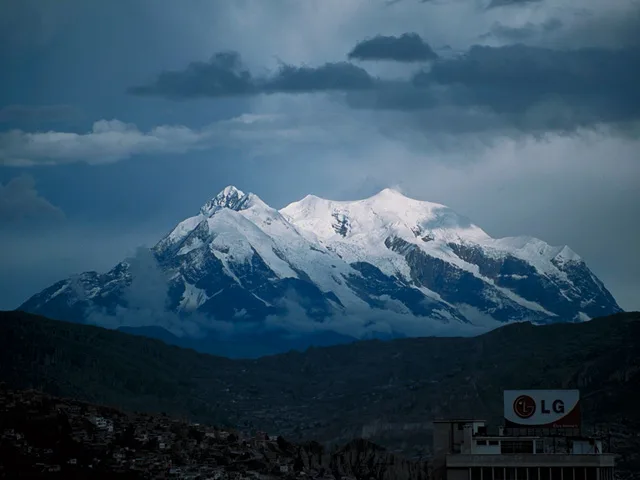
Illimani South Ridge Normal Route
The South Ridge Normal Route of Nevado Illimani is the classic high-altitude line ascending the southern monarch of the Cordillera Real to 6,438 metres. First climbed in September 1898 by Sir William Martin Conway and Swiss guides Antoine Maquignaz and Jean-Antoine Pellissier, the route traverses hanging glaciers and the famous Nido de Cóndores aerie before conquering an exposed 50-degree knife-edge summit arête.
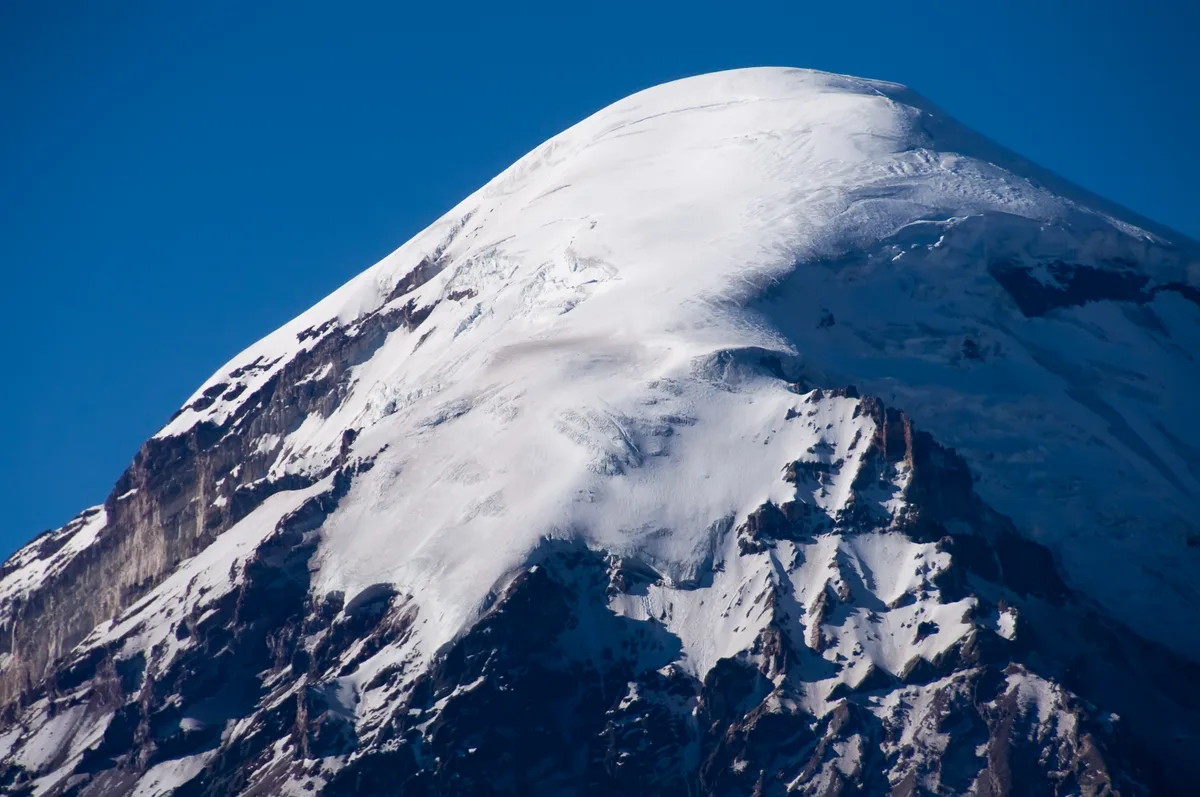
Nevado Sajama Northwest Ridge
The Northwest Ridge is the standard mountaineering route up Nevado Sajama, ascending Bolivia's highest summit at 6,542 metres. Pioneered in October 1939 by Austrian alpinist Joseph Prem and Wilfrid Kuehm, the route confronts harsh Altiplano gales, steep volcanic ash moraines, and maze-like fields of ice penitentes before surmounting a 45-degree summit firn headwall to the broad glaciated caldera.
Historic Expeditions & First Ascents
Epoch-making sieges and triumphant summits recorded within Bolivia's alpine history.
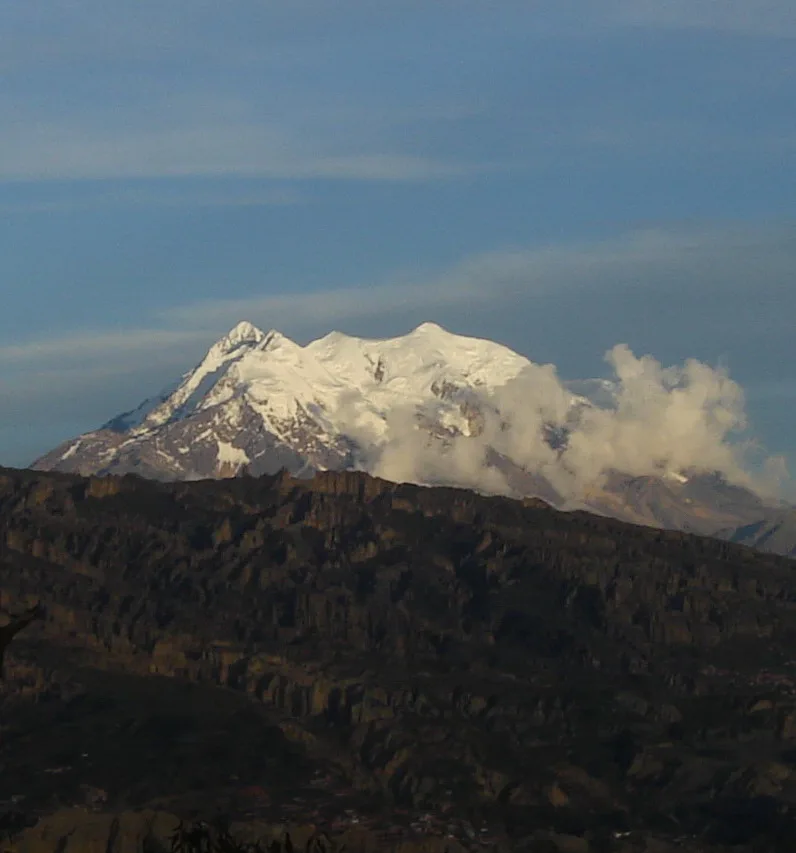
1898 Sir William Martin Conway Illimani Historic First Ascent Expedition
On September 21, 1898, British explorer Sir William Martin Conway alongside Italian Alpine guides Antoine Maquignaz and Jean-Antoine Pellissier achieved the historic first ascent of Nevado Illimani (6,438 m). Overcoming extreme cold, altitude sickness, and knife-edge snow cornices, Conway conquered the monarch of the Cordillera Real and conducted the first scientific surveys of the Bolivian Andes.
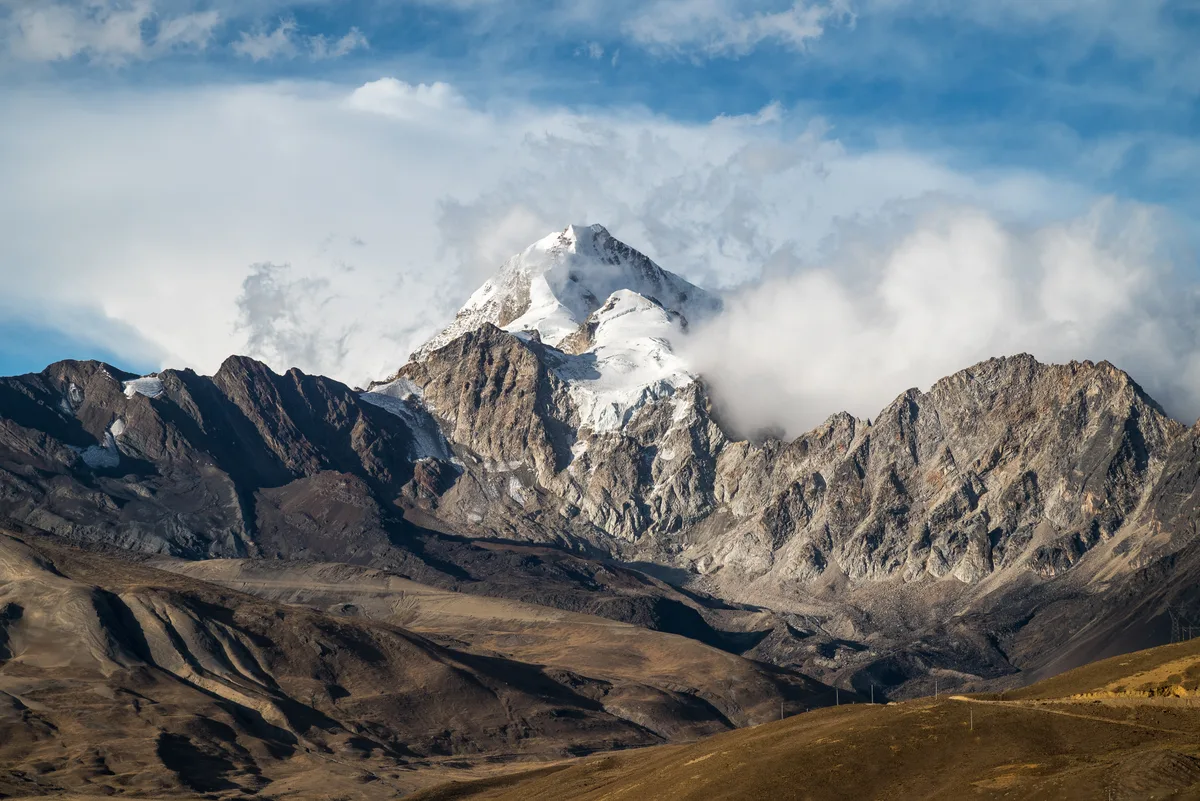
1919 Dienst-Schulze Huayna Potosí Historic First Ascent Expedition
On May 18, 1919, German mountaineers Rudolf Dienst and Adolf Schulze accomplished the historic first ascent of Huayna Potosí (6,088 m) in the Cordillera Real. Tackling the glaciated eastern cirque from Zongo Pass and navigating steep bergschrunds, Dienst and Schulze claimed the virgin summit of Bolivia's most iconic glaciated pyramid.
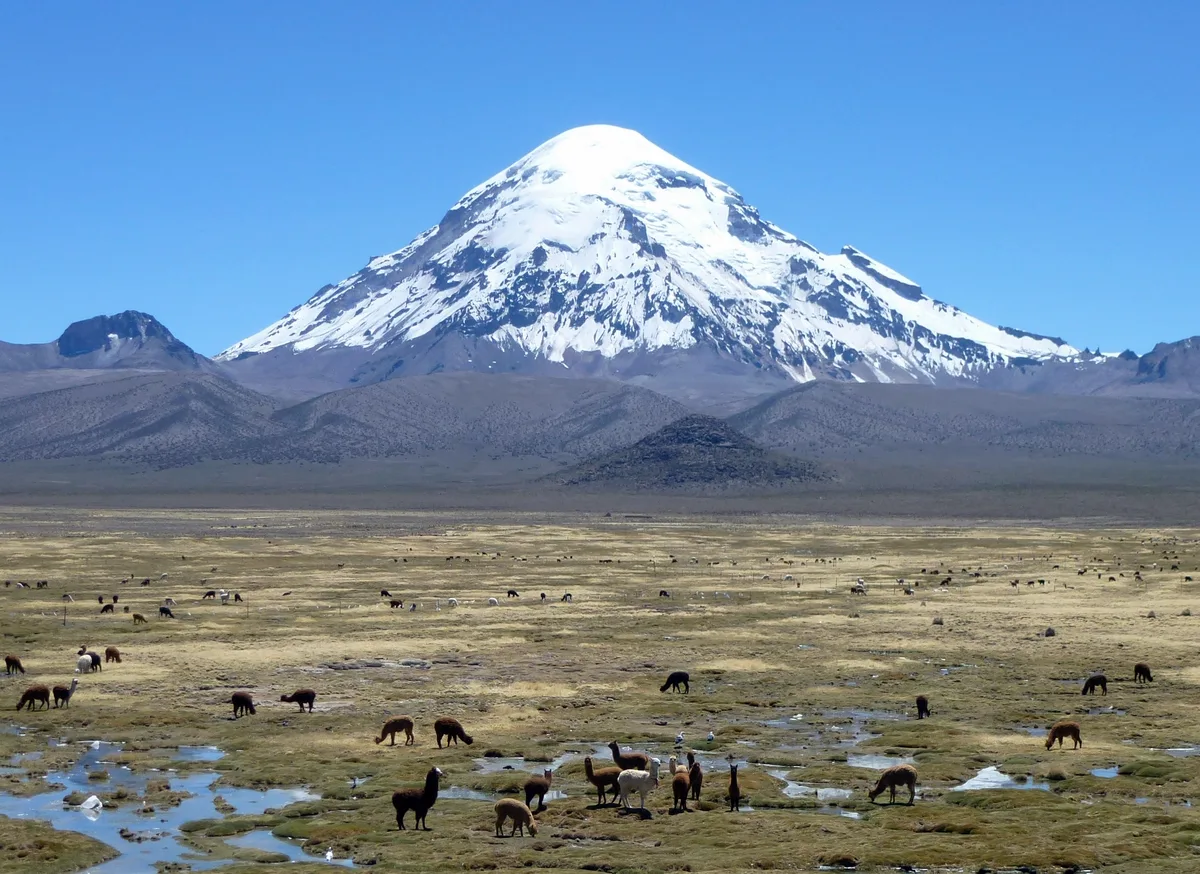
1939 Prem-Kuehm Nevado Sajama Historic First Ascent Expedition
On October 4, 1939, Austrian alpinist Joseph Prem and Wilfrid Kuehm, supported by Italian expedition pioneer Piero Ghiglione, achieved the historic first ascent of Nevado Sajama (6,542 m), the highest peak in Bolivia. Battling maze-like penitente fields, freezing Altiplano gales, and extreme altitude, their victory solved the greatest volcanic mountaineering prize in the central Andes.
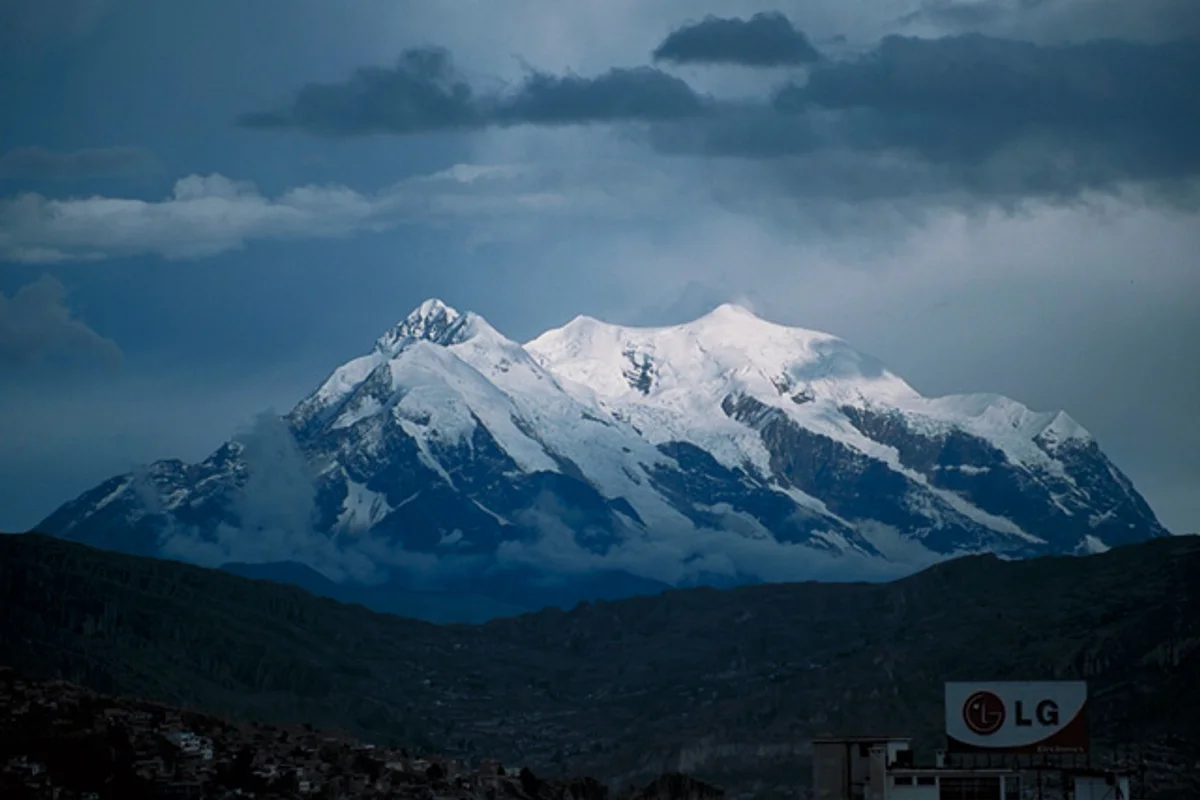
1950 Hans Ertl First Ascent of Illimani South Peak
In April 1950, German-Bolivian mountaineer and cinematographer Hans Ertl completed the historic first ascent of the South Peak of Illimani (6,438 m), the highest and most difficult summit of the iconic Andean massif.
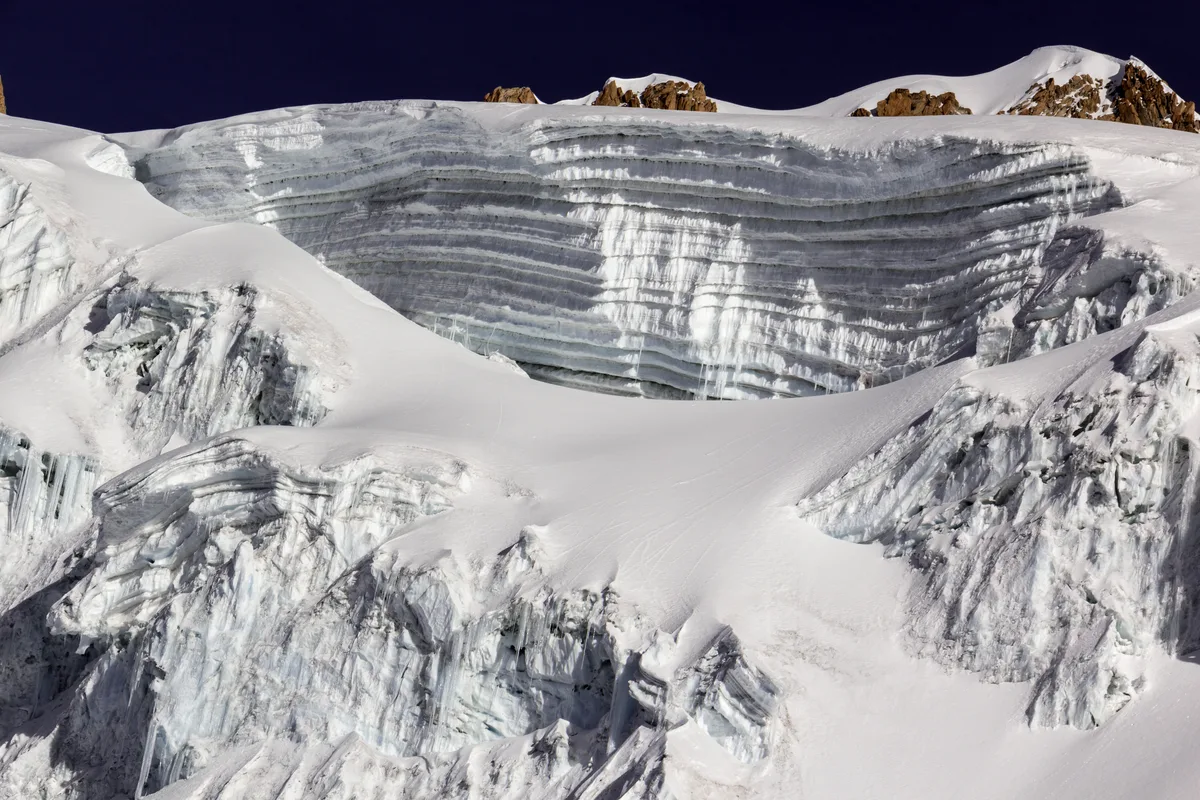
1970 Mesili Huayna Potosí West Face Historic Direct Ascent
In July 1970, French-Bolivian alpine pioneer Alain Mesili and climbing companions unlocked the colossal 1,000-metre West Face of Huayna Potosí (6,088 m). Scaling 70-degree black ice corridors, rotten quartzite bands, and hanging seracs in lightweight style, their breakthrough inaugurated modern extreme technical alpinism in the Cordillera Real.
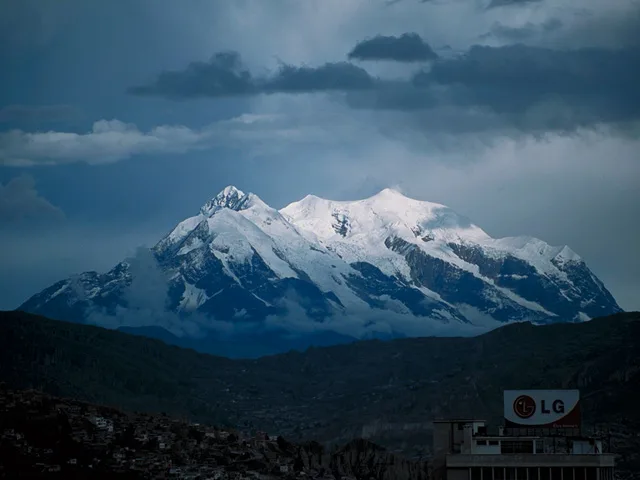
1972 Mesili-Monasterio Illimani South Face Historic Direct Ascent
In August 1972, Alain Mesili and elite companions completed the first direct ascent of the terrifying 2,000-metre South Face of Nevado Illimani (6,438 m). Confronting relentless vertical ice flutings, stonefall, and hanging bivouacs suspended over the Amazon basin, the team conquered the greatest high-altitude big-wall ice face in Bolivia.
Pioneer Mountaineers of Bolivia
Biographical chronicles of legendary high-altitude alpinists hailing from Bolivia.
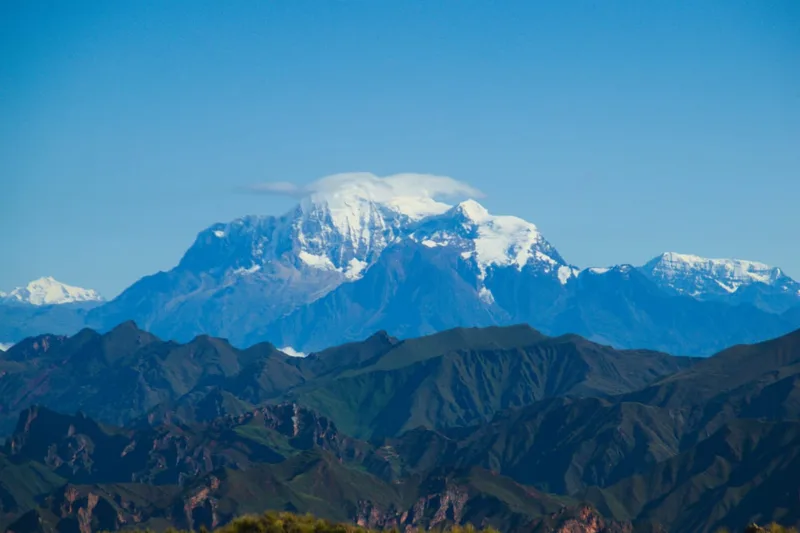
Erick Monasterio
Born and raised in La Paz, Bolivia, Erick Monasterio developed an intimate bond with the glaciated peaks of the Cordillera Real from childhood. Becoming one of Bolivia's earliest internationally certified UIAGM/IFMGA mountain guides, Monasterio pushed technical limits on the ice faces of Huayna Potosí, Illimani, Mururata, and Condoriri. Parallel to his climbing feats, Monasterio completed medical training and specialized in forensic psychiatry, becoming a leading global researcher on the neurobiology and psychology of extreme sports athletes, BASE jumpers, and high-altitude mountaineers. His pioneering scientific studies published in prestigious medical journals examined sensation-seeking, trauma resilience, and cognitive functioning under acute hypoxia in the Death Zone. In the mountains, Monasterio was celebrated for ethical alpine-style ascents, swift emergency mountain rescues in the Bolivian Andes, and unwavering advocacy for the indigenous Aymara and Quechua mountain porters and guides. Serving as a clinical professor and researcher, Monasterio bridged the worlds of extreme physical performance and cognitive neuroscience, inspiring generations of South American mountaineers.
Archival Primary Source Quotations
“Great things are done when men and mountains meet; this is not done by jostling in the street.”
Defined Alpine Terminology & Concepts
- Archival Integrity
- The standard of verifying historical mountain facts, summit claims, and altitudes using primary expeditions journals and geodetic measurements.
Frequently Asked Questions: Bolivia Mountaineering
What historical significance does this countrie hold?
Bolivia represents an essential chapter in global mountaineering heritage, verified through contemporary expedition journals and archival sources.
How are the facts and records for Bolivia verified?
All records are checked against peer-reviewed journals, national alpine clubs, geodetic surveys, and the Mountanity Archival Integrity Policy.