Andes
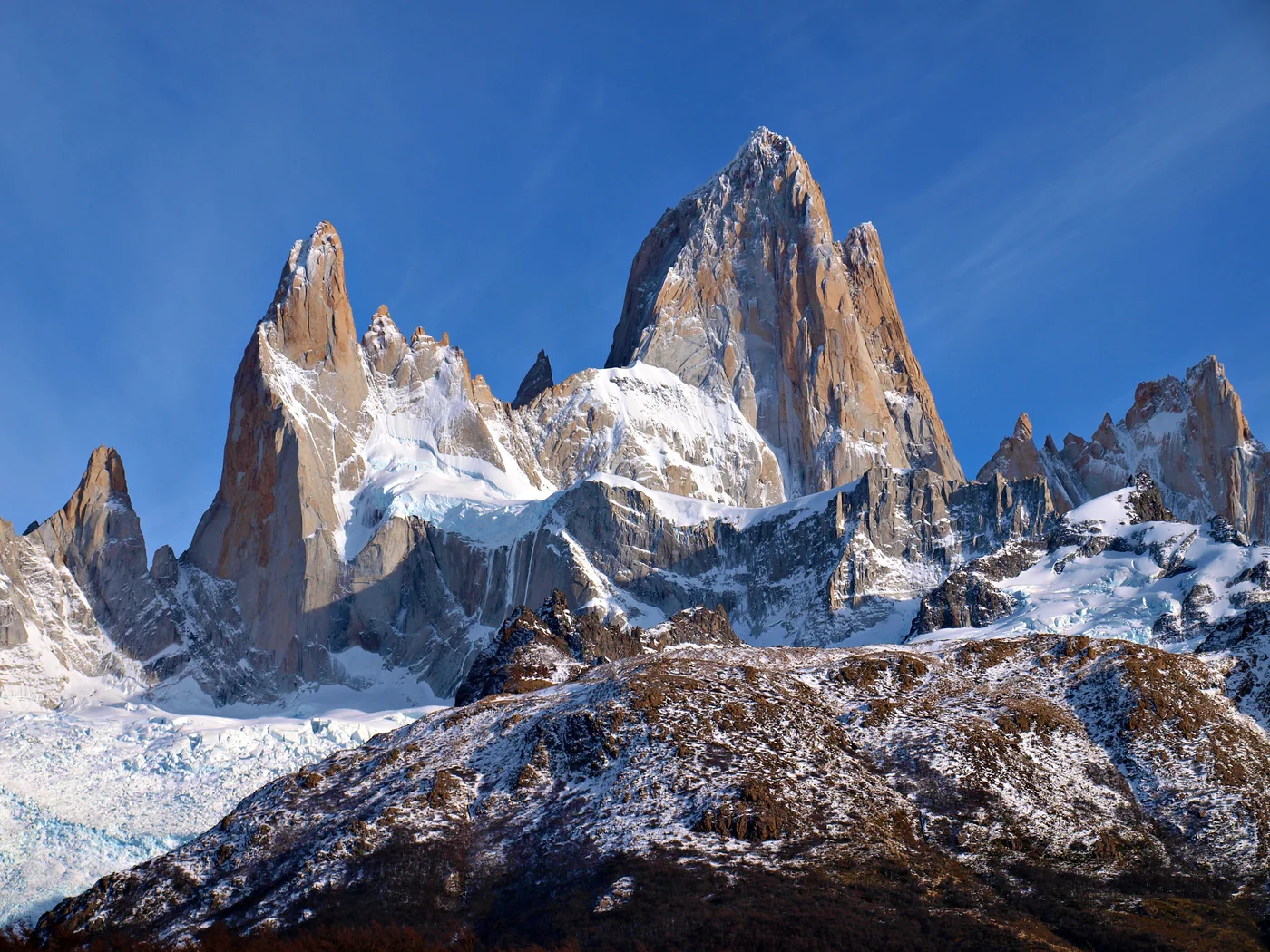
The Andes form the longest continental mountain range on Earth, stretching over 7,000 kilometres along the western margin of South America. Renowned for soaring glaciated volcanoes, high Altiplano plateaus, and the sheer wind-blasted granite spires of Patagonia, the range contains legendary alpine challenges including Aconcagua and Cerro Fitz Roy.
Peer Review: Senior Editorial Board & Historical Reviewers • Editorial Standards
Key Statistics & Topographic Figures
- Archive Classification
- RANGES
Mountanity Knowledge Corpus
- Verification Status
- Editorially Verified
Archival Standards
- Citation Standard
- Primary Source Verified
Alpine Research Desk
Archival Primary Source Quotations
“Great things are done when men and mountains meet; this is not done by jostling in the street.”
Defined Alpine Terminology & Concepts
- Archival Integrity
- The standard of verifying historical mountain facts, summit claims, and altitudes using primary expeditions journals and geodetic measurements.
Frequently Asked Questions: Andes
What historical significance does this range hold?
Andes represents an essential chapter in global mountaineering heritage, verified through contemporary expedition journals and archival sources.
How are the facts and records for Andes verified?
All records are checked against peer-reviewed journals, national alpine clubs, geodetic surveys, and the Mountanity Archival Integrity Policy.
Documented Peaks in Andes
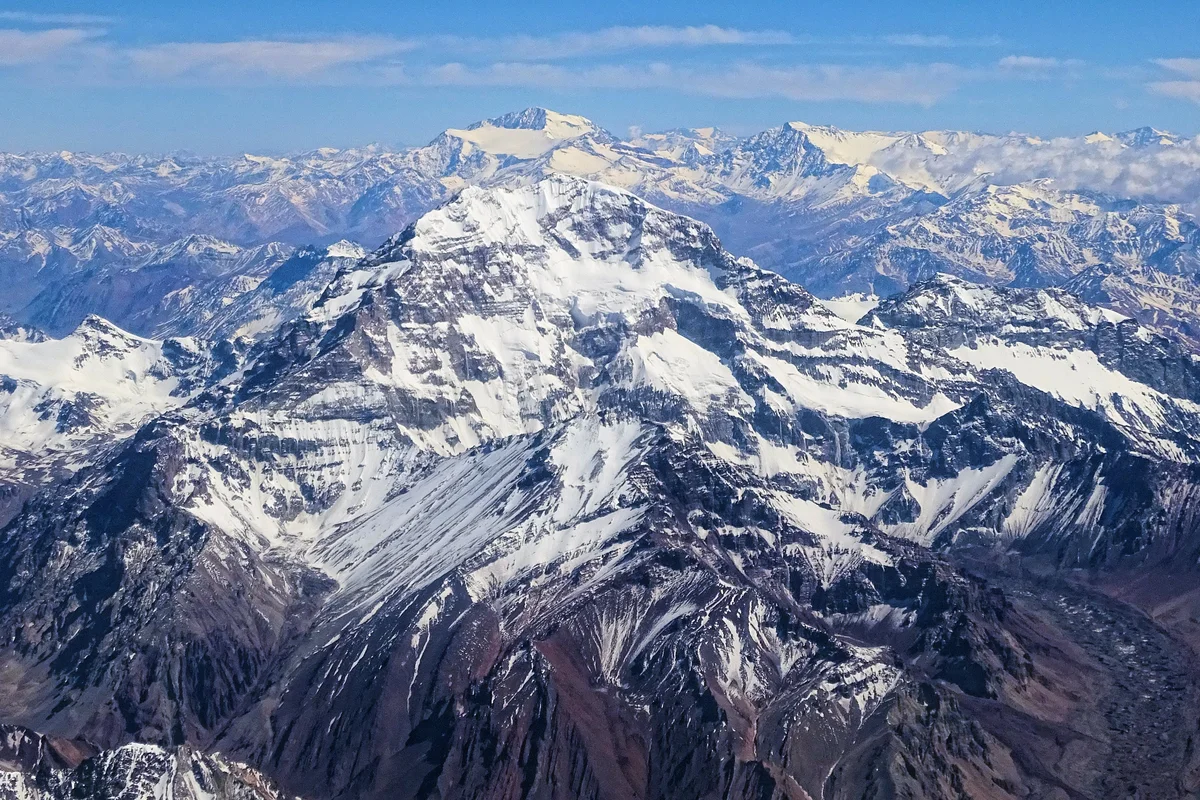

Aconcagua
Aconcagua is the highest mountain in the Americas and the highest peak outside Asia, rising to 6,961 metres in Argentina's Andes. Celebrated as the second most topographically prominent mountain on Earth, it features colossal glaciated faces, intense high-altitude gales, and historic routes including the Polish Glacier.
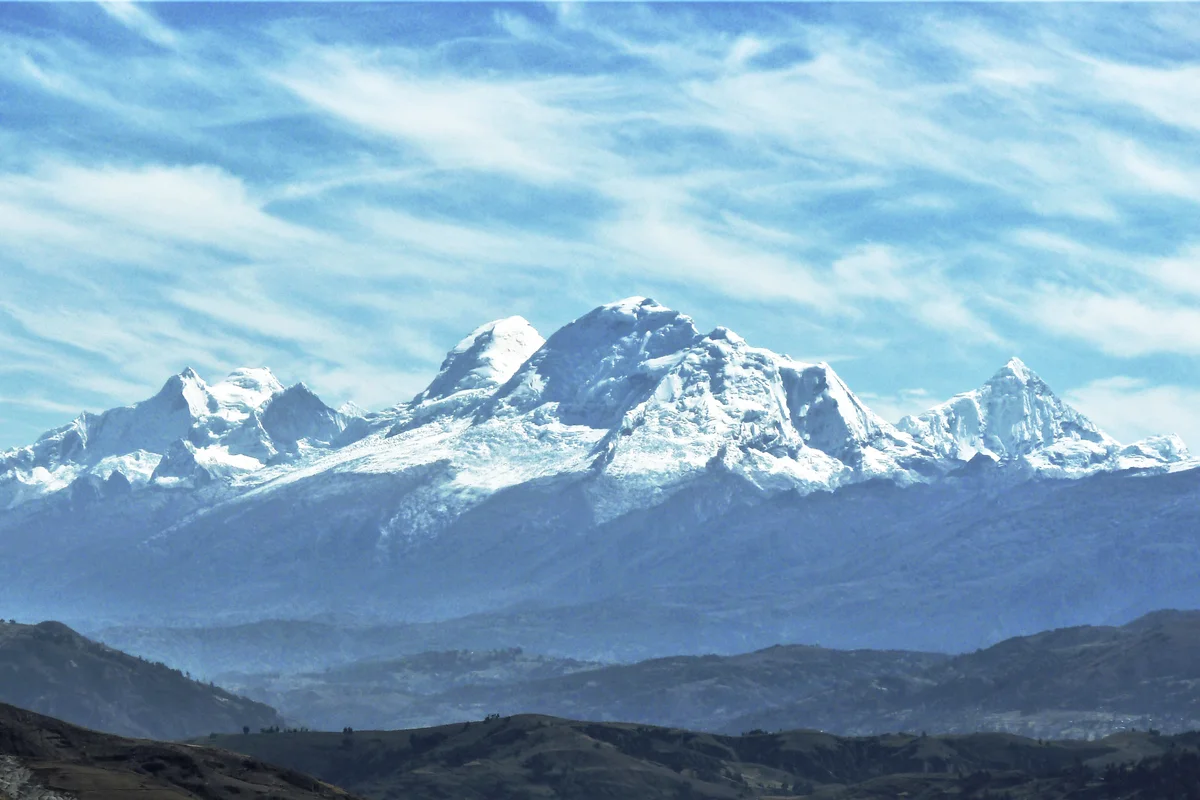

Huascarán
Huascarán is the highest mountain in Peru and the highest peak in the entire tropical zone of Earth, rising to 6,768 metres in the Cordillera Blanca. Its twin glaciated summits—Huascarán Sur (6,768 m) and Huascarán Norte (6,655 m)—tower over the Callejón de Huaylas with colossal icefalls and sheer vertical walls.
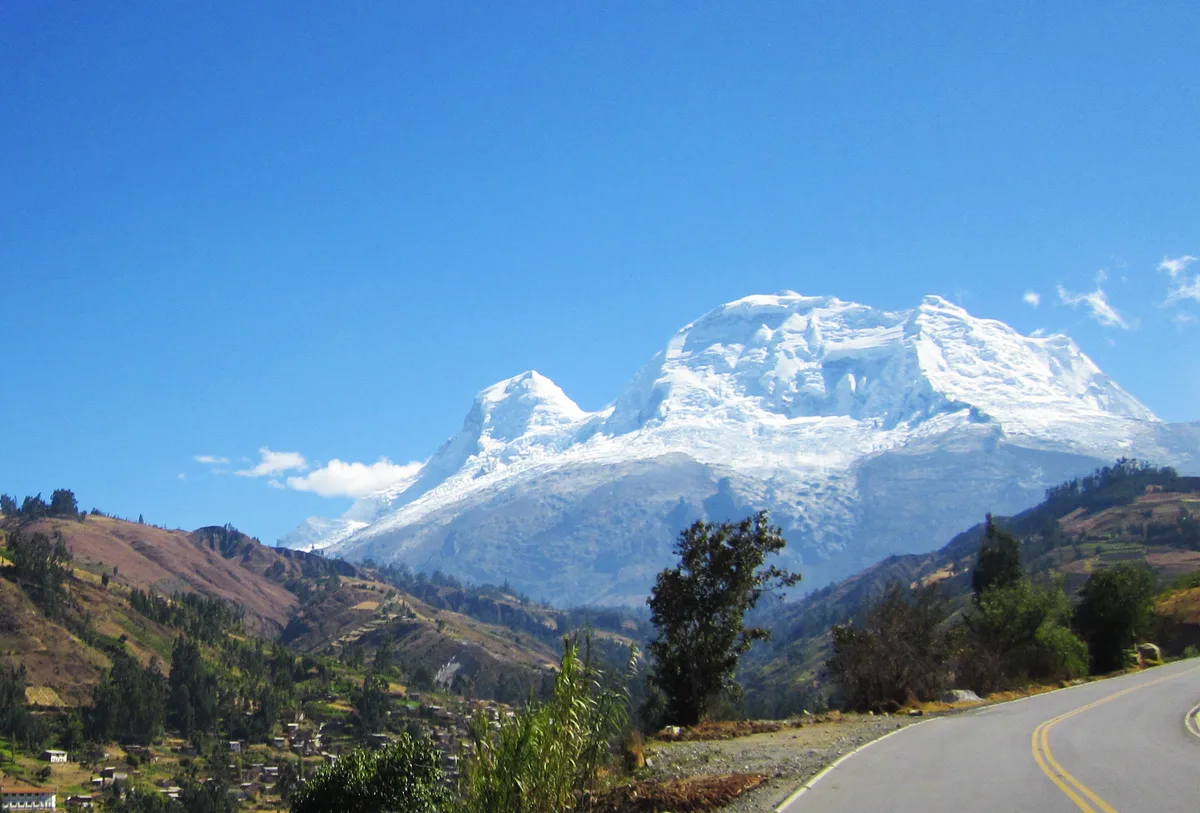
Huascarán Norte
Huascarán Norte is the northern summit of Peru's highest mountain massif, rising to 6,655 metres in the Cordillera Blanca. It was first climbed in September 1908 by pioneering American suffragist Annie Smith Peck alongside Swiss guides Gabriel Zumtaugwald and Rudolf Taugwalder. The peak features steep ice aprons and towering seracs connected to Huascarán Sur via the Garganta col.
Yerupajá
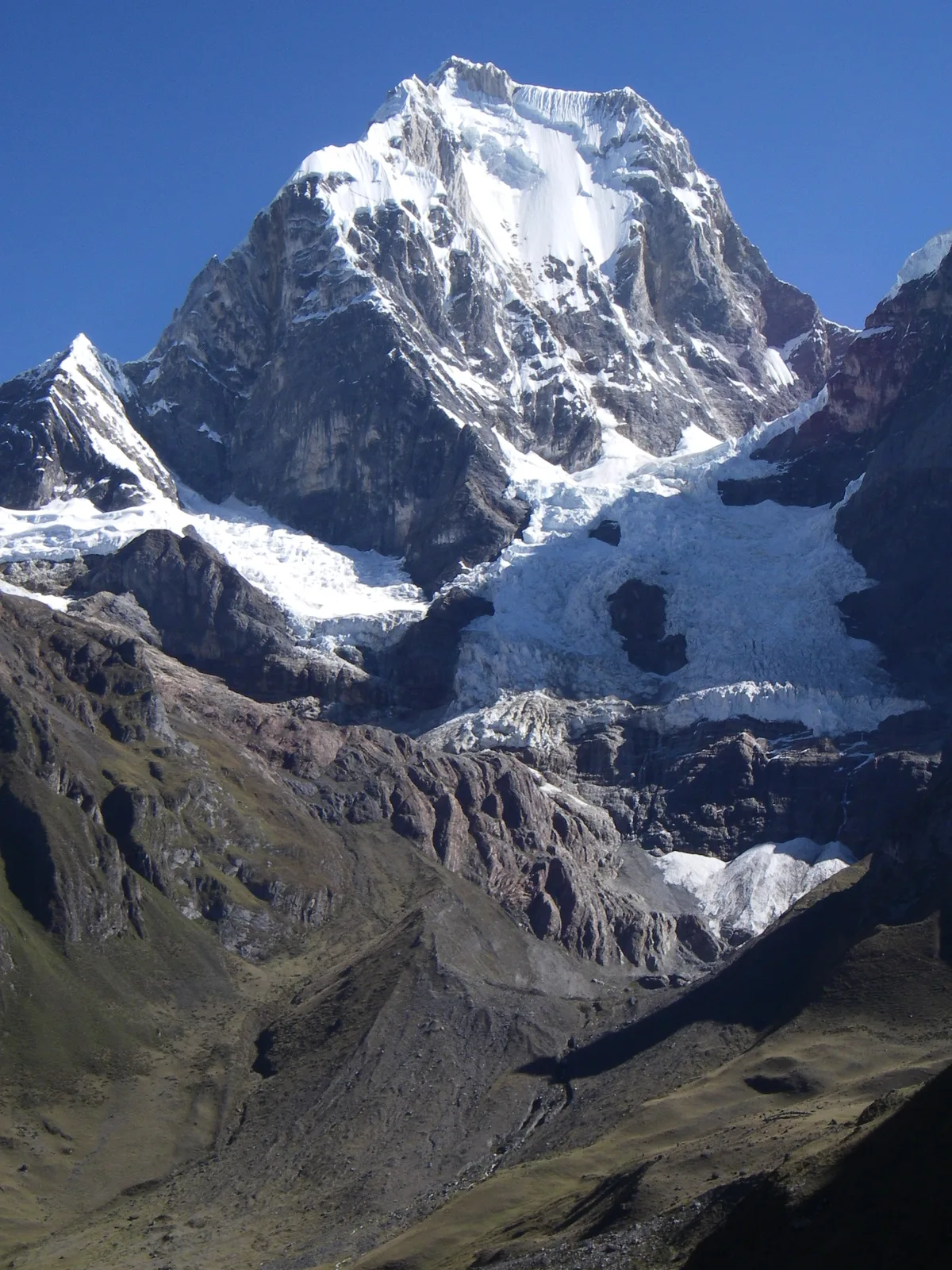
Yerupajá is the second-highest peak in Peru and the undisputed monarch of the Cordillera Huayhuash, soaring to 6,635 metres. Celebrated for its razor-sharp summit cornices, vertical ice walls, and ominous local moniker El Carnicero (The Butcher), it was first climbed in July 1950 by Jim Maxwell and Dave Harrah of the Harvard Andean Mountaineering Club. In 1968, Chris Jones and Paul Dix completed the first ascent of its fearsome 1,200-metre West Face.
Nevado Sajama
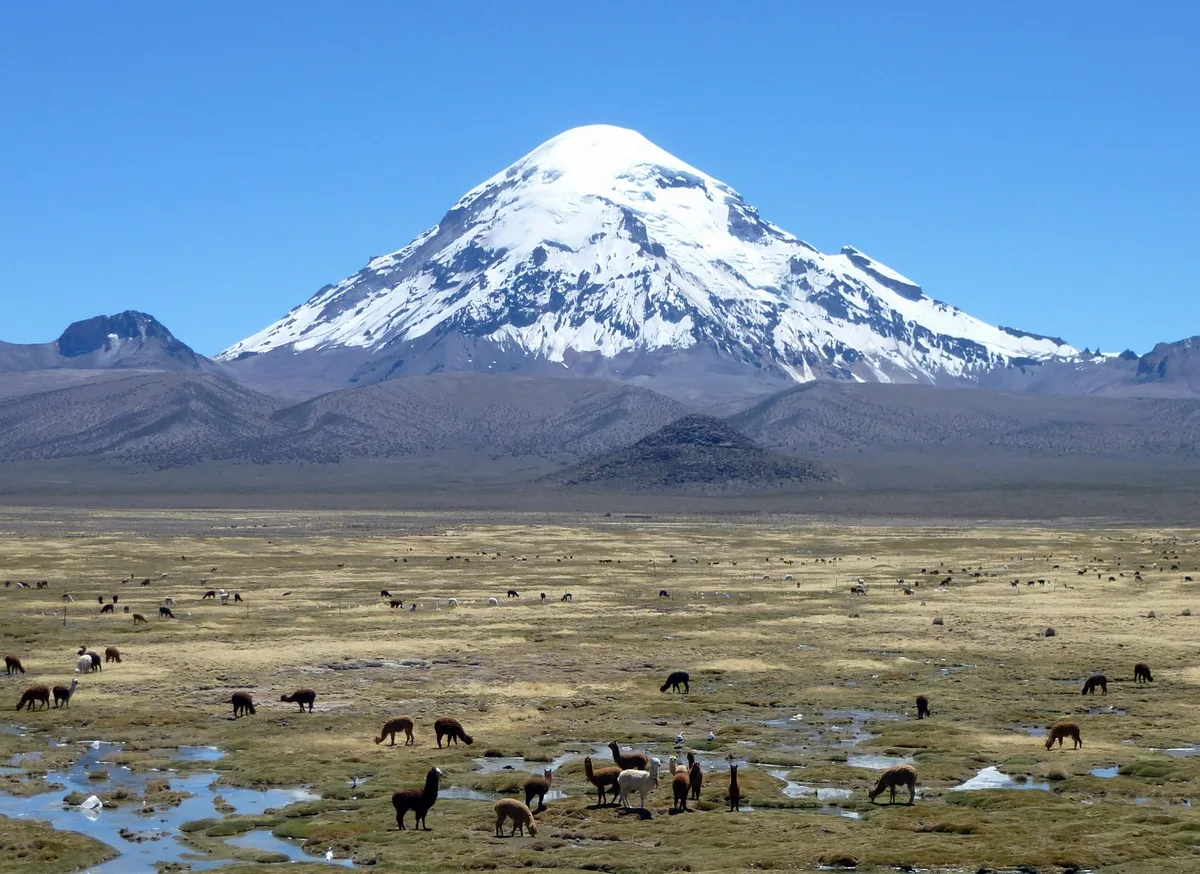
Nevado Sajama is an immense 6,542-metre extinct stratovolcano and the highest mountain in Bolivia, rising majestically above the arid high plains of Sajama National Park. First climbed in October 1939 by Austrian alpinist Joseph Prem and fellow climber Wilfrid Kuehm, the mountain features vast fields of ice penitentes, sub-zero winds, and rare high-altitude Polylepis dwarf forests along its flanks. Sajama stands as an isolated giant near the Chilean frontier.
Illimani
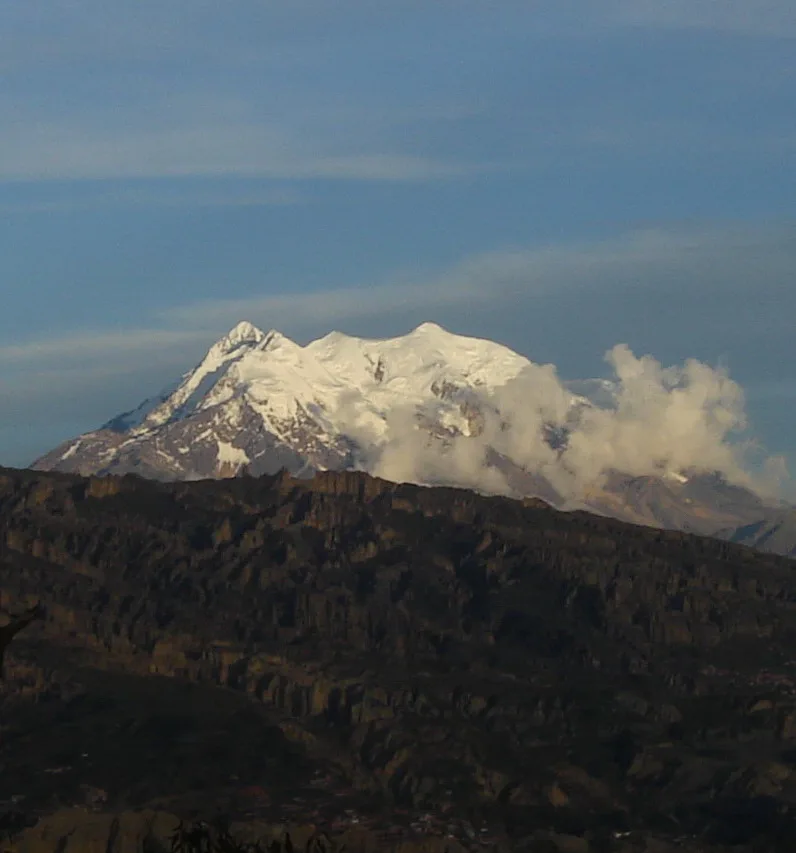
Nevado Illimani is the iconic 6,438-metre monarch of the Cordillera Real, towering dramatically over the city of La Paz and the Bolivian Altiplano. First climbed in September 1898 by British explorer Sir William Martin Conway alongside Swiss guides Antoine Maquignaz and Jean-Antoine Pellissier, the mountain features four distinct summits linked by knife-edge glaciated ridges. Its immense southern and eastern faces drop precipitously toward the Amazon basin.
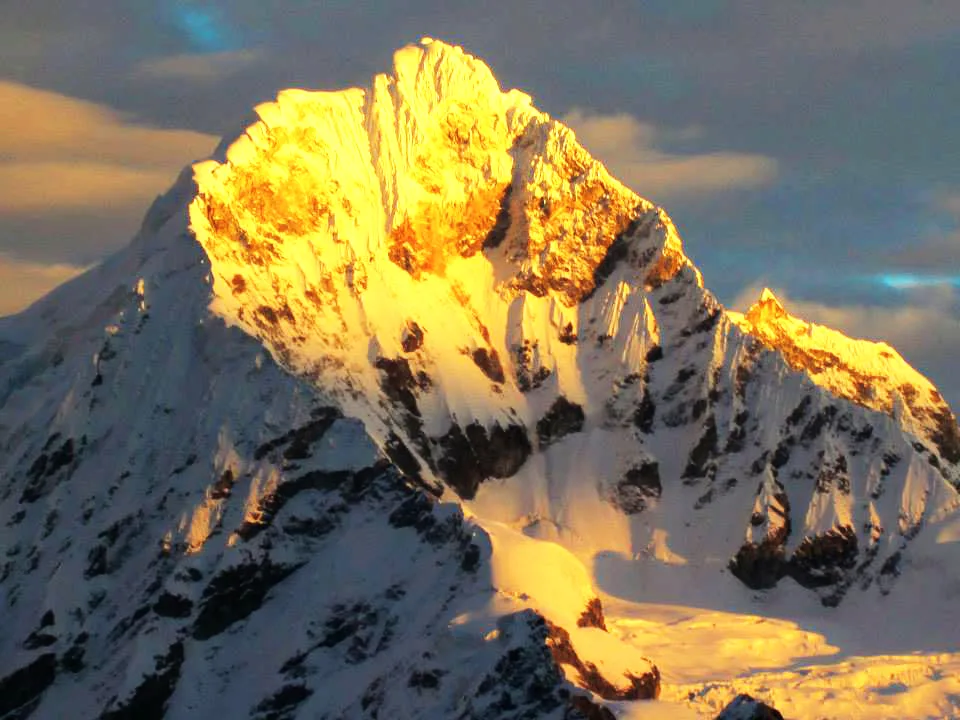
Chopicalqui
Chopicalqui is a magnificent 6,354-metre glaciated peak rising in the heart of Peru's Cordillera Blanca between Huascarán and Yanapaccha. First summited on August 3, 1932, by Erwin Schneider, Philipp Borchers, and Hermann Hoerlin, it is celebrated for its elegant Southwest Ridge route. The mountain offers complex crevassed glacier travel and knife-edge summit cornices.
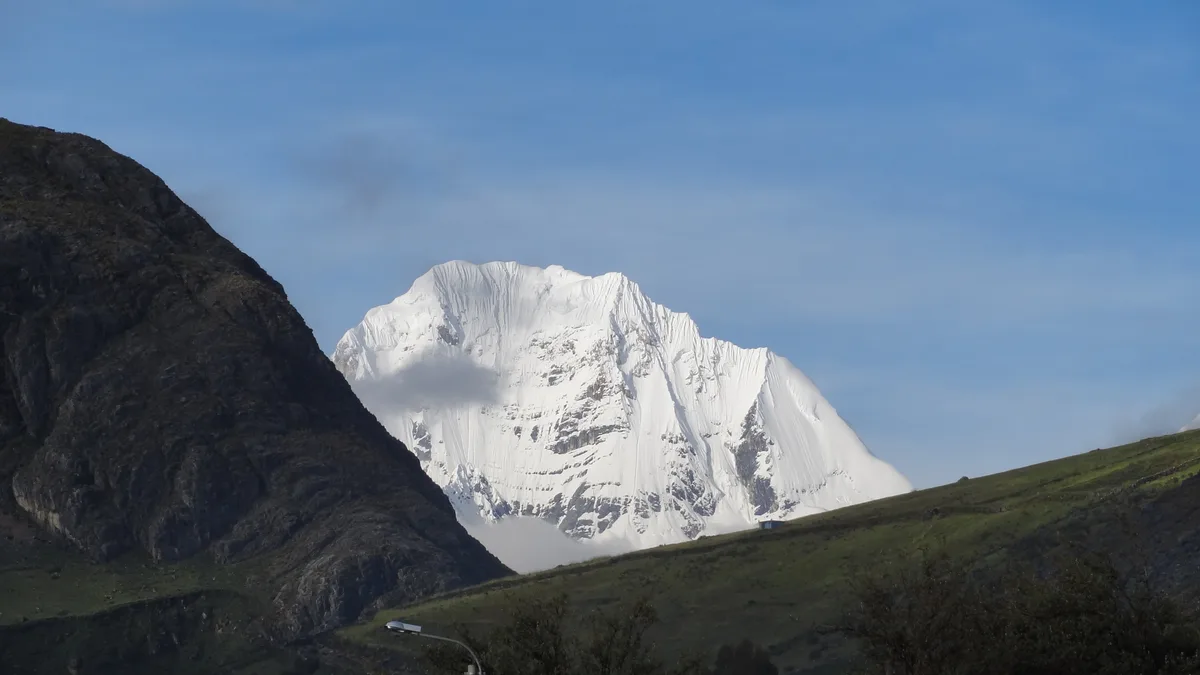
Siula Grande
Siula Grande is a majestic 6,344-metre mountain in the Cordillera Huayhuash of the Peruvian Andes, renowned for its sheer western precipice, knife-edge corniced ridges, and one of mountaineering's greatest survival sagas. First climbed in July 1936 by Austrian alpinists Erwin Schneider and Arnold Awerzger via the North Ridge, the peak earned worldwide fame from Joe Simpson and Simon Yates' harrowing 1985 first ascent of the West Face, chronicled in Touching the Void.
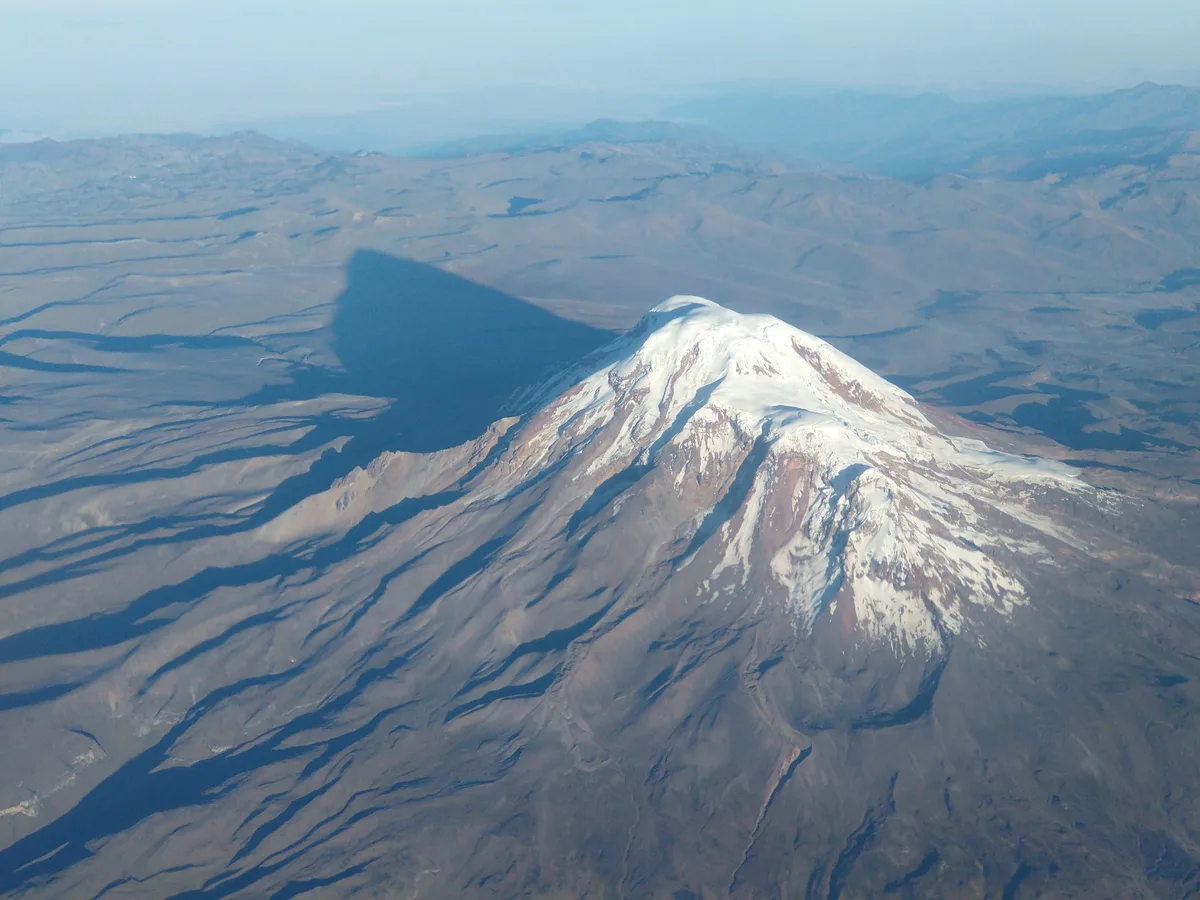
Chimborazo
Nevado Chimborazo is a colossal 6,263-metre glaciated stratovolcano in the Cordillera Occidental of Ecuador. Because Earth is an oblate spheroid with an equatorial bulge, Chimborazo's summit is the furthest terrestrial point from the center of the Earth (6,384.4 km), making it the closest place on the planet's surface to the Sun. Renowned in exploration history, it was attempted by Alexander von Humboldt in 1802 and finally summited on January 4, 1880, by Edward Whymper alongside Val Tournanche alpine guides Louis Carrel and Jean-Antoine Carrel.
Jirishanca
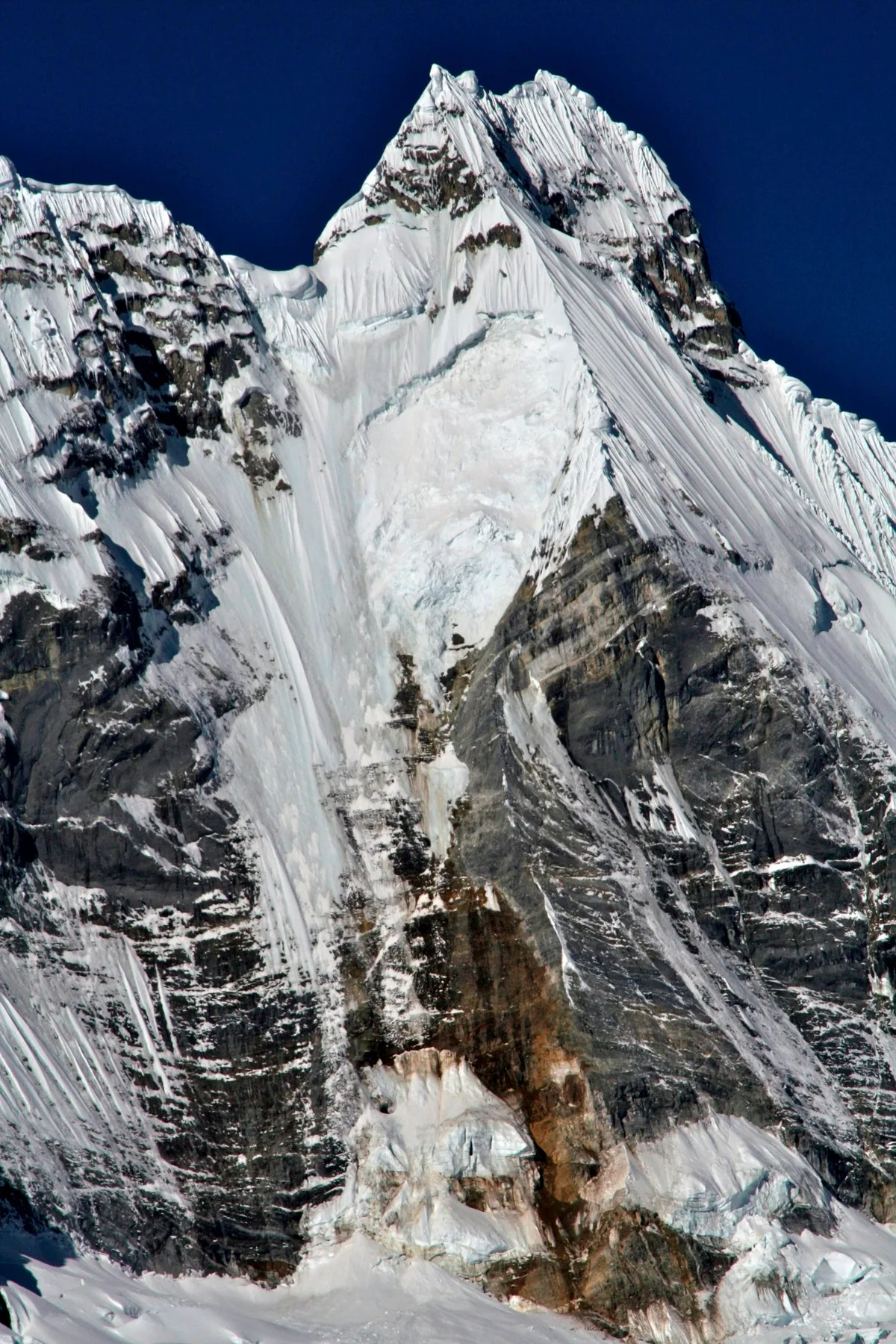
Jirishanca is a breathtaking 6,094-metre pinnacle in the northern Cordillera Huayhuash, internationally renowned as the Matterhorn of the Andes for its impossibly sheer profile and fluted ice spires. Its Quechua name translates to Hummingbird Beak of Ice. The mountain was first climbed on July 12, 1957, by Austrian mountaineering legends Toni Egger and Siegfried Jungmeir via the treacherous East Buttress, one of the boldest technical achievements in Andean climbing history.
Huayna Potosí
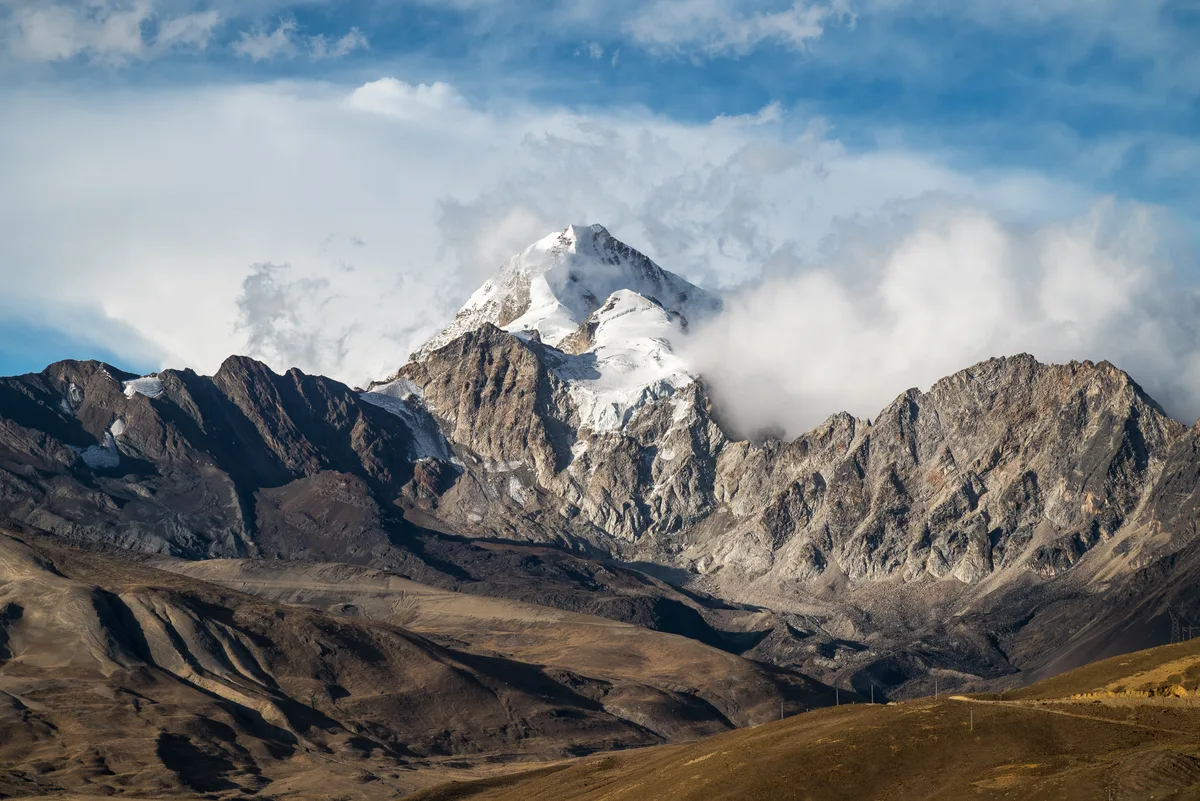
Huayna Potosí is a stunning 6,088-metre glaciated pyramid in the Cordillera Real of Bolivia, widely regarded as one of the most aesthetic peaks in South America. First climbed in 1919 by German mountaineers Rudolf Dienst and Adolf Schulze, the peak features classic glacier ramps, steep summit bergschrunds, and formidable 1,000-metre technical ice walls on its west face. It stands directly north of La Paz near the Zongo Pass.
Alpamayo
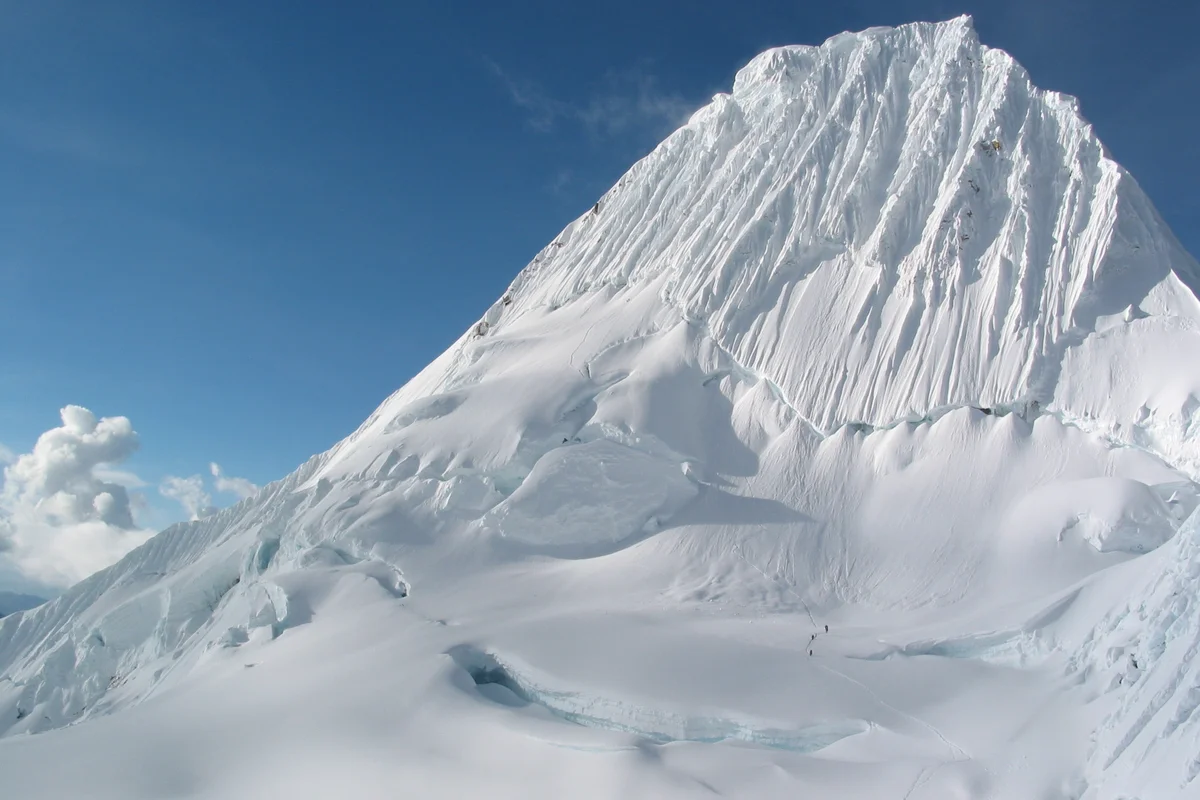
Alpamayo is an extraordinary 5,947-metre pyramid of ice and snow situated in the northern Cordillera Blanca of Peru. Globally celebrated as the World's Most Beautiful Mountain, its sheer Southwest Face is carved with steep fluted ice runnels that form one of the premier alpine ice climbs on Earth.
Cotopaxi
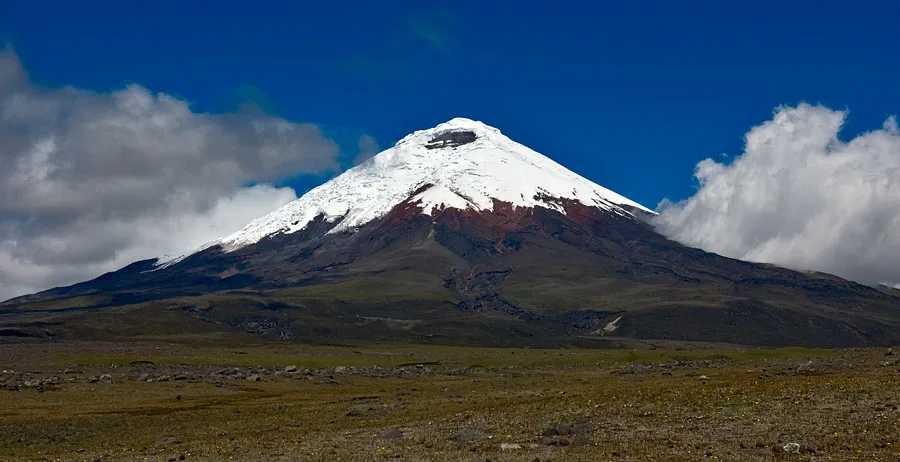
Volcán Cotopaxi is a near-perfect symmetrical stratovolcano rising to 5,897 metres in the Eastern Cordillera of the Ecuadorian Andes. One of the highest historically active volcanoes on Earth, its snow-mantled cone encases an 800-metre-wide crater emitting sulfurous steam vents and fumaroles. The volcano was first climbed on November 28, 1872, by German geologist Wilhelm Reiss and Colombian-Ecuadorian explorer Ángel María Escobar, who spent hours surveying the inner crater rim.
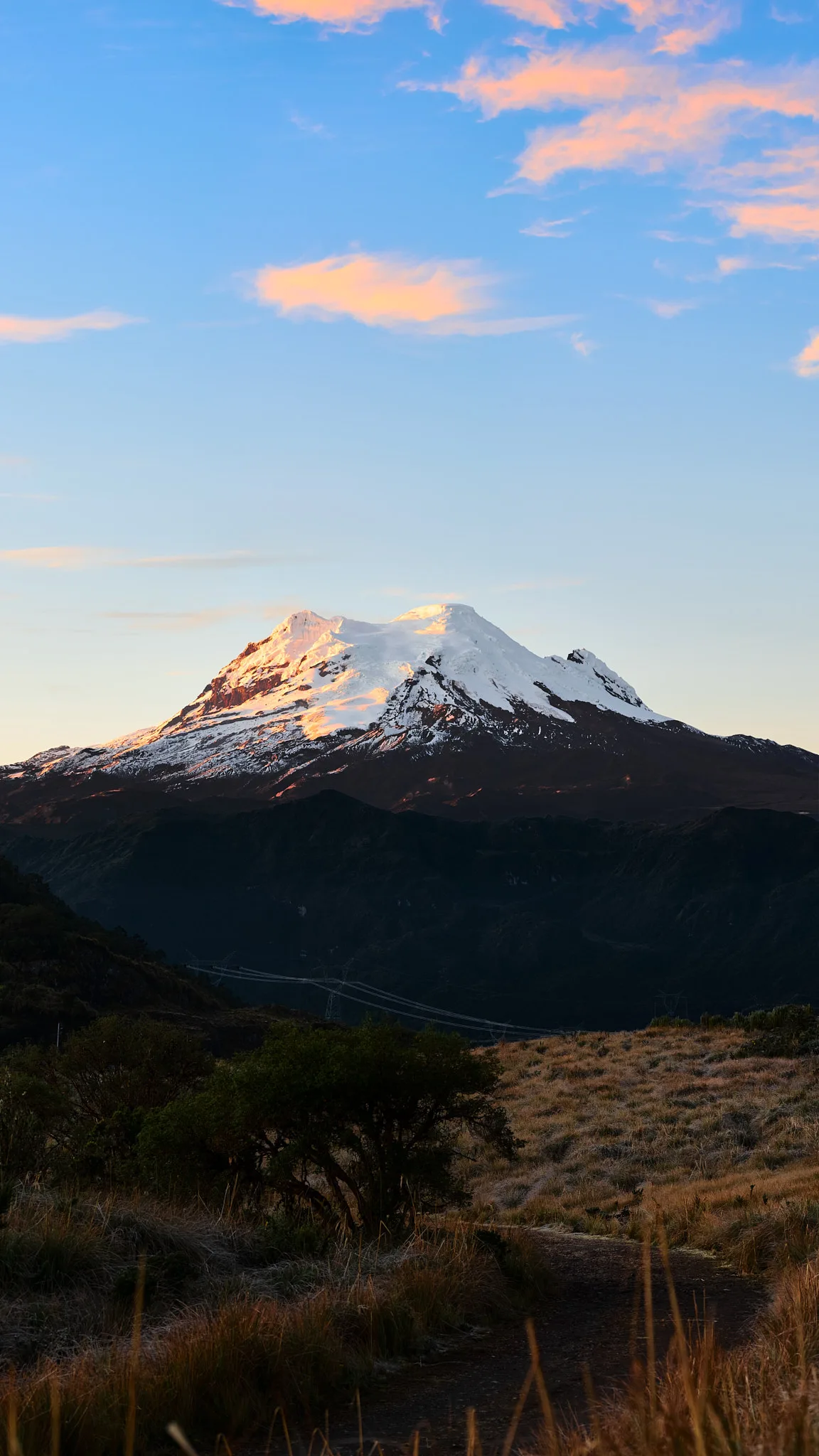
Antisana
Volcán Antisana is an imposing, heavily glaciated 5,753-metre stratovolcano in the Cordillera Real of Ecuador, renowned for its complex glacier maze, massive seracs, and yawning crevasse fields. Widely recognized as one of the most technically demanding volcanic massifs in the northern Andes, Antisana was first climbed on March 10, 1880, by Edward Whymper, Louis Carrel, and Jean-Antoine Carrel. In 1906, pioneering Ecuadorian polymath Nicolás Martínez led the first national ascent, cementing modern Ecuadorian alpinism.
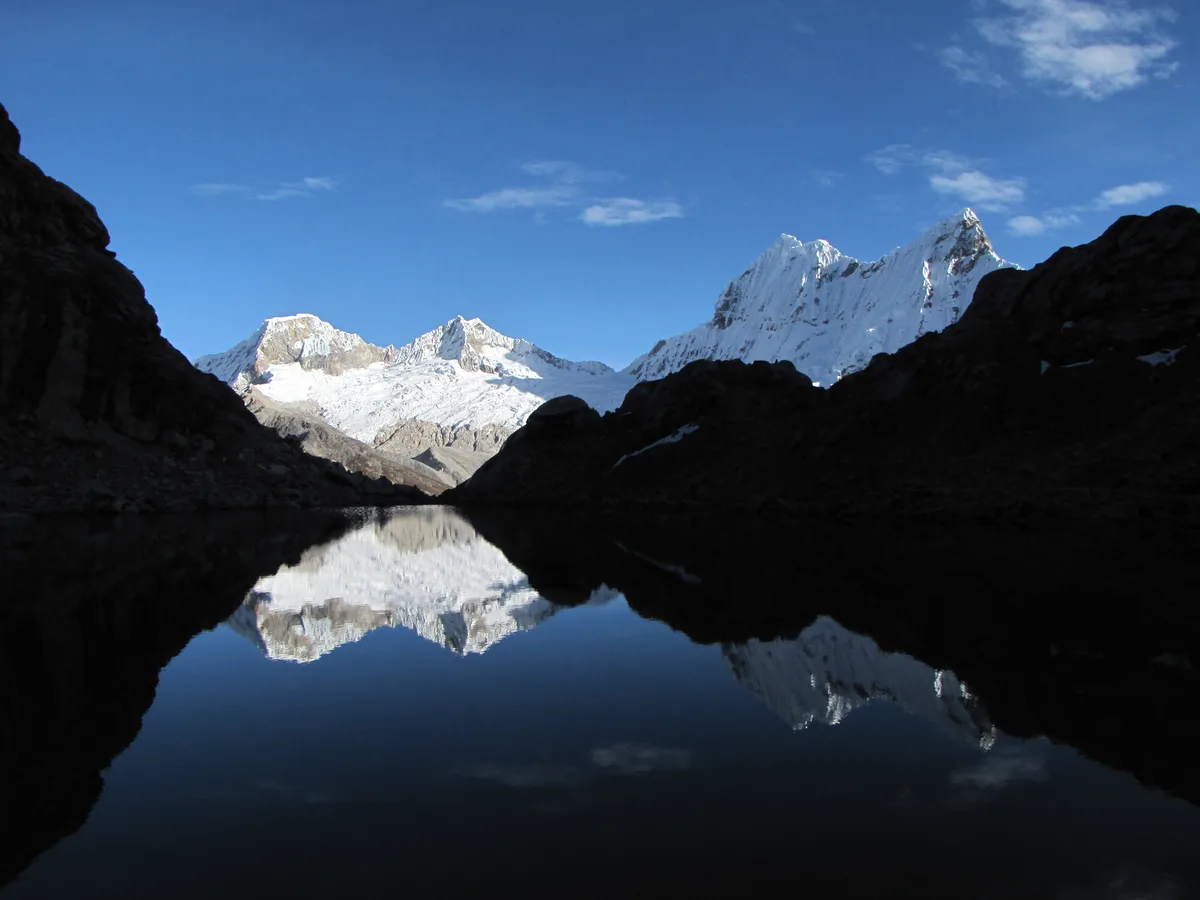
Nevado Pisco
Nevado Pisco is a celebrated 5,752-metre glaciated summit located in the central Cordillera Blanca of Peru above the Quebrada Llanganuco. First climbed on July 12, 1951, by Austrian topographer Erwin Schneider alongside Claude Fabre and Fermo Marzari, it was named to toast their triumph with Peru's traditional pisco brandy. The summit offers an unparalleled 360-degree panorama of Huascarán, Chacraraju, and Artesonraju.
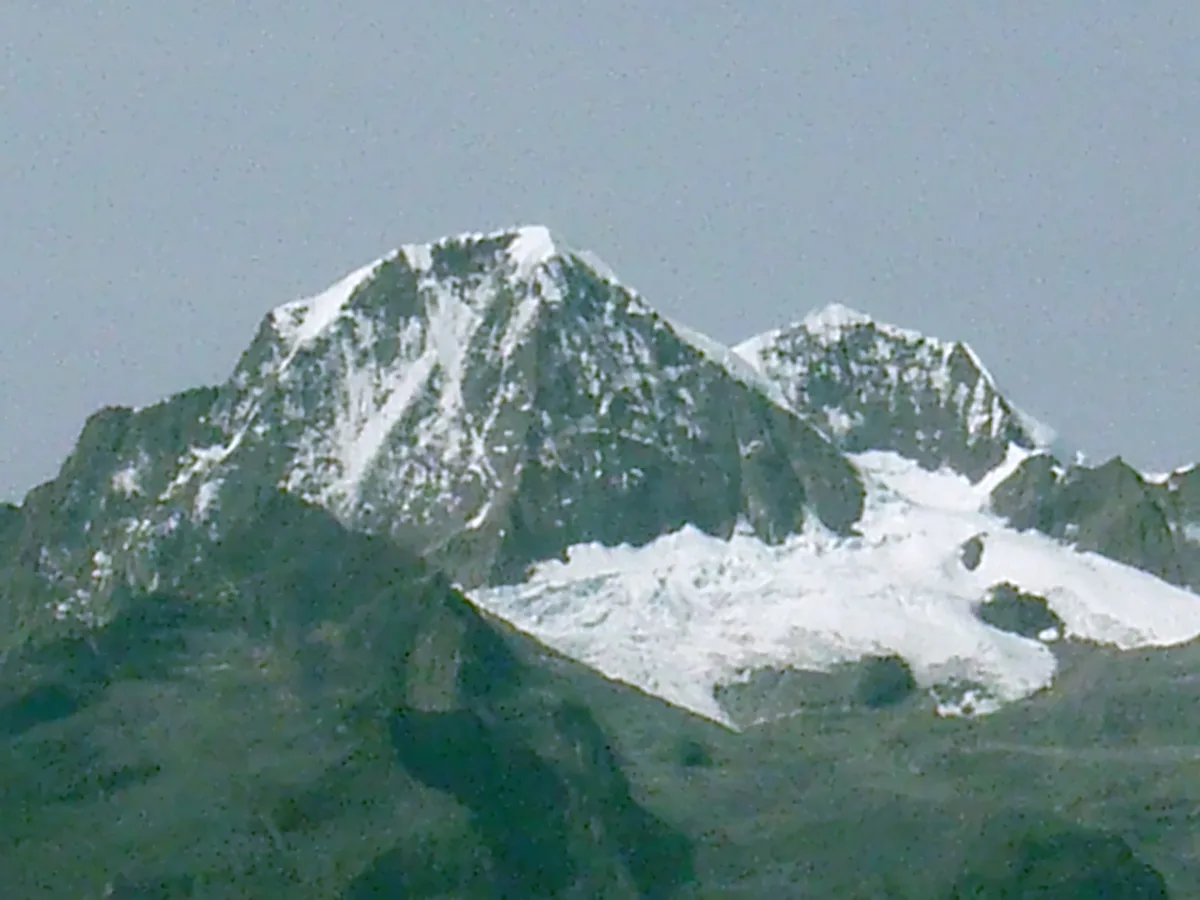

Pico Cristóbal Colón
Pico Cristóbal Colón is the highest mountain in Colombia and the fifth most topographically prominent peak on Earth, soaring to 5,730 metres in the isolated coastal massif of the Sierra Nevada de Santa Marta. Rising abruptly just 42 kilometres from the Caribbean Sea, this glaciated titan holds profound sacred significance for indigenous Kogui, Arhuaco, Wiwa, and Kankuamo peoples as the heart of the world. The peak was first climbed in 1939 by Walter Wood, Anderson Bakewell, and Colombian mountaineering pioneer Erwin Kraus.
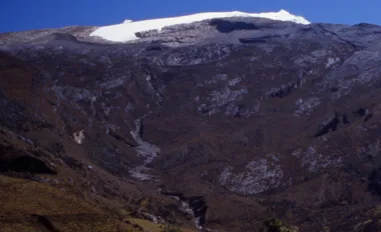
Ritacuba Blanco
Ritacuba Blanco is the 5,410-metre crowning peak of the Cordillera Oriental of Colombia and the Sierra Nevada del Cocuy. Dominated by a massive western ice sheet and sheer eastern rock walls dropping precipitously toward the Amazonian llanos, Ritacuba Blanco is celebrated for its pristine glaciated ramps and high-altitude paramo lakes. The mountain was first climbed on April 3, 1942, by Erwin Kraus, Guido Tamayo, and Heriberto Degen.
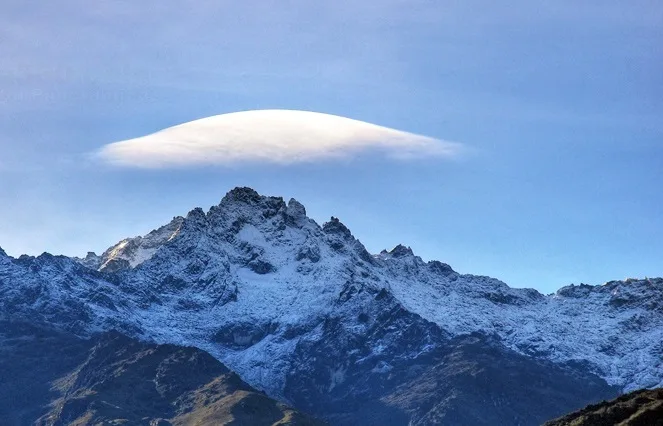

Pico Bolívar
Pico Bolívar is the highest mountain in Venezuela, rising to 4,978 metres above the city of Mérida in the Venezuelan Andes. Historically crowned by northern equatorial glaciers, its jagged metamorphic horn stands as the geographical symbol of Venezuela's alpine heritage. First explored scientifically by German geographer Wilhelm Sievers in 1885, Pico Bolívar was first climbed on January 5, 1935, by Austrian alpinist Franz Josef Weiss alongside legendary Los Nevados guide Domingo Peña and Herlindo Molina.
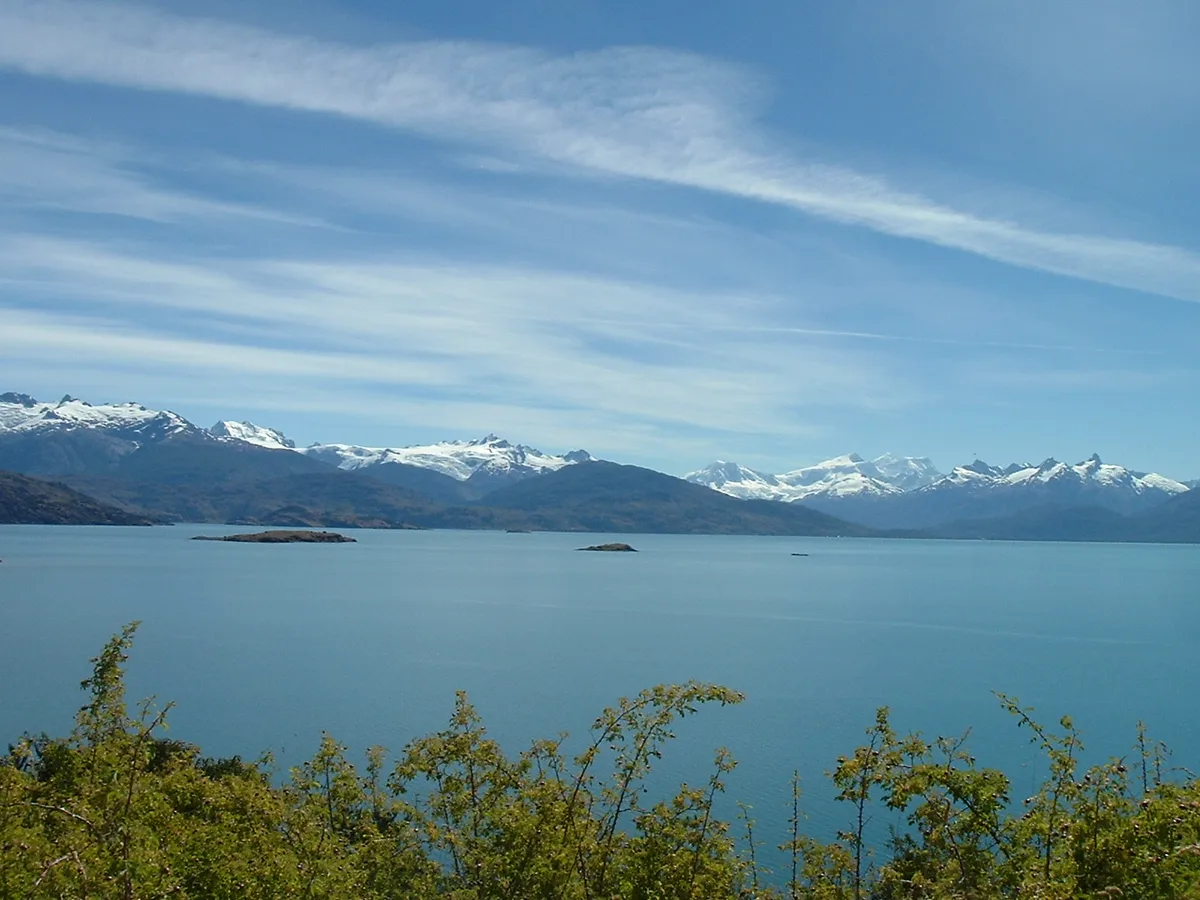

Monte San Valentín
Monte San Valentín is the highest peak in Patagonia, rising to an official surveyed elevation of 4,058 metres (13,314 ft) at the head of the Northern Patagonian Icefield in Chile. Bounded by colossal hanging glaciers, severe icefalls, and ferocious Pacific storms, it commands an immense topographic prominence of 3,696 metres, making it one of the most prominent mountains on Earth. Although explored by Father Alberto María De Agostini in 1921, the summit was first reached in December 1952 by an Argentine-French expedition led by Jorge Peterek.
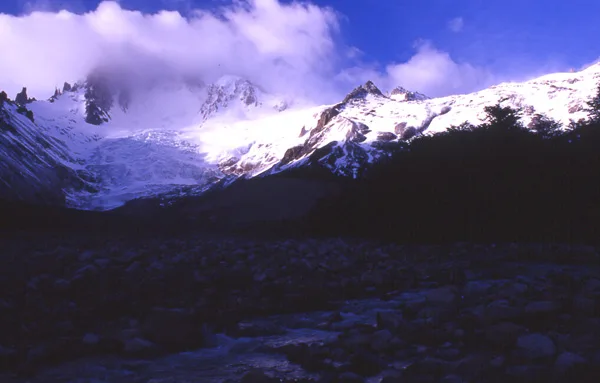
Cerro San Lorenzo
Cerro San Lorenzo, also known as Monte San Lorenzo or Mount Cochrane at 3,706 metres (12,159 ft), is the second highest peak in Patagonia, straddling the border between Chile and Argentina. Towering above the Patagonian steppes with a massive topographic prominence of 3,319 metres, it is an isolated giant surrounded by four heavily crevassed glaciers. In December 1943, sixty-year-old Salesian missionary and explorer Father Alberto María De Agostini led the historic first ascent with mountain guides Alejandro Hemmi and Heriberto Schmoll, overcoming brutal gales and treacherous sérac falls.
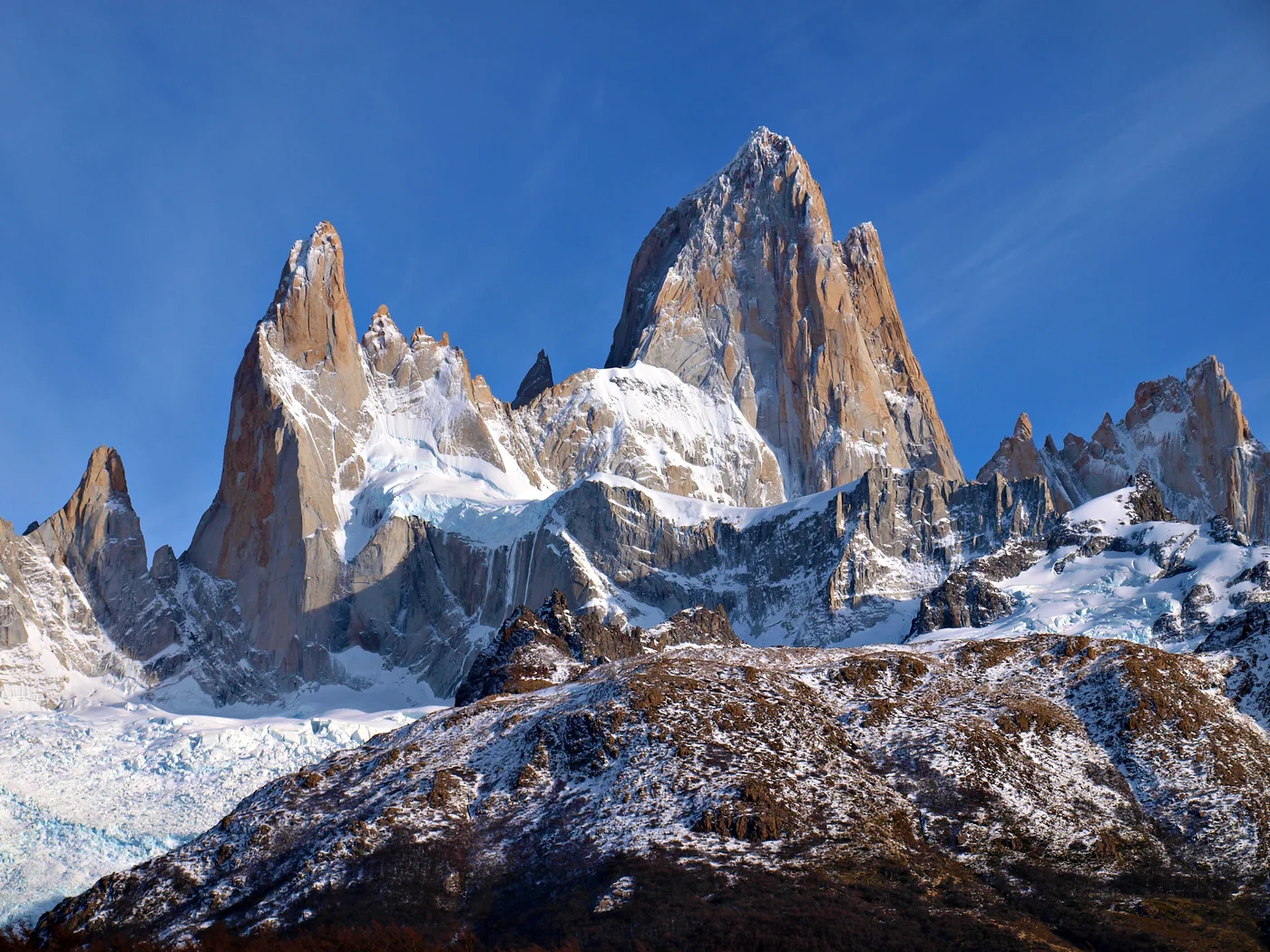
Cerro Fitz Roy
Cerro Fitz Roy, also known as Monte Fitz Roy or Cerro Chaltén at 3,405 meters (11,171 ft), is a world-renowned granite monolith situated in the Southern Patagonian Icefield near El Chaltén, Argentina. Revered for its vertical granite walls and notorious hurricane-force Patagonian storms, it is considered one of the most technically demanding alpine summits on Earth. French climbers Lionel Terray and Guido Magnone completed the legendary first ascent on February 2, 1952, establishing the historic Franco-Argentine Route.
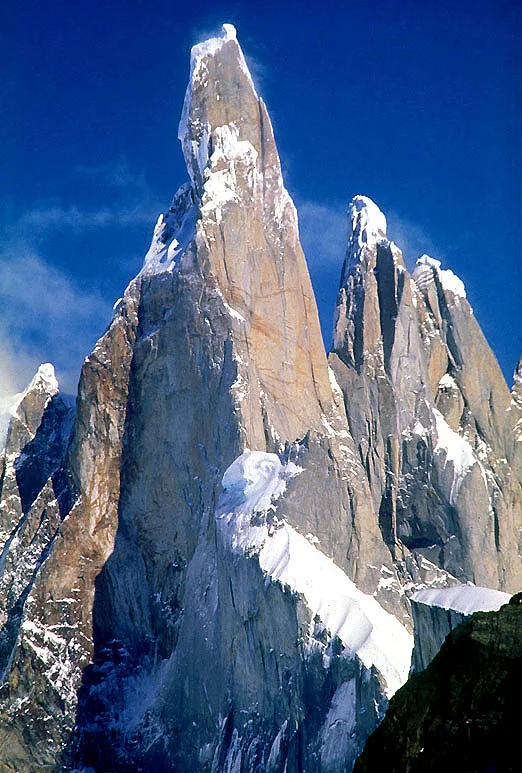
Cerro Torre
Cerro Torre is a world-famous granite spire rising to 3,128 meters in the Southern Patagonian Icefield on the Argentina-Chile border. Renowned for vertical sheer granite walls topped by monstrous rime-ice mushrooms formed by relentless Pacific winds, it is widely considered one of mountaineering's supreme technical challenges. Following fierce international debate over Cesare Maestri's disputed 1959 climb, Maestri returned in 1970 to drill hundreds of bolts using a gasoline compressor on the Southeast Ridge. In 1979, American pioneers Jim Bridwell and Steve Brewer completed the historic first definitive ascent of the Compressor Route to the summit.
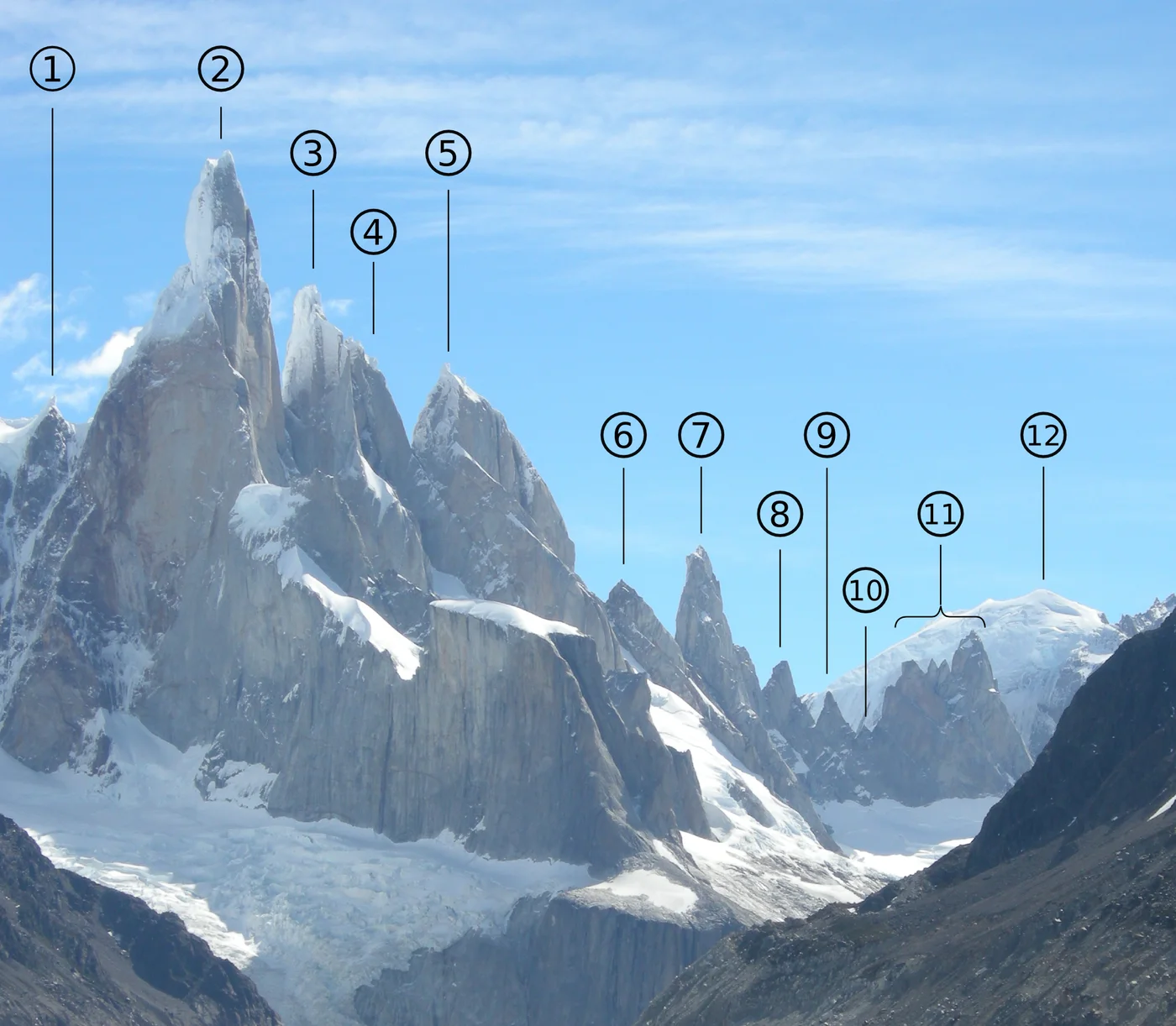
Torre Egger
Torre Egger is an extraordinarily steep granite needle rising to 2,685 meters in the Cerro Torre group of Patagonia, situated between Cerro Torre and Aguja Standhardt. Named in memory of Austrian climber Toni Egger who perished on Cerro Torre in 1959, the spire is widely considered by elite alpinists to be technically harder than Cerro Torre itself due to unbroken vertical granite walls, hanging ice daggers, and brutal weather. It was first climbed in December 1976 by Americans Jim Donini, John Bragg, and Michael de la Yane, and achieved international fame when Canadian solo sensation Marc-André Leclerc completed the historic first solo winter ascent in September 2016.
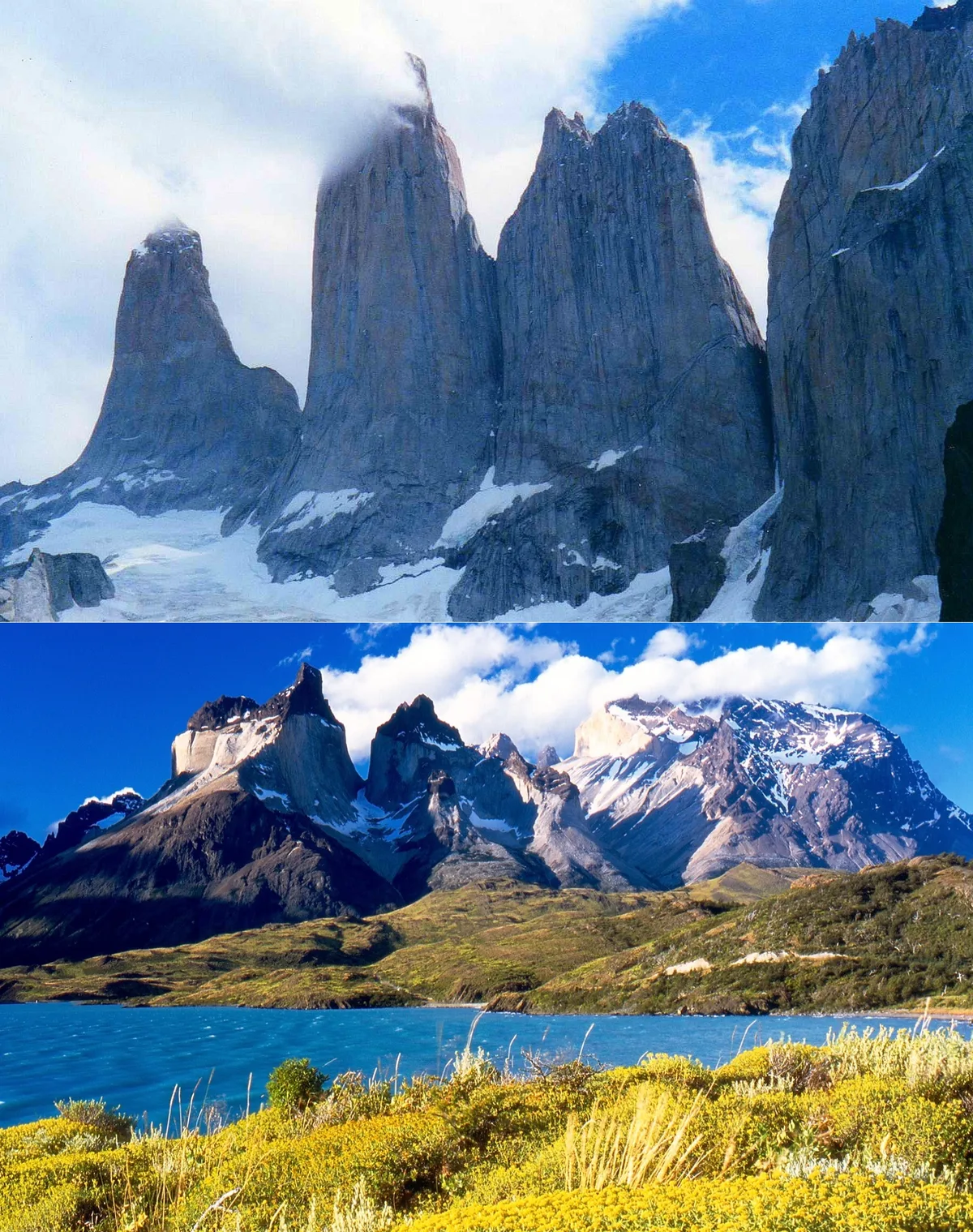
Torres del Paine
Torres del Paine is a world-renowned complex of vertical granite towers rising to 2,500 metres in Chilean Patagonia's Torres del Paine National Park. The three primary monoliths—Torre Sur (2,500 m), Torre Central (2,460 m), and Torre Norte (2,260 m)—plunge sheer down to glacial lakes and moraines, battered by legendary Roaring Forties gales. Italian guides led by Armando Aste first conquered Torre Sur in 1963, while British alpine legends Chris Bonington and Don Whillans won an epic international race to make the first ascent of the sheer 800-metre east face of Torre Central in January 1963.
Documented Sources & Archival Citations
- American Alpine Journal: Patagonian Andes Chronology(American Alpine Club)
Supporting claim: Cartographic and first ascent records across the Southern Patagonian Icefield and Andes
Accessed/Documented: 2026