1970 Mesili Huayna Potosí West Face Historic Direct Ascent
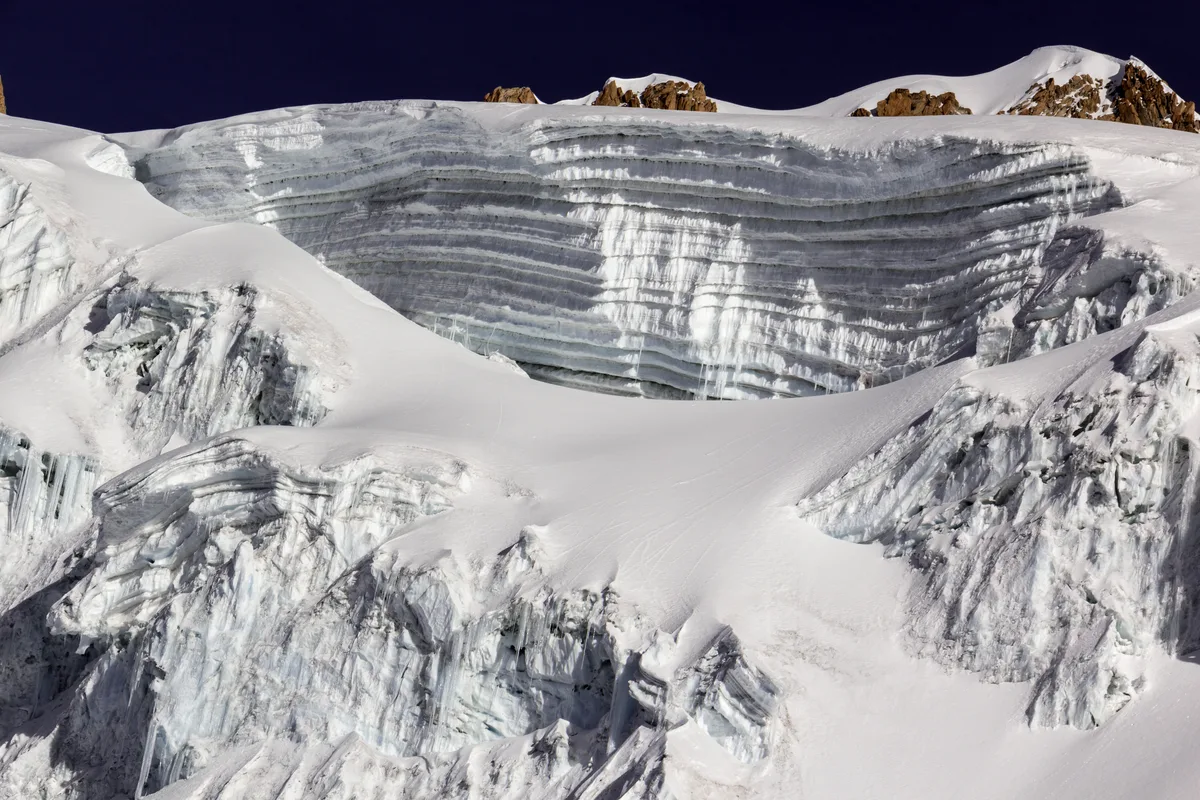
In July 1970, French-Bolivian alpine pioneer Alain Mesili and climbing companions unlocked the colossal 1,000-metre West Face of Huayna Potosí (6,088 m). Scaling 70-degree black ice corridors, rotten quartzite bands, and hanging seracs in lightweight style, their breakthrough inaugurated modern extreme technical alpinism in the Cordillera Real.
Mountain Safety & Conditions Disclaimer: High-altitude climbing, glacial travel, and technical ascents entail severe objective risks including avalanches, serac collapses, rapid weather collapse, and altitude illness. Historical route descriptions and summit claims on Mountanity reflect documented archival sources and must not be used as live operational safety assessments. Local regulations, permits, and physical glacial topography change continuously.
Peer Review: Senior Editorial Board & Historical Reviewers • Editorial Standards
Official Expedition Narrative & Archival Record
By 1970, while Huayna Potosí's eastern glacier routes were frequently ascended, the mountain's forbidding 1,000-metre West Face remained an unclimbed fortress of vertical ice and crumbling rock. Plunging sheer into the rainforest valleys of the Yungas, the wall was threatened by stonefall and swept by violent storms. French alpinist Alain Mesili, who had brought modern Chamonix icecraft to Bolivia, formed a small alpine-style team to attempt the direct line. Approaching from the Milluni valley, Mesili and his rope partner established a precarious bivouac below the face. On July 14, 1970, moving fast with front-point crampons and short technical ice axes, Mesili led pitch after pitch of sustained 65-to-75-degree water ice, threading through shattered quartzite bands where piton protection was marginal. Overcoming a fragile overhanging ice cornice at the summit rim, Mesili hauled himself onto the 6,088-metre peak. The ascent was hailed across the alpine community as a watershed moment that propelled Bolivian mountaineering directly into the modern era of extreme technical face climbing.
Documented Team Composition
- Alain Mesili (Lead Climber, France/Bolivia)
- French-Bolivian Alpine Rope Team
Key Statistics & Topographic Figures
- Wall Verticality
- 1,000 vertical metres
- First Ascent Date
- July 14, 1970
- Lead Alpinist
- Alain Mesili
- Ice Angle
- 65°-75° sustained water ice
Archival Primary Source Quotations
“The West Face was sheer, silent, and endless; every front-point placement was a contract with gravity.”
Defined Alpine Terminology & Concepts
- Black Water Ice
- Extremely dense, dark glacial ice formed by freeze-thaw compression on steep Andean walls, notoriously hard on ice tools.
Frequently Asked Questions: 1970 Mesili Huayna Potosí West Face Historic Direct Ascent
Who climbed the West Face of Huayna Potosí in 1970?
French-Bolivian alpine pioneer Alain Mesili and climbing companions made the historic first ascent of the 1,000-metre West Face on July 14, 1970.
What technical difficulty characterizes the West Face of Huayna Potosí?
The route features 1,000 metres of sustained 65-to-75-degree black water ice, shattered quartzite bands, and overhanging summit cornices.
Why was the 1970 West Face ascent a watershed moment in Bolivia?
It introduced modern European extreme front-pointing and big-wall icecraft to the Cordillera Real, shifting focus from normal routes to technical faces.
Ascent Route & Topography
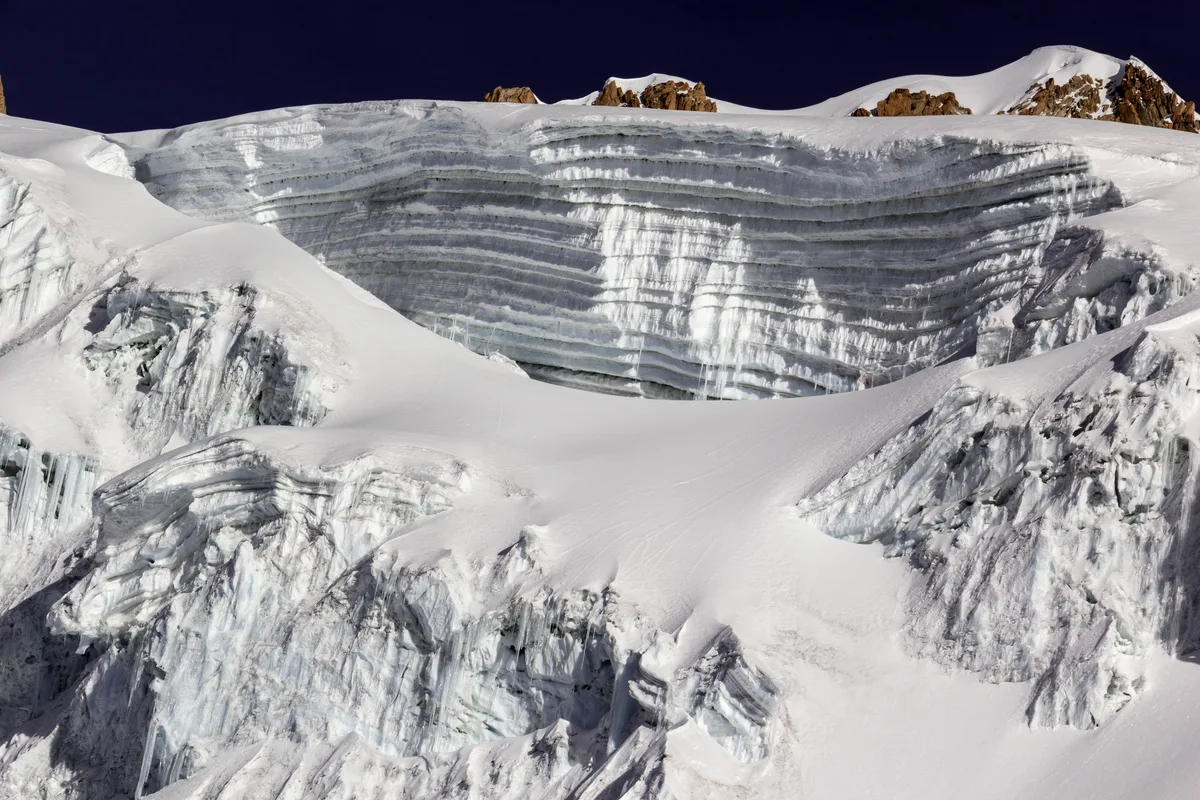
Huayna Potosí French Route (Southeast Face)
The French Route on Huayna Potosí is an exhilarating technical ice direct ascending the peak's southeast wall to 6,088 metres in the Cordillera Real. First climbed in the 1970s by French-Bolivian alpine pioneer Alain Mesili and companions, this direct variant surmounts a continuous 300-metre ice wall sloping between 55 and 70 degrees, bypassing the crowded normal route to deliver a thrilling and pure alpine experience.
Target Objective Peak
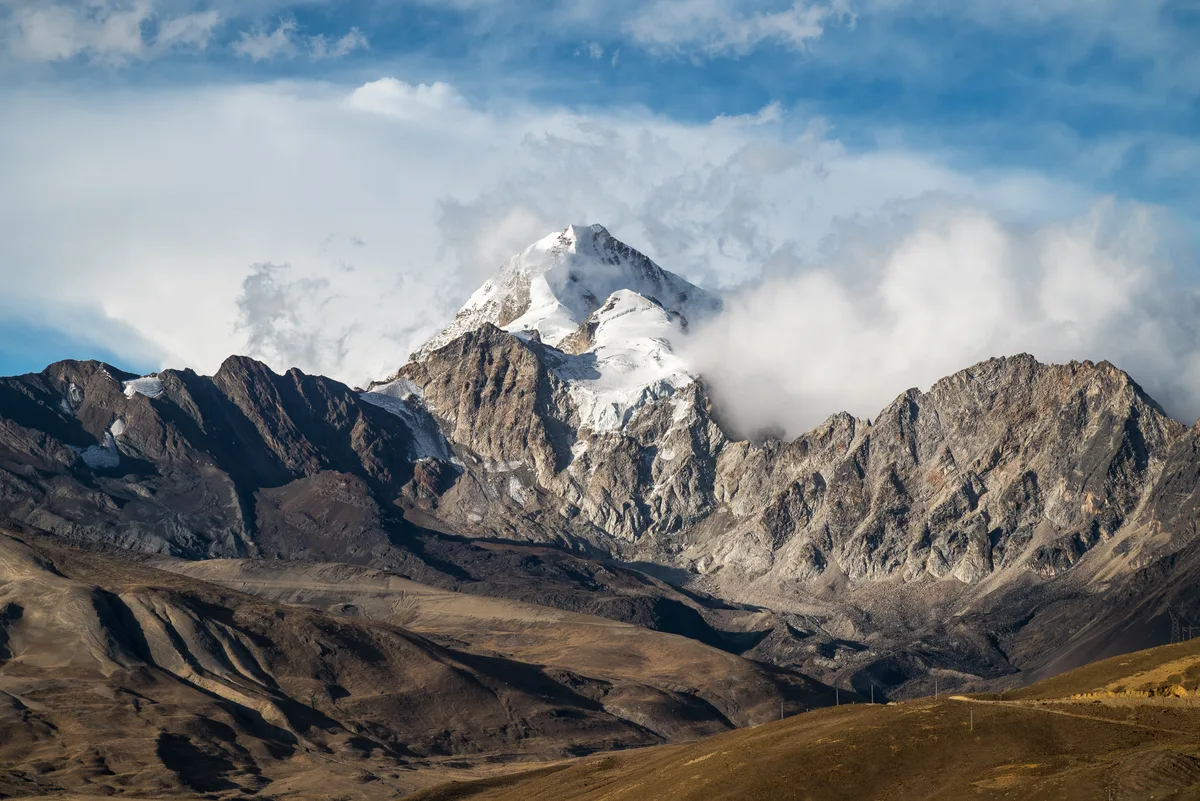

Huayna Potosí
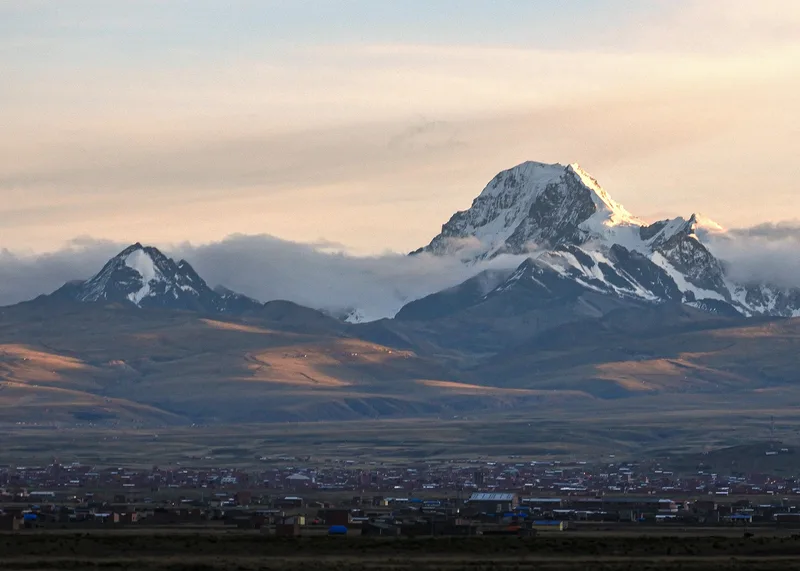
Huayna Potosí is a stunning 6,088-metre glaciated pyramid in the Cordillera Real of Bolivia, widely regarded as one of the most aesthetic peaks in South America. First climbed in 1919 by German mountaineers Rudolf Dienst and Adolf Schulze, the peak features classic glacier ramps, steep summit bergschrunds, and formidable 1,000-metre technical ice walls on its west face. It stands directly north of La Paz near the Zongo Pass.
Featured Expedition Climber
Alain Mesili
Born in France, Alain Mesili was captivated by high mountains from his youth in Chamonix, honing advanced ice and big-wall techniques in the Mont Blanc massif. In the late 1960s, seeking pristine, unclimbed walls away from the crowds of Europe, Mesili traveled to South America and settled in La Paz, Bolivia. Mesili quickly recognized that the Cordillera Real held world-class alpine potential that remained untouched by modern technical methods. Over the next two decades, Mesili launched an extraordinary series of bold first ascents. In 1970, he spearheaded the first direct ascent of the daunting 1,000-metre West Face of Huayna Potosí (6,088 m), tackling 70-degree black ice and vertical mixed pitches. In 1972, Mesili solved one of the grandest challenges in South America by completing the first direct ascent of the colossal 2,000-metre South Face of Nevado Illimani (6,438 m). Mesili went on to establish technical routes on Mururata, Condoriri, and Chachacomani, authoring the first comprehensive modern climbing guidebook to the Cordillera Real, The Bolivian Andes. Mesili dedicated his life to training Bolivian mountain guides, promoting sustainable alpine tourism, and advocating for environmental protection of the fragile Altiplano watersheds.
Associated Historical Chronicles & Stories
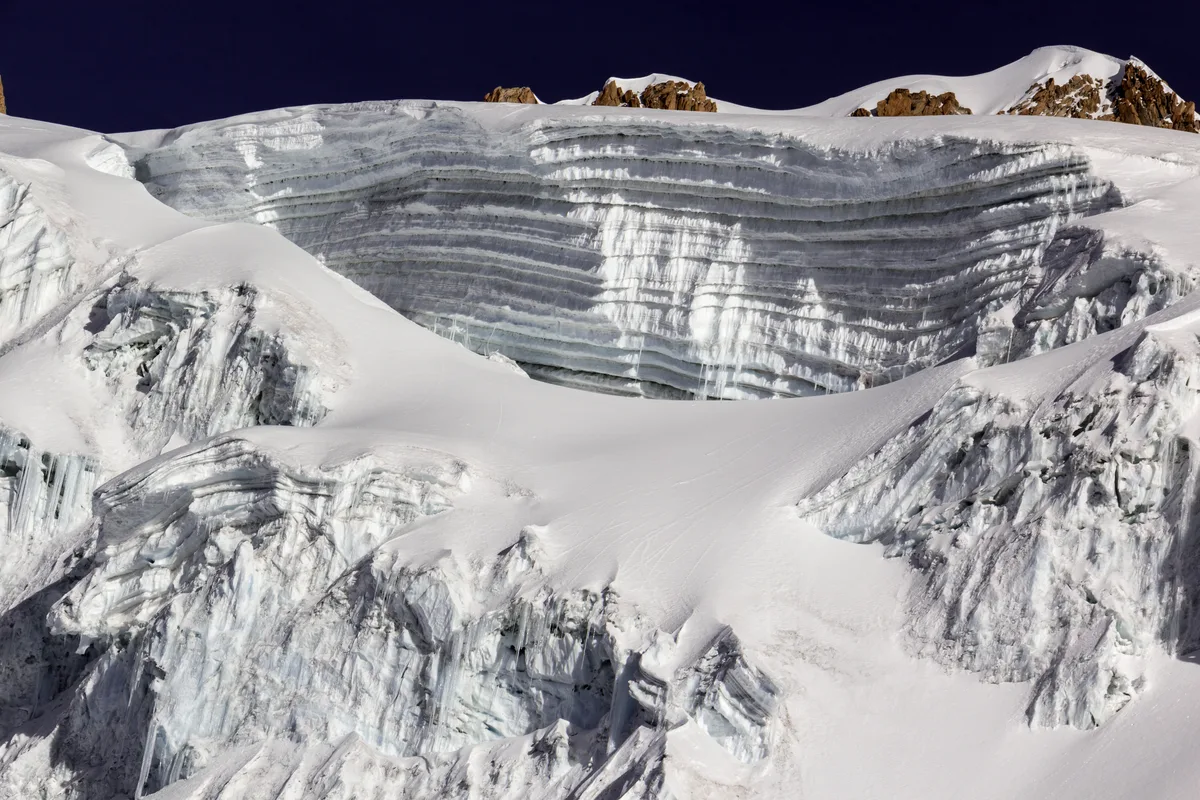
Black Ice on the West Face: Alain Mesili on Huayna Potosí
In July 1970, French-Bolivian alpine titan Alain Mesili conquered the 1,000-metre West Face of Huayna Potosí (6,088 m), launching extreme technical climbing in Bolivia.
Documented Sources & Archival Citations
- The Bolivian Andes: Cordillera Real Climbing Guide(Alain Mesili / Los Amigos del Libro)
Supporting claim: Firsthand technical chronicle and topo of the 1970 West Face first ascent of Huayna Potosí
Accessed/Documented: 1980 - American Alpine Journal: Andes Chronology - Bolivia(American Alpine Club)
Supporting claim: Technical appraisal of Mesili's breakthrough big-wall ice ascents in the Cordillera Real
Accessed/Documented: 1971