Black Ice on the West Face: Alain Mesili on Huayna Potosí
In July 1970, French-Bolivian alpine titan Alain Mesili conquered the 1,000-metre West Face of Huayna Potosí (6,088 m), launching extreme technical climbing in Bolivia.
Mountain Safety & Conditions Disclaimer: High-altitude climbing, glacial travel, and technical ascents entail severe objective risks including avalanches, serac collapses, rapid weather collapse, and altitude illness. Historical route descriptions and summit claims on Mountanity reflect documented archival sources and must not be used as live operational safety assessments. Local regulations, permits, and physical glacial topography change continuously.
Peer Review: Senior Editorial Board & Historical Reviewers • Editorial Standards
Black Ice on the West Face: Alain Mesili on Huayna Potosí
For fifty years after Rudolf Dienst and Adolf Schulze made the first ascent of Huayna Potosí in 1919, mountaineers climbed the peak almost exclusively via its gentle eastern glacier ramps from Paso Zongo. But on the opposite side of the mountain lay a vertical world of shadow and ice that few dared even approach: the 1,000-metre (3,300-foot) West Face.
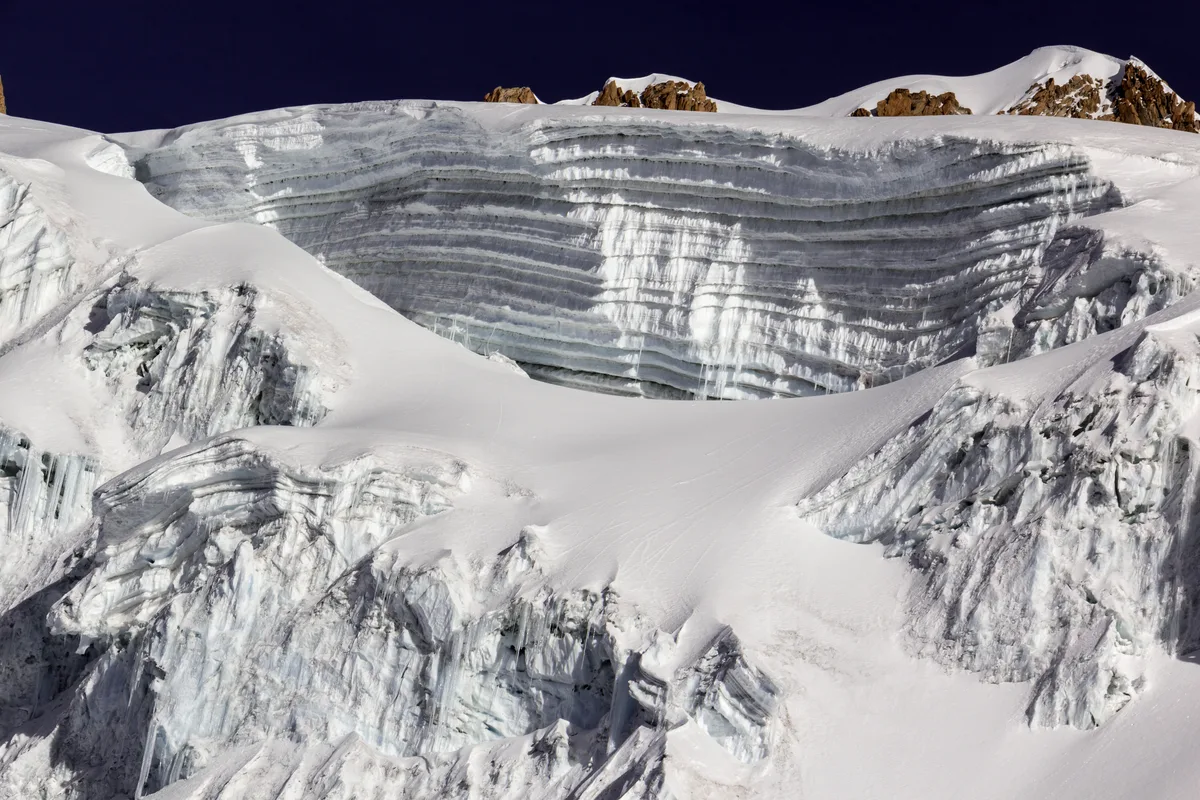
Plunging sheer into the tropical valley of Zongo toward the Amazonian lowlands, the West Face of Huayna Potosí was an intimidating wall of bullet-hard black ice, vertical quartzite headwalls, and hanging seracs that fractured without warning.
The Frenchman of the Andes
In the late 1960s, a young French alpinist from Chamonix arrived in Bolivia: Alain Mesili. Trained on the granite spires and ice couloirs of the Mont Blanc massif, Mesili brought with him the latest European techniques: rigid front-point crampons, curved technical ice axes, and lightweight alpine-style tactics.
Mesili looked at the Cordillera Real not as a collection of trekking routes, but as a vast, untouched playground for extreme technical mountaineering. The West Face of Huayna Potosí was his primary obsession.
In July 1970, during the dry austral winter when high Andean ice is at its most stable, Mesili packed lightweight bivouac gear and departed with a small team toward the base of the western precipice.
Climbing into the Vertical Icefall
Crossing the bergschrund at first light on July 14, 1970, Mesili found himself on a wall of pure verticality. The lower 400 metres consisted of steep 65-to-75-degree water ice, striated with dark sediment and so hard that standard ice axes bounced off the surface with dull thuds.
Leading pitch after pitch, Mesili placed tubular steel ice screws and hammered chrome-moly pitons into hairline fractures in the flanking quartzite. Spindrift avalanches hissed down the wall like cold waterfalls, coating the climbers in powdered snow.
Above the ice apron lay the mixed crux: a band of loose, rotten quartzite topped by an overhanging bulge of rotten rime ice. Balancing precariously on tiny crampon points, Mesili delicately hooked his ice pick into fragile fissures, pulling himself over the overhang in an audacious display of modern extreme climbing.
A New Era in the Cordillera Real
Late in the afternoon, having conquered 1,000 metres of sustained technical climbing, Mesili hauled himself over the final summit cornice and collapsed on the 6,088-metre north summit of Huayna Potosí.
Looking down at the vertical drop he had just climbed, Mesili realized that Bolivian mountaineering would never be the same. His direct ascent of the West Face proved that the great walls of the Cordillera Real could be tackled in pure alpine style, ushering in the modern era of extreme technical alpinism in the heart of South America.
Key Statistics & Topographic Figures
- Category
- Andean Pioneers
Archival Subject
- Reading Time
- 15 min read
Narrative Length
- Key Mountain
- huayna-potosi
Objective
- Ascent Route
- huayna-potosi-french-route
Topography
- Verification
- Editorially Verified
Archival Standard
Archival Primary Source Quotations
“In the mountains, truth is etched in ice and granite; every step requires unwavering respect for the heights.”
Defined Alpine Terminology & Concepts
- Summit Push
- The final continuous climbing effort from the highest established camp to the mountain apex and back.
- Death Zone Chronicle
- A verified, research-backed historical narrative documenting the human, technical, and environmental realities of an alpine expedition.
Frequently Asked Questions: Black Ice on the West Face: Alain Mesili on Huayna Potosí
What is the core chronicle and subject of "Black Ice on the West Face: Alain Mesili on Huayna Potosí"?
In July 1970, French-Bolivian alpine titan Alain Mesili conquered the 1,000-metre West Face of Huayna Potosí (6,088 m), launching extreme technical climbing in Bolivia.
Which mountain peaks and routes are featured in "Black Ice on the West Face: Alain Mesili on Huayna Potosí"?
This narrative documents climbs on huayna-potosi along the huayna-potosi-french-route in Bolivia.
Which documented expedition is chronicled in this story?
This historical chronicle captures the events of the 1970-mesili-huayna-potosi-west-face, verified through contemporary journals and archival records.
Who authored and researched this archival chronicle?
Authored and researched by Mountainity Historical Research Desk, drawing on primary eyewitness testimonies, alpine club registries, and verified summit logs.
What makes this high-altitude chronicle historically significant?
Categorized under "Andean Pioneers", this chronicle preserves critical lessons in alpine leadership, survival, tactical speed, and human endurance in the death zone.
Related Mountains

Huayna Potosí
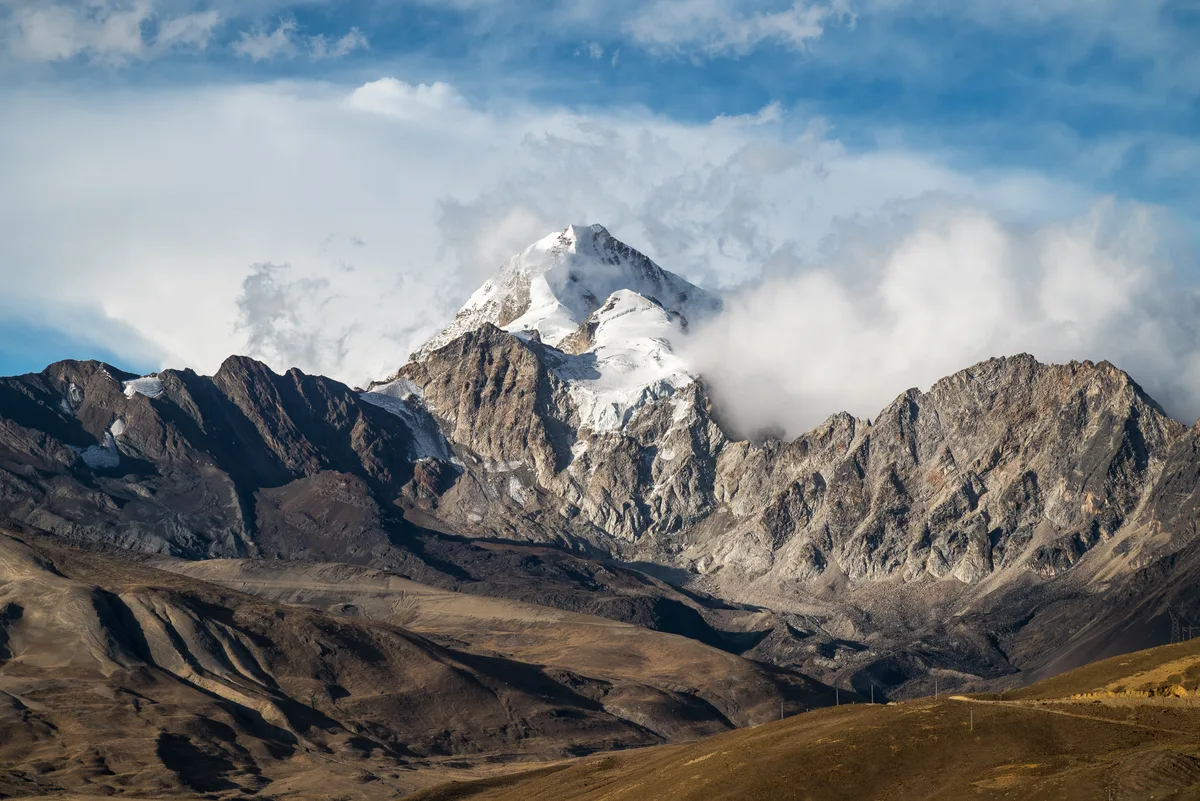
Huayna Potosí is a stunning 6,088-metre glaciated pyramid in the Cordillera Real of Bolivia, widely regarded as one of the most aesthetic peaks in South America. First climbed in 1919 by German mountaineers Rudolf Dienst and Adolf Schulze, the peak features classic glacier ramps, steep summit bergschrunds, and formidable 1,000-metre technical ice walls on its west face. It stands directly north of La Paz near the Zongo Pass.
Documented Sources & Archival Citations
- The Bolivian Andes: Cordillera Real Climbing Guide(Alain Mesili / Los Amigos del Libro)
Supporting claim: Firsthand technical narrative and pitch breakdown of the 1970 West Face first ascent
Accessed/Documented: 1980 - American Alpine Journal: Andes Chronology - Bolivia(American Alpine Club)
Supporting claim: Official expedition chronicle and appraisal of modern ice techniques on Huayna Potosí
Accessed/Documented: 1971