Everest 1921: Mallory and the Great Reconnaissance
In 1921, George Mallory and the Mount Everest Committee embarked on a pioneering exploration across Tibet, mapping the north side of Everest and discovering the crucial route to the North Col.
Mountain Safety & Conditions Disclaimer: High-altitude climbing, glacial travel, and technical ascents entail severe objective risks including avalanches, serac collapses, rapid weather collapse, and altitude illness. Historical route descriptions and summit claims on Mountainity reflect documented archival sources and must not be used as live operational safety assessments. Local regulations, permits, and physical glacial topography change continuously.
Peer Review: Senior Editorial Board & Historical Reviewers • Editorial Standards
The Secret Kingdom and the Unmapped Giant
In the early spring of 1921, the world’s highest mountain was largely a geographic mystery. While the Great Trigonometrical Survey of India had calculated its summit height in the 1850s, no European mountaineer had approached within sixty miles of its base. Closed borders in Tibet and Nepal had sealed Everest behind impenetrable diplomatic and geopolitical walls.
The 1921 British Mount Everest Reconnaissance Expedition, organized jointly by the Royal Geographical Society and the Alpine Club, changed everything. Led diplomatically by Lieutenant-Colonel Charles Howard-Bury and driven mountaineering-wise by thirty-five-year-old George Leigh Mallory and Guy Bullock, the party crossed the high plateau of Tibet from Darjeeling. Their objective was not necessarily to reach the summit, but to survey the mountain’s topography and locate an accessible route to the highest point on Earth.
Discovery of the Rongbuk and the North Face
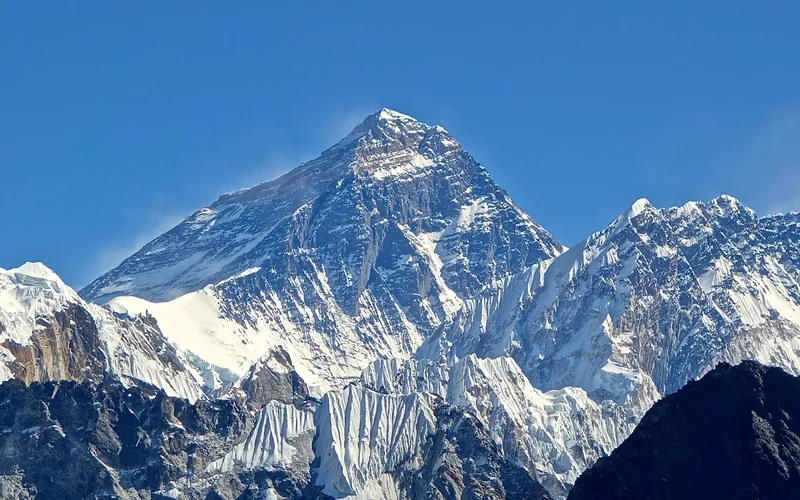
Arriving on the north side of the Himalayan crest, Mallory was greeted by the awe-inspiring sight of the Rongbuk Glacier and the staggering three-mile-wide North Face of Everest. Writing in his journals, Mallory described the northern precipices as a colossal wall of dark rock and hanging glaciers, sheer and seemingly impregnable.
Mallory and Bullock methodically explored the labyrinth of surrounding glaciated valleys. They pushed up the Western Rongbuk, the Lingtren range, and the high passes overlooking Nepal, including the Lho La. From each vantage point, they sketched maps, photographed ridges, and assessed avalanche danger. While the West Ridge appeared excessively difficult and exposed, Mallory’s keen eye detected a feasible line on the East Rongbuk side.
The Key to the North Col
The defining breakthrough of the 1921 expedition arrived in September. Bypassing the formidable lower icefalls of the East Rongbuk Glacier, Mallory, Bullock, and Oliver Wheeler ascended to the head of the glacier. There, rising above a steep wall of shattered seracs and ice slopes, stood a saddle of compacted ice at 7,020 meters: the North Col (Chang La).
On September 24, 1921, fighting biting Arctic winds and debilitating thin air without bottled oxygen, Mallory, Bullock, and Wheeler climbed onto the crest of the North Col. Looking up from this wind-scoured perch, Mallory traced the gentle rise of the North Ridge connecting directly to the Northeast Ridge and the final summit pyramid. The highway to the summit of Mount Everest had been discovered. Although fierce gales forced their retreat that afternoon, the 1921 reconnaissance established the definitive blueprint that would guide all pre-war British attempts, concluding in Mallory’s fateful 1924 summit bid.
Key Statistics & Topographic Figures
- Category
- Historic Expeditions
Archival Subject
- Reading Time
- 11 min read
Narrative Length
- Key Mountain
- mount-everest
Objective
- Ascent Route
- the ascent route
Topography
- Verification
- Editorially Verified
Archival Standard
Defined Alpine Terminology & Concepts
- Summit Push
- The final continuous climbing effort from the highest established camp to the mountain apex and back.
- Death Zone Chronicle
- A verified, research-backed historical narrative documenting the human, technical, and environmental realities of an alpine expedition.
Frequently Asked Questions: Everest 1921: Mallory and the Great Reconnaissance
What is the core chronicle and subject of "Everest 1921: Mallory and the Great Reconnaissance"?
In 1921, George Mallory and the Mount Everest Committee embarked on a pioneering exploration across Tibet, mapping the north side of Everest and discovering the crucial route to the North Col.
Which mountain peaks and routes are featured in "Everest 1921: Mallory and the Great Reconnaissance"?
This narrative documents climbs on mount-everest along the the ascent route in Tibet.
Which documented expedition is chronicled in this story?
This historical chronicle captures the events of the 1921-british-everest-reconnaissance, verified through contemporary journals and archival records.
Who authored and researched this archival chronicle?
Authored and researched by Mountainity Historical Research Desk, drawing on primary eyewitness testimonies, alpine club registries, and verified summit logs.
What makes this high-altitude chronicle historically significant?
Categorized under "Historic Expeditions", this chronicle preserves critical lessons in alpine leadership, survival, tactical speed, and human endurance in the death zone.
Related Mountains


Mount Everest
Mount Everest is the highest mountain above sea level on Earth, standing at an official elevation of 8,848.86 meters (29,031.7 ft). Straddling the international frontier between Nepal and China, it is known locally as Sagarmatha in Nepali ('Goddess of the Sky') and Chomolungma in Tibetan ('Mother Goddess of the World'). The peak rises into the extreme upper troposphere, where oxygen levels drop to barely one-third of sea-level pressure. Climbers face hurricane-force jet stream winds, severe frostbite conditions, shifting ice crevasses in the Khumbu Icefall, and the dangerous Death Zone above 8,000 meters.
Featured Mountaineers & Pioneers (1)
Browse All Mountaineers →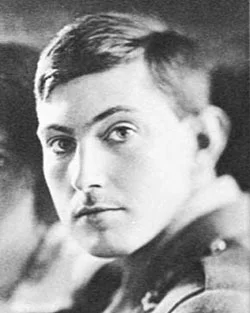
George Leigh Mallory
George Herbert Leigh Mallory was born on June 18, 1886, in Mobberley, Cheshire, England. Educated at Winchester College and Magdalene College, Cambridge, Mallory developed into an extraordinarily graceful and daring...
Documented Sources & Archival Citations
- Mount Everest: The Reconnaissance, 1921(C. K. Howard-Bury & George Leigh Mallory / Edward Arnold (London))
Supporting claim: First comprehensive surveying and discovery of the North Col route on Everest.
- The Alpine Journal: The First Mount Everest Expedition(The Alpine Club (UK))
Supporting claim: Contemporary archival reports of the 1921 topographic and mountaineering reconnaissance.
Share Exploration
Global Mountain Intelligence
✓ Link copied to clipboard!