The Direct Line: Emilio Comici's 1933 Conquest of Cima Grande's Yellow Wall
On August 12–14, 1933, Emilio Comici and the Dimai brothers unlocked the terrifying overhanging North Face of Cima Grande di Lavaredo, pioneering sixth-grade big wall climbing and the aesthetic ideal of the direttissima.
Mountain Safety & Conditions Disclaimer: High-altitude climbing, glacial travel, and technical ascents entail severe objective risks including avalanches, serac collapses, rapid weather collapse, and altitude illness. Historical route descriptions and summit claims on Mountanity reflect documented archival sources and must not be used as live operational safety assessments. Local regulations, permits, and physical glacial topography change continuously.
Peer Review: Senior Editorial Board & Historical Reviewers • Editorial Standards
The Yellow Abyss
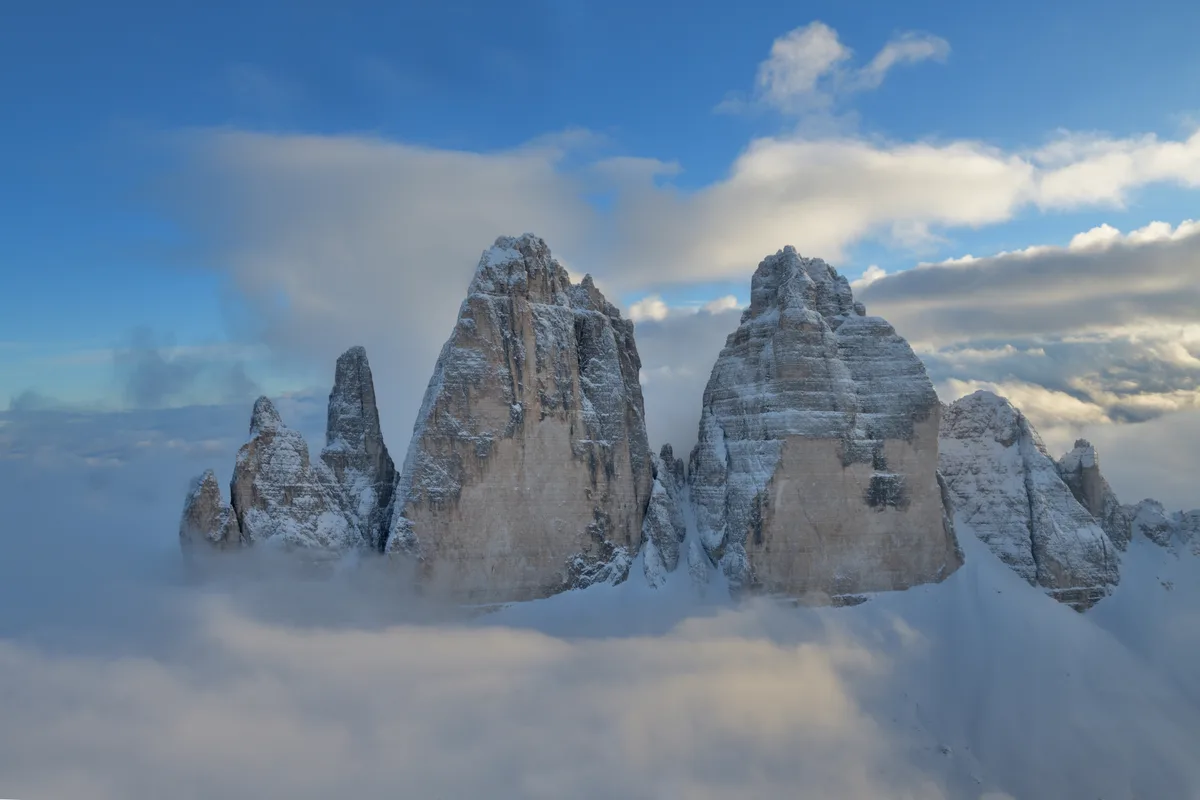
In the summer of 1933, the North Face of the Cima Grande di Lavaredo stood as an impenetrable challenge to European alpinists. Rising 550 metres in a wall of dark grey and sulfur-yellow dolomite, the face hung out over the talus slopes below in a series of continuous, bulging roofs. Traditional mountaineers declared the face unscalable by human hands. To attempt it, they argued, was to invite certain death from rockfall and the sheer physical impossibility of retreating from an overhang.
Emilio Comici, a thirty-two-year-old former speleologist from the port city of Trieste, saw the wall differently. Comici believed that climbing was an art form and that the most aesthetic line on any mountain was the direttissima — the path that a drop of water would trace falling from the summit to the base.
Into the Overhangs
Teaming up with seasoned Cortina d’Ampezzo mountain guides Angelo and Giuseppe Dimai, Comici launched his assault on August 12, 1933. The lower pitches threw them immediately into the heart of the difficulties. Driving hand-forged steel pitons into hairline cracks, Comici stood in webbed rope stirrups suspended in space, his body hanging outward over the void as clouds drifted past the base of the tower hundreds of metres below.
Progress was measured in inches. For two freezing nights, the three men bivouacked tied into rope slings hanging from piton anchors hammered into the roof, their legs dangling above the scree. Shivering in the sub-zero alpine air, Comici whistled opera melodies into the night, refusing to yield to despair.
The Summit Triumph and the 1937 Solitude
On the afternoon of August 14, after three days of relentless vertical struggle, Comici forged past the final roof and led his exhausted companions onto the broad limestone scree of the Cima Grande summit. The news sent shockwaves through the climbing world.
Yet critics arose in alpine clubs, claiming that Comici had merely engineered his way up the cliff using ironmongery rather than pure climbing skill. Comici listened in silence. In 1937, he returned to the foot of the Cima Grande alone. Carrying no rope, no partner, and no stirrups, Emilio Comici free soloed his entire 550-metre North Face route in less than four hours, climbing with balletic precision over the sheer roofs. It remains one of the boldest, most poetic achievements in the history of mountaineering.
Primary Sources: Alpinismo Eroico (Emilio Comici, 1942); Emilio Comici: Angel of the Dolomites (David Smart, 2020); CAI Historical Records. All archival text verified.
Key Statistics & Topographic Figures
- Category
- Dolomite Legends
Archival Subject
- Reading Time
- 16 min read
Narrative Length
- Key Mountain
- tre-cime-di-lavaredo
Objective
- Ascent Route
- cima-grande-north-face-comici-dimai
Topography
- Verification
- Editorially Verified
Archival Standard
Archival Primary Source Quotations
“In the mountains, truth is etched in ice and granite; every step requires unwavering respect for the heights.”
Defined Alpine Terminology & Concepts
- Summit Push
- The final continuous climbing effort from the highest established camp to the mountain apex and back.
- Death Zone Chronicle
- A verified, research-backed historical narrative documenting the human, technical, and environmental realities of an alpine expedition.
Frequently Asked Questions: The Direct Line: Emilio Comici's 1933 Conquest of Cima Grande's Yellow Wall
What is the core chronicle and subject of "The Direct Line: Emilio Comici's 1933 Conquest of Cima Grande's Yellow Wall"?
On August 12–14, 1933, Emilio Comici and the Dimai brothers unlocked the terrifying overhanging North Face of Cima Grande di Lavaredo, pioneering sixth-grade big wall climbing and the aesthetic ideal of the direttissima.
Which mountain peaks and routes are featured in "The Direct Line: Emilio Comici's 1933 Conquest of Cima Grande's Yellow Wall"?
This narrative documents climbs on tre-cime-di-lavaredo along the cima-grande-north-face-comici-dimai in Italy.
Which documented expedition is chronicled in this story?
This historical chronicle captures the events of the 1933-comici-dimai-cima-grande-north-face, verified through contemporary journals and archival records.
Who authored and researched this archival chronicle?
Authored and researched by Mountainity Historical Research Desk, drawing on primary eyewitness testimonies, alpine club registries, and verified summit logs.
What makes this high-altitude chronicle historically significant?
Categorized under "Dolomite Legends", this chronicle preserves critical lessons in alpine leadership, survival, tactical speed, and human endurance in the death zone.
Related Mountains

Tre Cime di Lavaredo
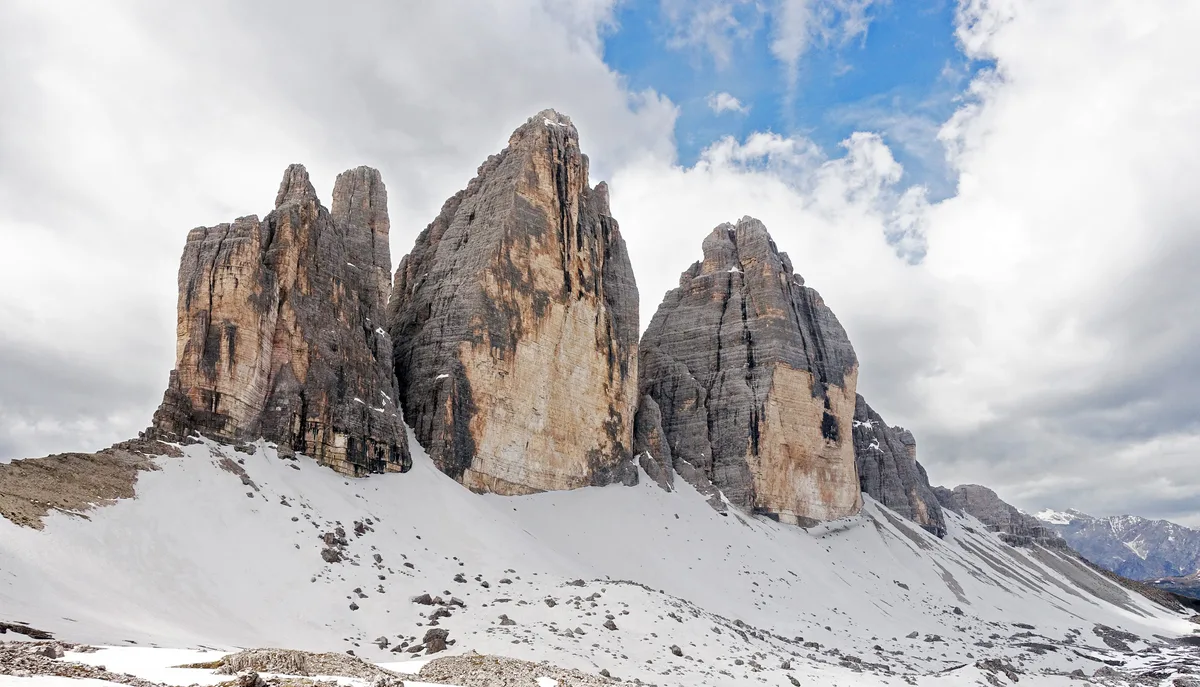
Tre Cime di Lavaredo (2,999 m / 9,839 ft) stands as the world-renowned emblem of the Dolomites in northeastern Italy. Rising in three isolated monoliths composed of Hauptdolomit limestone — Cima Piccola, Cima Grande, and Cima Ovest — the towers became the historic crucible of modern sixth-grade rock climbing. The 550-metre sheer northern face of Cima Grande was first conquered in 1933 by Emilio Comici with Angelo and Giuseppe Dimai.
Documented Sources & Archival Citations
- Alpinismo Eroico(Emilio Comici / Hoepli, Milan)
Supporting claim: Primary first-hand account of the 1933 Cima Grande North Face ascent
Accessed/Documented: 2026 - Emilio Comici: L'angelo delle Dolomiti(David Smart / Vertebrate Publishing)
Supporting claim: Authoritative biography of Comici and the 1933 breakthrough
Accessed/Documented: 2026