Tre Cime di Lavaredo
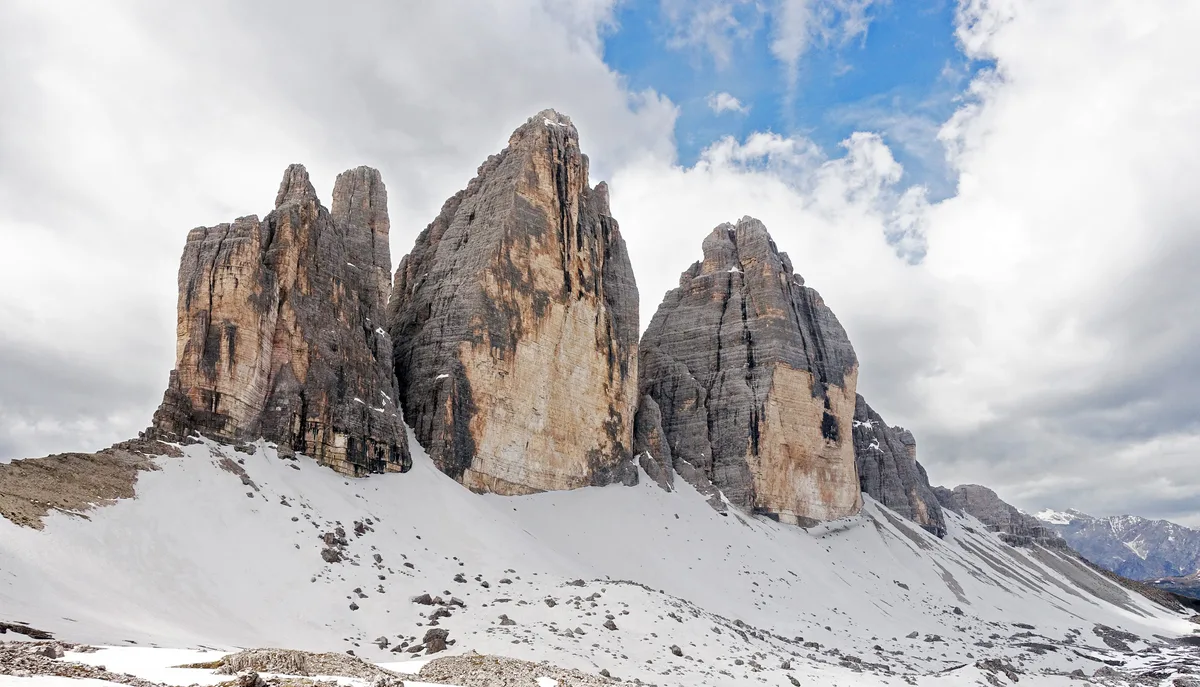
Tre Cime di Lavaredo (2,999 m / 9,839 ft) stands as the world-renowned emblem of the Dolomites in northeastern Italy. Rising in three isolated monoliths composed of Hauptdolomit limestone — Cima Piccola, Cima Grande, and Cima Ovest — the towers became the historic crucible of modern sixth-grade rock climbing.

Mountain Safety & Conditions Disclaimer: High-altitude climbing, glacial travel, and technical ascents entail severe objective risks including avalanches, serac collapses, rapid weather collapse, and altitude illness. Historical route descriptions and summit claims on Mountanity reflect documented archival sources and must not be used as live operational safety assessments. Local regulations, permits, and physical glacial topography change continuously.
Peer Review: Senior Editorial Board & Historical Reviewers • Editorial Standards
Geographical Setting & Topography
Sexten Dolomites of northeastern Italy, towering above the Auronzo Valley and Misurina, UNESCO World Heritage site.
Historic First Ascent
Date: August 21, 1869
Ascent Team: Paul Grohmann (Austria) guided by Franz Innerkofler and Peter Salcher (Normal Route)
Key Statistics & Topographic Figures
- Highest Summit
- Cima Grande (2,999 m / 9,839 ft)
- Prominence
- 545 metres above Passo Lavaredo
- First Ascent Date
- August 21, 1869 (Grohmann, Innerkofler, Salcher)
- Rock Type
- Dolomia Principale (Triassic dolomite limestone)
- UNESCO Status
- Inscribed in 2009 as part of the Dolomites
Archival Primary Source Quotations
“Nowhere else in the Alps does rock rise with such perpendicular fury and geometric perfection as the Drei Zinnen.”
Defined Alpine Terminology & Concepts
- Dolomia Principale
- A massive marine sedimentary rock formation composed of calcium magnesium carbonate that gives the Dolomites their vertical towers and pale coloration.
- Spigolo Giallo
- The "Yellow Edge", an ultra-exposed 350-metre vertical arête on Cima Piccola climbed by Emilio Comici in 1933.
Tre Cime di Lavaredo Mountain Weather Forecast
Meteorological Feed Unavailable
Unable to reach meteorological station endpoint. Please verify your connection or retry.
Loading condition...
Target Elevation: 2,999 mSafe summit ridge climbing requires gusts below 40 km/h.
Evaluating thermal loss...
Tracking glacial freezing boundary...
Assessing whiteout and cloud immersion hazards...
High-altitude snow glare requires Category 4 glacier glasses to prevent snow blindness.
Evaluating oxygen partial pressure...
Detailed 14-Day Summit Window & Weather Timeline
Explore day-by-day summit push safety windows, wind shear analysis, and extended multi-day forecasts for Tre Cime di Lavaredo.
Explore Tre Cime di Lavaredo (2,999 m) in Interactive 3D
Inspect steep glacial walls, hanging seracs, ridge approaches, and elevation relief with 360° rotation and terrain tilt in WebGL.
Documented Climbing Routes (1)
Cima Grande North Face (Via Comici-Dimai)
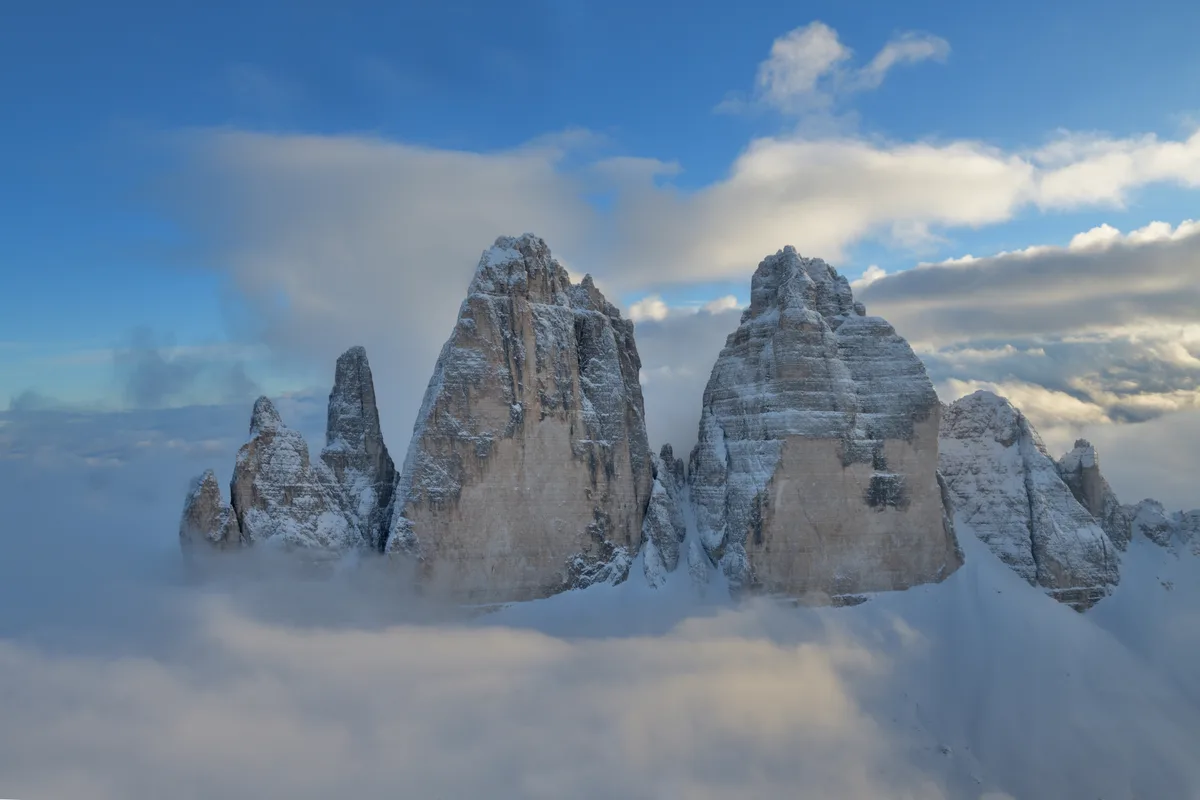
The Via Comici-Dimai on the North Face of Cima Grande di Lavaredo (2,999 m) is the world's quintessential extreme classic limestone rock climb. Pioneered over three days in August 1933 by Emilio Comici with brothers Angelo and Giuseppe Dimai, the route ascends 550 metres of yellow overhanging rock and steep chimneys graded UIAA VII / YDS 5.10d. Comici famously returned in 1937 to free solo the entire North Face alone.
Historical Expeditions (3)
1912 Hans Dülfer Cima Ovest North Face First Ascent
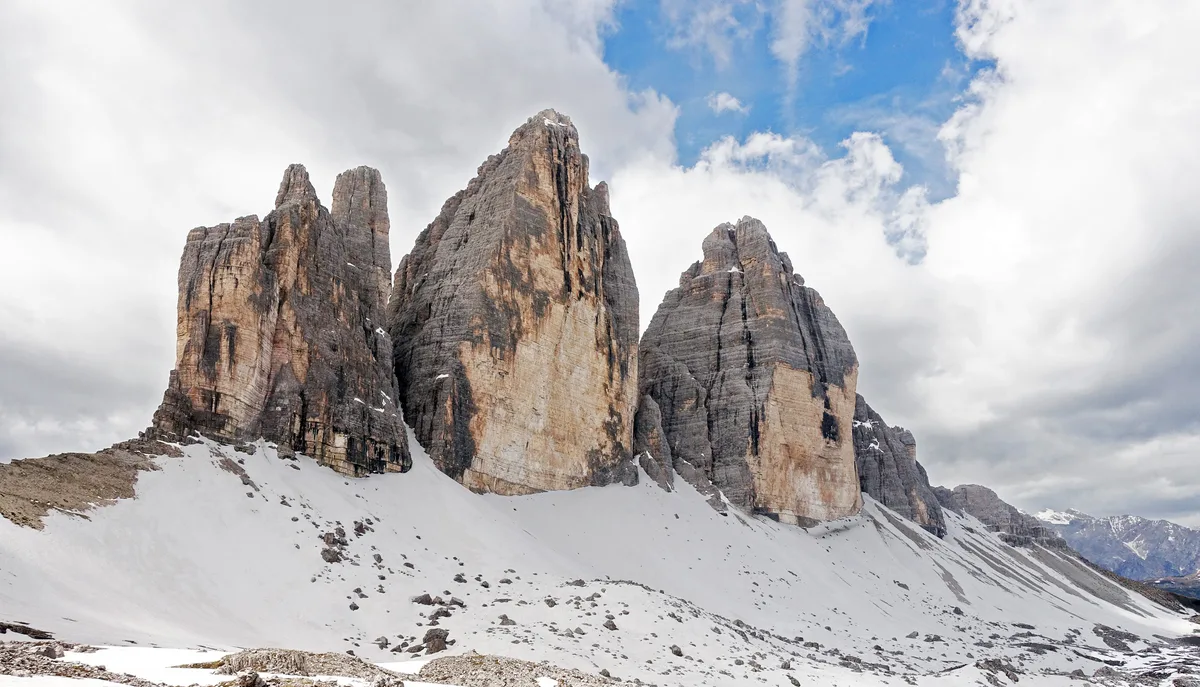
On July 29, 1912, German master technician Hans Dülfer and Walter von Bernuth made the daring first ascent of the vertical North Face of Cima Ovest di Lavaredo, pioneering extreme friction and crack layback techniques.
1913 Angelo Dibona Aiguille Dibona First Ascent
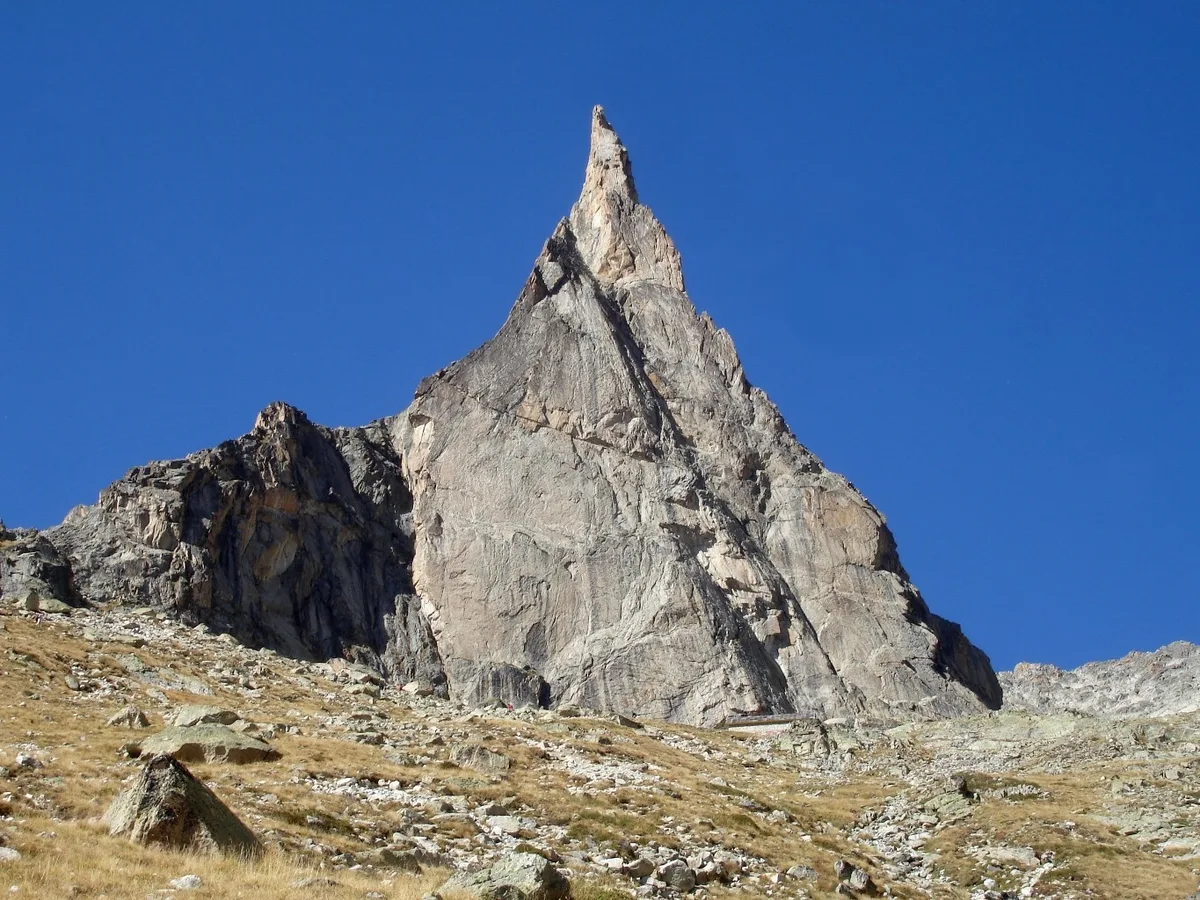
On June 27, 1913, Cortina guide Angelo Dibona with Guido and Max Mayer conquered the needle-sharp granite monolith of the Pain de Sucre in the French Alps, a spire so iconic it was renamed Aiguille Dibona in his honor.
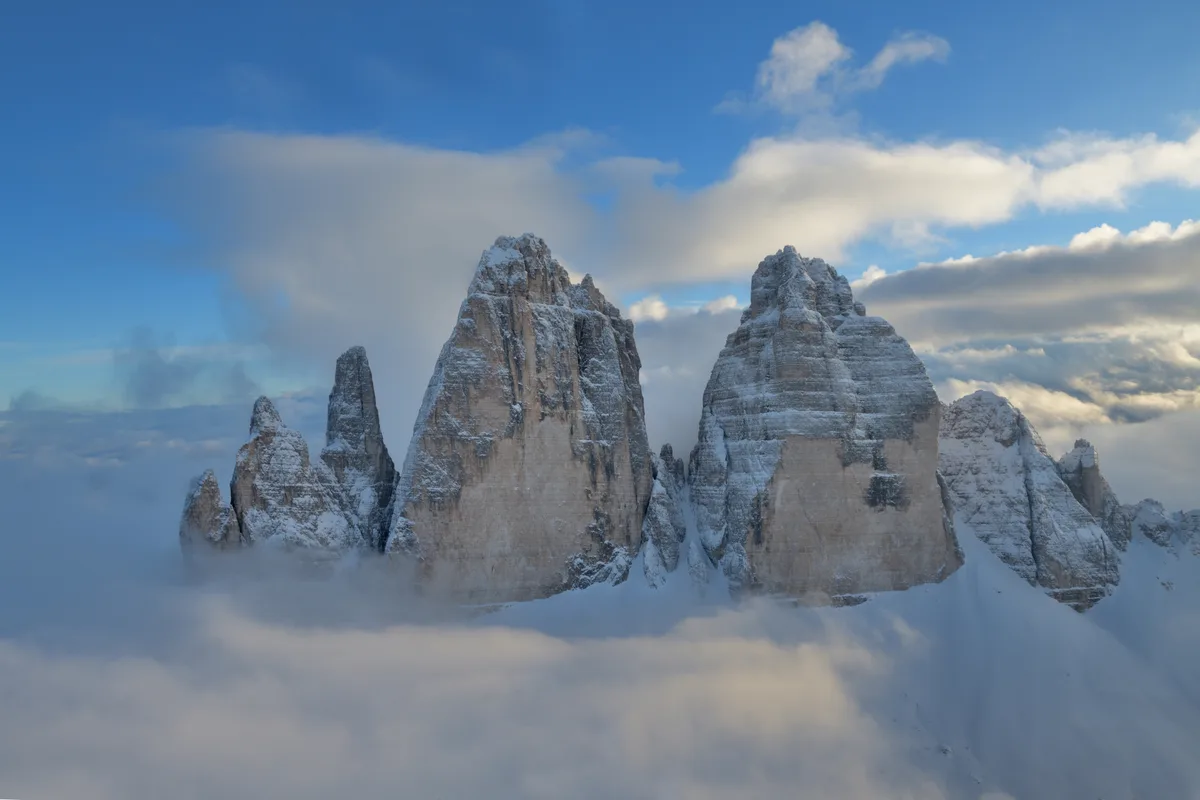
1933 Comici & Dimai Cima Grande North Face First Ascent
On August 12–14, 1933, Emilio Comici and Cortina guides Angelo and Giuseppe Dimai conquered the overhanging 550-metre North Face of Cima Grande di Lavaredo, heralding the golden era of sixth-grade big wall climbing.
Summit Chronicles & Stories (3)
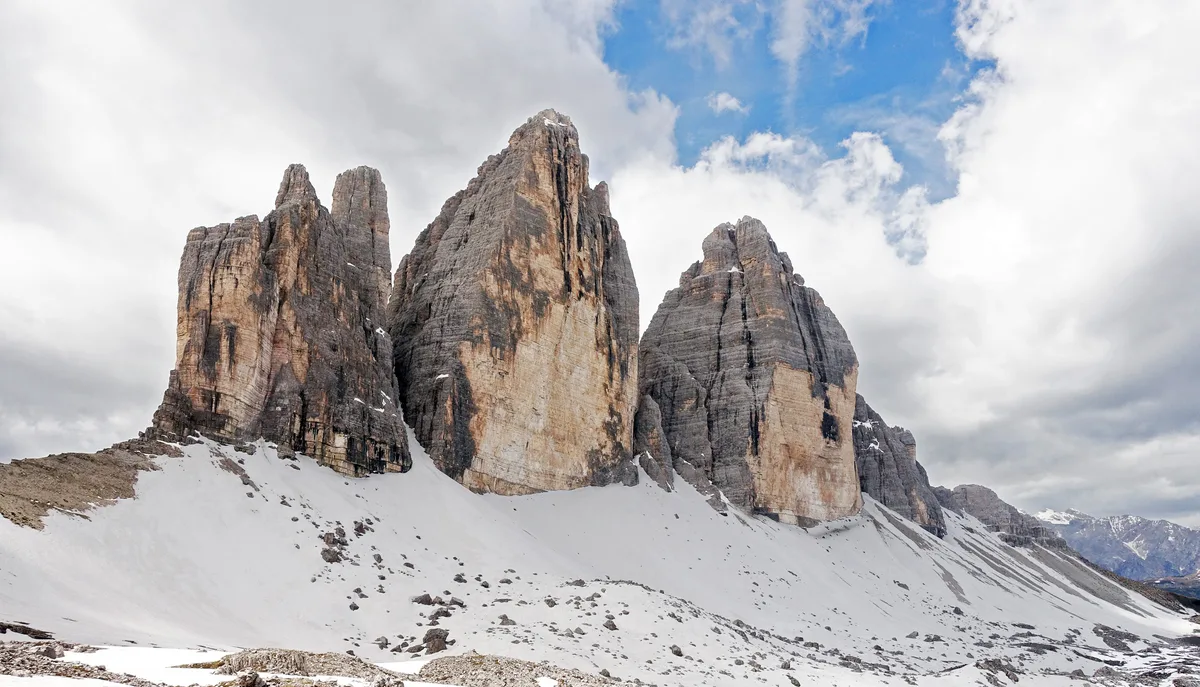
The Birth of the Layback: Hans Dülfer's 1912 Cima Ovest North Face
On July 29, 1912, German master technician Hans Dülfer and Walter von Bernuth conquered the 500-metre North Face of Cima Ovest di Lavaredo, pioneering the layback and extreme friction techniques on sheer limestone.
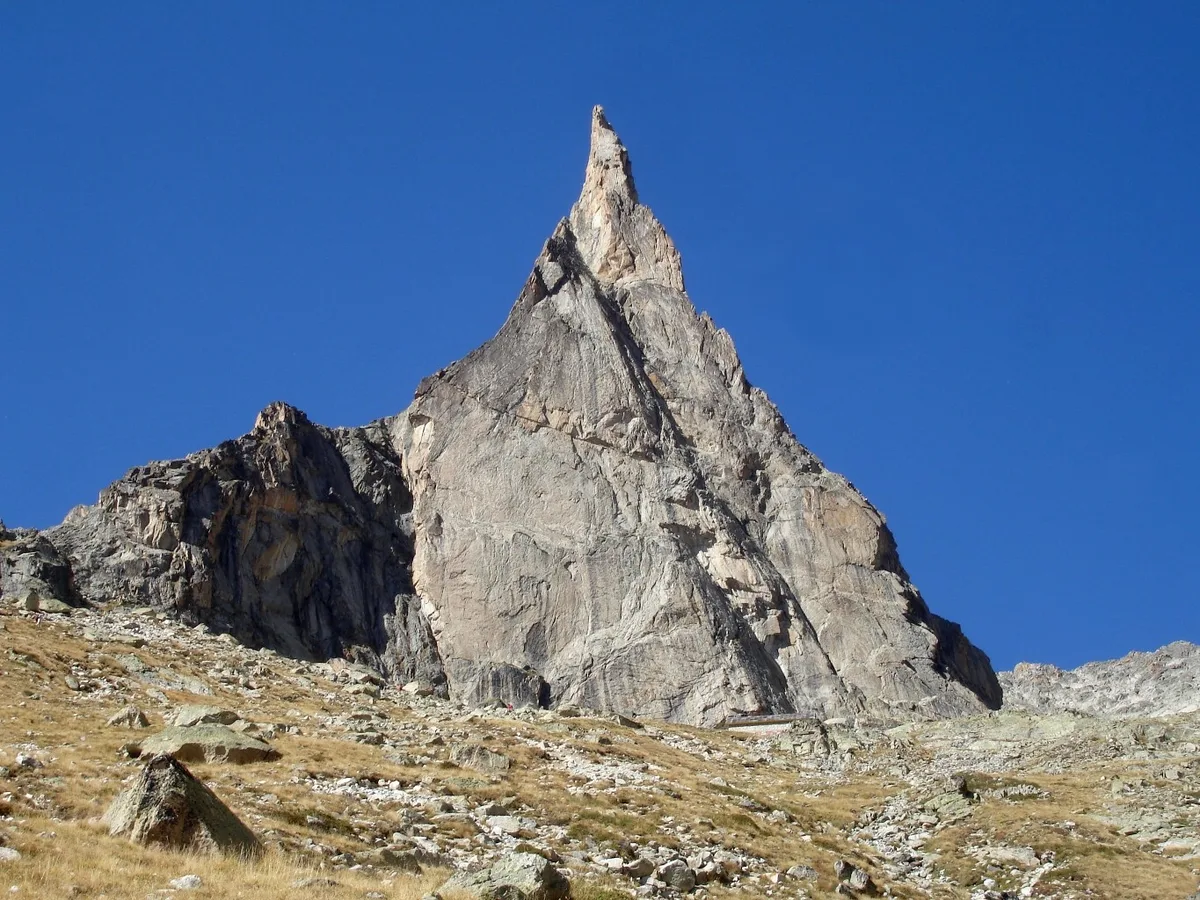
The King of Cortina: Angelo Dibona's 1913 Soreiller Granite Masterpiece
On June 27, 1913, Cortina guide Angelo Dibona conquered the needle-sharp granite monolith of Pain de Sucre in the French Alps, a spire so beautiful the French nation renamed it Aiguille Dibona in his honor.
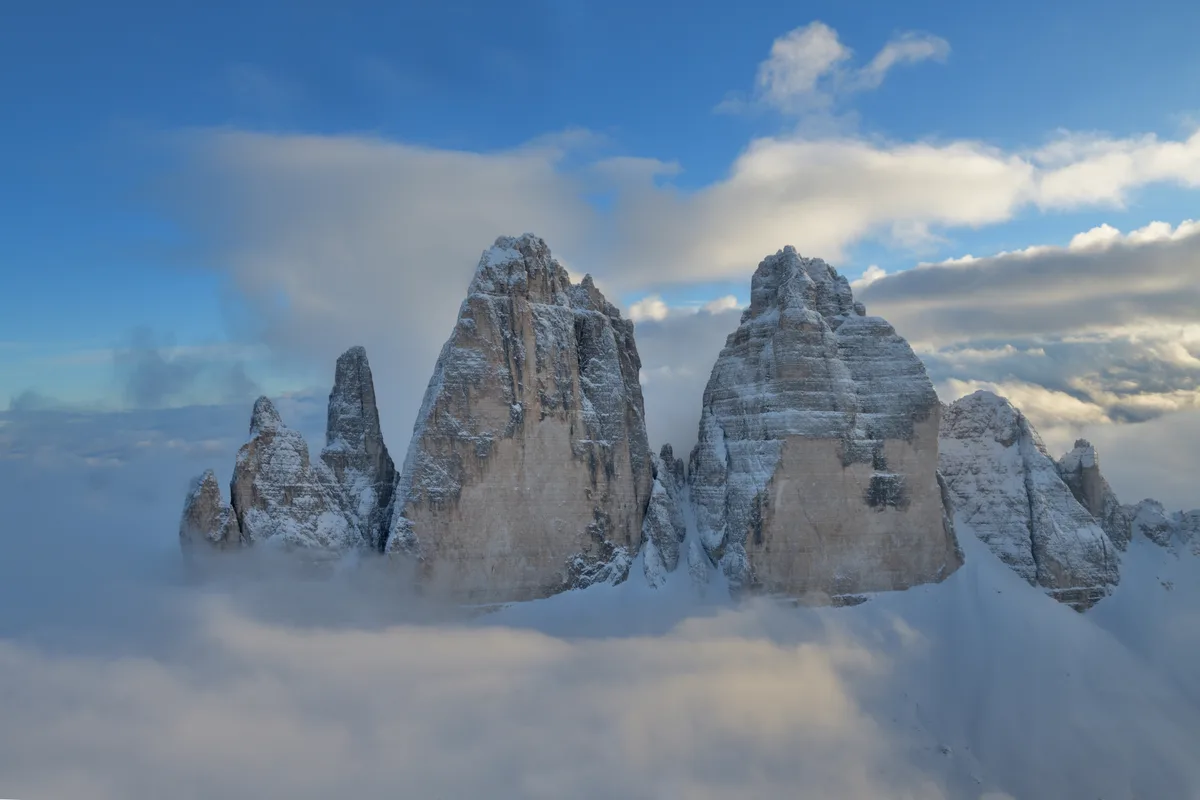
The Direct Line: Emilio Comici's 1933 Conquest of Cima Grande's Yellow Wall
On August 12–14, 1933, Emilio Comici and the Dimai brothers unlocked the terrifying overhanging North Face of Cima Grande di Lavaredo, pioneering sixth-grade big wall climbing and the aesthetic ideal of the direttissima.
Frequently Asked Questions: Tre Cime di Lavaredo
What are the Tre Cime di Lavaredo and where are they located?
The Tre Cime di Lavaredo (Drei Zinnen) are three iconic sheer limestone battlements in the Sexten Dolomites of northeastern Italy: Cima Grande, Cima Ovest, and Cima Piccola.
What is the elevation of each of the Tre Cime peaks?
Cima Grande rises to 2,999 metres, Cima Ovest reaches 2,973 metres, and Cima Piccola stands at 2,857 metres above sea level.
Who first climbed Cima Grande di Lavaredo?
Paul Grohmann, Franz Innerkofler, and Peter Salcher made the first ascent of Cima Grande on August 21, 1869, via the South Face.
Why is the North Face of Cima Grande historically world-famous?
It is a 550-metre vertical and overhang limestone wall whose 1933 ascent by Emilio Comici revolutionized big-wall aid climbing and the Direttissima concept.
What mountain group and UNESCO site encompass the Tre Cime?
The Tre Cime are the centerpiece of the Sexten Dolomites within the UNESCO World Heritage Dolomiti system.
What role did the Tre Cime play during the First World War?
The Tre Cime marked the fierce frontline between Italy and Austria-Hungary (1915–1917), crisscrossed by trenches, tunnels, and artillery emplacements still visible today.
What are the most famous climbing routes on the Tre Cime?
The Comici-Dimai (Grade VI) on Cima Grande, the Cassin Route on Cima Ovest, the Dibona Kante, and the Spigolo Giallo (Yellow Edge) on Cima Piccola.
Which mountain huts offer the best views of the Tre Cime North Faces?
Rifugio Antonio Locatelli (Dreizinnenhütte) and Rifugio Auronzo provide legendary vantage points of the three vertical north faces.
Documented Sources & Archival Citations
- Alpinismo Eroico(Emilio Comici / Hoepli, Milan)
Supporting claim: Primary first-hand account of the historic 1933 first ascent of the Cima Grande North Face
Accessed/Documented: 2026 - Classic Dolomite Climbs(Dino Buzzati / Alpine Club Guidebooks)
Supporting claim: Historical and topographical analysis of routes on the Tre Cime di Lavaredo
Accessed/Documented: 2026