Cima Grande North Face (Via Comici-Dimai)
The Via Comici-Dimai on the North Face of Cima Grande di Lavaredo (2,999 m) is the world's quintessential extreme classic limestone rock climb. Pioneered over three days in August 1933 by Emilio Comici with brothers Angelo and Giuseppe Dimai, the route ascends 550 metres of yellow overhanging rock and steep chimneys graded UIAA VII / YDS 5.
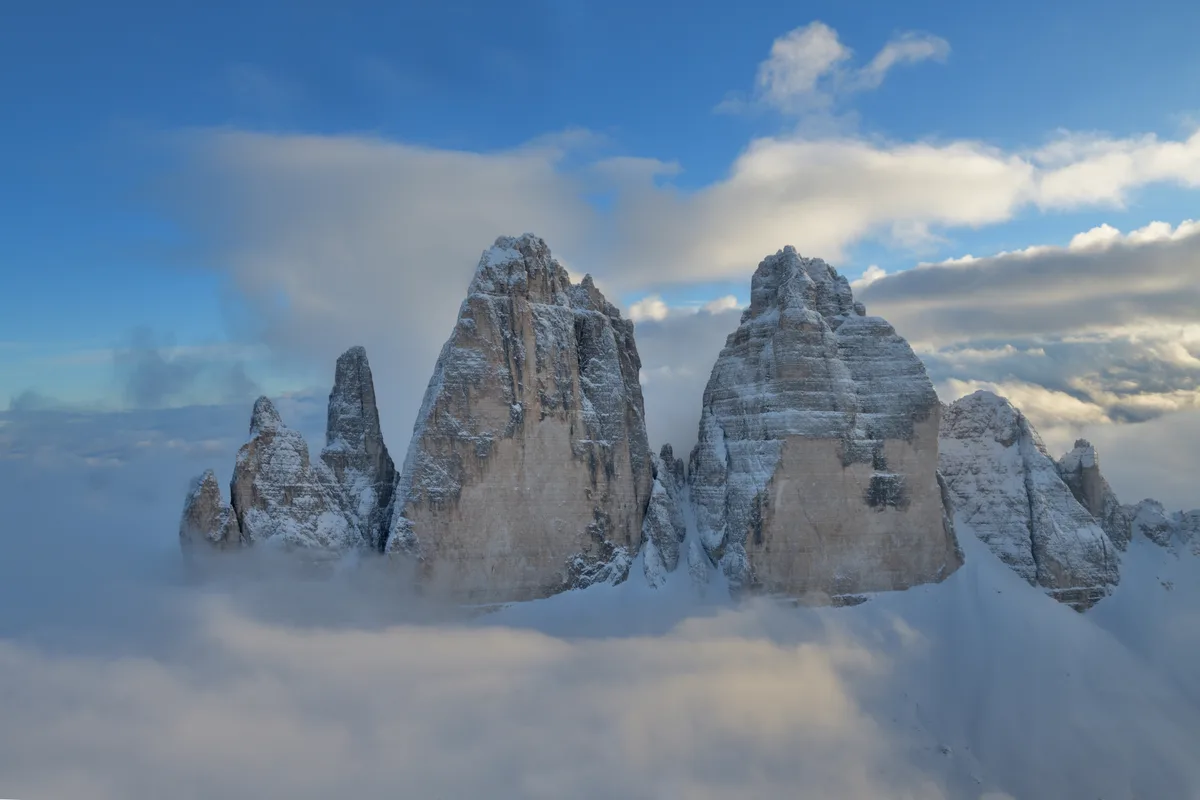
Ascent line, technical cruxes & camp topography profile for Cima Grande North Face (Via Comici-Dimai)
Mountain Safety & Conditions Disclaimer: High-altitude climbing, glacial travel, and technical ascents entail severe objective risks including avalanches, serac collapses, rapid weather collapse, and altitude illness. Historical route descriptions and summit claims on Mountanity reflect documented archival sources and must not be used as live operational safety assessments. Local regulations, permits, and physical glacial topography change continuously.
Peer Review: Senior Editorial Board & Historical Reviewers • Editorial Standards
Tactical & Camp Notes
Departing from the Rifugio Antonio Locatelli (Dreizinnenhütte) or Rifugio Auronzo, climbers reach the base of the shaded north wall. The lower pitches attack yellow overhangs with strenuous finger jams and steep laybacks. The route traverses left into the monumental vertical depression of the face, climbing through sustained roofs and exposure before exiting onto the easier scree ledge and final summit blocks.
Interactive Elevation Profile
Vertical profile, technical cruxes, and camp staging progression for Cima Grande North Face (Via Comici-Dimai) on Tre Cime di Lavaredo.
Historic Dolomite mountain refuge providing direct views of the sheer Tre Cime North Faces.
Camp-by-Camp Topography
Key staging altitudes, technical cruxes, and terrain transitions for Cima Grande North Face (Via Comici-Dimai).
Rifugio Antonio Locatelli (Dreizinnenhütte)
Historic Dolomite mountain refuge providing direct views of the sheer Tre Cime North Faces.
Cima Grande Summit
Broad limestone summit plateau offering 360-degree panoramas across the Sexten and Cadore Dolomites.
Topographic Location & Terrain Map
Cartographic datum, massif coordinates, and terrain context for Cima Grande North Face (Via Comici-Dimai) on Tre Cime di Lavaredo.
Interactive Topographic Terrain Map
Click below to load live cartographic contours, glacier approaches, and geographic markers for Tre Cime di Lavaredo (46°37′07″ N, 12°18′11″ E).
Key Statistics & Topographic Figures
- Wall Height
- 550 metres (1,800 feet) vertical limestone
- Technical Grade
- UIAA VI / 6b+ free (originally Grade VI A1)
- Pitch Count
- 17 sustained alpine pitches
- First Ascent Dates
- August 12–14, 1933 (Comici, A. Dimai, G. Dimai)
- First Solo Ascent
- 1937 by Emilio Comici (3 hrs 45 min)
Archival Primary Source Quotations
“On the overhangs of Cima Grande, space ceases to be an empty void; it becomes a tangible presence beneath your boots.”
Defined Alpine Terminology & Concepts
- Hanging Bivouac
- An overnight stop on a sheer vertical wall where climbers sleep suspended from piton anchors in harnesses with feet in stirrups.
- Gialli (Yellow Bands)
- The intensely steep, overhanging yellow dolomite limestone strata on Cima Grande that require flawless finger locks and piton placements.
Frequently Asked Questions: Cima Grande North Face (Via Comici-Dimai)
What is the Comici-Dimai route on Cima Grande di Lavaredo?
The Comici-Dimai is a legendary 550-metre Grade VI big-wall climb on the vertical and overhanging North Face of Cima Grande, first ascended in August 1933.
Who first climbed the Comici-Dimai route?
Trieste master Emilio Comici with Cortina mountain guides Angelo Dimai and Giuseppe Dimai over three grueling days from August 12–14, 1933.
What is the climbing grade and difficulty of the Comici-Dimai?
Historically rated Grade VI (UIAA), today it is graded 6b+ (5.11a) when climbed free, featuring continuous steep and sustained vertical exposure.
Why was the 1933 ascent controversial at the time?
Purist climbers criticized the team's use of approximately 90 pitons, prompting Comici to make a sensational solo ascent in 1937 in under 4 hours.
How long does it take to climb the Comici-Dimai route today?
Experienced modern rope teams typically complete the 17 pitches in 6 to 9 hours, starting from Rifugio Auronzo or Rifugio Locatelli.
What are the key technical pitches on the Comici-Dimai?
Pitches 3 through 7 cross the colossal overhanging yellow limestone wall beneath the central roofs, demanding precise footwork and upper-body endurance.
What objective hazards exist on the North Face of Cima Grande?
Freezing verglas, sudden summer hailstorms, rockfall from upper terraces, and hypothermia during forced hanging bivouacs.
Where does the route top out and how do climbers descend?
The route tops out on the large summit ledge system; climbers descend via the traditional South Face Normal Route with abseils and scrambling.
Mountain Ascended
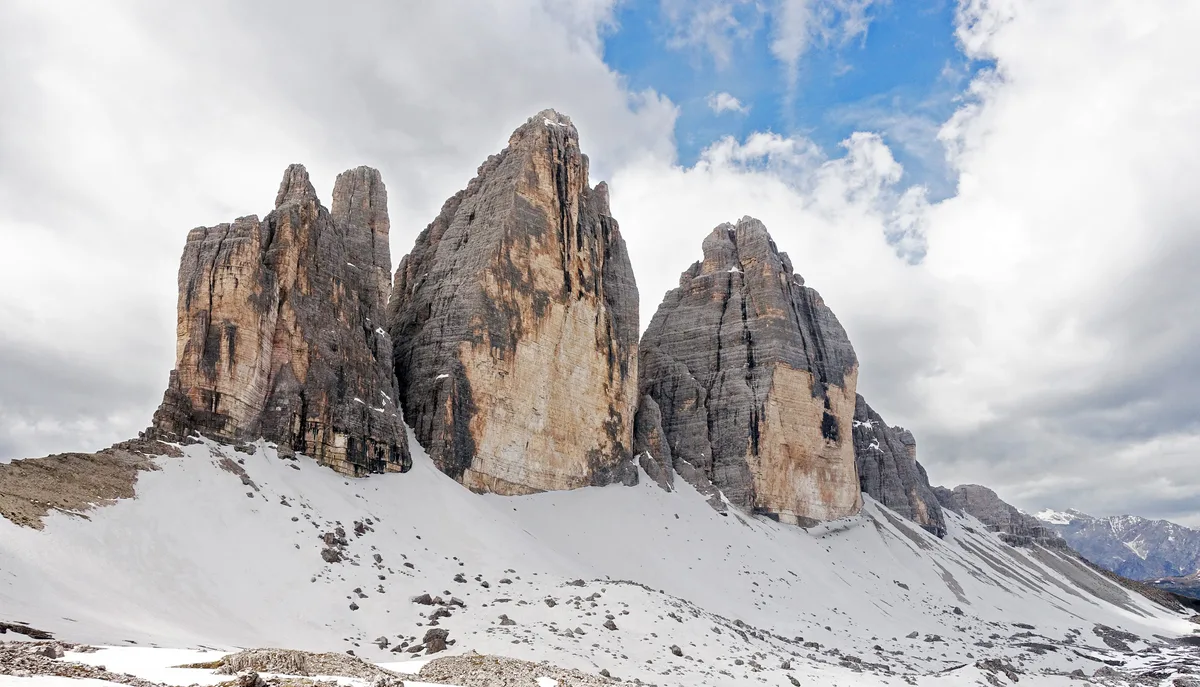

Tre Cime di Lavaredo
Tre Cime di Lavaredo (2,999 m / 9,839 ft) stands as the world-renowned emblem of the Dolomites in northeastern Italy. Rising in three isolated monoliths composed of Hauptdolomit limestone — Cima Piccola, Cima Grande, and Cima Ovest — the towers became the historic crucible of modern sixth-grade rock climbing. The 550-metre sheer northern face of Cima Grande was first conquered in 1933 by Emilio Comici with Angelo and Giuseppe Dimai.
Documented Expeditions on this Route (1)
Verified historical summits, siege campaigns, and pioneer attempts recorded on Cima Grande North Face (Via Comici-Dimai).
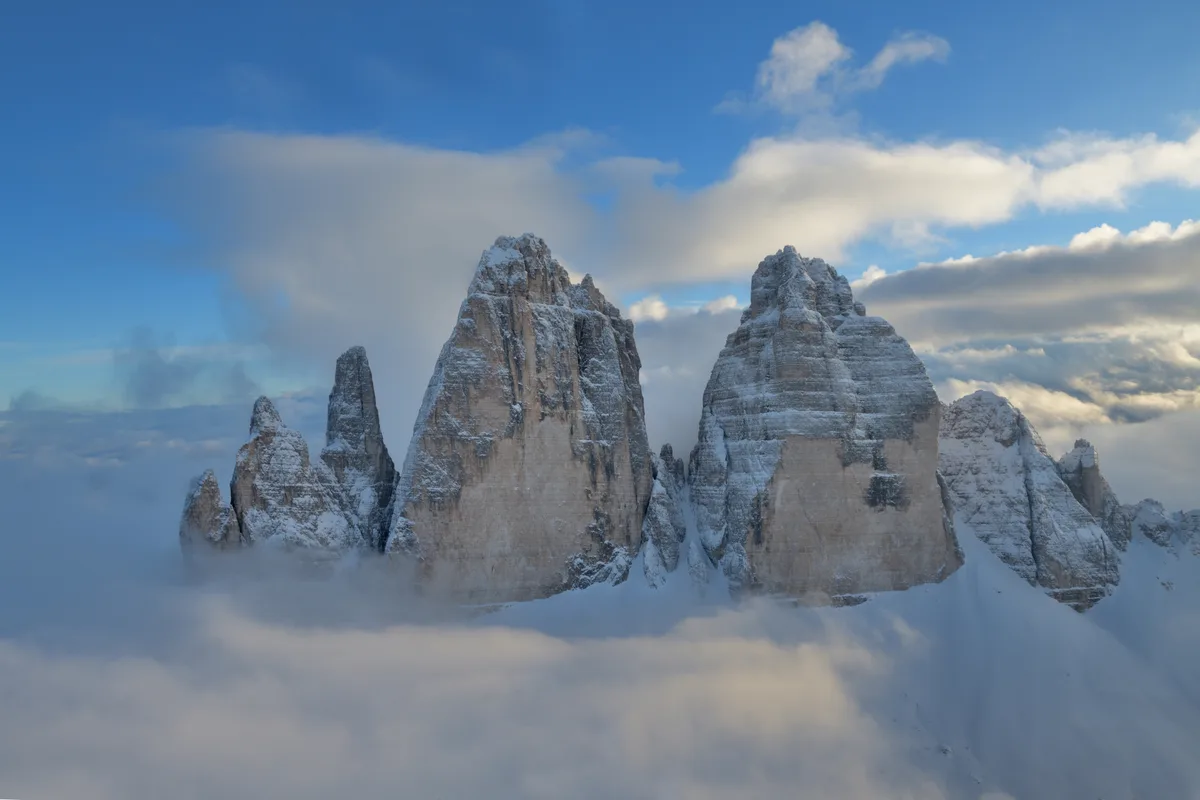
1933 Comici & Dimai Cima Grande North Face First Ascent
On August 12–14, 1933, Emilio Comici and Cortina guides Angelo and Giuseppe Dimai conquered the overhanging 550-metre North Face of Cima Grande di Lavaredo, heralding the golden era of sixth-grade big wall climbing.
Archival Chronicles & Stories on this Route (1)
In-depth longform historical narratives, harrowing survival accounts, and firsthand alpine journals on Cima Grande North Face (Via Comici-Dimai).
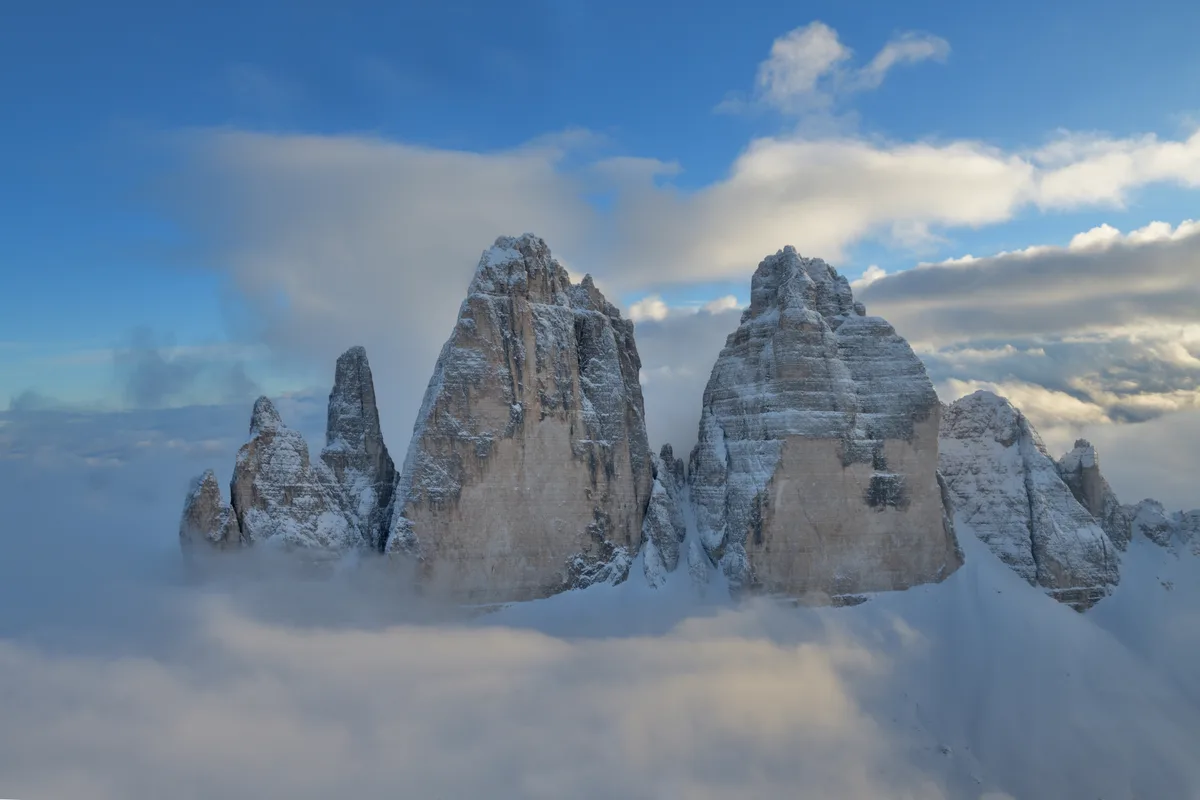
The Direct Line: Emilio Comici's 1933 Conquest of Cima Grande's Yellow Wall
On August 12–14, 1933, Emilio Comici and the Dimai brothers unlocked the terrifying overhanging North Face of Cima Grande di Lavaredo, pioneering sixth-grade big wall climbing and the aesthetic ideal of the direttissima.
Documented Sources & Archival Citations
- Alpinismo Eroico(Emilio Comici / Hoepli, Milan)
Supporting claim: Detailed pitch-by-pitch narrative and sketches of the 1933 first ascent
Accessed/Documented: 2026 - Classic Dolomite Climbs(Norbert Memmel / Baton Wicks)
Supporting claim: Modern technical topo and grade evaluations for the Comici-Dimai route
Accessed/Documented: 2026