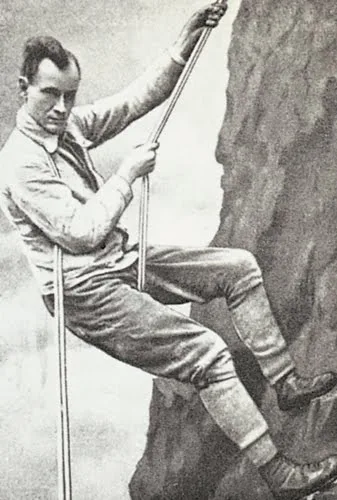
Hans Dülfer
Hans Dülfer was an influential German mountaineer, pianist, and medical student who transformed rock climbing technique in the years before World War I. Renowned as the inventor of the Dülfersitz body rappel and the Dülfer layback, he made over fifty daring first ascents across the Wilder Kaiser and Dolomite massifs.
Mountain Safety & Conditions Disclaimer: High-altitude climbing, glacial travel, and technical ascents entail severe objective risks including avalanches, serac collapses, rapid weather collapse, and altitude illness. Historical route descriptions and summit claims on Mountanity reflect documented archival sources and must not be used as live operational safety assessments. Local regulations, permits, and physical glacial topography change continuously.
Peer Review: Senior Editorial Board & Historical Reviewers • Editorial Standards
Biographical Record & Archival Chronicle
Born on May 23, 1892, in Barmen (Wuppertal), Germany, Johannes Emil 'Hans' Dülfer studied medicine and philosophy in Munich while cultivating exceptional skill as a classical pianist. Drawn to the jagged limestone towers of the Wilder Kaiser in Austria and the Rosengarten in the Dolomites, Dülfer applied a physicist's analytical precision to the mechanics of balance, friction, and rope management. In 1910, he invented the Dülfersitz — a method of wrapping a climbing rope around one leg, across the chest, and over the opposite shoulder to control friction without metal descenders, enabling climbers to rappel safely down sheer vertical cliffs. He also pioneered the Dülfer layback (Piazgang / Layback), gripping an edge with both hands while opposing friction with the feet against a blank wall. Between 1910 and 1914, Dülfer established more than fifty landmark routes of unprecedented difficulty. His masterpieces include the West Face of the Totenkirchl (1911), the Fleischbank East Face (Dülfer Crack, 1912), the North Face of the Cima Ovest di Lavaredo (1912), and the Direct South Face of the Odle spires. Enlisting as a volunteer in the Bavarian light infantry at the outbreak of World War I, Dülfer was deployed to the Western Front in France. On June 15, 1915, during the Battle of Arras near Neuville-Saint-Vaast, he was struck by French grenade shrapnel and killed at the age of twenty-three. His technical inventions remain standard climbing curriculum across the globe.
Notable Milestones & Ascents
- Invented the Dülfersitz (body rappel), the foundational method of cliff descent prior to mechanical descenders
- Pioneered the layback climbing technique, fundamentally expanding the repertoire of crack and corner climbing
- First ascent of the Fleischbank East Face (Dülfer-Riss, UIAA V+) in the Wilder Kaiser in 1912
- Pioneered the historic 1912 route on the North Face of Cima Ovest di Lavaredo in the Dolomites
- First ascent of the West Face of Totenkirchl (1911), one of the hardest rock routes in Europe at the time
- Completed over fifty pioneering first ascents between 1910 and 1914 before his tragic death at age twenty-three
Key Statistics & Topographic Figures
- Lifespan
- May 23, 1892 – June 15, 1915 (aged 23)
- Inventions
- Dülfersitz rappel, Layback (counter-pressure technique)
- Iconic Routes
- Cima Ovest West Face (1912), Fleischbank East Face
- Primary Arenas
- Wilder Kaiser (Austria), Tre Cime di Lavaredo (Italy)
- Total First Ascents
- Over 50 landmark routes
Archival Primary Source Quotations
“The true climber seeks mastery over the rock through balance and rhythm, finding strength where others see only blank stone.”
Defined Alpine Terminology & Concepts
- Dülfersitz
- A traditional friction-based rappelling technique where the rope runs under one thigh, across the chest, and over the opposite shoulder.
- Layback (Dülfer Crack)
- An opposition rock climbing technique using hand pulling against a vertical edge coupled with foot smearing against the opposing wall.
Frequently Asked Questions: Hans Dülfer
Who was Hans Dülfer and what did he contribute to mountaineering technique?
Hans Dülfer (1892–1915) was a visionary German climber who invented the classic body rappel (Dülfersitz) and the counter-pressure layback crack climbing technique (Dülfer crack).
What is the Dülfersitz rappel method?
The Dülfersitz is a method of descending a rope using body friction alone across the thigh, chest, and shoulder, dispensing with mechanical descent devices.
What is a "layback" (Dülfer crack technique)?
A rock climbing movement where the hands pull on an offset edge or flake while the feet push in opposition against the adjacent wall face.
What was Hans Dülfer's most famous ascent in the Dolomites?
His 1912 first ascent of the West Face and North Face of Cima Ovest di Lavaredo, which established a new international standard of free climbing difficulty.
Where did Hans Dülfer conduct his earliest breakthrough climbs?
In the Kaisergebirge (Wilder Kaiser) of Austria, where he mastered severe limestone cracks, slabs, and chimney systems on the Fleischbank and Totenkirchl.
How did Hans Dülfer die?
Dülfer was killed in action at age 23 on June 15, 1915, during the First World War at the Battle of Arras on the Western Front in France.
How many first ascents did Dülfer establish in his brief career?
Between 1910 and 1914, Dülfer completed over 50 daring first ascents across the Wilder Kaiser and the Eastern Alps.
What was Dülfer's attitude toward artificial climbing aids?
Dülfer was a dedicated free climber who used pitons almost exclusively for protection and belaying rather than upward progress.
Associated Summits (1)
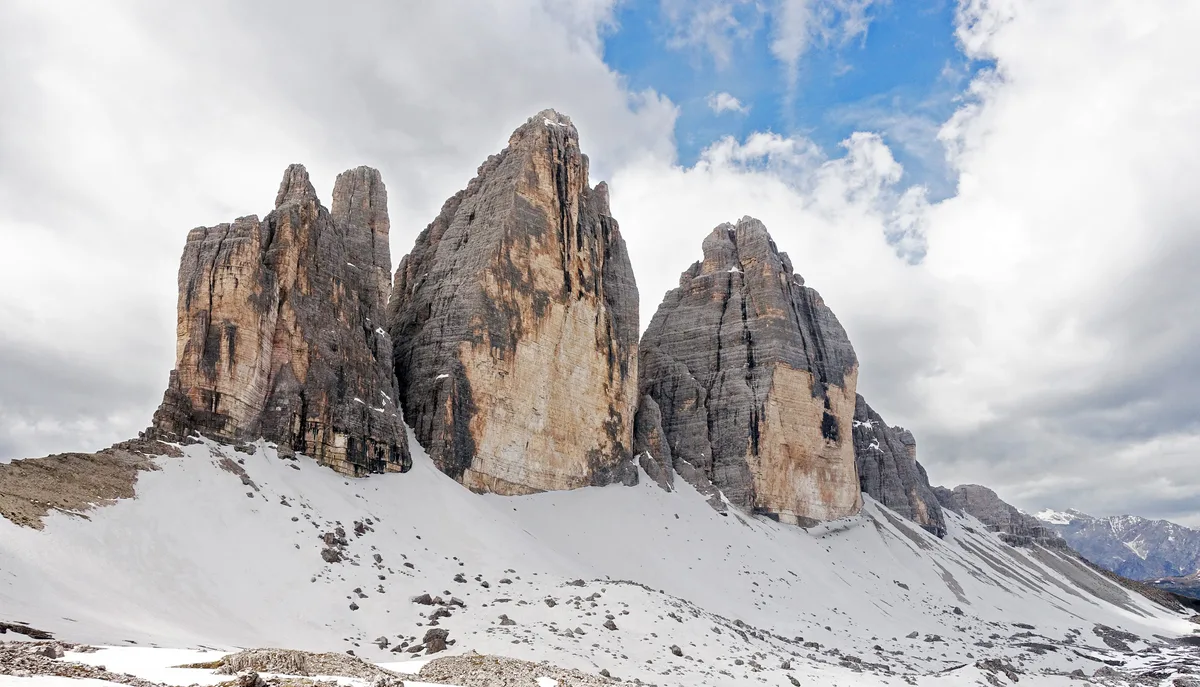

Tre Cime di Lavaredo
Tre Cime di Lavaredo (2,999 m / 9,839 ft) stands as the world-renowned emblem of the Dolomites in northeastern Italy. Rising in three isolated monoliths composed of Hauptdolomit limestone — Cima Piccola, Cima Grande, and Cima Ovest — the towers became the historic crucible of modern sixth-grade rock climbing. The 550-metre sheer northern face of Cima Grande was first conquered in 1933 by Emilio Comici with Angelo and Giuseppe Dimai.
Pioneered & Associated Routes (1)

Cima Grande North Face (Via Comici-Dimai)
The Via Comici-Dimai on the North Face of Cima Grande di Lavaredo (2,999 m) is the world's quintessential extreme classic limestone rock climb. Pioneered over three days in August 1933 by Emilio Comici with brothers Angelo and Giuseppe Dimai, the route ascends 550 metres of yellow overhanging rock and steep chimneys graded UIAA VII / YDS 5.10d. Comici famously returned in 1937 to free solo the entire North Face alone.
Documented Expeditions (1)
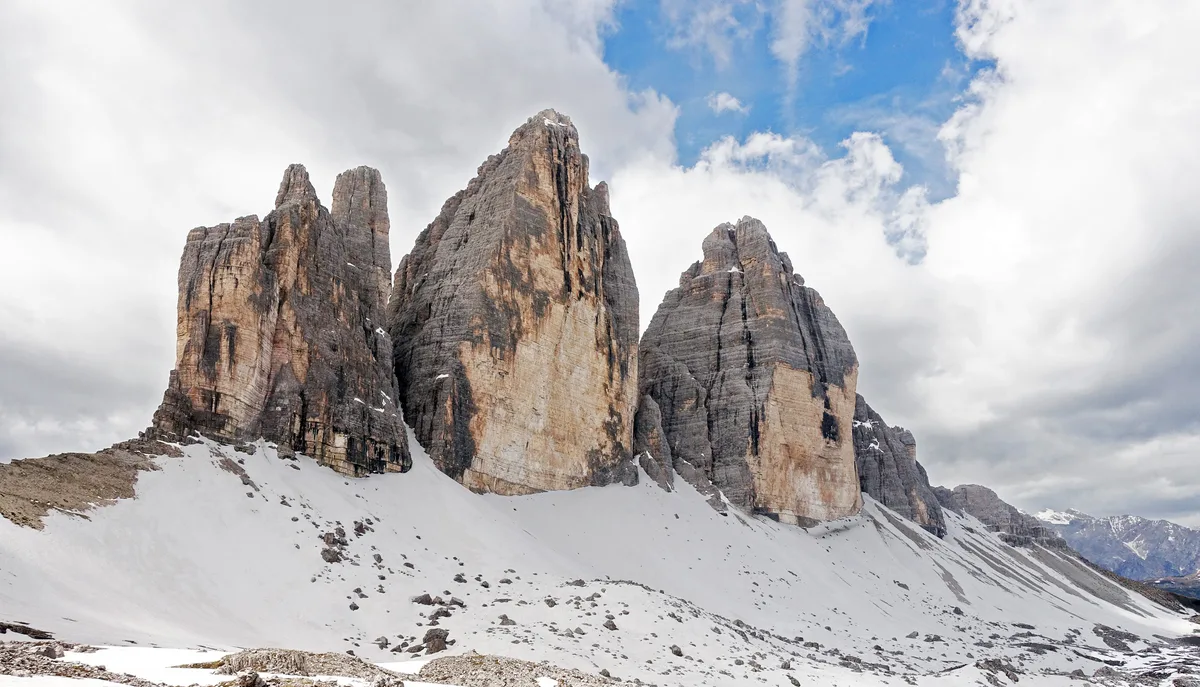
1912 Hans Dülfer Cima Ovest North Face First Ascent
On July 29, 1912, German master technician Hans Dülfer and Walter von Bernuth made the daring first ascent of the vertical North Face of Cima Ovest di Lavaredo, pioneering extreme friction and crack layback techniques.
Associated Chronicles & Stories (1)
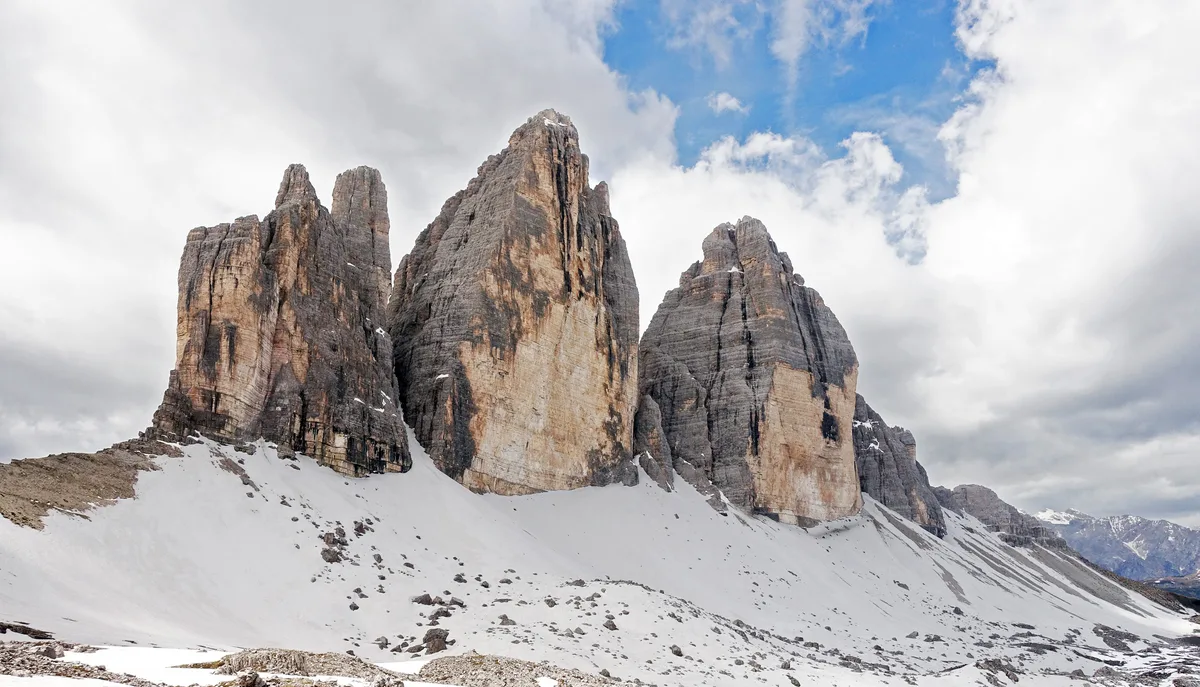
The Birth of the Layback: Hans Dülfer's 1912 Cima Ovest North Face
On July 29, 1912, German master technician Hans Dülfer and Walter von Bernuth conquered the 500-metre North Face of Cima Ovest di Lavaredo, pioneering the layback and extreme friction techniques on sheer limestone.
Documented Sources & Archival Citations
- Hans Dülfer: Bergsteiger-Biografie(Fritz Schmitt / Bergverlag Rother, Munich)
Supporting claim: Comprehensive biographical chronicle of Dülfer's climbing achievements and technical innovations
Accessed/Documented: 2026 - Mitteilungen des Deutschen und Österreichischen Alpenvereins (1915)(DuÖAV, Munich)
Supporting claim: Memorial obituary and official register of Dülfer's first ascents in the Kaisergebirge and Dolomites
Accessed/Documented: 2026