1912 Hans Dülfer Cima Ovest North Face First Ascent
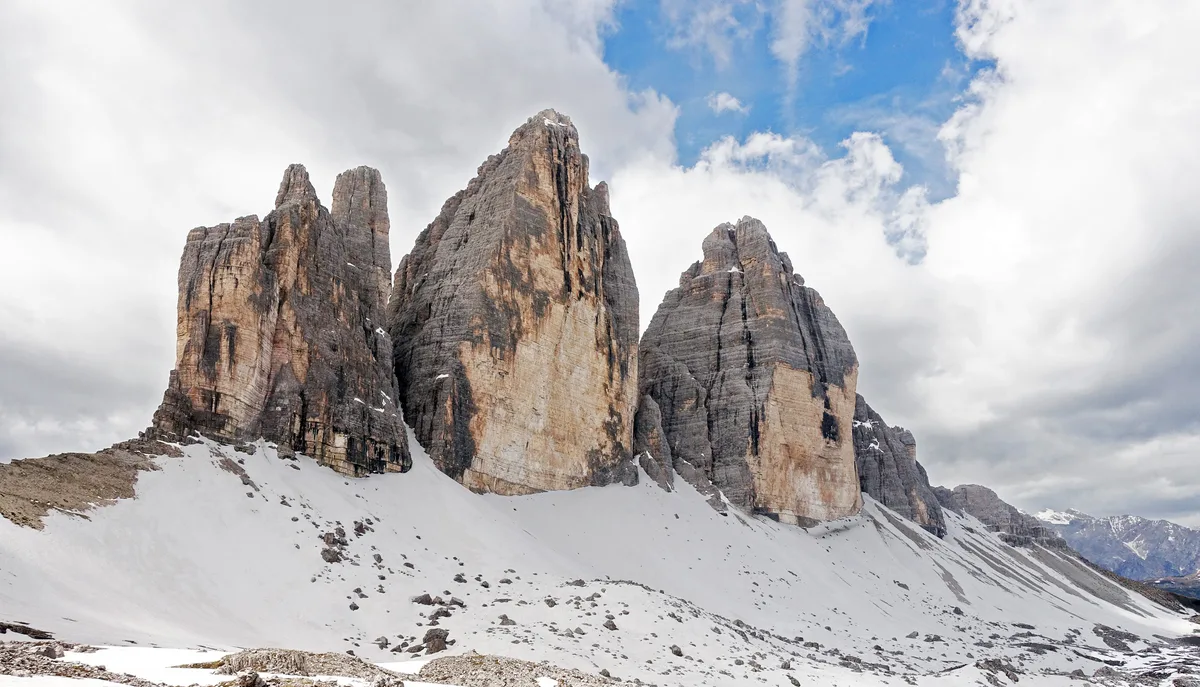
On July 29, 1912, German master technician Hans Dülfer and Walter von Bernuth made the daring first ascent of the vertical North Face of Cima Ovest di Lavaredo, pioneering extreme friction and crack layback techniques.
Mountain Safety & Conditions Disclaimer: High-altitude climbing, glacial travel, and technical ascents entail severe objective risks including avalanches, serac collapses, rapid weather collapse, and altitude illness. Historical route descriptions and summit claims on Mountanity reflect documented archival sources and must not be used as live operational safety assessments. Local regulations, permits, and physical glacial topography change continuously.
Peer Review: Senior Editorial Board & Historical Reviewers • Editorial Standards
Official Expedition Narrative & Archival Record
In late July 1912, twenty-year-old medical student and classical pianist Hans Dülfer arrived at the Tre Cime di Lavaredo with his climbing partner Walter von Bernuth. Setting their sights on the formidable 500-metre vertical North Face of Cima Ovest (2,973 m), the pair attacked the steep limestone wall without the benefit of artificial aids or modern pitons. Utilizing his revolutionary layback technique — counter-levering his hands and friction boots against steep vertical flakes — Dülfer led the team through intimidating overhangs and friable rock. The climbers completed the ascent in a single astonishing push on July 29, 1912, solving what was recognized as the hardest technical rock climb in the Eastern Alps before World War I.
Documented Team Composition
- Hans Dülfer (Leader, Germany)
- Walter von Bernuth (Climber, Germany)
Key Statistics & Topographic Figures
- Ascent Date
- July 29, 1912
- Summit
- Cima Ovest di Lavaredo (2,973 m / 9,754 ft)
- Climbers
- Hans Dülfer, Walter von Bernuth
- Key Innovation
- First use of layback counter-pressure on Tre Cime
- Technical Grade
- UIAA V+
Archival Primary Source Quotations
“By sheer balance and the opposition of hands and boots, the overhangs of the West Peak yielded step by step.”
Defined Alpine Terminology & Concepts
- Cima Ovest (Westliche Zinne)
- The western bastion of the Tre Cime di Lavaredo, famed for its yellow overhanging roof overhangs.
- Pendulum Traverse
- A technical maneuver using a tensioned rope anchor to swing across a blank rock wall to reach a new crack system.
Frequently Asked Questions: 1912 Hans Dülfer Cima Ovest North Face First Ascent
What was the 1912 Hans Dülfer Cima Ovest Expedition?
The daring first ascent of the West Face and North Face arête of Cima Ovest di Lavaredo on July 29, 1912, by Hans Dülfer and Walter von Bernuth.
What new technical maneuvers did Dülfer employ on the climb?
Dülfer utilized his innovative layback crack-climbing technique and dynamic pendulum traverses across sheer, holdless limestone towers.
How was the difficulty graded at the time?
Rated at the absolute limit of what was thought humanly possible without artificial aid, setting the standard for early Grade V+ climbing.
Who was Dülfer's climbing companion?
Walter von Bernuth, a skilled Munich mountaineer who partnered with Dülfer on several historic Dolomite conquests.
What summit did they achieve?
Cima Ovest di Lavaredo (2,973 m), the western battlement of the Tre Cime.
Ascent Route & Topography

Cima Grande North Face (Via Comici-Dimai)
The Via Comici-Dimai on the North Face of Cima Grande di Lavaredo (2,999 m) is the world's quintessential extreme classic limestone rock climb. Pioneered over three days in August 1933 by Emilio Comici with brothers Angelo and Giuseppe Dimai, the route ascends 550 metres of yellow overhanging rock and steep chimneys graded UIAA VII / YDS 5.10d. Comici famously returned in 1937 to free solo the entire North Face alone.
Target Objective Peak
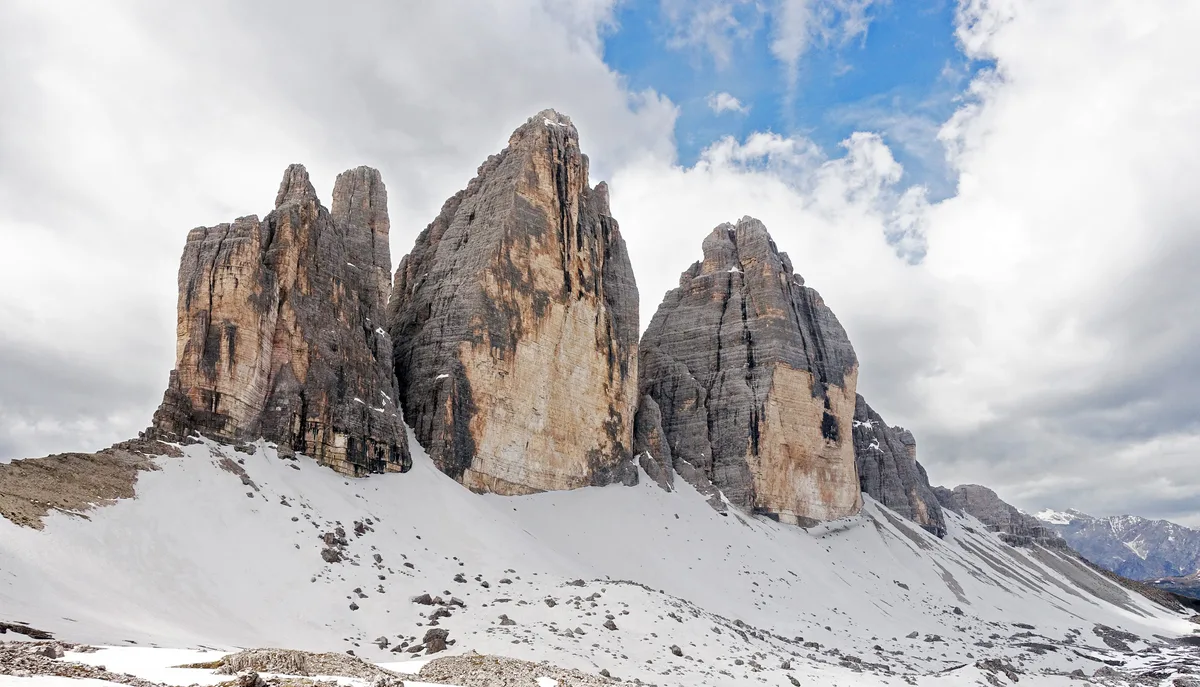

Tre Cime di Lavaredo
Tre Cime di Lavaredo (2,999 m / 9,839 ft) stands as the world-renowned emblem of the Dolomites in northeastern Italy. Rising in three isolated monoliths composed of Hauptdolomit limestone — Cima Piccola, Cima Grande, and Cima Ovest — the towers became the historic crucible of modern sixth-grade rock climbing. The 550-metre sheer northern face of Cima Grande was first conquered in 1933 by Emilio Comici with Angelo and Giuseppe Dimai.
Featured Expedition Climber
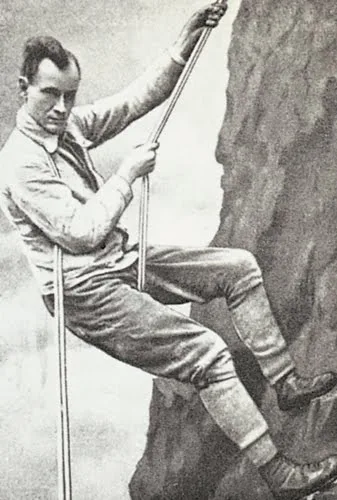
Hans Dülfer
Born on May 23, 1892, in Barmen (Wuppertal), Germany, Johannes Emil 'Hans' Dülfer studied medicine and philosophy in Munich while cultivating exceptional skill as a classical pianist. Drawn to the jagged limestone towers of the Wilder Kaiser in Austria and the Rosengarten in the Dolomites, Dülfer applied a physicist's analytical precision to the mechanics of balance, friction, and rope management. In 1910, he invented the Dülfersitz — a method of wrapping a climbing rope around one leg, across the chest, and over the opposite shoulder to control friction without metal descenders, enabling climbers to rappel safely down sheer vertical cliffs. He also pioneered the Dülfer layback (Piazgang / Layback), gripping an edge with both hands while opposing friction with the feet against a blank wall. Between 1910 and 1914, Dülfer established more than fifty landmark routes of unprecedented difficulty. His masterpieces include the West Face of the Totenkirchl (1911), the Fleischbank East Face (Dülfer Crack, 1912), the North Face of the Cima Ovest di Lavaredo (1912), and the Direct South Face of the Odle spires. Enlisting as a volunteer in the Bavarian light infantry at the outbreak of World War I, Dülfer was deployed to the Western Front in France. On June 15, 1915, during the Battle of Arras near Neuville-Saint-Vaast, he was struck by French grenade shrapnel and killed at the age of twenty-three. His technical inventions remain standard climbing curriculum across the globe.
Associated Historical Chronicles & Stories
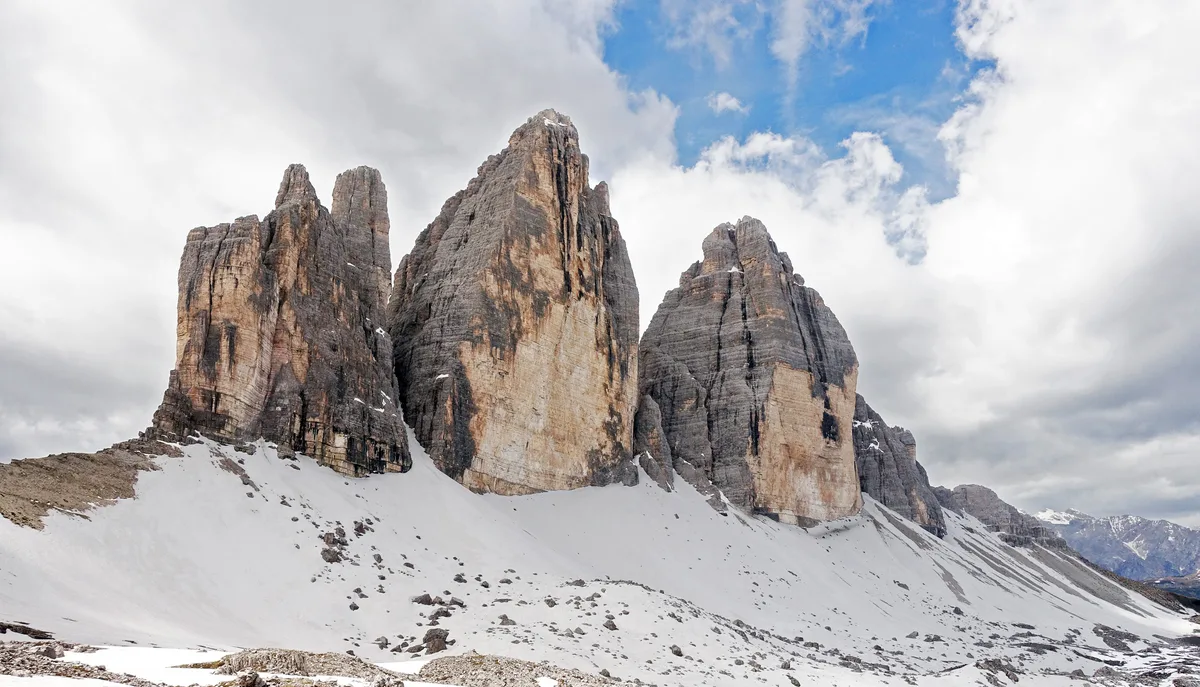
The Birth of the Layback: Hans Dülfer's 1912 Cima Ovest North Face
On July 29, 1912, German master technician Hans Dülfer and Walter von Bernuth conquered the 500-metre North Face of Cima Ovest di Lavaredo, pioneering the layback and extreme friction techniques on sheer limestone.
Documented Sources & Archival Citations
- Mitteilungen des DuÖAV (1912): Die Nordwand der Westlichen Zinne(Hans Dülfer / DuÖAV, Munich)
Supporting claim: Primary first-hand expedition chronicle of the 1912 Cima Ovest North Face ascent
Accessed/Documented: 2026 - Hans Dülfer: Bergsteiger-Biografie(Fritz Schmitt / Bergverlag Rother)
Supporting claim: Technical and historical analysis of Dülfer's Tre Cime campaigns
Accessed/Documented: 2026