Conquering the Volcano of Ice: The 1939 First Ascent of Sajama
On October 4, 1939, Austrian alpinist Joseph Prem and Wilfrid Kuehm achieved the historic first ascent of Nevado Sajama (6,542 m), the highest peak in Bolivia.
Mountain Safety & Conditions Disclaimer: High-altitude climbing, glacial travel, and technical ascents entail severe objective risks including avalanches, serac collapses, rapid weather collapse, and altitude illness. Historical route descriptions and summit claims on Mountanity reflect documented archival sources and must not be used as live operational safety assessments. Local regulations, permits, and physical glacial topography change continuously.
Peer Review: Senior Editorial Board & Historical Reviewers • Editorial Standards
Conquering the Volcano of Ice: The 1939 First Ascent of Sajama
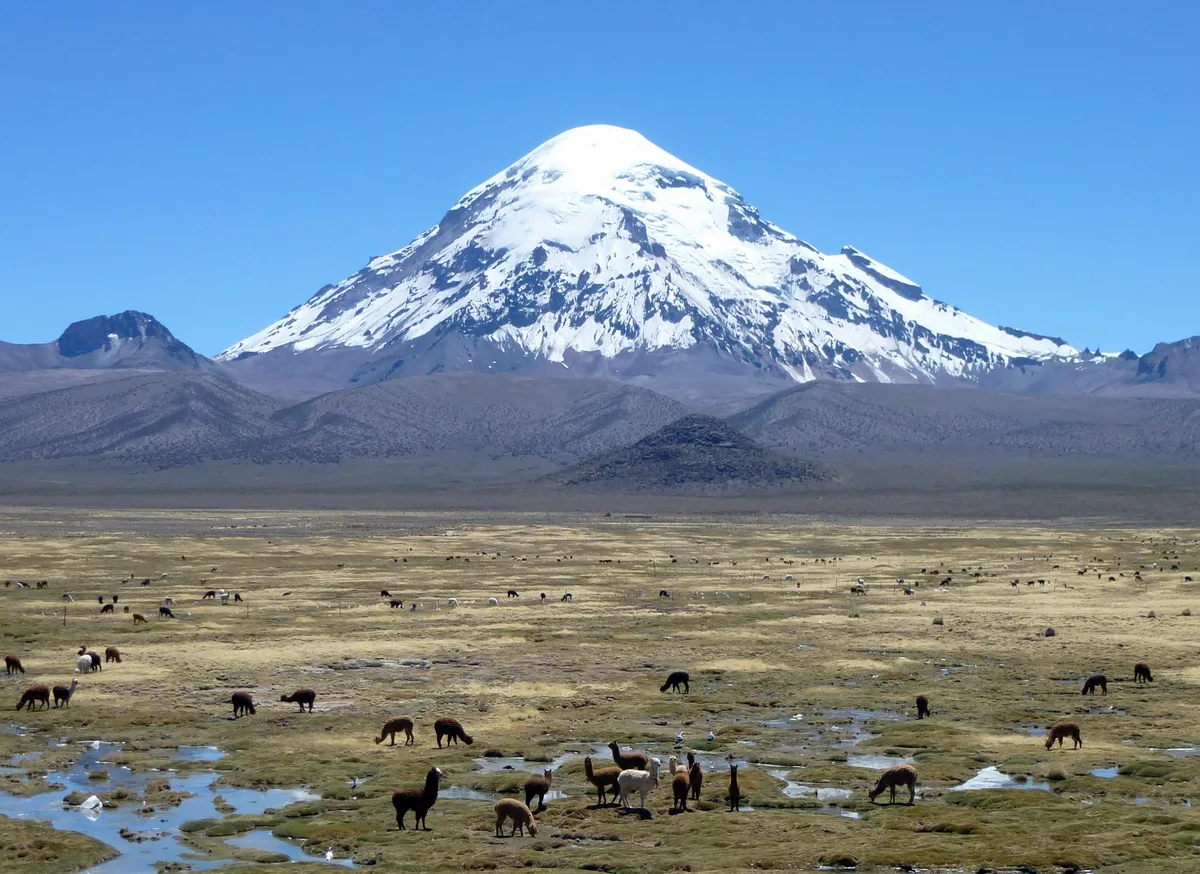
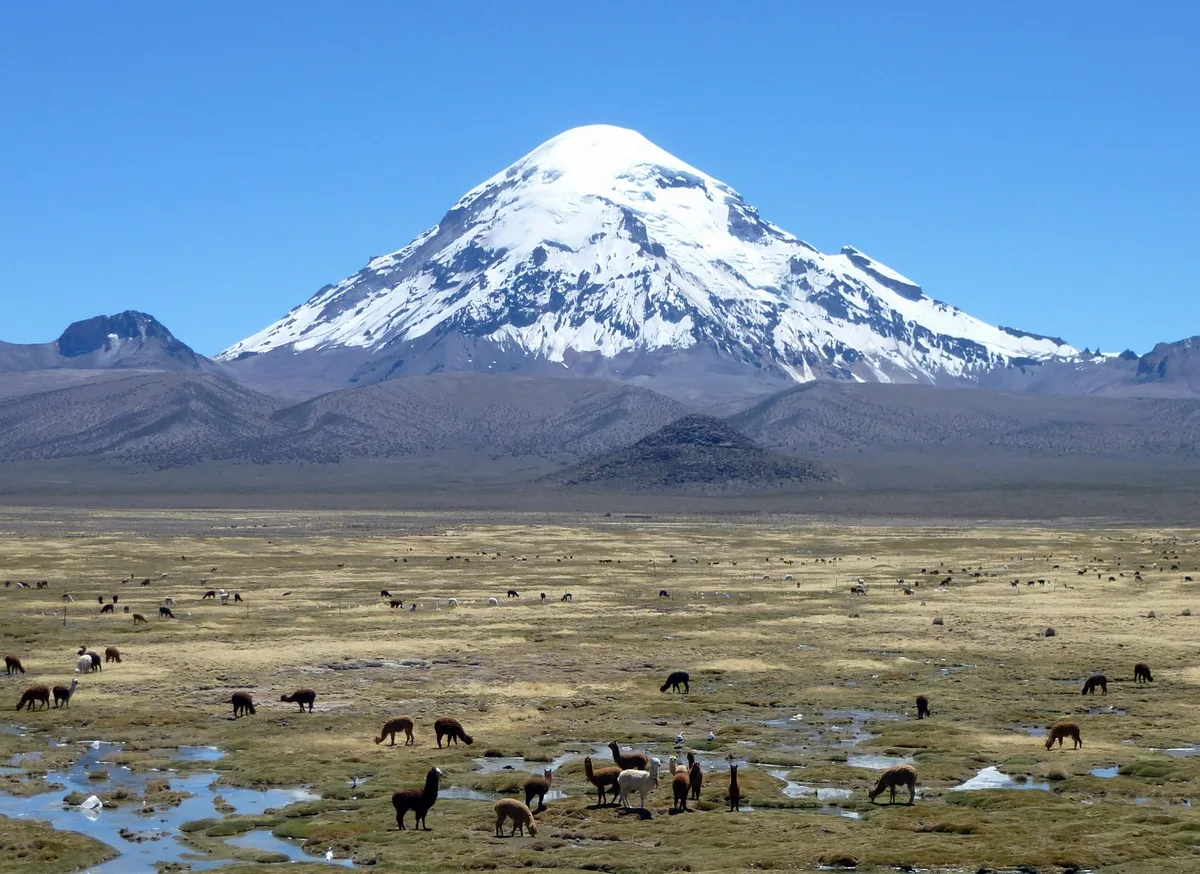
In the southwestern corner of the Bolivian Altiplano, isolated from the continuous chain of the Cordillera Real, stands a lonely giant of rock and ice: Nevado Sajama. Soaring to 6,542 metres (21,463 feet), this extinct stratovolcano is the highest mountain in Bolivia and one of the most formidable natural fortresses on the South American continent.
Surrounded by arid salt flats, boiling geysers, and ancient dwarf forests of Polylepis tarapacana—the highest-growing trees on Earth—Sajama had earned a fearsome reputation among early twentieth-century explorers. Prior attempts by experienced German and Italian teams had failed, defeated not by technical rock walls, but by brutal sub-zero Altiplano gales, debilitating altitude, and miles of razor-sharp ice penitentes.
Ghiglione and the 1939 Expedition
In September 1939, veteran Italian alpine explorer and engineer Piero Ghiglione arrived in the Altiplano determined to organize a decisive attempt on Sajama. Recognizing the need for hardened local high-altitude climbers, Ghiglione joined forces with Austrian expatriate alpinist Joseph Prem and fellow climber Wilfrid Kuehm.
Operating from the picturesque Aymara village of Sajama at 4,250 metres, the team recruited native llama drivers to haul heavy provisions across the volcanic sand dunes. Ascending through the gnarled Polylepis forests, they established Base Camp at 4,800 metres near natural thermal hot springs.
Ghiglione and Prem carefully studied the mountain’s flanks. The southern and eastern sides presented colossal, unstable ice cliffs that dropped continuous avalanches onto the plains. The Northwest Ridge, however, offered a continuous ramp of volcanic scree leading to the upper glacier cap.
The Labyrinth of Penitentes
On October 2, the climbers established a high bivouac at 5,700 metres on an exposed rock shelf of the Northwest Ridge. That night, ferocious desert winds battered their canvas shelter, and temperatures plunged past minus-twenty-five degrees Celsius.
Setting out before dawn on October 4, 1939, Prem and Kuehm encountered the most exhausting physical obstacle of their climbing lives: an endless field of nieves penitentes—sword-like blades of hardened ice carved by solar radiation that stood between one and two metres high.
Unable to walk around the penitentes, the two men had to kick and clamber over the frozen blades, bruising their knees and shins with every step. Above the penitente forest lay a continuous 45-degree slope of hard, wind-scoured firn leading toward the crater rim.
Standing on Bolivia’s Highest Apex
Gasping for breath in the thin atmosphere, Prem took the lead, relentlessly swinging his ice axe to cut steps into the bullet-hard slope. Higher and higher they climbed, the barren expanse of the Bolivian and Chilean Altiplano stretching beneath them like an endless beige ocean dotted with smoking volcanic cones.
At 2:00 p.m. on October 4, 1939, Joseph Prem and Wilfrid Kuehm surmounted the final ice rim and stepped onto the broad, snow-filled summit caldera of Nevado Sajama at 6,542 metres.
They had conquered the highest point in Bolivia. Looking westward toward Chile, they could see the twin volcanic peaks of Parinacota and Pomerape gleaming in the thin, crystalline air.
Their triumph on Sajama resolved the last great mountain problem in Bolivia and stood as a masterpiece of endurance, determination, and alpine technique in the high desert of the Andes.
Key Statistics & Topographic Figures
- Category
- Andean Pioneers
Archival Subject
- Reading Time
- 16 min read
Narrative Length
- Key Mountain
- sajama
Objective
- Ascent Route
- sajama-northwest-ridge
Topography
- Verification
- Editorially Verified
Archival Standard
Archival Primary Source Quotations
“In the mountains, truth is etched in ice and granite; every step requires unwavering respect for the heights.”
Defined Alpine Terminology & Concepts
- Summit Push
- The final continuous climbing effort from the highest established camp to the mountain apex and back.
- Death Zone Chronicle
- A verified, research-backed historical narrative documenting the human, technical, and environmental realities of an alpine expedition.
Frequently Asked Questions: Conquering the Volcano of Ice: The 1939 First Ascent of Sajama
What is the core chronicle and subject of "Conquering the Volcano of Ice: The 1939 First Ascent of Sajama"?
On October 4, 1939, Austrian alpinist Joseph Prem and Wilfrid Kuehm achieved the historic first ascent of Nevado Sajama (6,542 m), the highest peak in Bolivia.
Which mountain peaks and routes are featured in "Conquering the Volcano of Ice: The 1939 First Ascent of Sajama"?
This narrative documents climbs on sajama along the sajama-northwest-ridge in Bolivia.
Which documented expedition is chronicled in this story?
This historical chronicle captures the events of the 1939-prem-kuehm-sajama-first-ascent, verified through contemporary journals and archival records.
Who authored and researched this archival chronicle?
Authored and researched by Mountainity Historical Research Desk, drawing on primary eyewitness testimonies, alpine club registries, and verified summit logs.
What makes this high-altitude chronicle historically significant?
Categorized under "Andean Pioneers", this chronicle preserves critical lessons in alpine leadership, survival, tactical speed, and human endurance in the death zone.
Related Mountains
Nevado Sajama
Nevado Sajama is an immense 6,542-metre extinct stratovolcano and the highest mountain in Bolivia, rising majestically above the arid high plains of Sajama National Park. First climbed in October 1939 by Austrian alpinist Joseph Prem and fellow climber Wilfrid Kuehm, the mountain features vast fields of ice penitentes, sub-zero winds, and rare high-altitude Polylepis dwarf forests along its flanks. Sajama stands as an isolated giant near the Chilean frontier.
Documented Sources & Archival Citations
- Alpine Journal: Ascent of Mount Sajama(Piero Ghiglione / Alpine Club)
Supporting claim: Firsthand expedition report detailing the logistics, penitente fields, and summit victory on Sajama
Accessed/Documented: 1940 - Bolivia: A Climbing Guide(Yossi Brain / The Mountaineers Books)
Supporting claim: Comprehensive historical assessment and route topo of the 1939 first ascent
Accessed/Documented: 1999