A Toast Above the Clouds: The 1951 First Ascent and Naming of Nevado Pisco
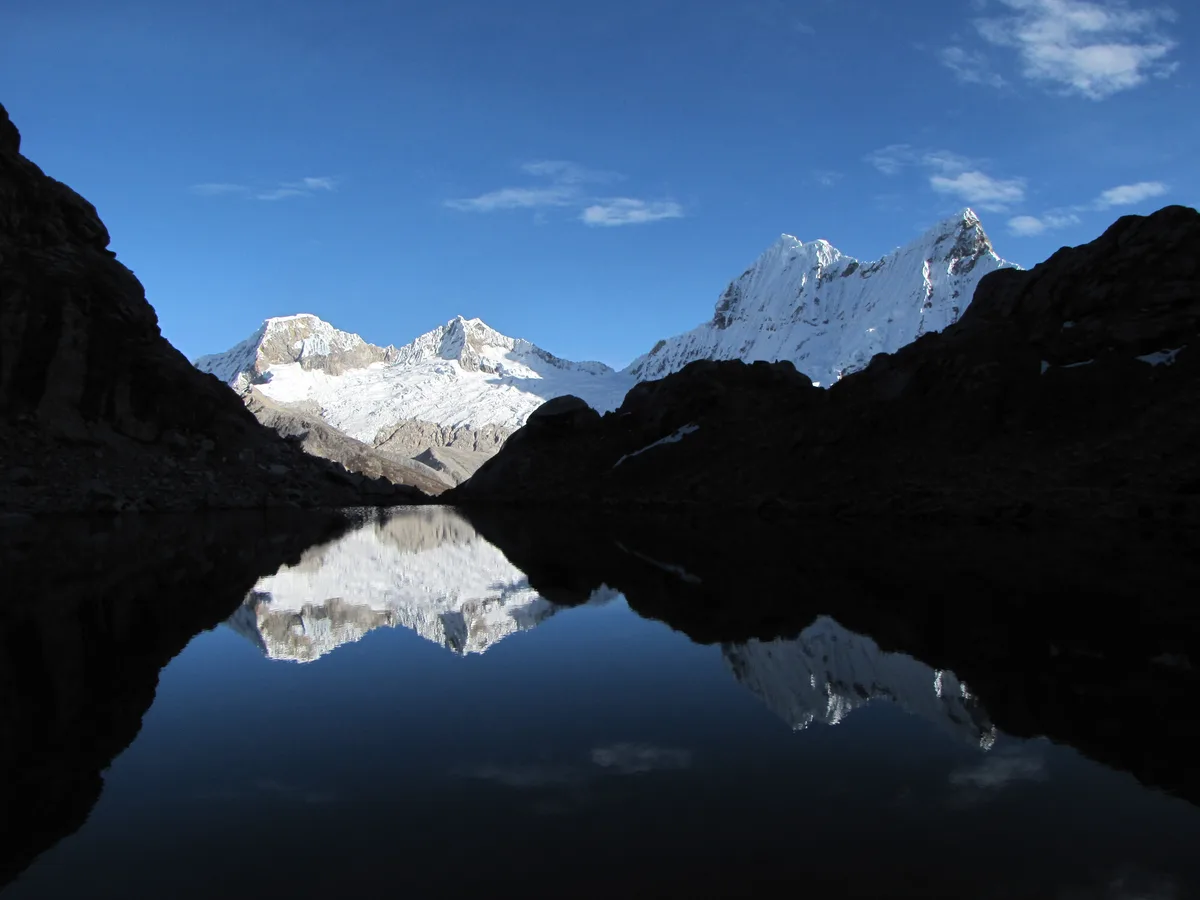
In July 1951, Austrian mountain titan Erwin Schneider returned to Peru to claim the virgin summit of a 5,752-metre glaciated jewel, christening it Nevado Pisco with a celebratory toast of Andean brandy.
Mountain Safety & Conditions Disclaimer: High-altitude climbing, glacial travel, and technical ascents entail severe objective risks including avalanches, serac collapses, rapid weather collapse, and altitude illness. Historical route descriptions and summit claims on Mountanity reflect documented archival sources and must not be used as live operational safety assessments. Local regulations, permits, and physical glacial topography change continuously.
Peer Review: Senior Editorial Board & Historical Reviewers • Editorial Standards
A Toast Above the Clouds: The 1951 First Ascent and Naming of Nevado Pisco
In July 1951, nearly two decades after he had conquered Huascarán Sur and Chopicalqui during the fabled 1932 German-Austrian expedition, Erwin Schneider walked back into the Callejón de Huaylas. The forty-five-year-old Austrian topographer had survived Himalayan avalanches, world war, and international expeditions, yet his fascination with the glaciated spires of Peru’s Cordillera Blanca remained as intense as it had been in his youth.
Schneider was in Peru on a cartographic mission: to refine his groundbreaking Alpenvereinskarte surveys and map the complex feeder glaciers of the northern cordillera. Partnering with French alpinist C. Fabre and Italian climber F. Marzari, Schneider turned his sights toward an unnamed, glaciated peak rising to 5,752 metres between the towering massifs of Huandoy and Chacraraju.
The Approach Through Cebollapampa
Departing from the turquoise waters of the Llanganuco lakes, Schneider’s party pushed past the dense quenual forests of Quebrada Llanganuco into the high alpine meadow of Cebollapampa. Towering above them were some of the most fearsome rock and ice walls in South America: the sheer South Face of Chacraraju, bristling with hanging seracs, and the four soaring horns of Huandoy.
Nestled between these giants was an elegant, symmetrical snow dome whose glaciated slopes tumbled gently down toward a high col. Because it lacked a formal Quechua designation or official government title, the mountain was known in survey notebooks simply by its altitude: Point 5,752.
Establishing a base camp at Cebollapampa, the team hired local porters from Yungay to carry equipment across the colossal, unstable lateral moraines. Traversing fields of razor-sharp granite boulders, shifting talus, and glacial meltwater streams, they pitched a high camp at 4,900 metres directly beneath the glacier’s terminus.
Into the Crevasse Maze: July 12, 1951
At 3:00 a.m. on July 12, 1951, beneath a canopy of southern stars, Schneider, Fabre, and Marzari strapped on ten-point crampons and roped up for the glacier.
Drawing upon decades of high-altitude experience, Schneider took the lead. The glacier was heavily broken by deep, transverse crevasses and delicate snow bridges weakened by tropical solar radiation. Weaving a serpentine path through the ice maze, Schneider probed every step with the pick of his wooden ice axe.
As the sun crested the jagged ridge of Chacraraju, illuminating the snow in blazing crimson and gold, the party reached the broad, glaciated col. From here, the route steepened into a clean 40-to-45-degree slope of hard, wind-packed firn. With crisp, rhythmic crampon placements, the three climbers ascended steadily, feeling the exhilarating freedom of pioneering untouched terrain.
At mid-morning, the slope gently rounded off. Taking the final steps across a gentle snow crest, Erwin Schneider stepped onto the summit at 5,752 metres.
A Toast with Pisco
The summit of Point 5,752 revealed what is universally acknowledged today as the grandest 360-degree mountain panorama on Earth. Directly across the Llanganuco chasm stood the colossal twin domes of Huascarán Norte and Huascarán Sur, their icefalls gleaming in the morning light. To the north rose the fluted ice pyramid of Artesonraju and the jagged battlements of Pirámide de Garcilaso. To the west, the four summits of Huandoy seemed close enough to touch.
Standing in the biting wind, overwhelmed by the splendor of the scene, Fabre reached into his rucksack and produced a bottle of Peru’s traditional national liquor: pisco, the clear grape brandy produced in the coastal valleys of southern Peru.
Uncorking the bottle, the three climbers passed it among themselves, drinking a hearty toast to their Peruvian camp companions, the people of the Callejón de Huaylas, and the triumphant completion of their climb. As they drank, Schneider declared that Point 5,752 would henceforth bear an appropriate and unforgettable title: Nevado Pisco.
The Living Legend of Pisco
Schneider’s christening stuck. When the official cartographic maps of Huascarán National Park were drafted, the name Nevado Pisco was permanently inscribed.
In the decades that followed, Nevado Pisco became a legendary rite of passage for mountaineers from around the world. Because its normal route offers accessible glaciated climbing with unmatched panoramic rewards, almost every alpine expedition to the Cordillera Blanca makes an ascent of Pisco its mandatory acclimatization objective.
Nearly three-quarters of a century after Erwin Schneider took his historic sip above the clouds, climbers still carry flasks of pisco to the 5,752-metre summit, raising a glass to the Austrian master whose vision and joie de vivre forever linked Peru’s national drink to its most beloved high-altitude viewpoint.
Key Statistics & Topographic Figures
- Category
- Andean Pioneers
Archival Subject
- Reading Time
- 13 min read
Narrative Length
- Key Mountain
- nevado-pisco
Objective
- Ascent Route
- the ascent route
Topography
- Verification
- Editorially Verified
Archival Standard
Archival Primary Source Quotations
“In the mountains, truth is etched in ice and granite; every step requires unwavering respect for the heights.”
Defined Alpine Terminology & Concepts
- Summit Push
- The final continuous climbing effort from the highest established camp to the mountain apex and back.
- Death Zone Chronicle
- A verified, research-backed historical narrative documenting the human, technical, and environmental realities of an alpine expedition.
Frequently Asked Questions: A Toast Above the Clouds: The 1951 First Ascent and Naming of Nevado Pisco
What is the core chronicle and subject of "A Toast Above the Clouds: The 1951 First Ascent and Naming of Nevado Pisco"?
In July 1951, Austrian mountain titan Erwin Schneider returned to Peru to claim the virgin summit of a 5,752-metre glaciated jewel, christening it Nevado Pisco with a celebratory toast of Andean brandy.
Which mountain peaks and routes are featured in "A Toast Above the Clouds: The 1951 First Ascent and Naming of Nevado Pisco"?
This narrative documents climbs on nevado-pisco along the the ascent route in Peru.
Which documented expedition is chronicled in this story?
This historical chronicle captures the events of the 1951-schneider-nevado-pisco-first-ascent, verified through contemporary journals and archival records.
Who authored and researched this archival chronicle?
Authored and researched by Mountainity Historical Research Desk, drawing on primary eyewitness testimonies, alpine club registries, and verified summit logs.
What makes this high-altitude chronicle historically significant?
Categorized under "Andean Pioneers", this chronicle preserves critical lessons in alpine leadership, survival, tactical speed, and human endurance in the death zone.
Related Mountains

Nevado Pisco
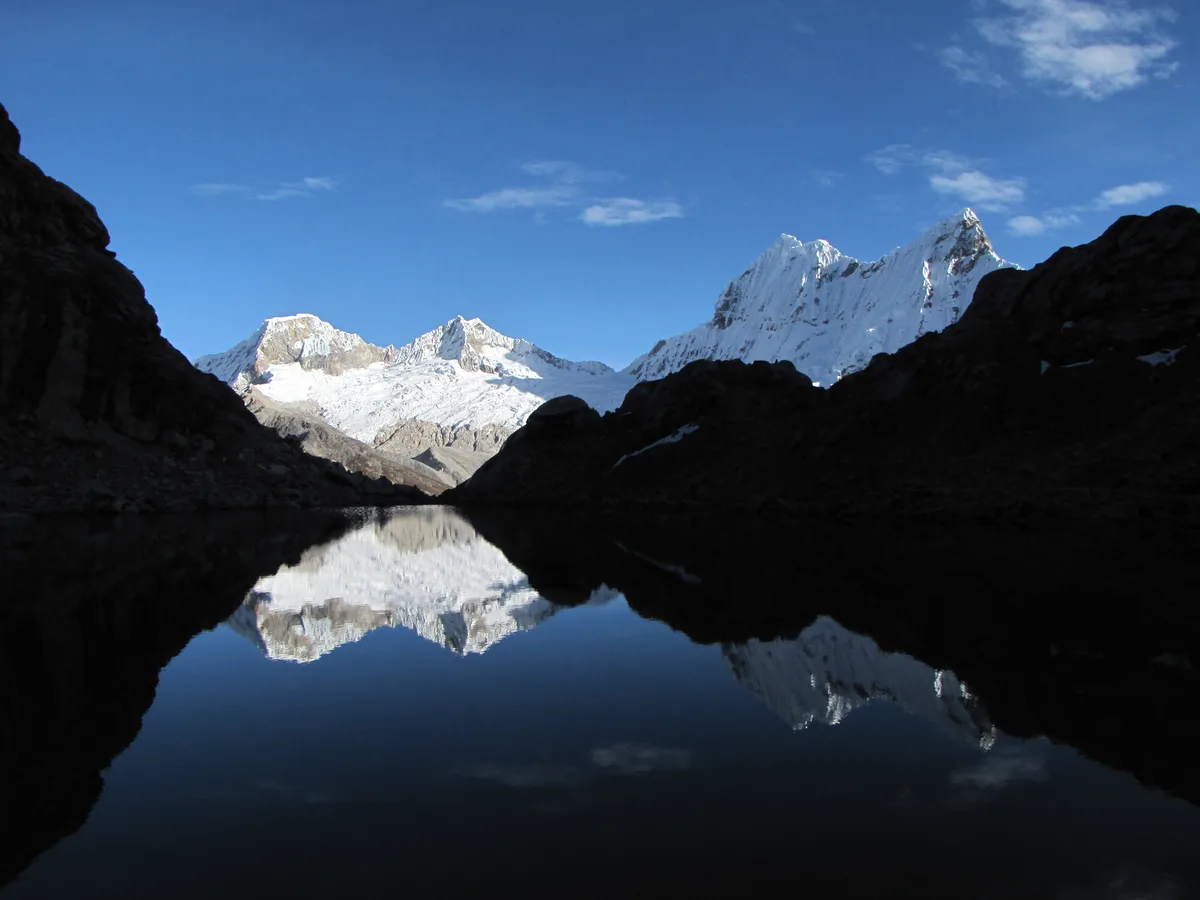
Nevado Pisco is a celebrated 5,752-metre glaciated summit located in the central Cordillera Blanca of Peru above the Quebrada Llanganuco. First climbed on July 12, 1951, by Austrian topographer Erwin Schneider alongside Claude Fabre and Fermo Marzari, it was named to toast their triumph with Peru's traditional pisco brandy. The summit offers an unparalleled 360-degree panorama of Huascarán, Chacraraju, and Artesonraju.
Documented Sources & Archival Citations
- American Alpine Journal: Cordillera Blanca Reconnaissance(American Alpine Club)
Supporting claim: Historical record of the 1951 first ascent and origin of the name Nevado Pisco
Accessed/Documented: 1952 - The High Andes: A Guide for Climbers(John Biggar / Andes Publishing)
Supporting claim: Topographical overview, normal route conditions, and historical milestones of Nevado Pisco
Accessed/Documented: 2026