Makalu 1955: The Flawless Triumph of Lionel Terray and Jean Couzy
On May 15, 1955, Lionel Terray and Jean Couzy conquered the terrifying granite pyramid of Makalu (8,485m), launching a legendary three-day assault that placed all nine expedition climbers on the summit.
Mountain Safety & Conditions Disclaimer: High-altitude climbing, glacial travel, and technical ascents entail severe objective risks including avalanches, serac collapses, rapid weather collapse, and altitude illness. Historical route descriptions and summit claims on Mountanity reflect documented archival sources and must not be used as live operational safety assessments. Local regulations, permits, and physical glacial topography change continuously.
Peer Review: Senior Editorial Board & Historical Reviewers • Editorial Standards
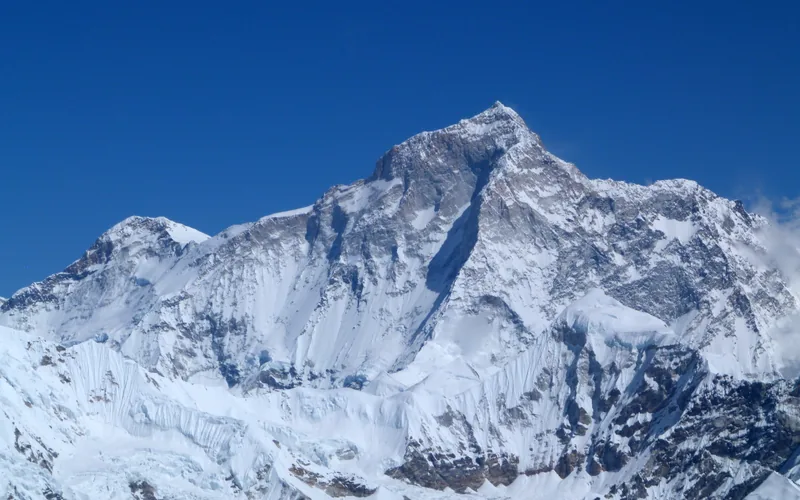
Rising nineteen kilometers southeast of Mount Everest, Makalu (8,485m)—known as “The Great Black”—is perhaps the most imposing natural citadel on planet Earth. Unlike the broad ridges of Cho Oyu or the sprawling massifs of Everest and Annapurna, Makalu is an isolated, monolithic four-sided pyramid of dark, sheer granite. Its knife-edge ridges drop thousands of vertical feet into bottomless glacial cirques, and its exposed headwall catches the full fury of the Tibetan jet stream. Early Himalayan explorers considered it an impregnable fortress.
In 1950, French alpinism had astonished the world with the first conquest of an 8,000-meter peak on Annapurna I. But that victory had come at a terrible human cost: Maurice Herzog and Louis Lachenal had returned mutilated, their fingers and toes amputated in field hospitals. Five years later, the French Alpine Club and the Fédération Française de la Montagne returned to Nepal with an entirely different objective: not merely to conquer Makalu, but to do so with surgical precision, mathematical planning, and zero casualties.
Under the calm, democratic leadership of Jean Franco, the team included the greatest expedition climber of the era, Lionel Terray, brilliant École Polytechnique aeronautical engineer Jean Couzy, and an elite cadre of Chamonix guides and Sherpas led by Sirdar Gyalzen Norbu.
The Barun Wilderness and the Makalu La
In the spring of 1955, the expedition marched through the untracked, rain-swept jungles of eastern Nepal into the remote Barun valley. Benefiting from an autumn 1954 reconnaissance in which Terray and Couzy had made the first ascent of neighboring Chomo Lonzo (7,804m), Franco bypassed the impossible southern precipices and targeted the mountain’s northern flank.
Base Camp was established at 5,300 meters on the Barun Glacier. Working methodically, the climbers fixed heavy hemp lines through the shattered seracs of the upper icefall and ascended onto the Makalu La—a gigantic, wind-scoured glacial col at 7,400 meters separating Makalu from its satellite peaks.
Unlike the chaotic siege warfare that had plagued other early expeditions, Franco’s team operated like a finely tuned watch. Camp V was established at 7,400 meters on the pass, and on May 14, Terray and Couzy climbed up the northwest slopes to pitch Camp VI—a lone assault tent perched on a snow ledge at 7,800 meters beneath the final summit pyramid.
May 15, 1955: Terray and Couzy Breach the Pyramid
At dawn on May 15, 1955, under a freezing sky of brilliant sapphire blue, Lionel Terray and Jean Couzy roped together for the virgin summit dash. Breathing bottled oxygen through open-circuit masks, the two men climbed with rhythmic, fluid precision.
The route led up a steep 50-degree couloir of hard ice, funneling between menacing granite bastions. As the morning sun crested the eastern horizon, revealing the distant, cloud-capped curvature of the earth toward Kangchenjunga, Couzy took the lead, using his front points to kick precise steps into the blue ice. Terray, possessing the physical strength of a draft horse and the technical instincts of a master guide, anchored each belay with total security.
Above 8,200 meters, they emerged onto a narrow, knife-edge rock and snow ridge. The exposure on either side was terrifying: to the north, a sheer 3,000-meter drop into Tibet; to the south, the abyss of the Barun Glacier. Step by step, navigating loose blocks of black granite, they climbed into the thin air.
At 3:00 PM on May 15, 1955, Lionel Terray and Jean Couzy stood side by side on the razor-sharp apex of Makalu at 8,485 meters.
Terray later recalled the overwhelming emotion of standing on the virgin summit: “The sky was of an incredible dark blue, almost black. Below us, the whole world seemed to fall away in sweeping folds of snow, ice, and jungle. We had asked of our bodies the ultimate effort, and the mountain had given us its ultimate reward.”
A Historic Sweep: All Nine Climbers on the Summit
What followed over the next forty-eight hours elevated the 1955 French Makalu Expedition into the realm of legend. In virtually every previous 8,000-meter conquest, once a single pair reached the top, the expedition demobilized amidst exhaustion. Jean Franco had a different plan. He believed that every man who had hauled loads and risked his life deserved to share in the triumph.
On May 16, twenty-four hours after Terray and Couzy’s breakthrough, the second assault team set off from Camp VI. Expedition leader Jean Franco, Dolomite rock master Guido Magnone, and Sherpa Sirdar Gyalzen Norbu climbed the route and reached the summit. For Gyalzen Norbu, standing on Makalu was a historic milestone that would precede his first ascent of Manaslu the very next year.
On May 17, the third assault wave—Jean Bouvier, Serge Coupé, Pierre Leroux, and André Vialatte—launched their push. Despite encountering rising winds and deteriorating weather, all four climbers reached the 8,485-meter crest.
In total, across three consecutive days, nine French mountaineers and one Nepalese Sherpa stood on the summit of Makalu. Not a single man suffered severe frostbite, no one was injured, and every climber returned safely to Base Camp.
The Triumph of Brotherhood
The 1955 conquest of Makalu fundamentally transformed the philosophy of high-altitude mountaineering:
- Flawless Teamwork: It proved that an 8,000-meter mountain could be conquered without leaving broken men or bitter rivalries behind.
- Alpine Mastery: Jean Couzy and Lionel Terray demonstrated that technical competence and meticulous planning could overcome even the most formidable granite pyramids.
- Respect and Equality: Sherpa Sirdar Gyalzen Norbu was celebrated as a full summit equal, paving the way for the recognition of indigenous Himalayan guides.
In his classic memoir Conquistadors of the Useless, Lionel Terray reflected on Makalu with deep contentment: “We had conquered one of the greatest monsters of the earth, not with violence or reckless gamble, but with the quiet harmony of men bound together by friendship.”
Key Statistics & Topographic Figures
- Category
- Historic Expeditions
Archival Subject
- Reading Time
- 12 min read
Narrative Length
- Key Mountain
- makalu
Objective
- Ascent Route
- makalu-normal-route
Topography
- Verification
- Editorially Verified
Archival Standard
Archival Primary Source Quotations
“In the mountains, truth is etched in ice and granite; every step requires unwavering respect for the heights.”
Defined Alpine Terminology & Concepts
- Summit Push
- The final continuous climbing effort from the highest established camp to the mountain apex and back.
- Death Zone Chronicle
- A verified, research-backed historical narrative documenting the human, technical, and environmental realities of an alpine expedition.
Frequently Asked Questions: Makalu 1955: The Flawless Triumph of Lionel Terray and Jean Couzy
What is the core chronicle and subject of "Makalu 1955: The Flawless Triumph of Lionel Terray and Jean Couzy"?
On May 15, 1955, Lionel Terray and Jean Couzy conquered the terrifying granite pyramid of Makalu (8,485m), launching a legendary three-day assault that placed all nine expedition climbers on the summit.
Which mountain peaks and routes are featured in "Makalu 1955: The Flawless Triumph of Lionel Terray and Jean Couzy"?
This narrative documents climbs on makalu along the makalu-normal-route in Nepal.
Which documented expedition is chronicled in this story?
This historical chronicle captures the events of the 1955-french-makalu, verified through contemporary journals and archival records.
Who authored and researched this archival chronicle?
Authored and researched by Mountainity Historical Research Desk, drawing on primary eyewitness testimonies, alpine club registries, and verified summit logs.
What makes this high-altitude chronicle historically significant?
Categorized under "Historic Expeditions", this chronicle preserves critical lessons in alpine leadership, survival, tactical speed, and human endurance in the death zone.
Related Mountains
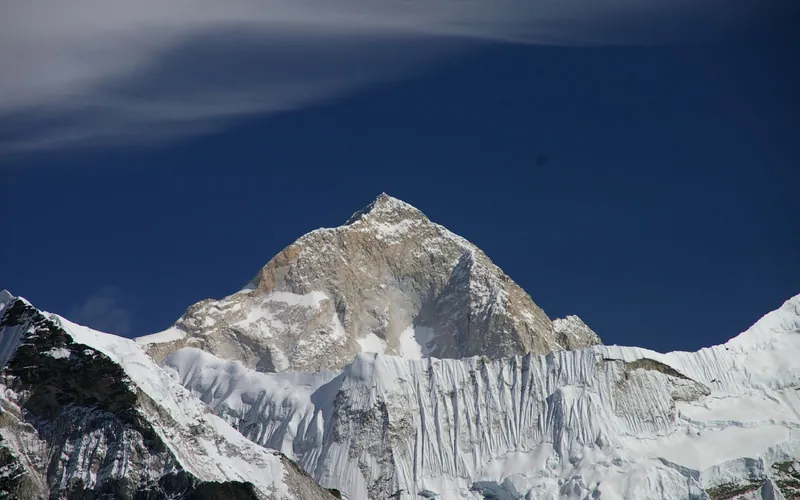


Makalu
Makalu, at 8,485 meters (27,838 ft), is the fifth-highest mountain on Earth, located 19 km southeast of Mount Everest. An isolated four-sided granite pyramid, it is known for technical knife-edge ridges, severe exposure, and punishing weather, making it one of the most challenging eight-thousanders.
Documented Sources & Archival Citations
- Makalu: 8,470 Metres(Jean Franco / Jonathan Cape)
Supporting claim: Official expedition leader narrative detailing route strategy, team ethos, and all three summit waves
Accessed/Documented: 1957 - Les Conquérants de l'inutile(Lionel Terray / Victor Gollancz)
Supporting claim: Eyewitness account by first-wave summit climber Lionel Terray of the North Face push
Accessed/Documented: 1963 - The Himalayan Database: Makalu 1955(Elizabeth Hawley Archive)
Supporting claim: Official verification of summit timestamps, team members, and lack of casualties
Accessed/Documented: 2026