The 1957 Ascent of Broad Peak: The Alpine Style Revolution
How four Austrian climbers rejected military siege tactics in 1957 to prove that 8,000-meter giants could be conquered clean, fast, and without bottled oxygen.
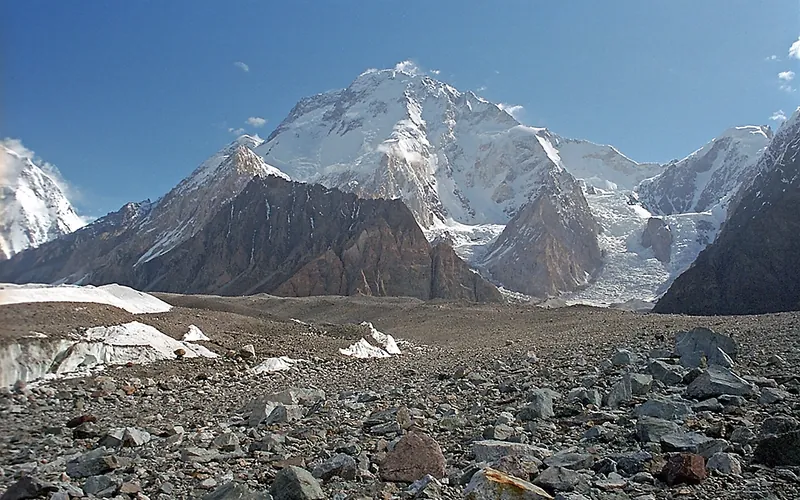
Mountain Safety & Conditions Disclaimer: High-altitude climbing, glacial travel, and technical ascents entail severe objective risks including avalanches, serac collapses, rapid weather collapse, and altitude illness. Historical route descriptions and summit claims on Mountanity reflect documented archival sources and must not be used as live operational safety assessments. Local regulations, permits, and physical glacial topography change continuously.
Peer Review: Senior Editorial Board & Historical Reviewers • Editorial Standards
Breaking Free from the Siege Mentality
In the early 1950s, climbing an 8,000-meter mountain was treated like a military campaign. National teams from Britain, France, Germany, and Italy marched into the Himalayas and Karakoram with hundreds of local porters, tons of canned rations, miles of fixed hemp rope, and heavy arrays of steel oxygen bottles. Mountains were besieged from the bottom up until sheer logistical weight forced a summit.
In the spring of 1957, a small group of four Austrian climbers decided to prove that a different way was possible. Led by Marcus Schmuck and joined by Fritz Wintersteller, Kurt Diemberger, and the already legendary Hermann Buhl, the Austrian Karakoram Expedition traveled to Broad Peak (8,051 m) with no army of high-altitude porters and not a single canister of supplemental oxygen.
Their philosophy was simple: climb the mountain on its own terms, carry your own gear, establish your own high camps, and rely on skill, speed, and personal fitness rather than industrial support.
The Strategy on the Baltoro
Arriving at the base of Broad Peak opposite the sheer pyramid of K2, the four men worked together like an alpine rope team in Europe. Rather than stringing endless fixed ropes up the West Ridge, they ferried their own tents and food to three modest camps:
- Camp I at 5,800 meters on the lower snow ridges.
- Camp II at 6,400 meters perched on an icy ledge.
- Camp III at 6,950 meters beneath the great snow col.
By carrying their own loads up the steep slopes day after day, they gained deep natural acclimatization. They did not need to wait for supply chains or porter relays. Whenever weather permitted, they moved up smoothly and quietly.
The False Summit Heartbreak
On May 29, 1957, the team launched their first summit push. Battling deep powder and bitter sub-zero cold, they reached what appeared to be the top of the mountain. But standing on the crest at 8,035 meters, they suffered a crushing blow: they had reached only the Forepeak.
Looking north across a sharp, corniced knife-edge ridge, they saw the true summit of Broad Peak standing nearly twenty meters higher and almost an hour’s difficult climb away across fragile snow formations. Exhausted, dehydrated, and with twilight closing in, they made the disciplined decision to retreat to Base Camp and wait for another weather window.
The Historic June 9 Triumph
Ten days later, on June 9, 1957, the team climbed back up the mountain. Marcus Schmuck and Fritz Wintersteller moved first, breaking trail up the col and reaching the Forepeak. This time, they did not stop. Pushing through severe fatigue and thin air, they crossed the narrow connecting crest and stood on the true summit of Broad Peak at 5:05 PM.
Behind them, Kurt Diemberger was climbing steadily when he noticed Hermann Buhl lagging behind on the lower ridge, moving slowly due to painful frostbite injuries sustained years earlier on Nanga Parbat. Diemberger waited for his friend, and together the two men started up the summit ridge as the late afternoon sun turned the surrounding Karakoram peaks a fiery gold.
At 7:00 PM on June 9, 1957, Hermann Buhl and Kurt Diemberger joined their teammates on the highest point of Broad Peak. For Buhl, it was his second first ascent of an 8,000-meter peak—both achieved without bottled oxygen.
The Dawn of Modern Alpinism
The 1957 Austrian ascent of Broad Peak permanently changed the world of mountaineering. It showed future generations that an eight-thousander did not require tons of gear or military hierarchies. A small, self-contained group of dedicated companions could travel light, move fast, and stand on the highest summits on Earth relying solely on human willpower and pure alpine craft.
Key Statistics & Topographic Figures
- Category
- Expedition History
Archival Subject
- Reading Time
- 6 min read
Narrative Length
- Key Mountain
- broad-peak
Objective
- Ascent Route
- broad-peak-normal
Topography
- Verification
- Editorially Verified
Archival Standard
Archival Primary Source Quotations
“In the mountains, truth is etched in ice and granite; every step requires unwavering respect for the heights.”
Defined Alpine Terminology & Concepts
- Summit Push
- The final continuous climbing effort from the highest established camp to the mountain apex and back.
- Death Zone Chronicle
- A verified, research-backed historical narrative documenting the human, technical, and environmental realities of an alpine expedition.
Frequently Asked Questions: The 1957 Ascent of Broad Peak: The Alpine Style Revolution
What is the core chronicle and subject of "The 1957 Ascent of Broad Peak: The Alpine Style Revolution"?
How four Austrian climbers rejected military siege tactics in 1957 to prove that 8,000-meter giants could be conquered clean, fast, and without bottled oxygen.
Which mountain peaks and routes are featured in "The 1957 Ascent of Broad Peak: The Alpine Style Revolution"?
This narrative documents climbs on broad-peak along the broad-peak-normal in Pakistan.
Which documented expedition is chronicled in this story?
This historical chronicle captures the events of the 1957-broad-peak, verified through contemporary journals and archival records.
Who authored and researched this archival chronicle?
Authored and researched by Mountanity Editorial Desk, drawing on primary eyewitness testimonies, alpine club registries, and verified summit logs.
What makes this high-altitude chronicle historically significant?
Categorized under "Expedition History", this chronicle preserves critical lessons in alpine leadership, survival, tactical speed, and human endurance in the death zone.
Related Mountains
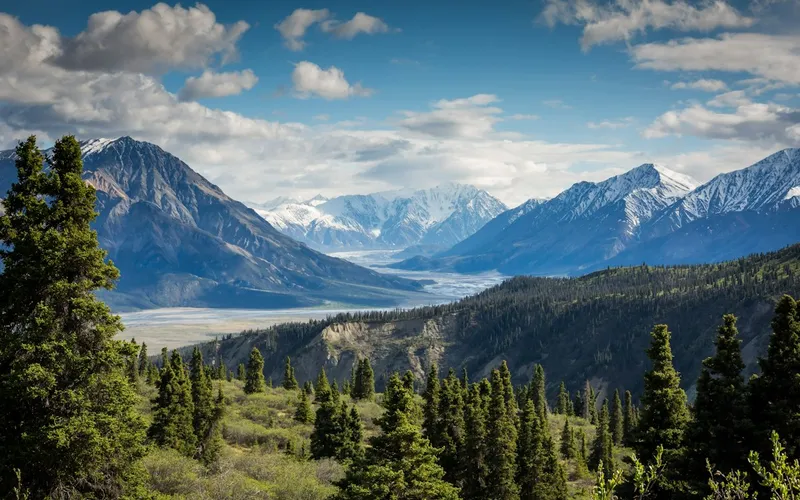


Broad Peak
Broad Peak, at 8,051 meters (26,414 ft), is the twelfth-highest mountain in the world. Located in the Karakoram directly across the Godwin-Austen Glacier from K2, it is famous for its 1.5-kilometre-long summit crest. First climbed in lightweight alpine style without supplemental oxygen or high-altitude porters in 1957 by an Austrian team.