The Sheer Horizon: Royal Robbins and the 1957 Northwest Face of Half Dome
In June 1957, Royal Robbins, Mike Sherrick, and Jerry Gallwas conquered the sheer 600-metre Northwest Face of Half Dome in five continuous days, establishing the first Grade VI climb in North America.
Mountain Safety & Conditions Disclaimer: High-altitude climbing, glacial travel, and technical ascents entail severe objective risks including avalanches, serac collapses, rapid weather collapse, and altitude illness. Historical route descriptions and summit claims on Mountanity reflect documented archival sources and must not be used as live operational safety assessments. Local regulations, permits, and physical glacial topography change continuously.
Peer Review: Senior Editorial Board & Historical Reviewers • Editorial Standards
The Great Sheared Monolith
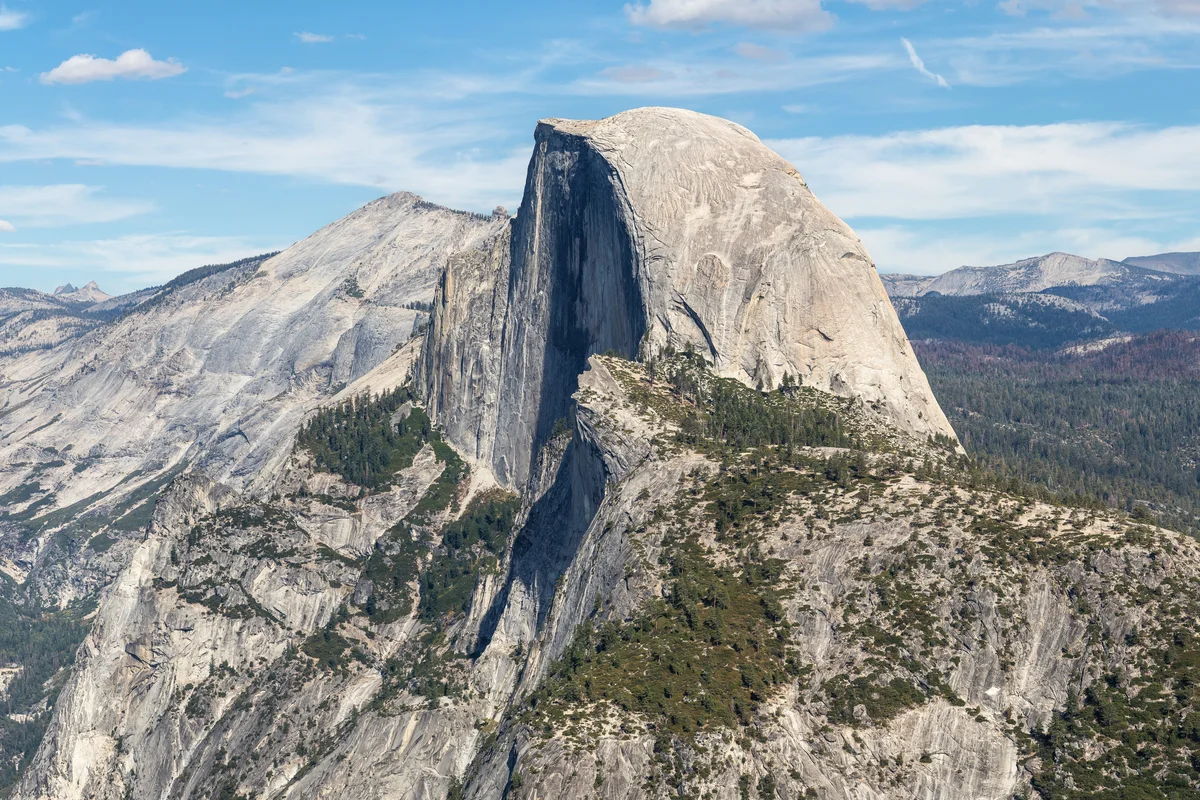
At the eastern terminus of Yosemite Valley stands Half Dome, a breathtaking granite colossus whose northwestern face appears as though a celestial cleaver had sliced an ancient mountain cleanly in two. Rising more than 1,440 vertical metres above the valley floor, with a sheer 600-metre vertical precipice dropping unbroken into the forest below, it captivated Native Ahwahnechee inhabitants and nineteenth-century geologists alike.
In the 1870s, California state geologist Josiah Whitney declared Half Dome “probably the only one of all the prominent points about the Yosemite which never has been, and never will be, trodden by human foot.” While George Anderson had scrambled up the rounded southern backside using eye-bolts in 1875, the sheer vertical Northwest Face remained an untouchable sanctuary—until the arrival of Royal Robbins.
The Architect of Style
In the summer of 1957, Royal Robbins was 22 years old, fiercely intelligent, disciplined, and possessed by a profound vision of climbing ethics. Unlike European mountaineering, which often relied upon heavy military-style siege tactics and copious artificial aids, Robbins believed that American rock climbing should strive for artistic purity. He envisioned tackling the continent’s largest walls in a continuous push from base to summit, carrying all provisions, establishing minimal fixed ropes, and relying primarily upon natural rock cracks rather than expansion bolts.
Joining Robbins were two exceptional partners: Jerry Gallwas, a quiet, brilliant climber who designed custom steel pitons, and Mike Sherrick, an athletic, cheerful Southern Californian known for his unflinching endurance.
In late June 1957, packing heavy canvas duffels with water jugs, canned sardines, dried fruit, and crude nylon ropes, the three young men approached the base of the Northwest Face.
Five Days in the Vertical Void
The climb began on June 23, 1957. Right from the opening pitches, the face presented sustained, intimidating difficulties. The granite was smooth and compact, requiring intricate aid placements of chrome-moly pitons in paper-thin seams. Above the initial pitches, the party reached the Robbins Traverse, a delicate, balance-testing sequence that unlocked access to the central dihedrals.
Operating without modern portaledges, the climbers were forced to endure uncomfortable, precarious bivouacs on narrow rock shelves. Tied to piton anchors driven into shallow seams, they spent the cold Sierra nights huddled against the vertical stone, watching the headlights of automobiles crawl like tiny fireflies across the valley floor hundreds of metres below.
By the fourth day, the intense summer heat began to take a severe toll. Their water rations had run dangerously low, reducing each man to a few sips per day. Their tongues were swollen with thirst, and their hands were raw and blistered from constant hauling on rough hemp and nylon lines. Yet morale remained unshakeable. Robbins and Gallwas alternated grueling leads, linking ascending dihedrals, while Sherrick managed the heavy hauling.
The Summit Breakthrough: June 28, 1957
On the morning of June 28, 1957, Robbins faced the final barrier: the massive summit overhangs that loomed like dark eaves over the upper Northwest Face. Placing pitons with surgical precision and hand-drilling only where blank rock offered zero natural fissures, Robbins worked his way out onto the exposed lip.
With a final, desperate heave over the smooth granite rim, Robbins hauled himself onto the broad, flat summit plateau of Half Dome. A handful of hikers, who had walked up the gentle tourist trail on the back of the mountain, stopped dead in their tracks, watching in utter disbelief as three sunburnt, dust-caked young men carrying heavy ropes and iron pitons emerged from the sheer precipice of the abyss.
In five days of continuous climbing, Robbins, Gallwas, and Sherrick had placed only twenty-five expansion bolts across twenty-four technical pitches, demonstrating that human skill and courage could overcome the greatest granite wall in America.
The Birth of Grade VI
The first ascent of the Northwest Face of Half Dome was universally recognized as a watershed event. To capture the unprecedented scale and commitment of the climb, the Yosemite community established a new pinnacle in the North American decimal system: Grade VI, designating multi-day big-wall climbs of supreme difficulty and sustained exposure.
More than a physical milestone, the 1957 climb established Royal Robbins as the spiritual leader of Yosemite’s Golden Age. It proved that the grandest walls on the continent could be climbed with clean, respectful style, igniting an ethical legacy that continues to inspire climbers around the globe.
Key Statistics & Topographic Figures
- Category
- Big Wall Alpine Legends
Archival Subject
- Reading Time
- 13 min read
Narrative Length
- Key Mountain
- half-dome
Objective
- Ascent Route
- the ascent route
Topography
- Verification
- Editorially Verified
Archival Standard
Archival Primary Source Quotations
“In the mountains, truth is etched in ice and granite; every step requires unwavering respect for the heights.”
Defined Alpine Terminology & Concepts
- Summit Push
- The final continuous climbing effort from the highest established camp to the mountain apex and back.
- Death Zone Chronicle
- A verified, research-backed historical narrative documenting the human, technical, and environmental realities of an alpine expedition.
Frequently Asked Questions: The Sheer Horizon: Royal Robbins and the 1957 Northwest Face of Half Dome
What is the core chronicle and subject of "The Sheer Horizon: Royal Robbins and the 1957 Northwest Face of Half Dome"?
In June 1957, Royal Robbins, Mike Sherrick, and Jerry Gallwas conquered the sheer 600-metre Northwest Face of Half Dome in five continuous days, establishing the first Grade VI climb in North America.
Which mountain peaks and routes are featured in "The Sheer Horizon: Royal Robbins and the 1957 Northwest Face of Half Dome"?
This narrative documents climbs on half-dome along the the ascent route in United States.
Which documented expedition is chronicled in this story?
This historical chronicle captures the events of the 1957-robbins-half-dome-regular-northwest-face, verified through contemporary journals and archival records.
Who authored and researched this archival chronicle?
Authored and researched by Mountainity Historical Research Desk, drawing on primary eyewitness testimonies, alpine club registries, and verified summit logs.
What makes this high-altitude chronicle historically significant?
Categorized under "Big Wall Alpine Legends", this chronicle preserves critical lessons in alpine leadership, survival, tactical speed, and human endurance in the death zone.
Related Mountains

Half Dome
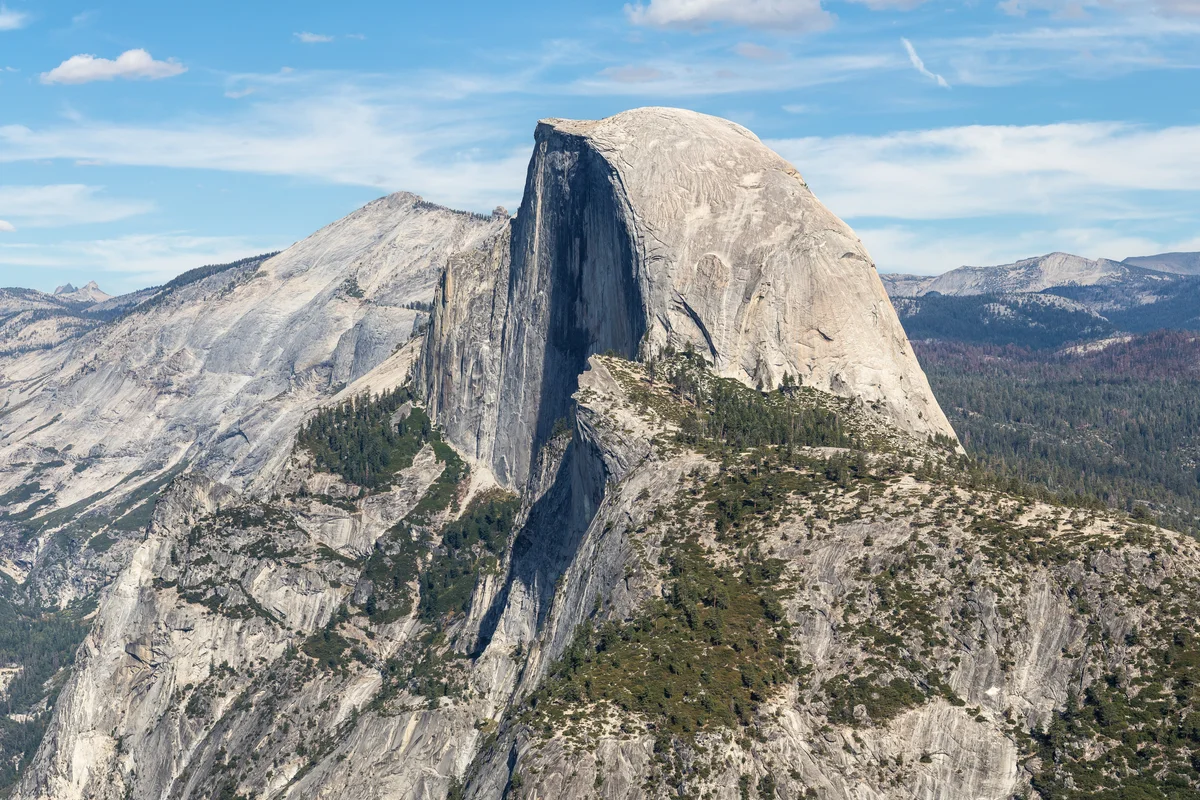
Half Dome is an iconic 2,694-metre granite dome rising majestically over 1,440 metres above the floor of eastern Yosemite Valley in California. Characterized by its distinctively sheared, sheer vertical northwest cliff face, Half Dome was once deemed perfectly inaccessible until pioneers opened technical big-wall routes on its massive precipice.
Documented Sources & Archival Citations
- American Alpine Journal: Northwest Face of Half Dome (1958)(American Alpine Club)
Supporting claim: Official climb chronicle by Royal Robbins detailing the five-day first ascent
Accessed/Documented: 2026 - Camp 4: Recollections of a Yosemite Rockclimber(Steve Roper / The Mountaineers Books)
Supporting claim: Historical analysis of the 1957 climb as the first Grade VI in the United States
Accessed/Documented: 2026