The Cry in the Tempest: Cesare Maestri and Toni Egger's Fateful 1959 Cerro Torre Epic
In January 1959, Cesare Maestri and Austrian prodigy Toni Egger mounted a daring alpine-style push on the unclimbed needle of Cerro Torre, culminating in triumph, tragedy, and the loss of Egger to an avalanche during their retreat.
Mountain Safety & Conditions Disclaimer: High-altitude climbing, glacial travel, and technical ascents entail severe objective risks including avalanches, serac collapses, rapid weather collapse, and altitude illness. Historical route descriptions and summit claims on Mountanity reflect documented archival sources and must not be used as live operational safety assessments. Local regulations, permits, and physical glacial topography change continuously.
Peer Review: Senior Editorial Board & Historical Reviewers • Editorial Standards
The Impossible Shard
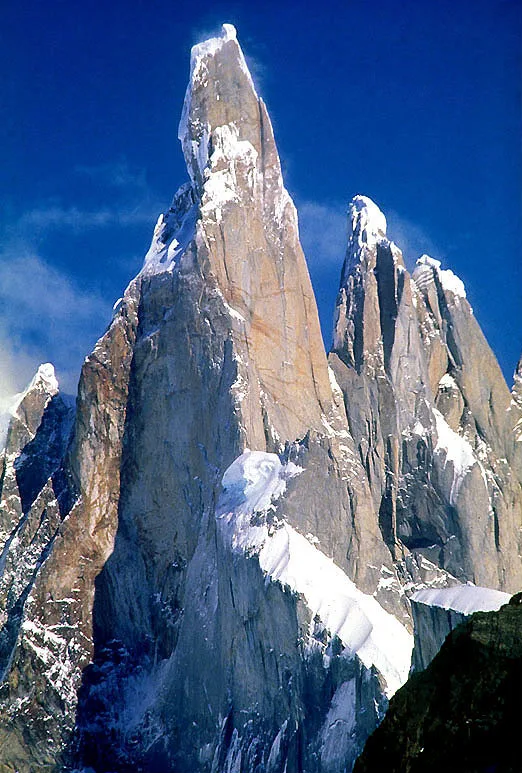
In 1959, the 3,128-metre granite spire of Cerro Torre in Southern Patagonia was widely regarded by the global mountaineering elite as an impossible mountain. French master Lionel Terray, conqueror of Fitz Roy, had famously declared Cerro Torre ‘a mistake of nature’ that no human climber could ever scale. Its three-thousand-foot vertical walls were sheathed in crystalline glaze and crowned by monstrous, unstable mushrooms of rime ice that sprouted outward over thousand-metre drops.
Cesare Maestri, a charismatic twenty-nine-year-old climbing phenomenon from Trento, refused to believe in the impossible. Nicknamed the ‘Spider of the Dolomites’ for his astonishing solo ascents of vertical limestone, Maestri assembled an elite lightweight team comprising fellow Italian Cesarino Fava and Austrian climbing virtuoso Toni Egger, fresh from his brilliant first ascent of Nevado Jirishanca in Peru.
Assault Above the Col of Conquest
Operating from a cramped snow cave beneath the sheer East Face, the team endured weeks of howling Pacific gales. In late January 1959, a brief atmospheric clearance appeared. Packing lightweight gear, Maestri and Egger pushed up the snow and ice couloir to the Col of Conquest (the high notch between Cerro Torre and Torre Egger), while Fava remained behind to support their retreat.
Tying into a single hemp rope, Maestri and Egger launched their bid up the formidable, wind-scoured north face. Egger, one of the premier ice climbers on Earth, took the lead on horrifying pitches of vertical rime and blank granite, employing newly forged ice daggers and pitons. According to Maestri’s subsequent account, the two men fought their way through freezing downdrafts and treacherous ice tunnels, reaching the summit rime mushroom on the afternoon of January 31, 1959.
The Roar in the Whiteout
Their descent into the abyss quickly descended into a nightmare. A ferocious Patagonian tempest engulfed the mountain, turning every granite ledge into an icy chute. For two days, Maestri and Egger rappelled through blinding whiteout conditions, hypothermic and exhausted.
On February 2, as they negotiated the lower slabs near the base of the wall, disaster struck. A colossal ice avalanche detached from the upper towers and roared down the face with deafening fury. In an instant, the avalanche swept Toni Egger into the void, carrying his body, his rope, and the camera containing the summit photographs down to the glacier thousands of feet below.
Maestri survived by a miracle, found days later by Cesarino Fava lying delirious and half-buried in the snow at the edge of the moraine. Although the veracity of the summit claim became the subject of bitter debate in subsequent decades, the world united in mourning Toni Egger. His extraordinary courage and technical brilliance were forever immortalized by naming the neighboring granite obelisk Torre Egger in his honor.
Key Statistics & Topographic Figures
- Category
- Patagonian Legends
Archival Subject
- Reading Time
- 16 min read
Narrative Length
- Key Mountain
- cerro-torre
Objective
- Ascent Route
- the ascent route
Topography
- Verification
- Editorially Verified
Archival Standard
Archival Primary Source Quotations
“In the mountains, truth is etched in ice and granite; every step requires unwavering respect for the heights.”
Defined Alpine Terminology & Concepts
- Summit Push
- The final continuous climbing effort from the highest established camp to the mountain apex and back.
- Death Zone Chronicle
- A verified, research-backed historical narrative documenting the human, technical, and environmental realities of an alpine expedition.
Frequently Asked Questions: The Cry in the Tempest: Cesare Maestri and Toni Egger's Fateful 1959 Cerro Torre Epic
What is the core chronicle and subject of "The Cry in the Tempest: Cesare Maestri and Toni Egger's Fateful 1959 Cerro Torre Epic"?
In January 1959, Cesare Maestri and Austrian prodigy Toni Egger mounted a daring alpine-style push on the unclimbed needle of Cerro Torre, culminating in triumph, tragedy, and the loss of Egger to an avalanche during their retreat.
Which mountain peaks and routes are featured in "The Cry in the Tempest: Cesare Maestri and Toni Egger's Fateful 1959 Cerro Torre Epic"?
This narrative documents climbs on cerro-torre along the the ascent route in Argentina.
Which documented expedition is chronicled in this story?
This historical chronicle captures the events of the 1959-maestri-egger-cerro-torre-attempt, verified through contemporary journals and archival records.
Who authored and researched this archival chronicle?
Authored and researched by Mountainity Historical Research Desk, drawing on primary eyewitness testimonies, alpine club registries, and verified summit logs.
What makes this high-altitude chronicle historically significant?
Categorized under "Patagonian Legends", this chronicle preserves critical lessons in alpine leadership, survival, tactical speed, and human endurance in the death zone.
Related Mountains


Cerro Torre
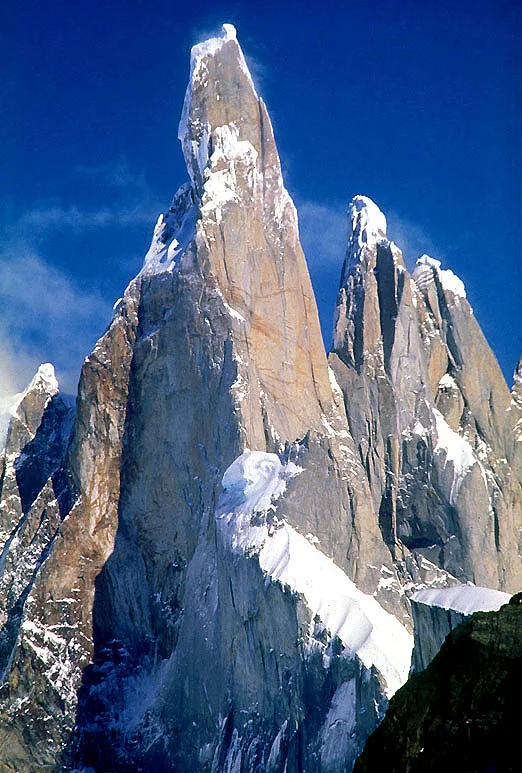
Cerro Torre is a world-famous granite spire rising to 3,128 meters in the Southern Patagonian Icefield on the Argentina-Chile border. Renowned for vertical sheer granite walls topped by monstrous rime-ice mushrooms formed by relentless Pacific winds, it is widely considered one of mountaineering's supreme technical challenges. Following fierce international debate over Cesare Maestri's disputed 1959 climb, Maestri returned in 1970 to drill hundreds of bolts using a gasoline compressor on the Southeast Ridge. In 1979, American pioneers Jim Bridwell and Steve Brewer completed the historic first definitive ascent of the Compressor Route to the summit.
Documented Sources & Archival Citations
- The Tower: A Chronicle of Climbing and Controversy on Cerro Torre(Kelly Cordes / Patagonia Books)
Supporting claim: Detailed investigative history of the 1959 Maestri-Egger Cerro Torre climb
Accessed/Documented: 2014 - American Alpine Journal: Cerro Torre: A Reassessment(Rolando Garibotti / American Alpine Club)
Supporting claim: Forensic climbing analysis and archival documentation of the 1959 expedition
Accessed/Documented: 2004