Dhaulagiri 1960: The Swiss-Austrian Conquest of the White Mountain
On May 13, 1960, Kurt Diemberger, Peter Diener, Ernst Forrer, Albin Schelbert, and Sherpas Nyima Dorje and Nawang Dorje conquered Dhaulagiri I (8,167m) via the Northeast Ridge without bottled oxygen, following the crash of their legendary glacier airplane 'Yeti'.
Mountain Safety & Conditions Disclaimer: High-altitude climbing, glacial travel, and technical ascents entail severe objective risks including avalanches, serac collapses, rapid weather collapse, and altitude illness. Historical route descriptions and summit claims on Mountanity reflect documented archival sources and must not be used as live operational safety assessments. Local regulations, permits, and physical glacial topography change continuously.
Peer Review: Senior Editorial Board & Historical Reviewers • Editorial Standards
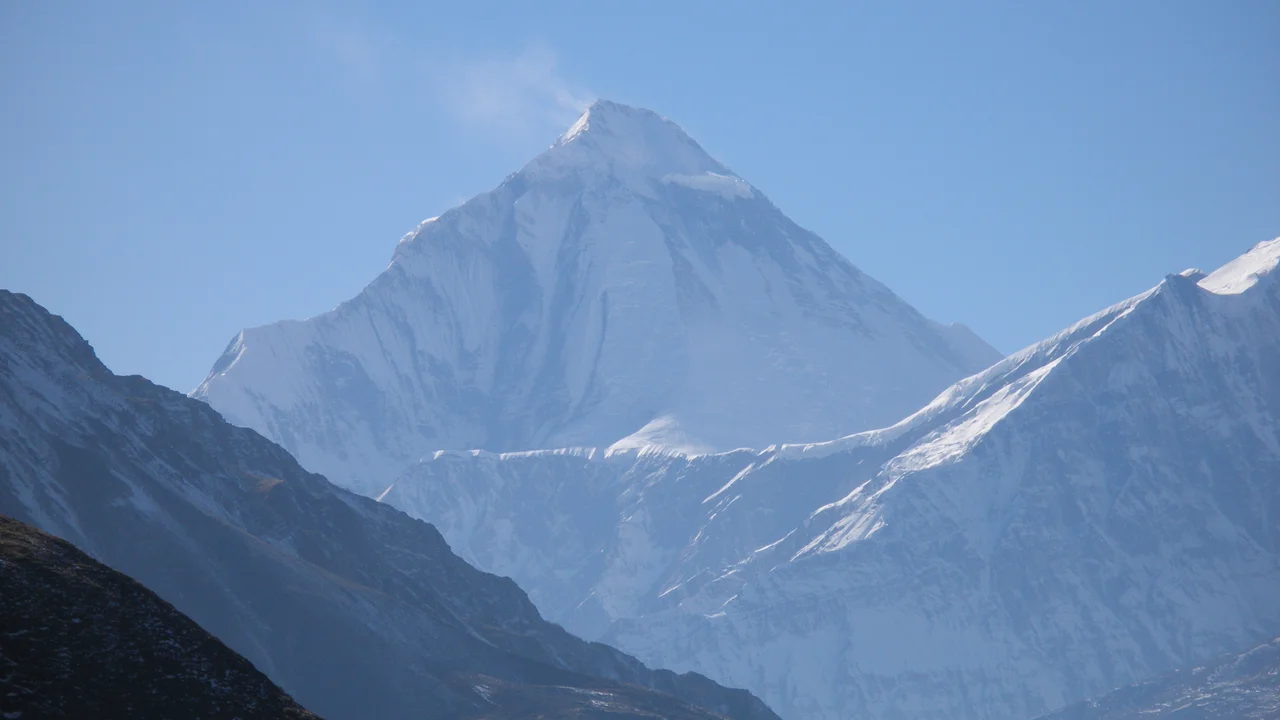
Rising in colossal, isolated isolation above the deepest gorge on Earth—the Kali Gandaki canyon of western Nepal—Dhaulagiri I (8,167m) was long believed in the early nineteenth century to be the highest mountain in the world. Its Sanskrit name translates directly to “White Mountain,” a fitting tribute to the thousands of vertical meters of sheer, hanging glaciers, wind-blasted ice faces, and violent slab avalanches that guard its summit pyramid.
Between 1950 and 1959, Dhaulagiri earned a dark, impenetrable reputation. Seven separate international expeditions—including French reconnaissance under Maurice Herzog in 1950, Swiss attempts in 1953, Argentine assaults in 1954 and 1956, and Austrian expeditions in 1958 and 1959—were beaten back by brutal weather, catastrophic avalanches, and technical dead-ends. By the spring of 1960, Dhaulagiri was the highest unclimbed mountain remaining on Earth.
The Audacious Vision of Max Eiselin and ‘Yeti’
In 1960, a visionary 28-year-old Swiss mountaineer and sports merchant named Max Eiselin organized an international expedition combining elite Swiss, Austrian, and German climbers. Eiselin secured the inclusion of Austrian extreme alpinist Kurt Diemberger—who had already made history three years earlier with the first ascent of Broad Peak—alongside Swiss technical masters Ernst Forrer, Albin Schelbert, Peter Diener, Michel Vaucher, Hugo Weber, and veteran Sherpas led by Sirdar Nawang Dorje.
Eiselin’s plan featured an unprecedented technological gamble: rather than relying solely on weeks of porter caravans through untracked river gorges, the expedition brought a prototype single-engine, ski-equipped Pilatus PC-6 Porter airplane christened “Yeti.” Piloted by Ernst Saxer and Emil Wick, Yeti flew sixteen hazardous reconnaissance and supply missions directly from Pokhara and Kathmandu, setting an aviation world record by landing on the Northeast Col at 5,700 meters.
However, Himalayan aviation in 1960 was fraught with peril. During an attempted takeoff from the rough glacier runway on May 5, Yeti suffered a severe engine failure and crashed into the ice. While pilots Saxer and Wick miraculously escaped unhurt, the aircraft was completely wrecked. Stranded without air support, the climbers had to rely on pure foot power, packing their own supplies across the glaciers in classic alpine fashion.
Assault via the Northeast Ridge
Targeting the daunting Northeast Ridge, the team established a succession of high-altitude camps from the Mayangdi Glacier up to the Northeast Col. Battling sustained sub-zero hurricane winds that shredded canvas tents, the climbers pushed through the upper technical crux: a delicate, wind-scoured ice knife-edge and mixed rock towers above 7,400 meters.
On May 12, 1960, a formidable assault party composed of Kurt Diemberger, Peter Diener, Ernst Forrer, Albin Schelbert, and Sherpas Nawang Dorje and Nyima Dorje crowded into the high tents of Camp VI at 7,800 meters. Temperatures inside the tents plunged below minus thirty-five degrees Celsius. Because the expedition’s supplemental oxygen sets were reserved as medical emergency backups, the entire six-man party committed to attempting the summit push without bottled oxygen.
The Summit Triumph of May 13, 1960
At dawn on May 13, 1960, the six climbers emerged into a bitterly cold, cloudless morning. The wind howled relentlessly across the ridge, threatening to blow them off the narrow crest. Traversing beneath a jagged band of yellow rock, they entered a steep snow couloir flanking the final summit pyramid in the Death Zone.
Moving with rhythmic, disciplined determination, Diemberger, Forrer, and Schelbert kicked steps through hard, brittle blue ice and deep powder drifts. At 12:30 PM, breaking onto the summit ridge, Ernst Forrer and Peter Diener stepped onto the 8,167-meter apex of Dhaulagiri I, followed closely by Kurt Diemberger, Albin Schelbert, Nawang Dorje, and Nyima Dorje.
For Kurt Diemberger, standing on top of Dhaulagiri marked an unparalleled milestone in high-altitude mountaineering history: alongside his late companion Hermann Buhl, Diemberger became one of only two people in world history to achieve the maiden first ascents of two 8,000-meter peaks (Broad Peak in 1957 and Dhaulagiri in 1960).
The Echo of Historic Victory
Ten days later, on May 23, 1960, a second wave comprising Michel Vaucher and Hugo Weber also reached the summit, bringing the expedition’s total to eight summiteers with zero fatalities.
The conquest of Dhaulagiri I stripped the White Mountain of its reputedly invincible aura. By conquering the highest unclimbed mountain on Earth without supplemental oxygen, the 1960 Swiss Dhaulagiri Expedition proved that technical mastery, physical fortitude, and genuine teamwork could triumph over the most intimidating bastion in the Himalayas.
Key Statistics & Topographic Figures
- Category
- Historic Expeditions
Archival Subject
- Reading Time
- 14 min read
Narrative Length
- Key Mountain
- dhaulagiri
Objective
- Ascent Route
- dhaulagiri-northeast-ridge
Topography
- Verification
- Editorially Verified
Archival Standard
Archival Primary Source Quotations
“In the mountains, truth is etched in ice and granite; every step requires unwavering respect for the heights.”
Defined Alpine Terminology & Concepts
- Summit Push
- The final continuous climbing effort from the highest established camp to the mountain apex and back.
- Death Zone Chronicle
- A verified, research-backed historical narrative documenting the human, technical, and environmental realities of an alpine expedition.
Frequently Asked Questions: Dhaulagiri 1960: The Swiss-Austrian Conquest of the White Mountain
What is the core chronicle and subject of "Dhaulagiri 1960: The Swiss-Austrian Conquest of the White Mountain"?
On May 13, 1960, Kurt Diemberger, Peter Diener, Ernst Forrer, Albin Schelbert, and Sherpas Nyima Dorje and Nawang Dorje conquered Dhaulagiri I (8,167m) via the Northeast Ridge without bottled oxygen, following the crash of their legendary glacier airplane 'Yeti'.
Which mountain peaks and routes are featured in "Dhaulagiri 1960: The Swiss-Austrian Conquest of the White Mountain"?
This narrative documents climbs on dhaulagiri along the dhaulagiri-northeast-ridge in Nepal.
Which documented expedition is chronicled in this story?
This historical chronicle captures the events of the 1960-swiss-dhaulagiri, verified through contemporary journals and archival records.
Who authored and researched this archival chronicle?
Authored and researched by Mountainity Historical Research Desk, drawing on primary eyewitness testimonies, alpine club registries, and verified summit logs.
What makes this high-altitude chronicle historically significant?
Categorized under "Historic Expeditions", this chronicle preserves critical lessons in alpine leadership, survival, tactical speed, and human endurance in the death zone.
Related Mountains

Dhaulagiri I
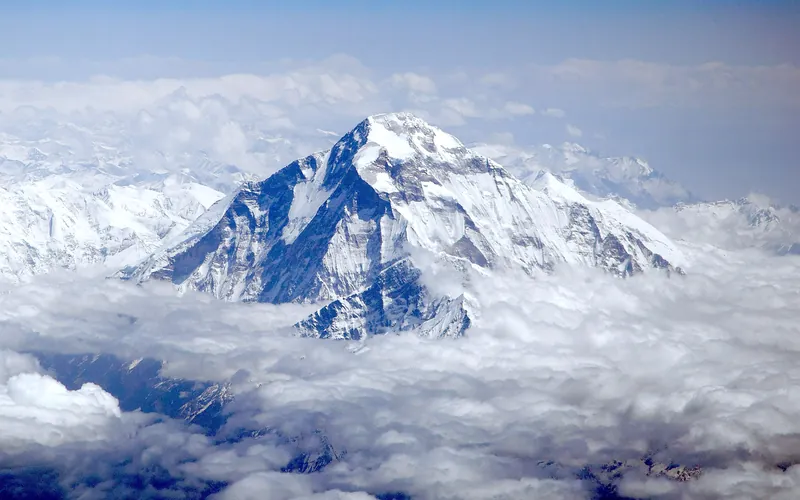
Dhaulagiri I, at 8,167 meters (26,795 ft), is the seventh-highest mountain on Earth and the highest peak situated entirely within Nepal. Rising steeply above the Kali Gandaki Gorge—the deepest gorge on Earth—opposite Annapurna, Dhaulagiri forms a staggering 7,000-meter vertical rise from the river valley.
Documented Sources & Archival Citations
- Erfolg am Dhaulagiri(Max Eiselin / Orell Füssli Verlag)
Supporting claim: Official Swiss expedition report detailing the Pilatus Porter operations, logistics, and summit climbs
Accessed/Documented: 1960 - The Himalayan Database: Spring 1960 Dhaulagiri Records(Elizabeth Hawley Archive)
Supporting claim: Official expedition verification, summit timestamps, and oxygen-free registry
Accessed/Documented: 2026 - Summits and Secrets(Kurt Diemberger / Hodder & Stoughton)
Supporting claim: Autobiographical account of the Broad Peak and Dhaulagiri maiden first ascents
Accessed/Documented: 1971