The Ice Spear: Fonrouge and Comesaña's 1965 Fitz Roy Supercanaleta Masterpiece
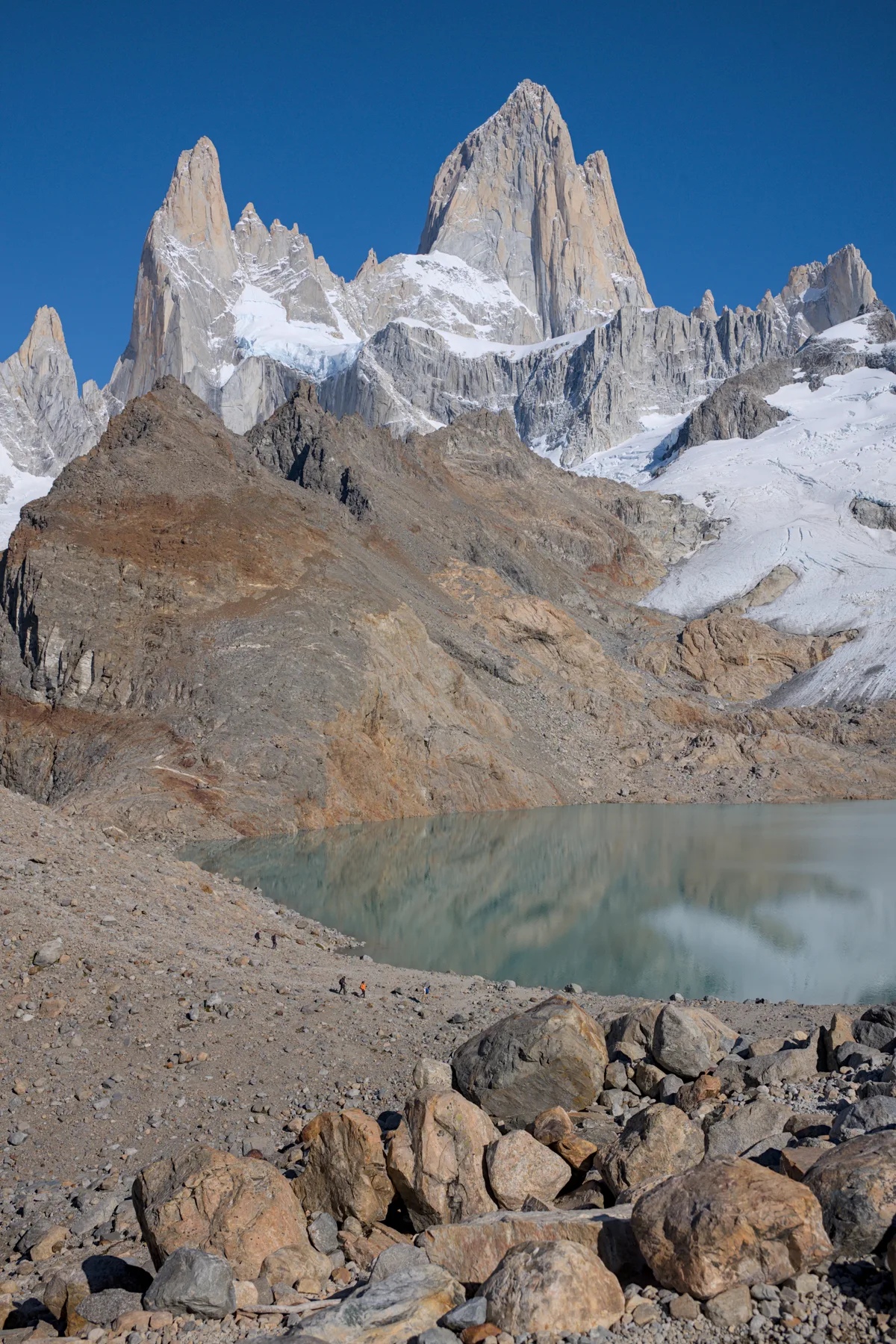
In January 1965, two young Argentine climbers, José Luis Fonrouge and Carlos Comesaña, completed the second ascent of Cerro Fitz Roy via the 1,600-metre Supercanaleta, climbing in pure, unsupported alpine style.
Mountain Safety & Conditions Disclaimer: High-altitude climbing, glacial travel, and technical ascents entail severe objective risks including avalanches, serac collapses, rapid weather collapse, and altitude illness. Historical route descriptions and summit claims on Mountanity reflect documented archival sources and must not be used as live operational safety assessments. Local regulations, permits, and physical glacial topography change continuously.
Peer Review: Senior Editorial Board & Historical Reviewers • Editorial Standards
The Great Ice Couloir
In the summer of 1964–1965, the sheer granite monument of Cerro Fitz Roy (3,405 m) in Argentine Patagonia had been climbed only once before: the historic 1952 French siege led by Lionel Terray and Guido Magnone, which required hundreds of metres of fixed rope, supply chains, and weeks of heavy base camp operations. To the international climbing community, Fitz Roy was an indomitable fortress that demanded massive resources and prolonged military-style logistics to survive.
Two young Argentines from Buenos Aires held a daringly different vision. Twenty-two-year-old José Luis ‘Pepe’ Fonrouge and nineteen-year-old Carlos Comesaña believed that heavy siege tactics robbed mountaineering of its purest spirit. Looking up at the terrifying, direct southwest face of Fitz Roy, they were drawn to the Supercanaleta—an unbroken, vertical 1,600-metre cleft of ice and mixed rock that pierced straight from the glacier to the upper granite crest like a frozen spear.
Light and Fast Into the Chasm
Rejecting fixed ropes and intermediate camps, Fonrouge and Comesaña packed only two small rucksacks containing two days of dehydrated rations, a single lightweight kerosene stove, and minimal ice screws. On January 14, 1965, under a fragile clearance in the weather, they crossed the gaping bergschrund and stepped into the shadowy chasm of the couloir.
The climbing was unrelenting. For a thousand continuous metres, the ice varied between 60 and 85 degrees, flanked on either side by vertical granite walls that funneled occasional spindrift avalanches down onto their helmets. Moving in continuous running belays, the young climbers worked with ruthless efficiency. By dusk, they reached the Bloque Empotrado—a massive boulder wedged inside the couloir at 2,900 metres. Using ice axes, they carved a narrow, shelf into the ice and spent an exposed bivouac huddled together in a single sleeping bag.
Summit Triumph and Legend
On the second morning, the couloir narrowed to vertical granite chimneys plastered in brittle rime ice. Switching from crampons to rock shoes in freezing winds, Fonrouge took the lead across sustained UIAA V+ granite pitches along the exposed southwest ridge. The exposure below their heels was staggering: two thousand metres of empty space plunging sheer down to the Rio Blanco valley.
At midday on January 16, 1965, Fonrouge and Comesaña surmounted the final granite ramp and stood atop the 3,405-metre summit of Fitz Roy. They were the first Argentines to stand on the peak, and the first mountaineers in history to climb a premier Patagonian big wall in pure, unsupported alpine style. Their 1,600-metre masterwork remained one of the greatest alpine achievements of the 20th century, inspiring generations of alpinists to climb light, fast, and bold.
Key Statistics & Topographic Figures
- Category
- Patagonian Legends
Archival Subject
- Reading Time
- 15 min read
Narrative Length
- Key Mountain
- fitz-roy
Objective
- Ascent Route
- fitz-roy-supercanaleta
Topography
- Verification
- Editorially Verified
Archival Standard
Archival Primary Source Quotations
“In the mountains, truth is etched in ice and granite; every step requires unwavering respect for the heights.”
Defined Alpine Terminology & Concepts
- Summit Push
- The final continuous climbing effort from the highest established camp to the mountain apex and back.
- Death Zone Chronicle
- A verified, research-backed historical narrative documenting the human, technical, and environmental realities of an alpine expedition.
Frequently Asked Questions: The Ice Spear: Fonrouge and Comesaña's 1965 Fitz Roy Supercanaleta Masterpiece
What is the core chronicle and subject of "The Ice Spear: Fonrouge and Comesaña's 1965 Fitz Roy Supercanaleta Masterpiece"?
In January 1965, two young Argentine climbers, José Luis Fonrouge and Carlos Comesaña, completed the second ascent of Cerro Fitz Roy via the 1,600-metre Supercanaleta, climbing in pure, unsupported alpine style.
Which mountain peaks and routes are featured in "The Ice Spear: Fonrouge and Comesaña's 1965 Fitz Roy Supercanaleta Masterpiece"?
This narrative documents climbs on fitz-roy along the fitz-roy-supercanaleta in Argentina.
Which documented expedition is chronicled in this story?
This historical chronicle captures the events of the 1965-fonrouge-comesana-fitz-roy-supercanaleta, verified through contemporary journals and archival records.
Who authored and researched this archival chronicle?
Authored and researched by Mountainity Historical Research Desk, drawing on primary eyewitness testimonies, alpine club registries, and verified summit logs.
What makes this high-altitude chronicle historically significant?
Categorized under "Patagonian Legends", this chronicle preserves critical lessons in alpine leadership, survival, tactical speed, and human endurance in the death zone.
Related Mountains
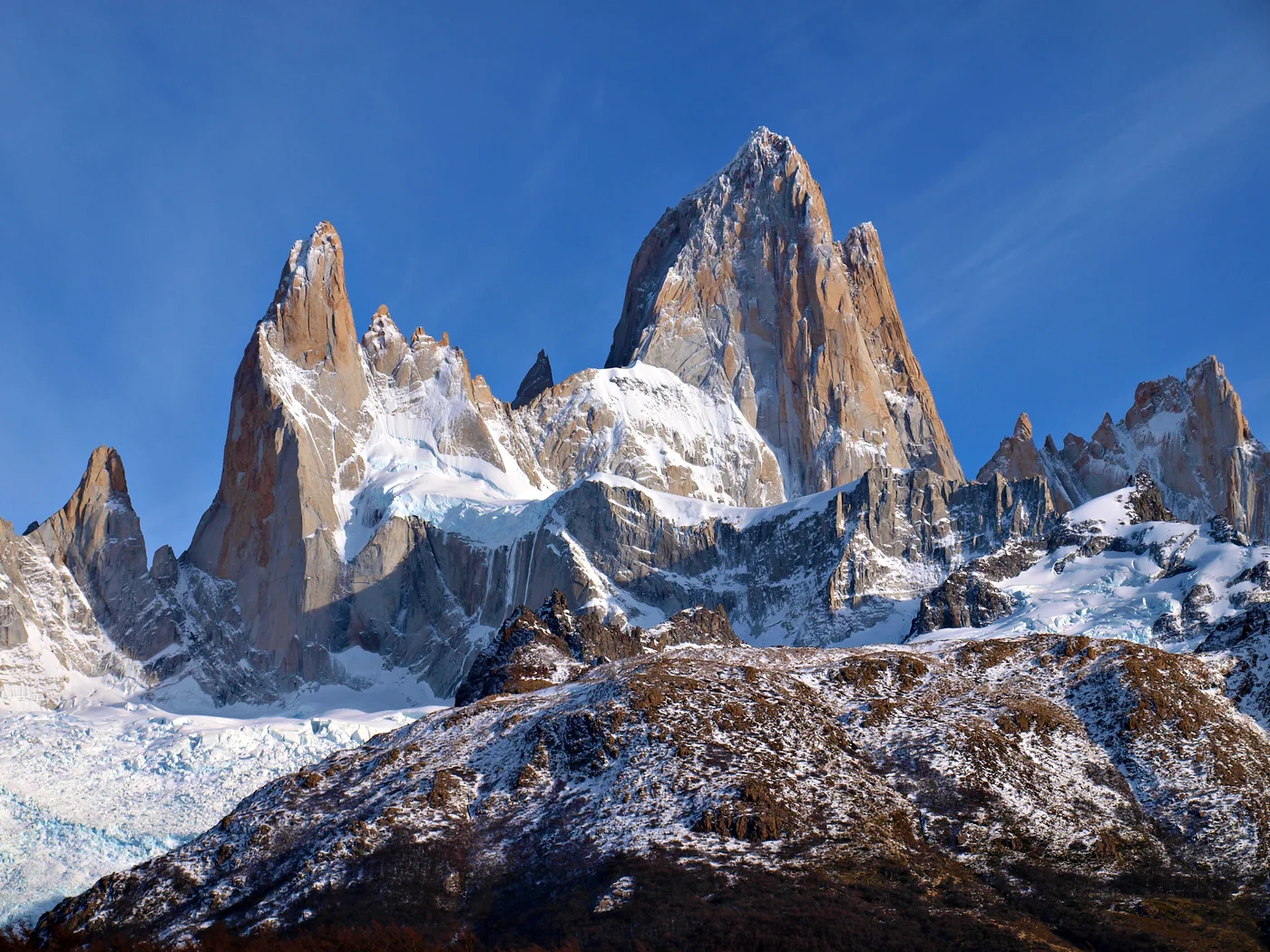


Cerro Fitz Roy
Cerro Fitz Roy, also known as Monte Fitz Roy or Cerro Chaltén at 3,405 meters (11,171 ft), is a world-renowned granite monolith situated in the Southern Patagonian Icefield near El Chaltén, Argentina. Revered for its vertical granite walls and notorious hurricane-force Patagonian storms, it is considered one of the most technically demanding alpine summits on Earth. French climbers Lionel Terray and Guido Magnone completed the legendary first ascent on February 2, 1952, establishing the historic Franco-Argentine Route.
Documented Sources & Archival Citations
- American Alpine Journal: Supercanaleta of FitzRoy(José Luis Fonrouge / American Alpine Club)
Supporting claim: Primary first-hand account of the 1965 Argentine alpine-style first ascent
Accessed/Documented: 1966 - Patagonia Vertical: Chaltén Massif(Rolando Garibotti / Sidarta)
Supporting claim: Definitive historical analysis of Fonrouge and Comesaña's breakthrough on Fitz Roy
Accessed/Documented: 2026