The Frozen Apex: The 1966 First Ascent of Mount Vinson
Nicholas Clinch and his ten-man American team conquer the continental roof of Antarctica in sub-zero polar storms.
Mountain Safety & Conditions Disclaimer: High-altitude climbing, glacial travel, and technical ascents entail severe objective risks including avalanches, serac collapses, rapid weather collapse, and altitude illness. Historical route descriptions and summit claims on Mountanity reflect documented archival sources and must not be used as live operational safety assessments. Local regulations, permits, and physical glacial topography change continuously.
Peer Review: Senior Editorial Board & Historical Reviewers • Editorial Standards
The Frozen Apex: The 1966 First Ascent of Mount Vinson
The Last Unclimbed Continental Summit
By the mid-1960s, the greatest high-altitude summits on Earth had all been conquered. Everest had fallen in 1953, K2 in 1954, and the final 8,000-metre giant, Shishapangma, in 1964. Mont Blanc, Denali, Aconcagua, and Kilimanjaro were well-trodden routes.
Yet one continental roof remained untouched, shrouded in mystery and eternal ice: Mount Vinson (4,892 m), the highest peak in Antarctica.
Discovered by US Navy air reconnaissance in January 1958 in the heart of the Sentinel Range, Vinson was situated 1,200 kilometres from the South Pole in one of the coldest, windiest, and most inaccessible environments on Earth. Reaching the base required a flight across 3,000 kilometres of trackless polar plateau where any engine failure meant certain death.
The man who rose to meet this challenge was Nicholas Bayard Clinch, a visionary mountaineering leader from California. Clinch had already organized and led the historic 1958 maiden first ascent of Gasherbrum I (8,080 m) in Pakistan. Convinced that an all-American expedition could conquer Antarctica’s highest mountain, Clinch forged a historic partnership between the American Alpine Club, the National Geographic Society, and the United States Navy.
“Vinson was the final frontier. There were no maps, no established routes, and no hope of rescue. It was just ten men, our ropes, and the coldest continent on Earth.” — Nicholas Clinch, National Geographic, 1967
Landing in the Frozen Sentinel
In December 1966, a ski-equipped US Navy LC-130 Hercules piloted by Commander Fred Gallagher touched down on the snowfields of the Nimitz Glacier at 2,140 metres. Stepping out into the blinding white light of the Antarctic summer, Clinch and his nine teammates—including Teton guide Barry Corbet, rock specialist John Evans, and glaciologist Peter Anderson—confronted temperatures of -30°C and a landscape of colossal, blue-ice massifs rising into pale blue skies.
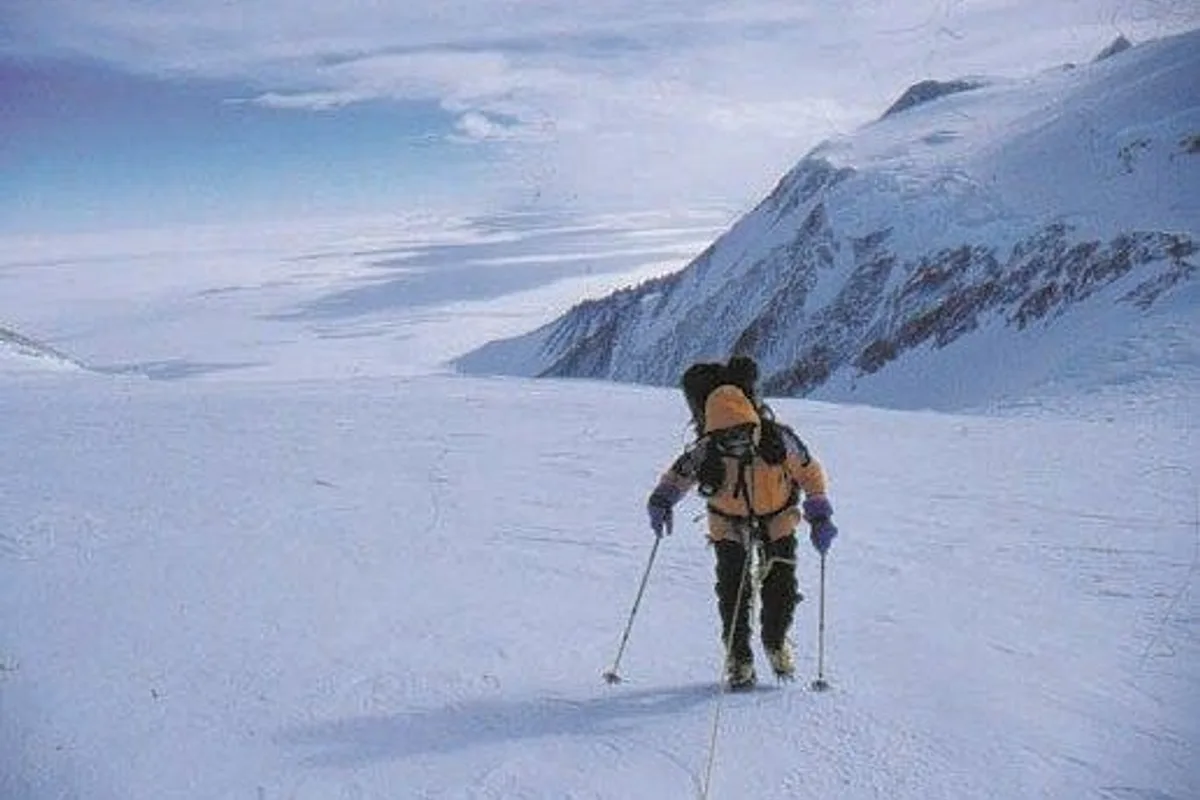
The team established Base Camp and began hauling heavy supply sledges up the crevassed ramps of the Branscomb Glacier. Under the 24-hour midnight sun, time lost all conventional meaning; the climbers marched through the night to take advantage of frozen snow crusts, resting during the warmer afternoon hours.
By December 15, they had established Camp 1 at 2,780 metres beneath the towering ice wall of the Branscomb Headwall. Fixed ropes were rigged up the 45-degree hard ice slopes, allowing the team to ferry tents, freeze-dried rations, and radio gear to High Camp at 3,770 metres on the broad, wind-blasted col between Mount Shinn and Mount Vinson.
The Summit Push
On the morning of December 18, 1966, the wind dropped to a gentle breeze, though the thermometer registered a bone-chilling -38°C. Clinch, Corbet, Evans, and Anderson roped into a four-man team for the decisive summit assault.
Ascending past the col, the climbers emerged onto the vast, gently rising snowfields of the Vinson Plateau. The air at nearly 4,500 metres in polar latitudes was deceptively thin; due to the thinning of the atmosphere over the poles, the effective barometric altitude felt closer to 5,500 metres in the Himalayas. With every step, ice crunched beneath their crampons and frost rime coated their parkas.
At the head of the plateau, a narrow, corniced knife-edge arête of shattered rock led steeply upwards. Corbet and Evans led the final pitches, carefully balancing along the wind-honed crest with vertical drops falling thousands of metres toward the Ronne Ice Shelf.
At 11:30 AM on December 18, 1966, Nicholas Clinch stepped onto the summit pinnacle of Mount Vinson: 4,892 metres above sea level.
Drawing Corbet, Evans, and Anderson up onto the summit dome, the four climbers embraced in quiet triumph. Above them was only the pristine blue dome of the polar sky; below them, the jagged, untouched spires of the Sentinel Range stretched toward the horizon like frozen waves in an ocean of ice.
They drove a metal stake into the frozen snow and unfurled the flags of the twelve nations that had signed the Antarctic Treaty. Over the next two days, the remaining six members of the team made the ascent, achieving a flawless 100% summit success rate on the highest point in Antarctica.
Key Statistics & Topographic Figures
- Category
- Polar Pioneers
Archival Subject
- Reading Time
- 16 min read
Narrative Length
- Key Mountain
- mount-vinson
Objective
- Ascent Route
- mount-vinson-normal-route
Topography
- Verification
- Editorially Verified
Archival Standard
Archival Primary Source Quotations
“In the mountains, truth is etched in ice and granite; every step requires unwavering respect for the heights.”
Defined Alpine Terminology & Concepts
- Summit Push
- The final continuous climbing effort from the highest established camp to the mountain apex and back.
- Death Zone Chronicle
- A verified, research-backed historical narrative documenting the human, technical, and environmental realities of an alpine expedition.
Frequently Asked Questions: The Frozen Apex: The 1966 First Ascent of Mount Vinson
What is the core chronicle and subject of "The Frozen Apex: The 1966 First Ascent of Mount Vinson"?
Nicholas Clinch and his ten-man American team conquer the continental roof of Antarctica in sub-zero polar storms.
Which mountain peaks and routes are featured in "The Frozen Apex: The 1966 First Ascent of Mount Vinson"?
This narrative documents climbs on mount-vinson along the mount-vinson-normal-route in Antarctica.
Which documented expedition is chronicled in this story?
This historical chronicle captures the events of the 1966-clinch-vinson-massif-first-ascent, verified through contemporary journals and archival records.
Who authored and researched this archival chronicle?
Authored and researched by Mountainity Historical Research Desk, drawing on primary eyewitness testimonies, alpine club registries, and verified summit logs.
What makes this high-altitude chronicle historically significant?
Categorized under "Polar Pioneers", this chronicle preserves critical lessons in alpine leadership, survival, tactical speed, and human endurance in the death zone.
Related Mountains

Mount Vinson / Vinson Massif
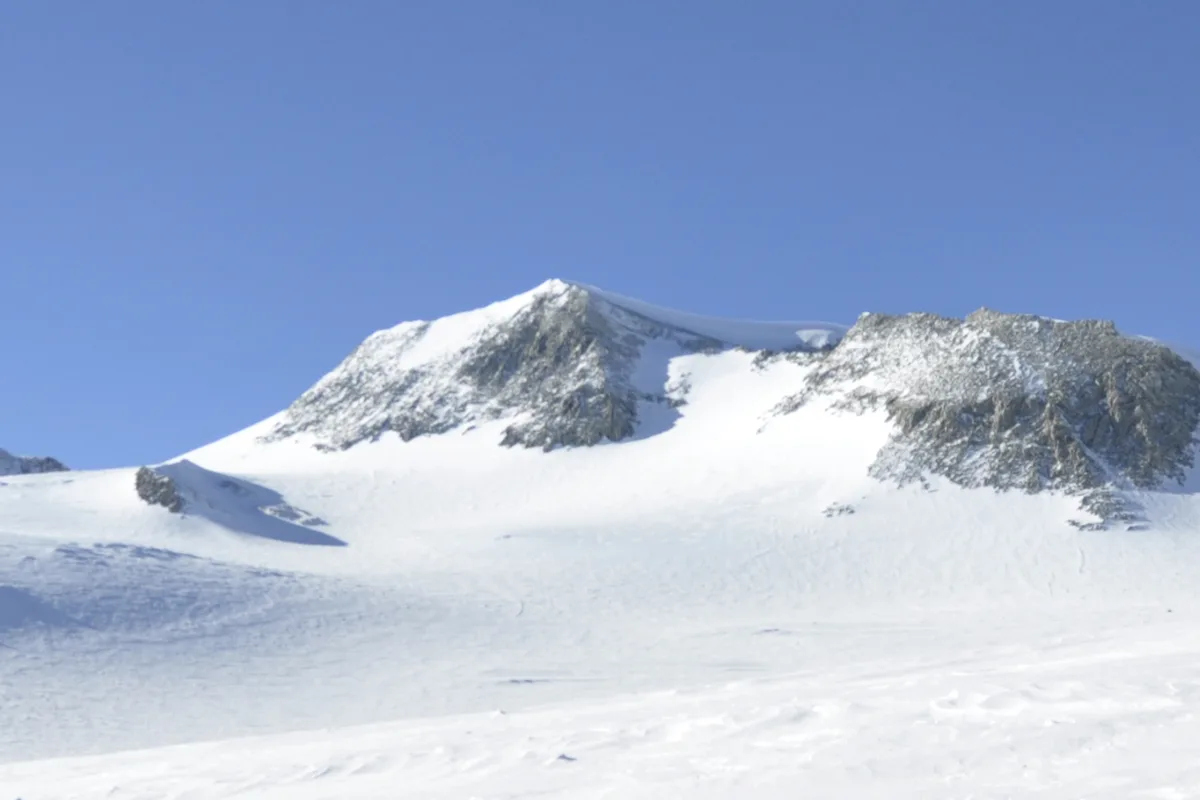
Mount Vinson is the highest peak in Antarctica at 4,892 metres (16,050 ft), situated in the Sentinel Range of the Ellsworth Mountains approximately 1,200 kilometres from the South Pole. As the summit of Antarctica, it forms one of the celebrated Seven Summits. First sighted by a US Navy aircraft in January 1958 and named after Georgia congressman Carl Vinson, the peak was conquered on December 18, 1966, by a team led by Nicholas Clinch and Barry Corbet during the historic American Antarctic Mountaineering Expedition. While technically moderate via the Branscomb Glacier, climbing Mount Vinson demands extreme endurance against temperatures plunging to -40°C and ferocious katabatic blizzards.
Documented Sources & Archival Citations
- First Ascent of Mount Vinson(Nicholas Clinch / National Geographic)
Supporting claim: Primary expedition chronicle
Accessed/Documented: 1967 - American Alpine Journal(American Alpine Club)
Supporting claim: Official technical record
Accessed/Documented: 1967