Iron Against the Needle: Cesare Maestri and the Compressor on Cerro Torre
In 1970, Italian mountaineer Cesare Maestri hauled a 135-kilogram gas compressor up Cerro Torre, drilling 400 bolts to forge the controversial Compressor Route.
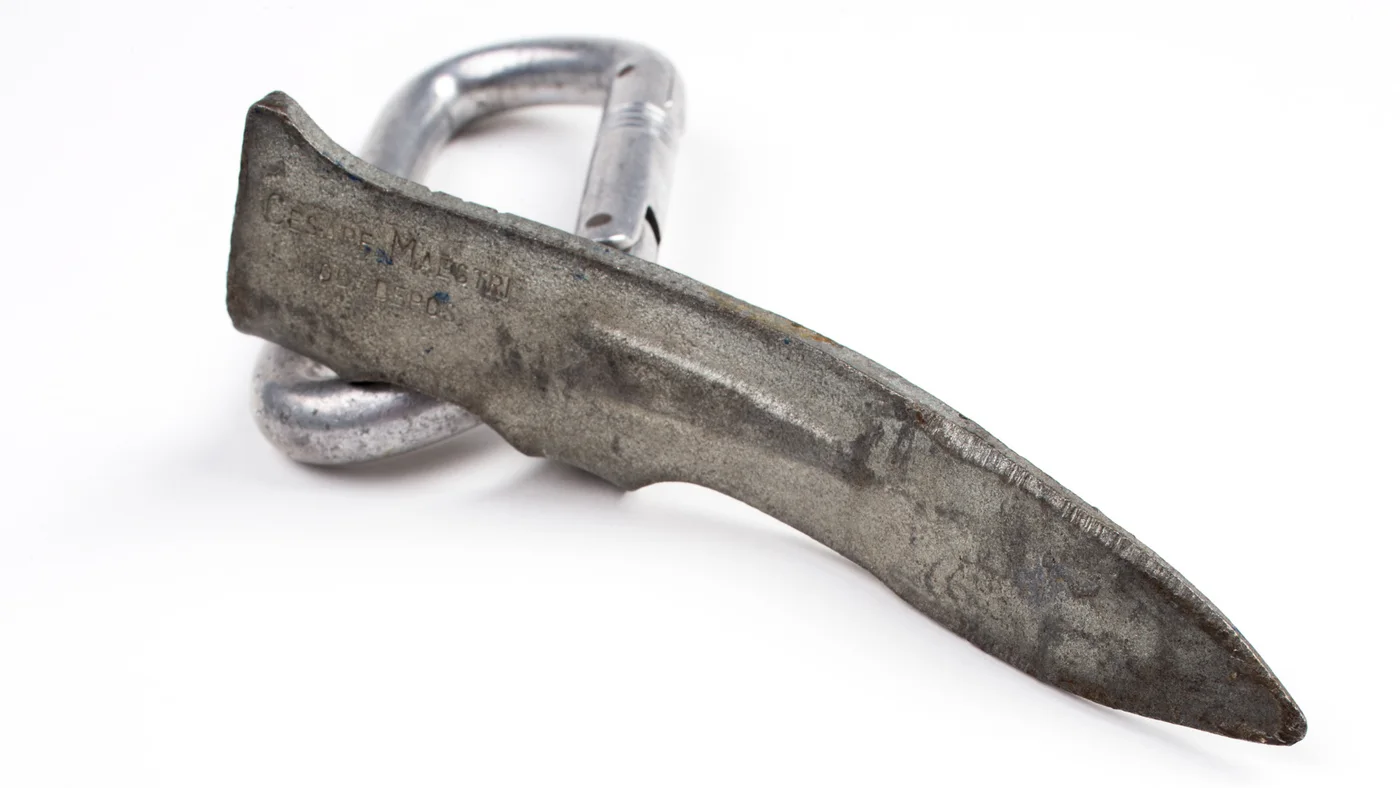
Mountain Safety & Conditions Disclaimer: High-altitude climbing, glacial travel, and technical ascents entail severe objective risks including avalanches, serac collapses, rapid weather collapse, and altitude illness. Historical route descriptions and summit claims on Mountanity reflect documented archival sources and must not be used as live operational safety assessments. Local regulations, permits, and physical glacial topography change continuously.
Peer Review: Senior Editorial Board & Historical Reviewers • Editorial Standards
Few events in mountaineering history have ignited as much fiery controversy, ethical debate, and lasting legend as Cesare Maestri’s 1970 campaign on Cerro Torre. Known across Europe as the “Spider of the Dolomites” for his breathtaking, unroped free solos on sheer limestone walls, Maestri was an alpinist of immense talent, fiery temper, and unyielding pride. Yet in the late 1960s, Maestri found himself haunted by skepticism following his claimed 1959 ascent of Cerro Torre with Austrian climber Toni Egger. When Egger was swept to his death by an avalanche during the descent, he took their camera and visual proof with him. Subsequent expeditions led by Carlo Mauri and others found zero trace of Maestri’s ascent on the upper mountain, prompting whispered doubts that quickly swelled into open accusations.
Wounded to his core and desperate to prove that he could conquer Cerro Torre by any means necessary, Maestri conceived a radical, industrial assault. If nature refused to provide cracks and holds on the wind-blasted granite tower, he would manufacture them.
Hauling the Beast into Patagonia
In the summer of 1970, Maestri returned to Patagonia accompanied by a formidable team of Dolomite climbers: Ezio Alimonta, Daniele Angeli, Claudio Baldessarri, and Carlo Claus. In their cargo was a machine unlike anything ever brought onto an alpine face: an Atlas Copco gasoline-driven air compressor weighing 135 kilograms, equipped with pneumatic drill bits capable of penetrating solid granite in seconds.
Beginning their siege in the brutal sub-zero temperatures of the Patagonian winter of 1970, the team rigged heavy winches and thousands of meters of nylon fixed ropes up the Southeast Ridge. Slowly, agonizingly, they winched the noisy, vibrating metal beast up vertical granite slabs. When winter storms pinned them in ice caves for weeks, they retreated, only to return with renewed fury in the austral spring.
Drilling to the Headwall
Working systematically pitch by pitch, Maestri sat in a suspended harness with the compressor purring above the abyss. Pressing the drill against the sheer rock face, he bored hole after hole, hammering in approximately four hundred steel expansion bolts to create a continuous artificial ladder up the vertical blank rock. Where traditional climbers sought natural crack systems and weaknesses, Maestri drove his line directly up the proudest, steepest buttress of the Southeast Ridge, ignoring natural features.
By early December 1970, Maestri, Claus, and Alimonta had reached the upper ramparts. On December 2, 1970, they climbed to the top of the vertical rock headwall, standing just below the massive rime-ice mushroom that caps the mountain. Maestri famously refused to climb the rime mushroom, declaring dismissively: “It’s not part of the mountain. It’s just a lump of ice that will blow away in a few years.”
A Controversial Legacy
Before beginning their descent, Maestri took a hammer and chopped off several bolt hangers on the upper headwall, intending to prevent future climbers from using his mechanical ladder. He left the heavy Atlas Copco compressor tied off to bolts just below the headwall, hanging like a rusted mechanical monument over the Patagonian wilderness.
When news of the ascent reached the international alpine community, reaction was swift and condemning. Visionary climbers including Royal Robbins, Reinhold Messner, and Yvon Chouinard decried the expedition as an act of vandalism that murdered the impossible through brute mechanical engineering. Royal Robbins even climbed the route in 1971 intending to chop all the bolts, but stopped after two pitches out of respect for Maestri’s sheer physical perseverance. The Compressor Route stood for decades as a monument to human defiance, sparking an enduring debate on the sacred boundaries between technology and the alpine spirit.
Key Statistics & Topographic Figures
- Category
- Mountain Controversies & Mechanical Sieges
Archival Subject
- Reading Time
- 15 min read
Narrative Length
- Key Mountain
- cerro-torre
Objective
- Ascent Route
- cerro-torre-compressor-route
Topography
- Verification
- Editorially Verified
Archival Standard
Archival Primary Source Quotations
“In the mountains, truth is etched in ice and granite; every step requires unwavering respect for the heights.”
Defined Alpine Terminology & Concepts
- Summit Push
- The final continuous climbing effort from the highest established camp to the mountain apex and back.
- Death Zone Chronicle
- A verified, research-backed historical narrative documenting the human, technical, and environmental realities of an alpine expedition.
Frequently Asked Questions: Iron Against the Needle: Cesare Maestri and the Compressor on Cerro Torre
What is the core chronicle and subject of "Iron Against the Needle: Cesare Maestri and the Compressor on Cerro Torre"?
In 1970, Italian mountaineer Cesare Maestri hauled a 135-kilogram gas compressor up Cerro Torre, drilling 400 bolts to forge the controversial Compressor Route.
Which mountain peaks and routes are featured in "Iron Against the Needle: Cesare Maestri and the Compressor on Cerro Torre"?
This narrative documents climbs on cerro-torre along the cerro-torre-compressor-route in Argentina.
Which documented expedition is chronicled in this story?
This historical chronicle captures the events of the 1970-cesare-maestri-cerro-torre-compressor, verified through contemporary journals and archival records.
Who authored and researched this archival chronicle?
Authored and researched by Mountainity Historical Research Desk, drawing on primary eyewitness testimonies, alpine club registries, and verified summit logs.
What makes this high-altitude chronicle historically significant?
Categorized under "Mountain Controversies & Mechanical Sieges", this chronicle preserves critical lessons in alpine leadership, survival, tactical speed, and human endurance in the death zone.
Related Mountains
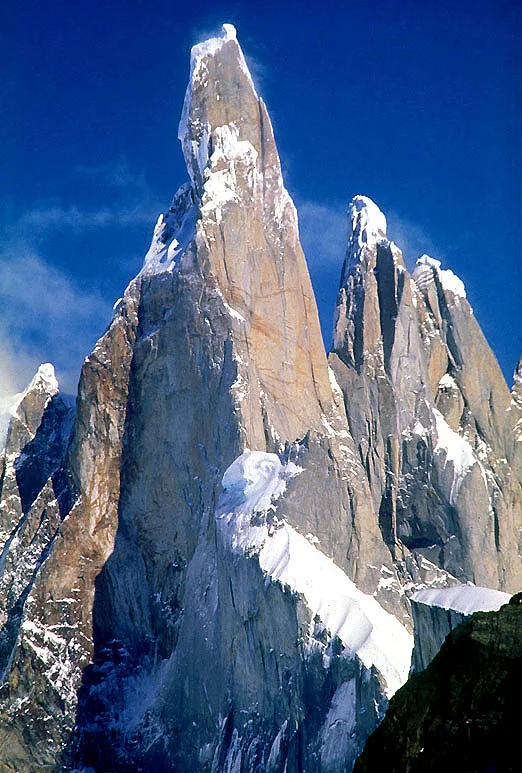


Cerro Torre
Cerro Torre is a world-famous granite spire rising to 3,128 meters in the Southern Patagonian Icefield on the Argentina-Chile border. Renowned for vertical sheer granite walls topped by monstrous rime-ice mushrooms formed by relentless Pacific winds, it is widely considered one of mountaineering's supreme technical challenges. Following fierce international debate over Cesare Maestri's disputed 1959 climb, Maestri returned in 1970 to drill hundreds of bolts using a gasoline compressor on the Southeast Ridge. In 1979, American pioneers Jim Bridwell and Steve Brewer completed the historic first definitive ascent of the Compressor Route to the summit.
Documented Sources & Archival Citations
- The Tower: A Chronicle of Climbing and Controversy on Cerro Torre(Kelly Cordes / Patagonia Books)
Supporting claim: Exhaustive historical analysis of Maestri's 1970 Compressor expedition and global fallout
Accessed/Documented: 2014 - American Alpine Journal: Cerro Torre Southeast Ridge(American Alpine Club)
Supporting claim: Initial technical and ethical assessments of the 1970 mechanical siege
Accessed/Documented: 1971