The Crystal Flutings: Casimiro Ferrari and the 1975 Alpamayo Masterpiece
On June 23, 1975, Casimiro Ferrari and the Ragni di Lecco scaled the 450-metre vertical ice runnels of Alpamayo's Southwest Face, creating the legendary Ferrari Route on the world's most beautiful mountain.
Mountain Safety & Conditions Disclaimer: High-altitude climbing, glacial travel, and technical ascents entail severe objective risks including avalanches, serac collapses, rapid weather collapse, and altitude illness. Historical route descriptions and summit claims on Mountanity reflect documented archival sources and must not be used as live operational safety assessments. Local regulations, permits, and physical glacial topography change continuously.
Peer Review: Senior Editorial Board & Historical Reviewers • Editorial Standards
The Ice Pyramid of the Tropics
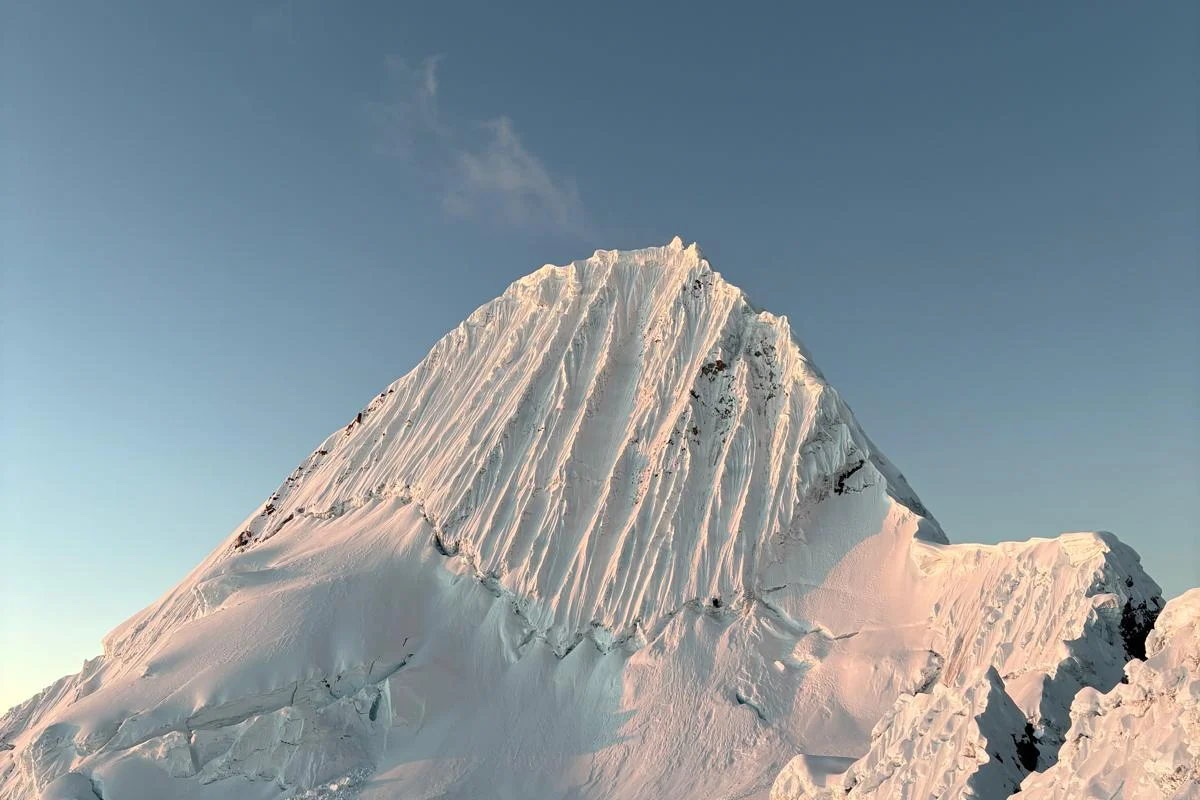
Tucked away in the northern reaches of Peru’s Cordillera Blanca stands Nevado Alpamayo, a breathtaking 5,947-metre spire whose architectural symmetry seems almost unnatural. When viewed from the high pass of Punta Unión or the slopes of Santa Cruz, Alpamayo presents a sheer trapezoidal wall of glittering white ice, corrugated with delicate vertical flutings that resemble the pipes of a celestial cathedral organ. In 1966, a survey conducted by UNESCO and the German magazine Alpinismus voted Alpamayo the “Most Beautiful Mountain in the World.”
Yet behind its ethereal elegance lay severe alpine danger. While German climbers had reached the northern summit ridge in 1957 via a circuitous route, the magnificent 450-metre direct Southwest Face remained untamed. Its sustained sixty- to eighty-degree ice flutings were guarded by an enormous, gaping bergschrund at the base and crowned by fragile, overhanging snow cornices along the summit crest.
Fresh from his historic victory on Cerro Torre in Patagonia, Casimiro Ferrari felt an irresistible pull toward the Cordillera Blanca. In June 1975, Ferrari returned to South America with a seasoned team from the Ragni di Lecco: Danilo Borgonovo, Angelo Zoia, and Pinuccio Castelnuovo.
Establishing the High Col Camp
The expedition journeyed up the lush, turquoise-lake-filled Quebrada Santa Cruz, accompanied by local Quechua muleteers. Leaving the valley floor, the climbers established base camp at 4,300 metres beside the moraine of the Arhuaycocha glacier.
From base camp, the Italians faced a grueling haul across glaciated terrain to establish their assault base. Clambering up loose moraine slopes and navigating a chaotic icefall between Alpamayo and neighboring Quitaraju, they pitched two sturdy nylon tents in a high glacial col at 5,400 metres.
From this windswept perch, the Southwest Face soared directly overhead: a gleaming, sheer wall of hard white ice split by deep, corrugated runnels. Ferrari studied the face for days, observing the sunlight patterns and noting that afternoon solar radiation could trigger devastating ice avalanches down the flutings. To succeed, the team would have to strike swiftly in the bitter cold of the early morning.
Front-Pointing into the Sky
At 2:00 AM on June 23, 1975, beneath an ocean of stars in the crisp Andean winter, Ferrari and his companions stepped across the frozen glacier. The cold was biting, freezing the snow into a bullet-hard crust that supported their weight.
Reaching the base of the wall, they encountered the first major hurdle: a gaping bergschrund ten metres wide. Ferrari traversed delicately along the lower lip, locating an unstable snow bridge suspended over the black abyss. Creeping across on all fours with ice axes held ready, he reached the vertical ice slope above and placed two tubular ice screws into solid ice.
Above the bergschrund, the climb became a pure test of calf-burning endurance. Moving up the central fluting, the four climbers front-pointed pitch after pitch on sustained sixty- to seventy-degree ice. Unlike brittle alpine winter ice, tropical Andean ice possessed a dense, plastic consistency that gripped crampon points tenaciously, yet demanded intense physical strength to drive ice axes firmly into the runnels.
Overcoming the Cornice
As morning sunlight illuminated the surrounding peaks of Huascarán, Huandoy, and Chopicalqui, the climbers reached the terrifying crux: the summit headwall. Here, the slope steepened to nearly eighty degrees directly beneath a massive, overhanging rime cornice that hung out into space.
Ferrari took the lead. Chopping delicate belay stances and placing ice screws into blue ice beneath the overhang, he methodically hacked an escape notch through the fragile rime wall. Small avalanches of ice crystals poured down over his shoulders and into the faces of his belayers.
With a final, desperate heave of his ice axes, Ferrari pulled his torso over the rim and surfaced onto the razor-thin summit ridge. One by one, Borgonovo, Zoia, and Castelnuovo joined him on the narrow snow crest.
The Benchmark of Andean Ice Climbing
The first ascent of the Southwest Face of Alpamayo was hailed as an instant classic of international mountaineering. Ferrari and his companions had climbed the face with impeccable speed, style, and safety, proving that the steepest tropical ice faces could be conquered without heavy siege equipment.
Today, the Ferrari Route remains revered by alpine climbers across the globe as the quintessential ice climb of the Andes—a peerless journey up the frozen flutings of Earth’s most beautiful mountain.
Key Statistics & Topographic Figures
- Category
- Andean Alpine Legends
Archival Subject
- Reading Time
- 13 min read
Narrative Length
- Key Mountain
- alpamayo
Objective
- Ascent Route
- alpamayo-ferrari-route
Topography
- Verification
- Editorially Verified
Archival Standard
Archival Primary Source Quotations
“In the mountains, truth is etched in ice and granite; every step requires unwavering respect for the heights.”
Defined Alpine Terminology & Concepts
- Summit Push
- The final continuous climbing effort from the highest established camp to the mountain apex and back.
- Death Zone Chronicle
- A verified, research-backed historical narrative documenting the human, technical, and environmental realities of an alpine expedition.
Frequently Asked Questions: The Crystal Flutings: Casimiro Ferrari and the 1975 Alpamayo Masterpiece
What is the core chronicle and subject of "The Crystal Flutings: Casimiro Ferrari and the 1975 Alpamayo Masterpiece"?
On June 23, 1975, Casimiro Ferrari and the Ragni di Lecco scaled the 450-metre vertical ice runnels of Alpamayo's Southwest Face, creating the legendary Ferrari Route on the world's most beautiful mountain.
Which mountain peaks and routes are featured in "The Crystal Flutings: Casimiro Ferrari and the 1975 Alpamayo Masterpiece"?
This narrative documents climbs on alpamayo along the alpamayo-ferrari-route in Peru.
Which documented expedition is chronicled in this story?
This historical chronicle captures the events of the 1975-ferrari-alpamayo-southwest-face, verified through contemporary journals and archival records.
Who authored and researched this archival chronicle?
Authored and researched by Mountainity Historical Research Desk, drawing on primary eyewitness testimonies, alpine club registries, and verified summit logs.
What makes this high-altitude chronicle historically significant?
Categorized under "Andean Alpine Legends", this chronicle preserves critical lessons in alpine leadership, survival, tactical speed, and human endurance in the death zone.
Related Mountains
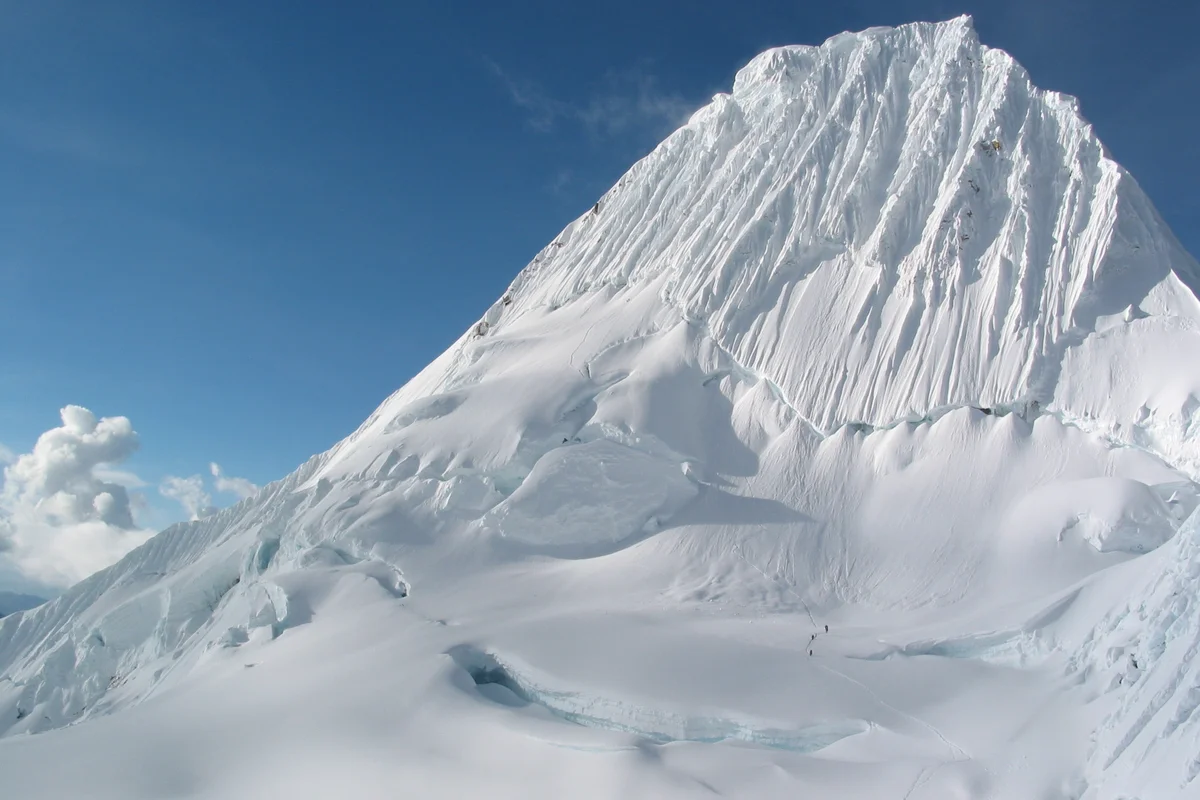

Alpamayo
Alpamayo is an extraordinary 5,947-metre pyramid of ice and snow situated in the northern Cordillera Blanca of Peru. Globally celebrated as the World's Most Beautiful Mountain, its sheer Southwest Face is carved with steep fluted ice runnels that form one of the premier alpine ice climbs on Earth.
Documented Sources & Archival Citations
- American Alpine Journal: Alpamayo Southwest Face (1976)(American Alpine Club)
Supporting claim: Official expedition journal of the 1975 Italian Ragni di Lecco first ascent
Accessed/Documented: 2026 - The Andes: A Guide for Climbers(John Biggar / Andes Publishing)
Supporting claim: Technical climbing documentation of the Ferrari Route on Alpamayo
Accessed/Documented: 2026