The First Pakistani on K2: Ashraf Aman's Historic 1977
On August 7, 1977, Hunza climber Ashraf Aman stood atop K2, ending a 23-year drought on the mountain and becoming the first Pakistani in human history to summit the world's second-highest peak.
Mountain Safety & Conditions Disclaimer: High-altitude climbing, glacial travel, and technical ascents entail severe objective risks including avalanches, serac collapses, rapid weather collapse, and altitude illness. Historical route descriptions and summit claims on Mountainity reflect documented archival sources and must not be used as live operational safety assessments. Local regulations, permits, and physical glacial topography change continuously.
Peer Review: Senior Editorial Board & Historical Reviewers • Editorial Standards
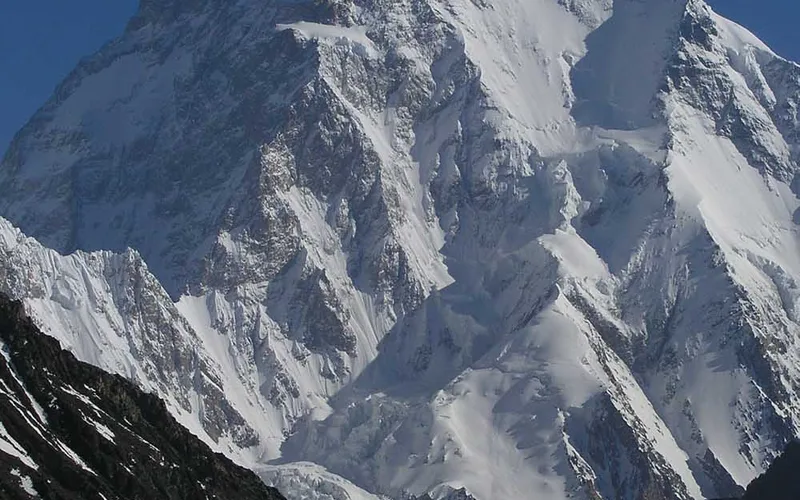
For twenty-three years following the historic Italian first ascent of K2 (8,611m) in 1954, the Savage Mountain had repelled every single human attempt to conquer its frozen pyramid. Colossal storms, devastating avalanches, and the terrifying altitude of the high Karakoram had defeated expeditions from America, Germany, and Britain. By the mid-1970s, K2’s reputation as the most dangerous and elusive mountain on Earth was firmly entrenched in international alpine lore.
On August 7, 1977, that long silence was broken. And for the very first time in human history, a Pakistani national stood on the apex of the Savage Mountain. His name was Ashraf Aman.
The Engineer from Aliabad
Ashraf Aman was born in 1938 in the picturesque village of Aliabad in Hunza, Gilgit-Baltistan. Blessed with extraordinary natural cardiovascular fitness and a disciplined intellect, Aman trained as an electrical engineer. Yet the magnetic pull of the soaring granite needles encircling his home valley proved irresistible. In an era when northern Pakistani mountaineers were almost universally hired as anonymous, low-altitude load carriers, Aman was determined to demonstrate that local climbers possessed the technical skill, strategic vision, and fortitude to operate as full climbing partners on the world’s highest peaks.
In 1976, Aman took part in the first ascent of the granite monolith of Paiyu Peak (6,660m) with the Alpine Club of Pakistan. When the Japan Mountaineering Association and the Pakistani government organized a massive 52-member joint expedition for K2 in 1977, Aman was chosen as one of Pakistan’s frontline summit contenders alongside a young Nazir Sabir.
The Return to the Abruzzi Spur
Led by 69-year-old veteran explorer Ichiro Yoshizawa, the 1977 expedition established Base Camp on the Godwin-Austen Glacier in June. The logistical scale was immense: nearly 1,500 Balti porters had carried tons of food, high-altitude gear, and miles of climbing rope across the Baltoro Glacier.
The route chosen was the classic Abruzzi Spur—the steep, jagged rib rising 3,500 vertical meters from the glacier to the summit. For six weeks, the climbers battled sub-zero blizzard cycles. Aman took a leading role in fixing lines up House’s Chimney—a 100-foot vertical rock fissure at 6,600 meters—and hauling heavy camps through the wind-scoured granite spires of the Black Pyramid.
By early August, a high-pressure system settled over the Karakoram. The summit team assembled at Camp VI on the Shoulder at 7,900 meters, resting in their tents beneath the ominous overhang of the Great Serac.
The Summit Day: August 7, 1977
At 3:00 AM on August 7, 1977, Ashraf Aman stepped into the sub-zero darkness of the Death Zone alongside Japanese alpinists Tsuneo Shigehiro and Shoji Nakamura. Breathing bottled oxygen to withstand the extreme cold and hypoxia, they moved steadily toward the Bottleneck—an 80-degree gully of hard blue ice directly threatened by thousands of tons of overhanging glacial ice.
Moving with calm precision, Aman kicked his crampons into the glassy ice, traversed beneath the towering wall of the serac, and broke trail onto the exposed summit snowfield. At approximately 2:00 PM, under a brilliant cobalt sky, Ashraf Aman, Tsuneo Shigehiro, and Shoji Nakamura stepped onto the 8,611-meter summit of K2.
Looking out across hundreds of miles of glaciated Karakoram peaks stretching into China and Pakistan, Aman unfurled the green-and-white national flag of Pakistan. It was the first time Pakistan’s banner had ever flown from the summit of K2.
An Enduring National Legacy
Ashraf Aman’s summit made front-page headlines across Pakistan and Japan. President General Muhammad Zia-ul-Haq conferred upon him the President’s Award for Pride of Performance in 1982, cementing his status as a founding father of national alpinism.
Rather than retiring from the mountains, Aman dedicated his life to opening Pakistan’s northern frontiers to the world. He founded Adventure Tours Pakistan (ATP), pioneered modern guiding standards, and served as Vice President of the Alpine Club of Pakistan.
Ashraf Aman proved to the international climbing community that Pakistani mountaineers were not merely support porters, but world-class summit leaders. His footsteps on August 7, 1977, blazed the trail that would later be walked by Nazir Sabir, Rajab Shah, Hassan Sadpara, and Ali Sadpara.
Key Statistics & Topographic Figures
- Category
- Pakistani Mountaineering Pioneers
Archival Subject
- Reading Time
- 12 min read
Narrative Length
- Key Mountain
- k2
Objective
- Ascent Route
- abruzzi-spur
Topography
- Verification
- Editorially Verified
Archival Standard
Defined Alpine Terminology & Concepts
- Summit Push
- The final continuous climbing effort from the highest established camp to the mountain apex and back.
- Death Zone Chronicle
- A verified, research-backed historical narrative documenting the human, technical, and environmental realities of an alpine expedition.
Frequently Asked Questions: The First Pakistani on K2: Ashraf Aman's Historic 1977
What is the core chronicle and subject of "The First Pakistani on K2: Ashraf Aman's Historic 1977"?
On August 7, 1977, Hunza climber Ashraf Aman stood atop K2, ending a 23-year drought on the mountain and becoming the first Pakistani in human history to summit the world's second-highest peak.
Which mountain peaks and routes are featured in "The First Pakistani on K2: Ashraf Aman's Historic 1977"?
This narrative documents climbs on k2 along the abruzzi-spur in Pakistan.
Which documented expedition is chronicled in this story?
This historical chronicle captures the events of the 1977-pakistan-japan-k2, verified through contemporary journals and archival records.
Who authored and researched this archival chronicle?
Authored and researched by Mountainity Historical Research Desk, drawing on primary eyewitness testimonies, alpine club registries, and verified summit logs.
What makes this high-altitude chronicle historically significant?
Categorized under "Pakistani Mountaineering Pioneers", this chronicle preserves critical lessons in alpine leadership, survival, tactical speed, and human endurance in the death zone.
Related Mountains


K2
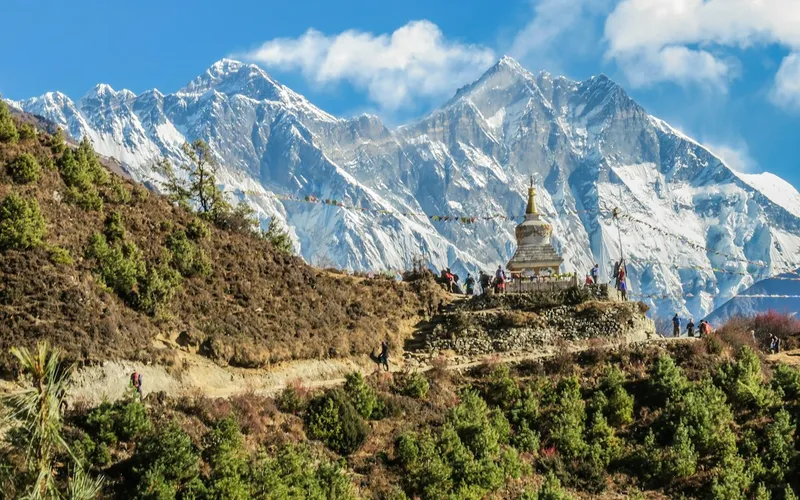
K2, at 8,611 meters (28,251 ft), is the second-highest mountain on Earth and widely regarded as the most technically demanding and lethal 8,000-meter peak. Located in the heart of the Karakoram on the border between Pakistan and China, K2 is characterized by sheer relief, severe weather anomalies, and persistent objective hazards including the notorious Bottleneck couloir.
Ascent Route & Topography (1)
View All Routes →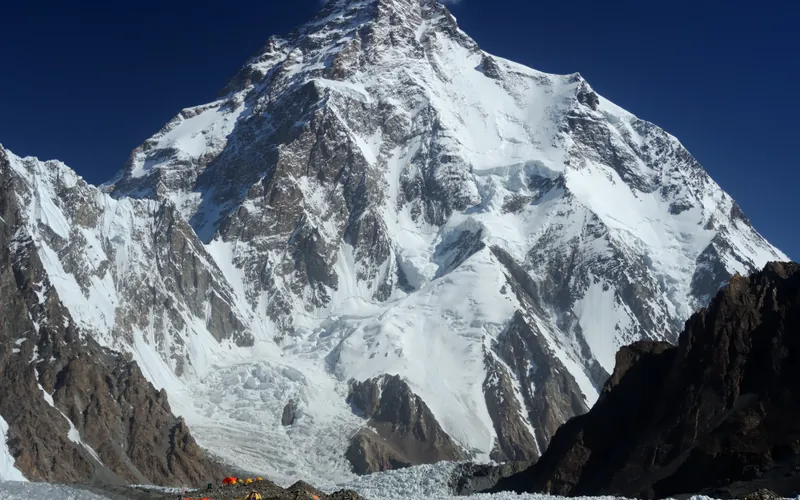
Abruzzi Spur (Southeast Ridge)
The Abruzzi Spur is the most famous and frequently climbed route on K2, tracing the mountain's steep southeast ridge from the Godwin-Austen Glacier to the summit. First explored in 1909 by Prince...
Featured Mountaineers & Pioneers (2)
Browse All Mountaineers →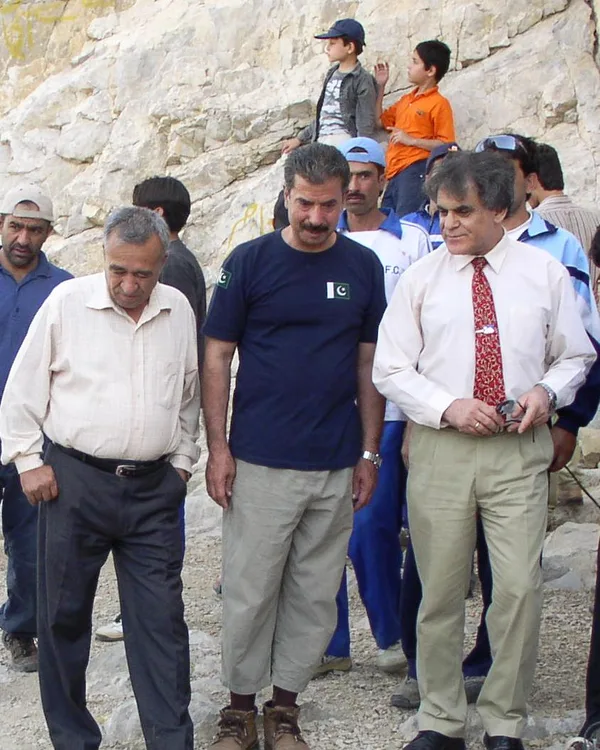
Ashraf Aman
Ashraf Aman was born on January 15, 1938, in Aliabad, Hunza, in what is now Gilgit-Baltistan, Pakistan. Growing up surrounded by the towering, vertical granite spires of the Karakoram, Aman pursued technical training in...

Nazir Sabir
Born on December 10, 1955, in Raminj, Chipursan Valley, Gojal, Hunza, Nazir Ahmad Sabir began his high-altitude mountaineering journey in 1974. At age 20, he achieved international prominence by completing the first...
Documented Expeditions (1)
View All Expeditions →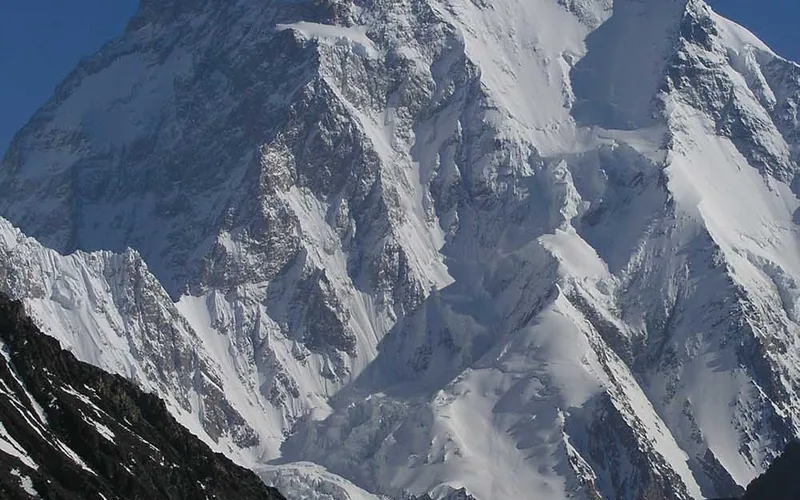
1977 Japanese-Pakistani K2 Expedition: First Pakistani Summit
On August 7, 1977, Hunza mountaineer Ashraf Aman reached the summit of K2 (8,611m) via the Abruzzi Spur alongside Japanese climbers, marking the historic second ascent of K2 and the first Pakistani summit in human history.
Documented Sources & Archival Citations
- American Alpine Journal: K2 Second Ascent(American Alpine Club)
Supporting claim: Official verification of the August 7, 1977 K2 summit by Ashraf Aman and Japanese climbers
- Pakistan Alpine Journal: Ashraf Aman Profile(Alpine Club of Pakistan)
Supporting claim: National record certifying Ashraf Aman as the first Pakistani mountaineer on K2
Share Exploration
Global Mountain Intelligence
✓ Link copied to clipboard!