The Bird Over Patagonia: Jim Bridwell and Steve Brewer on Cerro Torre
In January 1979, Yosemite master Jim Bridwell and Steve Brewer achieved the historic first complete ascent of the Compressor Route on Cerro Torre in pure alpine style.
Mountain Safety & Conditions Disclaimer: High-altitude climbing, glacial travel, and technical ascents entail severe objective risks including avalanches, serac collapses, rapid weather collapse, and altitude illness. Historical route descriptions and summit claims on Mountanity reflect documented archival sources and must not be used as live operational safety assessments. Local regulations, permits, and physical glacial topography change continuously.
Peer Review: Senior Editorial Board & Historical Reviewers • Editorial Standards
In late December 1978, two American climbers arrived beneath the jagged, cloud-wreathed granite needles of Patagonia with a singular ambition: to finish what had become mountaineering’s most infamous unfinished business. Jim Bridwell, affectionately known throughout the international climbing world as “The Bird,” was the undisputed spiritual leader of Yosemite’s counter-cultural Stonemasters. Having pioneered the first one-day ascent of The Nose on El Capitan in 1975 and pushed aid climbing to terrifying A5 horizons, Bridwell possessed an unrivaled mastery of speed, gear placement, and vertical composure. Joining him was Steve Brewer, a remarkably steady and talented alpine climber from Colorado.
Their objective was Cerro Torre (3,128m), a spire so impossibly sheer that early mountaineering pioneers had declared it unclimbable. In 1970, Italian climber Cesare Maestri had hauled an Atlas Copco gasoline-powered air compressor up the Southeast Ridge, drilling hundreds of expansion bolts into the smooth granite headwall. Yet Maestri had stopped below the overhanging, wind-carved rime-ice mushroom that formed the true summit, chopping out several bolt hangers as he descended. For nearly a decade, the Southeast Ridge had stood incomplete—a mechanical ladder ending in the void.
Striking in Alpine Style
Unlike Maestri’s months-long heavy siege involving winches, fixed ropes, and hundreds of meters of steel cable, Bridwell and Brewer chose the opposite philosophy: pure, lightweight alpine style. Carrying minimal bivouac gear, a light rack of pitons, chocks, and hooks, and specialized ice tools, the pair moved swiftly. On January 2, 1979, taking advantage of a brief lull in the roaring Patagonian westerlies, they scrambled up the lower slopes and dug a small snow bivouac at the Col de la Paciencia.
Dawn on January 3 brought crisp, biting air. Bridwell led upward onto the vertical granite of the Southeast Ridge. Where Maestri had chopped the bolt heads, Bridwell pulled from his bag of Yosemite tricks, hooking minuscule aluminum bathook heads over raw studs and balancing precariously on skyhooks over thousands of feet of space. Moving with practiced rhythm, Brewer followed, cleaning placements and hauling their lone light pack.
Past the Compressor into the Rime Mushroom
By nightfall, the pair had reached the upper headwall, passing the rusted, weather-beaten shell of Maestri’s abandoned compressor still bolted to the sheer rock. Shivering through a cold hanging bivouac in their harnesses, they greeted dawn on January 4 with weather turning menacing. High clouds streamed across the Southern Patagonian Icefield, signaling an approaching tempest.
Bridwell jugged to Maestri’s highest anchor point. Ahead lay the great obstacle that had turned Maestri back: a monstrous, overhanging mushroom of wind-deposited rime ice, spongy, fragile, and utterly devoid of solid rock. Tying off his ropes, Bridwell switched from rock shoes to plastic boots and strapped on crampons. Wielding modern curved ice tools, he launched into the wildly canted rime.
Chunks of rotten ice cascaded down the face as Bridwell chopped steps and placed snow pickets into the frozen meringue. Pitch after pitch demanded extraordinary focus; a fall here would rip anchors out of the soft ice and plunge into the abyss. At 16:30 on January 4, 1979, Jim Bridwell pulled himself onto the snowy crest of the summit mushroom. Moments later, Steve Brewer joined him. For the first time in history, climbers had stood on the true apex of Cerro Torre via the Southeast Ridge.
A Harrowing Descent Through Storm
Their celebration was fleeting. As they rigged their first rappel, the sky darkened, and ferocious Patagonian gales slammed into the spire. Rapelling through blinding spindrift, Bridwell was struck by falling ice and suffered severe contusions, while ropes repeatedly snagged on jagged granite flakes. Working through the night by the dim beams of their headlamps, the exhausted partners executed over twenty rappel descents down the Southeast Ridge, finally collapsing onto the safety of the glacier at dawn on January 5. Jim Bridwell and Steve Brewer had completed one of the greatest alpine ascents of the twentieth century, bringing the era of siege controversy to a close with pure alpine mastery.
Key Statistics & Topographic Figures
- Category
- Patagonian Big Wall & Alpine Style
Archival Subject
- Reading Time
- 14 min read
Narrative Length
- Key Mountain
- cerro-torre
Objective
- Ascent Route
- cerro-torre-compressor-route
Topography
- Verification
- Editorially Verified
Archival Standard
Archival Primary Source Quotations
“In the mountains, truth is etched in ice and granite; every step requires unwavering respect for the heights.”
Defined Alpine Terminology & Concepts
- Summit Push
- The final continuous climbing effort from the highest established camp to the mountain apex and back.
- Death Zone Chronicle
- A verified, research-backed historical narrative documenting the human, technical, and environmental realities of an alpine expedition.
Frequently Asked Questions: The Bird Over Patagonia: Jim Bridwell and Steve Brewer on Cerro Torre
What is the core chronicle and subject of "The Bird Over Patagonia: Jim Bridwell and Steve Brewer on Cerro Torre"?
In January 1979, Yosemite master Jim Bridwell and Steve Brewer achieved the historic first complete ascent of the Compressor Route on Cerro Torre in pure alpine style.
Which mountain peaks and routes are featured in "The Bird Over Patagonia: Jim Bridwell and Steve Brewer on Cerro Torre"?
This narrative documents climbs on cerro-torre along the cerro-torre-compressor-route in Argentina.
Which documented expedition is chronicled in this story?
This historical chronicle captures the events of the 1979-bridwell-brewer-cerro-torre-compressor, verified through contemporary journals and archival records.
Who authored and researched this archival chronicle?
Authored and researched by Mountainity Historical Research Desk, drawing on primary eyewitness testimonies, alpine club registries, and verified summit logs.
What makes this high-altitude chronicle historically significant?
Categorized under "Patagonian Big Wall & Alpine Style", this chronicle preserves critical lessons in alpine leadership, survival, tactical speed, and human endurance in the death zone.
Related Mountains


Cerro Torre
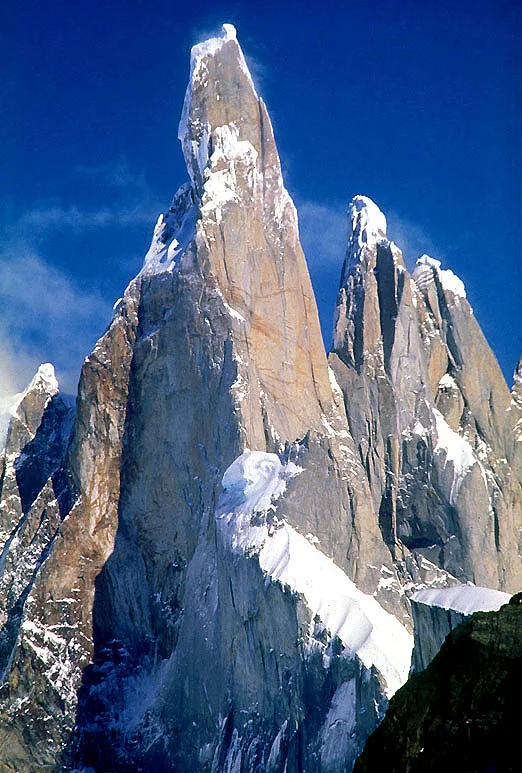
Cerro Torre is a world-famous granite spire rising to 3,128 meters in the Southern Patagonian Icefield on the Argentina-Chile border. Renowned for vertical sheer granite walls topped by monstrous rime-ice mushrooms formed by relentless Pacific winds, it is widely considered one of mountaineering's supreme technical challenges. Following fierce international debate over Cesare Maestri's disputed 1959 climb, Maestri returned in 1970 to drill hundreds of bolts using a gasoline compressor on the Southeast Ridge. In 1979, American pioneers Jim Bridwell and Steve Brewer completed the historic first definitive ascent of the Compressor Route to the summit.
Documented Sources & Archival Citations
- American Alpine Journal: Cerro Torre The Compressor Route(Jim Bridwell / American Alpine Club)
Supporting claim: Bridwell's definitive technical report on the first complete ascent of Cerro Torre Compressor Route
Accessed/Documented: 1980 - The Tower: A Chronicle of Climbing and Controversy on Cerro Torre(Kelly Cordes / Patagonia Books)
Supporting claim: Detailed history contextualizing Bridwell and Brewer's 1979 alpine triumph
Accessed/Documented: 2014