Inside Everest’s Wildest Amphitheater: The Kangshung Face
Protected by hanging seracs and furious Tibetan winds, Everest’s East Face has seen very few ascents—defined by the bold 1983 and 1988 lines.
Mountain Safety & Conditions Disclaimer: High-altitude climbing, glacial travel, and technical ascents entail severe objective risks including avalanches, serac collapses, rapid weather collapse, and altitude illness. Historical route descriptions and summit claims on Mountainity reflect documented archival sources and must not be used as live operational safety assessments. Local regulations, permits, and physical glacial topography change continuously.
Peer Review: Senior Editorial Board & Historical Reviewers • Editorial Standards
Beyond the Yak Pastures of Kama Chu
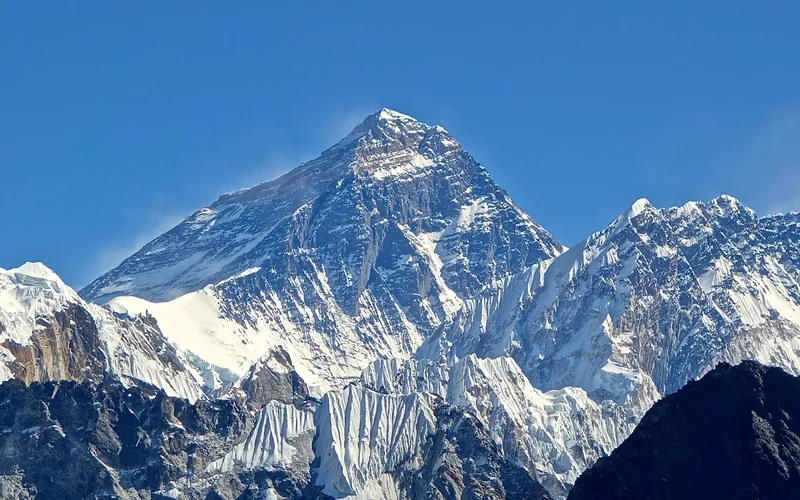
While hundreds of climbers line the Khumbu Icefall and North Col each spring, the eastern Kangshung Face of Mount Everest remains a lonely cathedral of ice. Reaching Base Camp at 5,200 meters requires trekking through lush rhododendron gorges along Tibet’s Kama Chu Valley before stepping beneath a 3,300-meter wall crowned by overhanging ice cliffs the size of city blocks. George Mallory himself turned away after one look at the face in 1921, declaring it virtually impossible.
1983: Fixing the American Buttress
In autumn 1983, an ambitious American expedition led by James Morrissey tackled a steep rock pillar on the far right side of the East Face, trying to thread past threatening serac shelves as quickly as possible. Using winch-assisted haul systems on the overhanging rock prow and cutting through terrifying snow flutes onto the upper snowfield, Carlos Buhler, Kim Momb, and Louis Reichardt topped out onto Everest’s summit on October 8, 1983, followed next day by George Lowe, Dan Reid, and Jay Cassell.
1988: Four Climbers Without Oxygen
Five years later, Americans Robert Anderson and Ed Webster, Canadian Paul Teare, and Briton Stephen Venables arrived with the antithesis of a siege team: just four climbers, no Sherpa high-altitude support, and zero supplemental oxygen tanks.
Climbing a direct, steep couloir–buttress system leading to the South Col—aptly dubbed the Neverest Buttress—all four reached Camp IV at 8,000 meters despite frostbite and relentless altitude exhaustion. While Teare descended to preserve his toes and Anderson and Webster turned back on the Southeast Ridge below the South Summit, Stephen Venables forged ahead alone through the night. At 3:40 p.m. on May 12, 1988, he reached Everest’s true 8,849-meter summit—becoming the first Briton to climb Everest without bottled oxygen—before surviving an icy open bivouac high on the ridge and staggering back down with all three teammates across the Kangshung snows.
Key Statistics & Topographic Figures
- Category
- Himalayan Pioneers
Archival Subject
- Reading Time
- 9 min read
Narrative Length
- Key Mountain
- mount-everest
Objective
- Ascent Route
- everest-kangshung-face
Topography
- Verification
- Editorially Verified
Archival Standard
Defined Alpine Terminology & Concepts
- Summit Push
- The final continuous climbing effort from the highest established camp to the mountain apex and back.
- Death Zone Chronicle
- A verified, research-backed historical narrative documenting the human, technical, and environmental realities of an alpine expedition.
Frequently Asked Questions: Inside Everest’s Wildest Amphitheater: The Kangshung Face
What is the core chronicle and subject of "Inside Everest’s Wildest Amphitheater: The Kangshung Face"?
Protected by hanging seracs and furious Tibetan winds, Everest’s East Face has seen very few ascents—defined by the bold 1983 and 1988 lines.
Which mountain peaks and routes are featured in "Inside Everest’s Wildest Amphitheater: The Kangshung Face"?
This narrative documents climbs on mount-everest along the everest-kangshung-face in China.
Which documented expedition is chronicled in this story?
This historical chronicle captures the events of the 1983-american-everest-east-face, 1988-everest-kangshung-neverest-buttress, verified through contemporary journals and archival records.
Who authored and researched this archival chronicle?
Authored and researched by Mountainity Historical Research Desk, drawing on primary eyewitness testimonies, alpine club registries, and verified summit logs.
What makes this high-altitude chronicle historically significant?
Categorized under "Himalayan Pioneers", this chronicle preserves critical lessons in alpine leadership, survival, tactical speed, and human endurance in the death zone.
Related Mountains


Mount Everest
Mount Everest is the highest mountain above sea level on Earth, standing at an official elevation of 8,848.86 meters (29,031.7 ft). Straddling the international frontier between Nepal and China, it is known locally as Sagarmatha in Nepali ('Goddess of the Sky') and Chomolungma in Tibetan ('Mother Goddess of the World'). The peak rises into the extreme upper troposphere, where oxygen levels drop to barely one-third of sea-level pressure. Climbers face hurricane-force jet stream winds, severe frostbite conditions, shifting ice crevasses in the Khumbu Icefall, and the dangerous Death Zone above 8,000 meters.
Ascent Route & Topography (1)
View All Routes →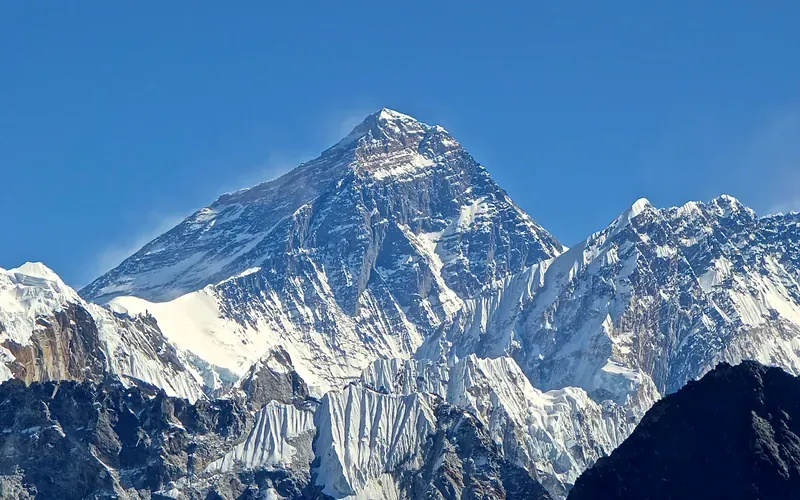
Everest Kangshung (East) Face (American Buttress & Neverest)
Rising above Tibet’s isolated Kangshung Glacier, Everest’s Eastern amphitheater sees scarcely a handful of ascents per decade—defined by the 1983 American Buttress and the 1988 small-team Neverest...
Featured Mountaineers & Pioneers (2)
Browse All Mountaineers →
Louis Reichardt
Born in 1942, Louis Reichardt pursued dual world-class careers in molecular neurobiology and extreme mountaineering. In 1973, Reichardt was a key summit climber on the American Dhaulagiri Expedition, reaching the top of...
Stephen Venables
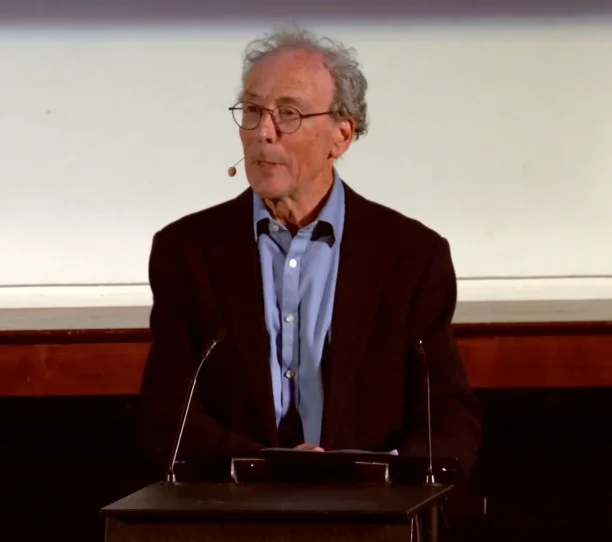
A classic small-team British Himalayan mountaineer operating in the Karakoram, Kishtwar, Garhwal, and Patagonia, Stephen Venables earned historic stature in spring 1988 on Mount Everest's remote Tibetan East Face....
Documented Expeditions (2)
View All Expeditions →1983 American Everest Kangshung Face First Ascent
Six American alpinists led by James Morrissey overcame huge hanging seracs on Everest’s formidable Tibetan East Face, putting Carlos Buhler, Kim Momb, and Louis Reichardt atop the summit on October 8, 1983.
1988 International Everest Kangshung Face Alpine Ascent
Without supplemental oxygen or Sherpa support, Stephen Venables, Ed Webster, Robert Anderson, and Paul Teare pioneered a direct line up Everest’s East Face via the Neverest Buttress, with Venables reaching the summit on May 12, 1988.
Documented Sources & Archival Citations
- Primary Alpine JournalEverest East Face 1983 & 1988 Kangshung Expeditions ↗(American Alpine Journal / Alpine Journal)
Supporting claim: Historical documentation of the 1983 American Buttress and 1988 Neverest Buttress ascents.
Share Exploration
Global Mountain Intelligence
✓ Link copied to clipboard!