K2 1986: Wanda Rutkiewicz's Historic Summit and Kukuczka's Polish Line
During the dramatic summer of 1986 on K2, Wanda Rutkiewicz made history as the first woman to summit the Savage Mountain, while Jerzy Kukuczka conquered the terrifying, unrepeated Polish Line.
Mountain Safety & Conditions Disclaimer: High-altitude climbing, glacial travel, and technical ascents entail severe objective risks including avalanches, serac collapses, rapid weather collapse, and altitude illness. Historical route descriptions and summit claims on Mountanity reflect documented archival sources and must not be used as live operational safety assessments. Local regulations, permits, and physical glacial topography change continuously.
Peer Review: Senior Editorial Board & Historical Reviewers • Editorial Standards
The summer of 1986 on K2 (8,611m / 28,251 ft), the feared “Savage Mountain” of the Karakoram, remains the most extraordinary and harrowing season in high-altitude mountaineering history. It witnessed milestones of superhuman boldness that redefined the outer limits of human capability, set against an unfolding tragedy that claimed the lives of thirteen world-class climbers.
At the epicenter of this historic summer were Poland’s legendary mountaineers: Wanda Rutkiewicz, who made history as the first woman to stand upon the summit of K2, and Jerzy Kukuczka, who pioneered the terrifying, unrepeated “Polish Line” directly up the central South Face.
June 23, 1986: Wanda Rutkiewicz’s Triumph
For decades, K2 had repelled every female climber who dared approach its frozen walls. Its sheer steepness, relentless stonefall, and catastrophic weather earned it a reputation as a mountain where human margins of error did not exist.
On June 19, 1986, Wanda Rutkiewicz set out from Base Camp as part of a small, lightweight international team alongside French mountaineers Maurice Barrard, his wife Liliane Barrard, and French journalist Michel Parmentier. Refusing supplemental oxygen, Rutkiewicz climbed with quiet, methodical precision up the Abruzzi Spur. Despite suffering from severe altitude headaches and vomiting, she kept pace with the French climbers, establishing high bivouacs through the Black Pyramid and the Shoulder at Camp IV (8,000m).
On the morning of June 23, under a crisp, azure Karakoram sky, Rutkiewicz launched her final push toward the summit. Negotiating the notorious Bottleneck beneath a colossal overhanging serac that threatened to collapse at any second, she crossed the delicate 80-degree ice traverse and ascended the final snow slopes.
At 10:15 AM on June 23, 1986, Wanda Rutkiewicz stood on top of K2. She was the first woman in history ever to summit K2—and only the third climber ever to reach its peak without supplemental oxygen. Maurice and Liliane Barrard reached the summit an hour later.
Yet their triumph instantly turned to nightmare during the descent. A sudden, violent blizzard engulfed the mountain above 8,000 meters. Separated in the whiteout near the Bottleneck, both Maurice and Liliane Barrard slipped into the abyss and perished. Fighting hypothermia and frostbite, Rutkiewicz survived a night alone in a snow hole and staggered down the Abruzzi Spur, reaching Base Camp exhausted and heartbroken.
July 1986: Kukuczka and the “Suicidal” South Face
Two weeks later, as Base Camp mourned the loss of the Barrards, Jerzy Kukuczka and his veteran partner Tadeusz Piotrowski prepared for an assault that stunned even the most hardened Himalayan veterans.
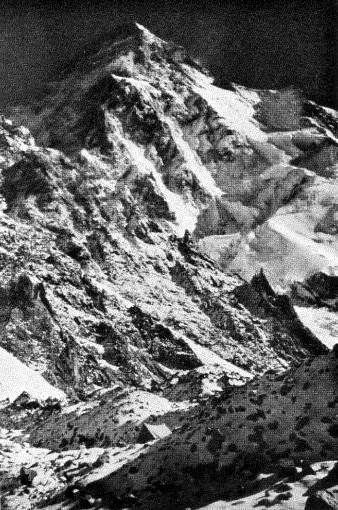
While other teams climbed the established Abruzzi Spur, Kukuczka and Piotrowski set their sights on the colossal, unclimbed central wall of K2’s South Face. Rising 3,200 vertical meters between the Abruzzi and the Magic Line, the face was a deathtrap of overhanging seracs, vertical granite bands, and avalanche funnels. Reinhold Messner, gazing at the proposed route through binoculars, bluntly warned: “This route is suicidal.”
Operating in pure alpine style without oxygen, fixed ropes, or high camps, Kukuczka and Piotrowski stepped onto the face on July 3, 1986. Over the next five days, they fought their way upward pitch by pitch. They negotiated vertical mixed chimneys at 7,600 meters, bypassed colossal blue ice cliffs, and endured four standing bivouacs on tiny ice ledges hacked into the precipice.
By July 7, their food was completely gone and their water stove had failed. Climbing in the Death Zone on sheer willpower alone, they pushed through the upper rock barrier and reached the summit of K2 at 6:25 PM on July 8, 1986. They had conquered the South Face of K2.
Disaster on the Abruzzi Spur
With darkness falling and a ferocious gale whipping the summit, Kukuczka and Piotrowski could not descend their vertical ascent route. They were forced to descend the Abruzzi Spur, which neither man had ever climbed before.
They bivouacked in the open at 8,300 meters without a tent or sleeping bags, shivering violently to survive. On July 9, dehydrated and exhausted, they managed to reach Camp IV, where they found an abandoned tent and melted snow to drink.
On the morning of July 10, as they negotiated the steep, icy gully below Camp IV near 7,900 meters, disaster struck. Piotrowski, moving ahead, suddenly lost both crampons when the binding straps snapped off his boots. Unable to hold his balance on the 55-degree bullet-hard ice, Piotrowski plummeted backward. Kukuczka desperately braced to catch him, but the momentum ripped Piotrowski out of reach. Piotrowski plunged over 1,000 meters down the eastern face to his death.
Numb with shock, Kukuczka continued his solitary descent through the storm, finally collapsing into the arms of rescuers on the Godwin-Austen Glacier.
Immortal Legacy
The summer of 1986 permanently cemented Wanda Rutkiewicz and Jerzy Kukuczka into mountaineering legend. Rutkiewicz’s ascent proved conclusively that women could conquer the most dangerous mountain on Earth on equal terms with men, without bottled oxygen.
Kukuczka’s conquest of the South Face—now universally known as the Polish Line—remains one of the most audacious feats in high-altitude history. To this day, despite dozens of attempts by the world’s elite climbers, the Polish Line on K2 has never been repeated.
Key Statistics & Topographic Figures
- Category
- Historic Expeditions
Archival Subject
- Reading Time
- 17 min read
Narrative Length
- Key Mountain
- k2
Objective
- Ascent Route
- k2-south-face-polish-line, abruzzi-spur
Topography
- Verification
- Editorially Verified
Archival Standard
Archival Primary Source Quotations
“In the mountains, truth is etched in ice and granite; every step requires unwavering respect for the heights.”
Defined Alpine Terminology & Concepts
- Summit Push
- The final continuous climbing effort from the highest established camp to the mountain apex and back.
- Death Zone Chronicle
- A verified, research-backed historical narrative documenting the human, technical, and environmental realities of an alpine expedition.
Frequently Asked Questions: K2 1986: Wanda Rutkiewicz's Historic Summit and Kukuczka's Polish Line
What is the core chronicle and subject of "K2 1986: Wanda Rutkiewicz's Historic Summit and Kukuczka's Polish Line"?
During the dramatic summer of 1986 on K2, Wanda Rutkiewicz made history as the first woman to summit the Savage Mountain, while Jerzy Kukuczka conquered the terrifying, unrepeated Polish Line.
Which mountain peaks and routes are featured in "K2 1986: Wanda Rutkiewicz's Historic Summit and Kukuczka's Polish Line"?
This narrative documents climbs on k2 along the k2-south-face-polish-line, abruzzi-spur in Pakistan.
Which documented expedition is chronicled in this story?
This historical chronicle captures the events of the 1986-polish-k2-south-face, verified through contemporary journals and archival records.
Who authored and researched this archival chronicle?
Authored and researched by Mountainity Historical Research Desk, drawing on primary eyewitness testimonies, alpine club registries, and verified summit logs.
What makes this high-altitude chronicle historically significant?
Categorized under "Historic Expeditions", this chronicle preserves critical lessons in alpine leadership, survival, tactical speed, and human endurance in the death zone.
Related Mountains


K2
K2, at 8,611 meters (28,251 ft), is the second-highest mountain on Earth and widely regarded as the most technically demanding and lethal 8,000-meter peak. Located in the heart of the Karakoram on the border between Pakistan and China, K2 is characterized by sheer relief, severe weather anomalies, and persistent objective hazards including the notorious Bottleneck couloir.
Documented Sources & Archival Citations
- My Vertical World: Climbing the 8000-Metre Peaks(Jerzy Kukuczka / The Mountaineers)
Supporting claim: Firsthand autobiographical account of the five-day Polish Line ascent and descent tragedy
Accessed/Documented: 1992 - K2: Triumph and Tragedy(Jim Curran / Grafton Books)
Supporting claim: Authoritative chronicle of the 1986 K2 climbing season, summits, and disasters
Accessed/Documented: 1987