The Master's Crown: Reinhold Messner's 1986 Mount Vinson Ascent
Fresh from conquering all fourteen eight-thousanders, Reinhold Messner summits Mount Vinson to establish the definitive Seven Summits standard.
Mountain Safety & Conditions Disclaimer: High-altitude climbing, glacial travel, and technical ascents entail severe objective risks including avalanches, serac collapses, rapid weather collapse, and altitude illness. Historical route descriptions and summit claims on Mountanity reflect documented archival sources and must not be used as live operational safety assessments. Local regulations, permits, and physical glacial topography change continuously.
Peer Review: Senior Editorial Board & Historical Reviewers • Editorial Standards
The Master’s Crown: Reinhold Messner’s 1986 Mount Vinson Ascent
The Great Debate: Kosciuszko vs. Carstensz
When Dick Bass completed his celebrated Seven Summits quest on Mount Vinson in April 1985, the climbing world erupted into debate. Bass’s list included Mount Kosciuszko (2,228 m) as the continental summit of Australia. But to serious mountaineers, Kosciuszko was little more than a scenic grassy stroll—a walk-up hill that required no ice axe, no crampons, and no climbing rope.
The greatest high-altitude visionary of the era, South Tyrolean legend Reinhold Messner, proposed a more rigorous geographic and mountaineering standard.
Messner argued that the continental plate was not Australia alone, but Australasia / Oceania. The true geographic summit of that continental landmass was Carstensz Pyramid (Puncak Jaya, 4,884 m) in the impenetrable jungles of Western New Guinea—a jagged, multi-pitch limestone pyramid requiring technical rock climbing and high-altitude wilderness survival.
Messner had already conquered Carstensz Pyramid in 1971. In October 1986, he achieved the absolute pinnacle of mountaineering history by standing atop Lhotse in Nepal, becoming the first human ever to summit all fourteen 8,000-metre peaks on Earth without supplemental oxygen.
Just two months later, in December 1986, Messner turned his sights toward the frozen wilderness of Antarctica to put his definitive stamp on the Seven Summits.
“A mountain must be a challenge to the human body and spirit. To climb Kosciuszko is a pleasant holiday walk; to climb Carstensz and Vinson is to face the genuine savagery of nature.” — Reinhold Messner, All 14 Eight-Thousanders & The Seven Summits, 1988
Into the White Desert
In late November 1986, Messner flew to Punta Arenas, Chile, teaming up with Canadian mountaineer Pat Morrow and polar aviator Giles Kershaw. Flying an unpressurized ski plane across the turbulent Drake Passage, they touched down on the frozen plateau beneath the towering ramparts of the Sentinel Range.
Accustomed to the terrifying altitudes of the Himalayas and Karakoram, Messner was struck by the unique psychological pressure of the Antarctic landscape: an endless, silent desert of ice where temperatures dropped to -40°C and no green plant or living creature could survive.
Operating in his trademark lightweight alpine style, Messner eschewed heavy support camps. He, Morrow, and Kershaw shouldered their packs and marched directly up the Branscomb Glacier, moving with steady, efficient strides under the unblinking glare of the polar midnight sun.
Summit on December 3, 1986
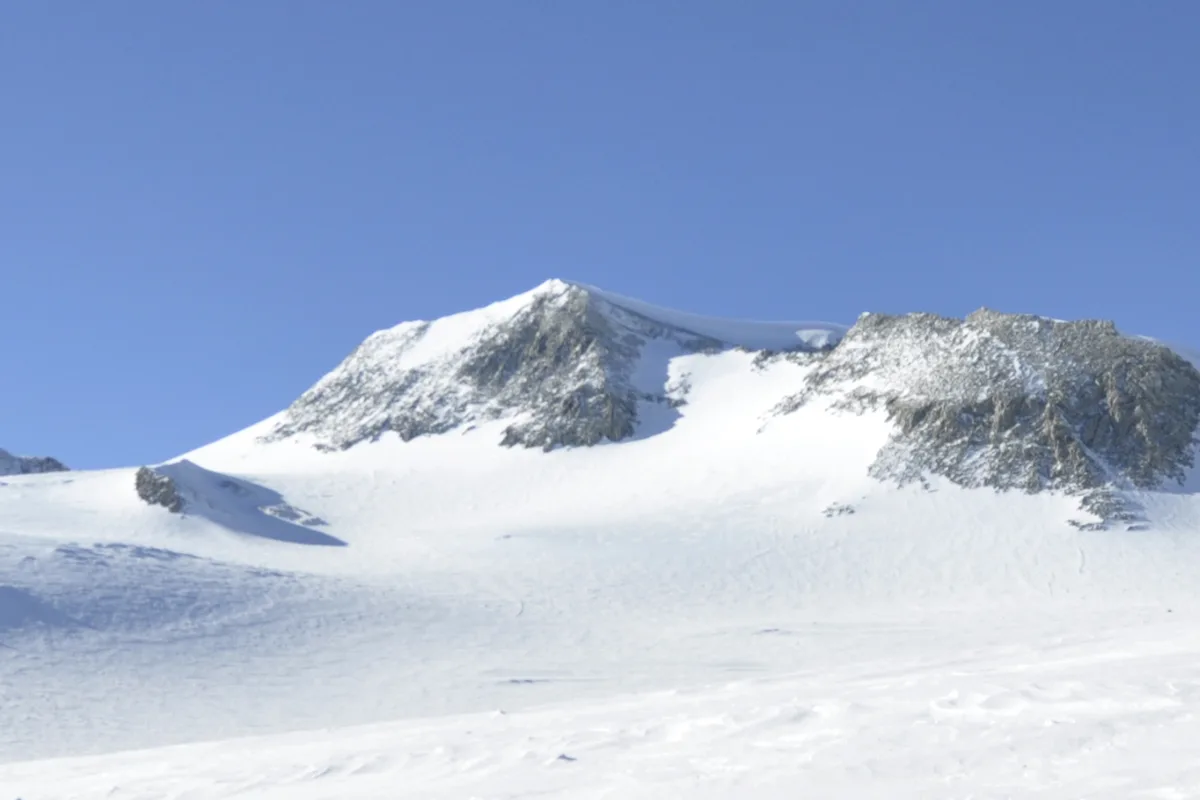
Ascending the Branscomb Headwall, the team established a light bivouac on the high col. On the morning of December 3, 1986, Messner stepped out into the freezing polar breeze and pushed up the final slopes of the Vinson Plateau.
Moving effortlessly across the snowfields, Messner traversed the corniced summit arête and stepped onto the crowning apex of Mount Vinson (4,892 m).
Standing on top of Antarctica, Reinhold Messner had closed an extraordinary year. In 1986, he had completed the 14 eight-thousanders and, in summiting Vinson, completed the Messner Seven Summits list (with Carstensz Pyramid).
Messner’s standard was instantly embraced by the international climbing community. Today, mountaineers worldwide distinguish between the ‘Bass List’ and the more prestigious, technically rigorous ‘Messner List’.
For Messner, the climb of Vinson was not merely a trophy; it was the gateway to a new dimension of exploration. Three years later, in 1989, Messner would return to Antarctica to cross the entire 2,800-kilometre continent on foot and skis via the South Pole, cementing his status as the greatest explorer-mountaineer of the modern era.
Key Statistics & Topographic Figures
- Category
- Polar Pioneers
Archival Subject
- Reading Time
- 16 min read
Narrative Length
- Key Mountain
- mount-vinson
Objective
- Ascent Route
- mount-vinson-normal-route
Topography
- Verification
- Editorially Verified
Archival Standard
Archival Primary Source Quotations
“In the mountains, truth is etched in ice and granite; every step requires unwavering respect for the heights.”
Defined Alpine Terminology & Concepts
- Summit Push
- The final continuous climbing effort from the highest established camp to the mountain apex and back.
- Death Zone Chronicle
- A verified, research-backed historical narrative documenting the human, technical, and environmental realities of an alpine expedition.
Frequently Asked Questions: The Master's Crown: Reinhold Messner's 1986 Mount Vinson Ascent
What is the core chronicle and subject of "The Master's Crown: Reinhold Messner's 1986 Mount Vinson Ascent"?
Fresh from conquering all fourteen eight-thousanders, Reinhold Messner summits Mount Vinson to establish the definitive Seven Summits standard.
Which mountain peaks and routes are featured in "The Master's Crown: Reinhold Messner's 1986 Mount Vinson Ascent"?
This narrative documents climbs on mount-vinson along the mount-vinson-normal-route in Antarctica.
Which documented expedition is chronicled in this story?
This historical chronicle captures the events of the 1986-messner-vinson-seven-summits, verified through contemporary journals and archival records.
Who authored and researched this archival chronicle?
Authored and researched by Mountainity Historical Research Desk, drawing on primary eyewitness testimonies, alpine club registries, and verified summit logs.
What makes this high-altitude chronicle historically significant?
Categorized under "Polar Pioneers", this chronicle preserves critical lessons in alpine leadership, survival, tactical speed, and human endurance in the death zone.
Related Mountains

Mount Vinson / Vinson Massif
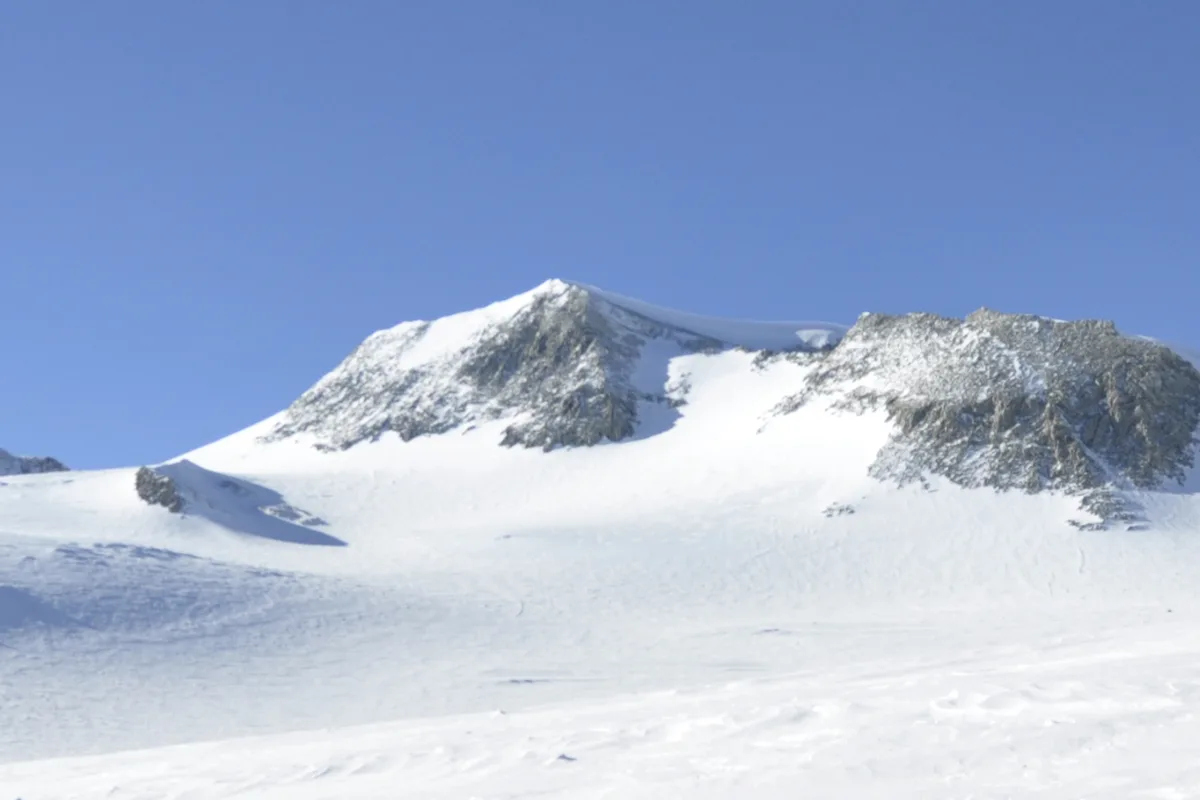
Mount Vinson is the highest peak in Antarctica at 4,892 metres (16,050 ft), situated in the Sentinel Range of the Ellsworth Mountains approximately 1,200 kilometres from the South Pole. As the summit of Antarctica, it forms one of the celebrated Seven Summits. First sighted by a US Navy aircraft in January 1958 and named after Georgia congressman Carl Vinson, the peak was conquered on December 18, 1966, by a team led by Nicholas Clinch and Barry Corbet during the historic American Antarctic Mountaineering Expedition. While technically moderate via the Branscomb Glacier, climbing Mount Vinson demands extreme endurance against temperatures plunging to -40°C and ferocious katabatic blizzards.
Documented Sources & Archival Citations
- All 14 Eight-Thousanders & The Seven Summits(Reinhold Messner / Crowood Press)
Supporting claim: Primary autobiographical source
Accessed/Documented: 1988 - Beyond Everest: Quest for the Seven Summits(Pat Morrow / Camden House)
Supporting claim: Firsthand expedition account
Accessed/Documented: 1986