Eternal Flame on Trango Nameless Tower: Free Climbing Above 6,000m
How Kurt Albert, Wolfgang Güllich, Milan Sykora, and Christoph Stiegler climbed 650 vertical meters of golden granite above the Baltoro in 1989.
Mountain Safety & Conditions Disclaimer: High-altitude climbing, glacial travel, and technical ascents entail severe objective risks including avalanches, serac collapses, rapid weather collapse, and altitude illness. Historical route descriptions and summit claims on Mountainity reflect documented archival sources and must not be used as live operational safety assessments. Local regulations, permits, and physical glacial topography change continuously.
Peer Review: Senior Editorial Board & Historical Reviewers • Editorial Standards
Bringing Sport-Climbing Standards to the Karakoram
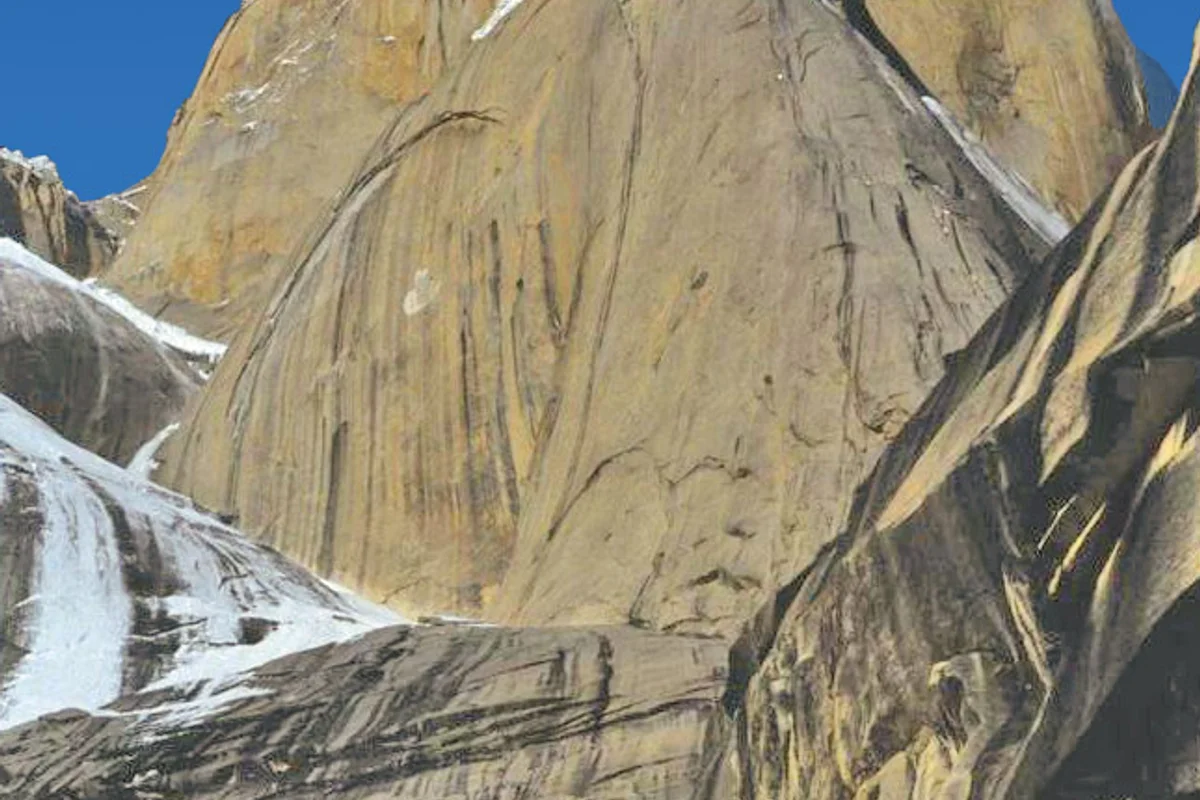
When West German sport-climbing pioneers Kurt Albert and Wolfgang Güllich arrived beneath the 6,239-meter Nameless Trango Tower in summer 1989 alongside Christoph Stiegler and Milan Sykora, big-wall climbs in the Himalaya and Karakoram were still overwhelmingly conducted with heavy aid gear, jumars, and ladders. Albert and Güllich wanted to prove that razor-sharp granite crack technique forged in Frankenjura and Yosemite could unlock vertical rock past 6,000 meters in thin air.
Twenty-Four Pitches of Golden Monzonite
Choosing an awe-inspiring pillar on the sunny South-Southeast Face, the quartet climbed free up to grade 5.12d (IX- UIAA), resorting to minimal aid (four short sections of A2) only where icy seams or sheer blank plates blocked free holds. On September 20, 1989—naming the line after the Bangles pop ballad playing on base-camp tapes—they reached the knife-edge granite apex of Nameless Tower, leaving a clean 24-pitch classic of global alpine rock.
Closing the Circle (2003–2009)
For twenty years climbers returned to try freeing the remaining aid bolts and blank pendulum. Denis Burdet freed key lower pitches in 2003, Iker and Eneko Pou bypassed sections in 2005, and in August 2009 Alexander and Thomas Huber linked a free variation around the blank pendulum section at 5.13a (7c+), achieving the first completely free ascent of Eternal Flame in continuous team style—solidifying Albert and Güllich’s vision twenty years to the season.
Key Statistics & Topographic Figures
- Category
- Big Wall & Free Climbing
Archival Subject
- Reading Time
- 8 min read
Narrative Length
- Key Mountain
- trango-tower
Objective
- Ascent Route
- trango-tower-eternal-flame
Topography
- Verification
- Editorially Verified
Archival Standard
Defined Alpine Terminology & Concepts
- Summit Push
- The final continuous climbing effort from the highest established camp to the mountain apex and back.
- Death Zone Chronicle
- A verified, research-backed historical narrative documenting the human, technical, and environmental realities of an alpine expedition.
Frequently Asked Questions: Eternal Flame on Trango Nameless Tower: Free Climbing Above 6,000m
What is the core chronicle and subject of "Eternal Flame on Trango Nameless Tower: Free Climbing Above 6,000m"?
How Kurt Albert, Wolfgang Güllich, Milan Sykora, and Christoph Stiegler climbed 650 vertical meters of golden granite above the Baltoro in 1989.
Which mountain peaks and routes are featured in "Eternal Flame on Trango Nameless Tower: Free Climbing Above 6,000m"?
This narrative documents climbs on trango-tower along the trango-tower-eternal-flame in Pakistan.
Which documented expedition is chronicled in this story?
This historical chronicle captures the events of the 1989-trango-tower-eternal-flame, verified through contemporary journals and archival records.
Who authored and researched this archival chronicle?
Authored and researched by Mountainity Technical Archive, drawing on primary eyewitness testimonies, alpine club registries, and verified summit logs.
What makes this high-altitude chronicle historically significant?
Categorized under "Big Wall & Free Climbing", this chronicle preserves critical lessons in alpine leadership, survival, tactical speed, and human endurance in the death zone.
Related Mountains
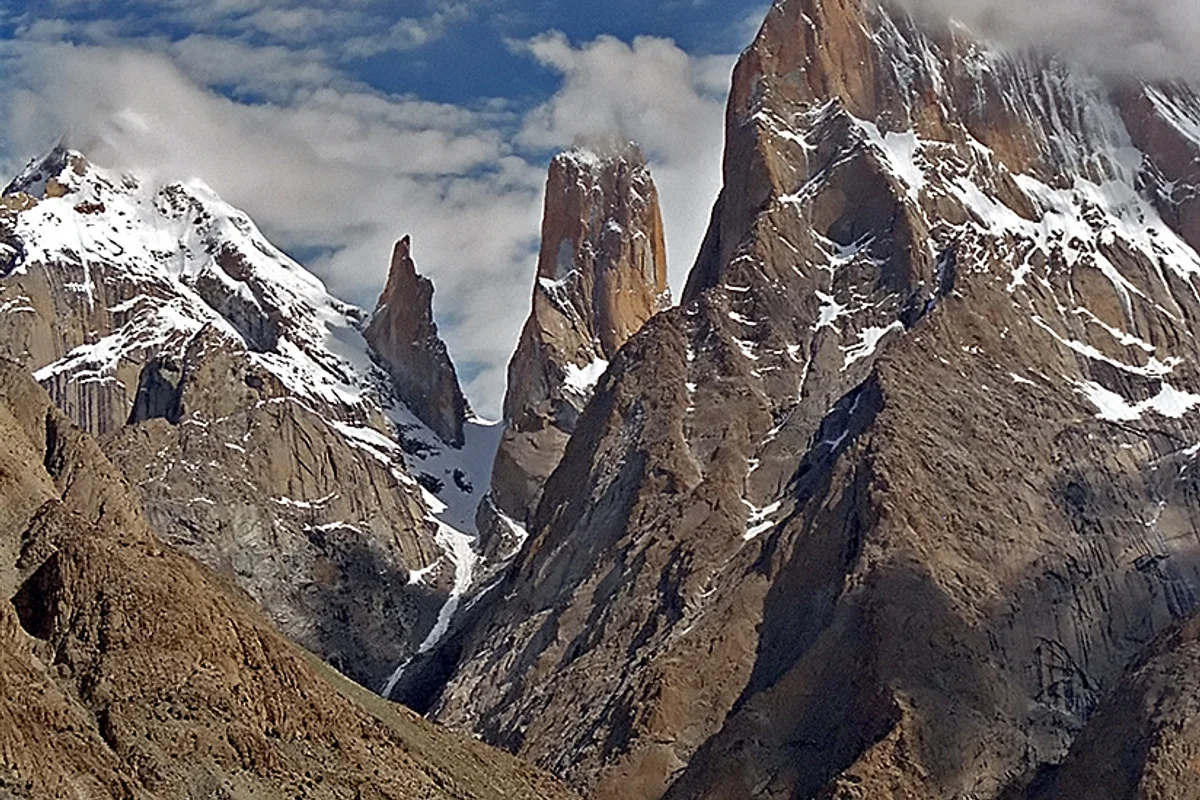

Trango Tower (Nameless Tower)
Trango Tower, universally renowned as Nameless Tower, is a stupendous 6,286-metre granite monolith rising vertically from the Baltoro Glacier basin in Gilgit-Baltistan, Pakistan. With sheer vertical rock walls exceeding 1,000 metres of vertical relief at extreme altitude, it represents the gold standard of worldwide big-wall alpine rock climbing.
Ascent Route & Topography (1)
View All Routes →Eternal Flame (Nameless Tower)
Eternal Flame on Trango Tower (Nameless Tower, 6,286m) is hailed as the crowning jewel of high-altitude rock climbing. Ascending the sheer South Face over 24 pitches of immaculate, golden Karakoram...
Documented Expeditions (1)
View All Expeditions →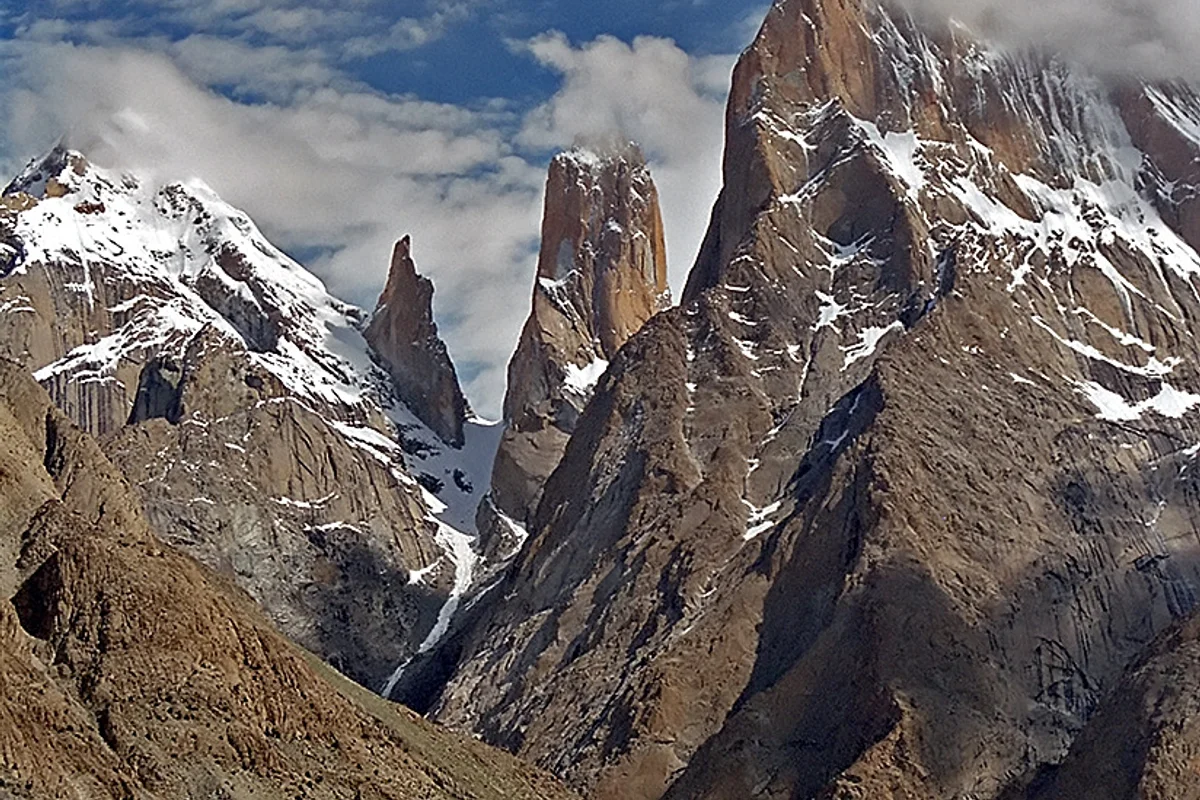
1989 Trango Tower Eternal Flame Expedition
In September 1989, German climbing visionaries Kurt Albert, Wolfgang Güllich, Christof Stiegler, and Milan Sykora established Eternal Flame on Trango Tower, ushering in the modern era of extreme big-wall free climbing at 6,000 metres.
Documented Sources & Archival Citations
- Primary Alpine JournalEternal Flame — Trango Tower 1989 ↗— by Kurt Albert & Wolfgang Güllich(American Alpine Club)
Supporting claim: First ascent details, 24 pitches, and redpoint progression.
Share Exploration
Global Mountain Intelligence
✓ Link copied to clipboard!