The Tigers of Shimshal: How Rajab Shah and Mehrban Shah Conquered K2 and All Five Pakistani 8,000ers
On July 20, 1995, Shimshal legends Rajab Shah and Mehrban Shah reached the summit of K2, making history as the first two Pakistanis to climb all five 8,000-meter peaks on home soil.
Mountain Safety & Conditions Disclaimer: High-altitude climbing, glacial travel, and technical ascents entail severe objective risks including avalanches, serac collapses, rapid weather collapse, and altitude illness. Historical route descriptions and summit claims on Mountanity reflect documented archival sources and must not be used as live operational safety assessments. Local regulations, permits, and physical glacial topography change continuously.
Peer Review: Senior Editorial Board & Historical Reviewers • Editorial Standards
Deep in the Karakoram range of northern Gilgit-Baltistan lies Shimshal, a remote Wakhi-speaking village once accessible only by days of traversing crumbling cliff trails high above the roaring river gorge. For centuries, the pastoralists of Shimshal tended yaks on the high-altitude pastures of the Pamir plateau, developing an extraordinary biological resilience to thin air, biting cold, and rugged terrain. Yet for decades in modern mountaineering history, Pakistani climbers were largely employed as nameless high-altitude porters—carrying crushing loads for foreign expeditions while visiting climbers claimed all the glory.
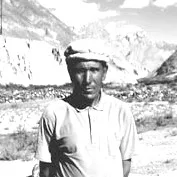
Two men from Shimshal shattered that dynamic forever: Rajab Shah and his cousin and lifelong rope partner, Mehrban Shah.
Between 1989 and 1995, Rajab and Mehrban carved out one of the most remarkable chapters in Asian mountaineering, methodically ascending each of Pakistan’s five eight-thousanders and culminating in an unforgettable triumph on the summit of K2.
The Inseparable Partnership
Rajab Shah, born in 1951, possessed natural tactical intelligence, an infectious laugh, and an unshakeable sense of purpose. Mehrban Shah, born in 1956, was his quiet, powerhouse counterweight—physically indefatigable, calm under pressure, and totally reliable on treacherous terrain. Whenever an international expedition ventured onto the Baltoro or Diamir glaciers and needed men who could fix ropes over blue ice at 7,500 meters, Rajab and Mehrban were the first names summoned.
Their historic march began in the summer of 1989, when both men reached the summit of Nanga Parbat (8,126m) via the steep Kinshofer Route. In July 1990, they climbed Gasherbrum I (8,068m). In August 1992, they achieved an extraordinary double: summiting Gasherbrum II (8,035m) and then repeating Gasherbrum I in rapid succession alongside Nazir Sabir. On July 7, 1993, the pair stood atop Broad Peak (8,051m).
Four of Pakistan’s five 8,000-meter giants had fallen to the Shimshalis. Only the monarch of mountains remained: the Savage Mountain, K2 (8,611m).
The Siege of K2: Summer 1995
In June 1995, a joint Dutch-Pakistani expedition led by veteran Dutch alpinist Ronald Naar arrived at K2 Base Camp at the foot of the Godwin-Austen Glacier. Rajab Shah and Mehrban Shah were hired not merely as support staff, but as front-line summit climbers whose technical competence and acclimatization would lead the charge up the Abruzzi Spur.
The Abruzzi Spur is a relentless, unrelenting staircase of rock, ice, and altitude. Through late June and early July, Rajab and Mehrban took the lead in fixing lines up House’s Chimney—a vertical 100-foot rock fracture at 6,600 meters—and hauling heavy camps up the shattered granite towers of the Black Pyramid.
By mid-July, a rare spell of calm weather opened over the Karakoram. On July 19, the summit team moved up to Camp IV on the Shoulder at 7,900 meters, resting in their tents beneath the ominous shadow of the Great Serac—the towering hanging glacier that guards K2’s upper slopes.
The Bottleneck and the Summit
Before dawn on July 20, 1995, Rajab Shah and Mehrban Shah stepped into the sub-zero darkness of the Death Zone. Above them loomed the Bottleneck: an 80-degree gully of hard blue water-ice directly threatened by thousands of tons of overhanging glacial seracs.
Moving with swift, rhythmic crampon placements, the two Shimshali climbers traversed beneath the hanging wall of ice and broke trail across the exposed summit snowfield. At approximately 1:30 PM on July 20, 1995, Rajab Shah and Mehrban Shah stepped onto the 8,611-meter summit of K2 alongside Dutch climber Hans van der Meulen.
Under a spotless azure sky, looking across hundreds of miles of jagged Karakoram peaks spanning China and Pakistan, Rajab Shah dropped to his knees in prayer. With this ascent, Rajab Shah became the very first Pakistani mountaineer in history to conquer all five of Pakistan’s 8,000-meter peaks. Mere paces behind him, Mehrban Shah became the second.
Legacy and the Birth of a Climbing Dynasty
The triumph on K2 transformed Rajab and Mehrban from local legends into national icons. Rajab Shah was awarded the President’s Pride of Performance in 1993, followed by national decorations for Mehrban.
Yet their greatest legacy was what they built at home. Recognizing that young mountain youth needed technical education and modern safety knowledge, Rajab Shah founded the Shimshal Mountaineering School in 2009. Crucially, Rajab insisted that young women receive the exact same climbing training as young men. Among his first students was his teenage niece, Samina Baig. Under Rajab’s patient tutelage on the local 6,000-meter peaks of Shimshal, Samina learned the craft that would later make her the first Pakistani woman to summit Mount Everest and scale the Seven Summits.
Tragedy struck in 2002 when Mehrban Shah was killed by a massive avalanche while guiding on Gasherbrum II, dying on the very slopes he had mastered. Rajab Shah continued mentoring mountain youth until his death from cancer in 2015.
Today, Shimshal is universally celebrated as Pakistan’s capital of high-altitude mountaineering, producing dozens of world-class climbers. Whenever a Pakistani alpinist steps onto an 8,000-meter summit, they stand on the shoulders of the two giants from Shimshal—Rajab Shah and Mehrban Shah.
Key Statistics & Topographic Figures
- Category
- Pakistani Mountaineering Pioneers
Archival Subject
- Reading Time
- 12 min read
Narrative Length
- Key Mountain
- k2
Objective
- Ascent Route
- abruzzi-spur
Topography
- Verification
- Editorially Verified
Archival Standard
Archival Primary Source Quotations
“In the mountains, truth is etched in ice and granite; every step requires unwavering respect for the heights.”
Defined Alpine Terminology & Concepts
- Summit Push
- The final continuous climbing effort from the highest established camp to the mountain apex and back.
- Death Zone Chronicle
- A verified, research-backed historical narrative documenting the human, technical, and environmental realities of an alpine expedition.
Frequently Asked Questions: The Tigers of Shimshal: How Rajab Shah and Mehrban Shah Conquered K2 and All Five Pakistani 8,000ers
What is the core chronicle and subject of "The Tigers of Shimshal: How Rajab Shah and Mehrban Shah Conquered K2 and All Five Pakistani 8,000ers"?
On July 20, 1995, Shimshal legends Rajab Shah and Mehrban Shah reached the summit of K2, making history as the first two Pakistanis to climb all five 8,000-meter peaks on home soil.
Which mountain peaks and routes are featured in "The Tigers of Shimshal: How Rajab Shah and Mehrban Shah Conquered K2 and All Five Pakistani 8,000ers"?
This narrative documents climbs on k2 along the abruzzi-spur in Pakistan.
Which documented expedition is chronicled in this story?
This historical chronicle captures the events of the 1995-pakistan-k2-rajab-mehrban, verified through contemporary journals and archival records.
Who authored and researched this archival chronicle?
Authored and researched by Mountainity Historical Research Desk, drawing on primary eyewitness testimonies, alpine club registries, and verified summit logs.
What makes this high-altitude chronicle historically significant?
Categorized under "Pakistani Mountaineering Pioneers", this chronicle preserves critical lessons in alpine leadership, survival, tactical speed, and human endurance in the death zone.
Related Mountains


K2
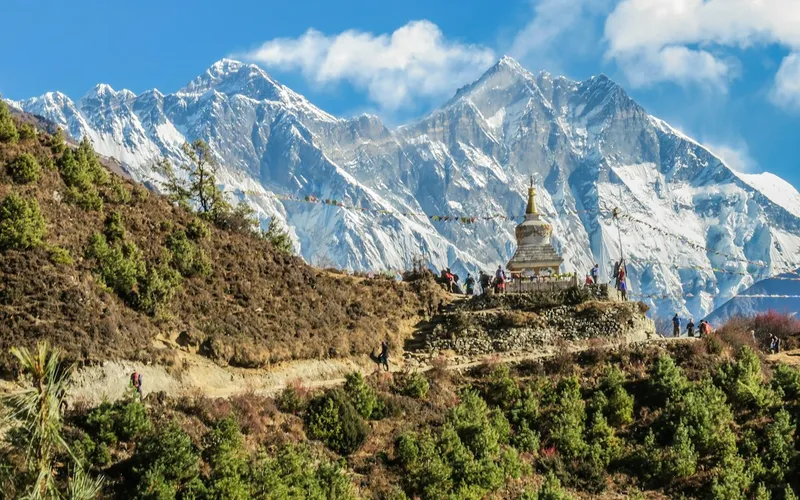
K2, at 8,611 meters (28,251 ft), is the second-highest mountain on Earth and widely regarded as the most technically demanding and lethal 8,000-meter peak. Located in the heart of the Karakoram on the border between Pakistan and China, K2 is characterized by sheer relief, severe weather anomalies, and persistent objective hazards including the notorious Bottleneck couloir.
Documented Sources & Archival Citations
- American Alpine Journal: K2 Ascents 1995(American Alpine Club)
Supporting claim: Official verification of the July 20, 1995 K2 summit by Rajab Shah and Mehrban Shah
Accessed/Documented: 1996 - Pakistan Alpine Journal: The Five Peaks Triumph(Alpine Club of Pakistan)
Supporting claim: National record confirming Rajab Shah and Mehrban Shah as the first two Pakistanis on all five 8,000ers
Accessed/Documented: 1996