The Third Eye: Tomaž Humar's Audacious Solo of Dhaulagiri South Face
In October 1999, Slovenian visionary Tomaž Humar spent nine solitary days ascending the lethal 4,000-meter South Face of Dhaulagiri without oxygen or ropes, creating the climb of the decade.
Mountain Safety & Conditions Disclaimer: High-altitude climbing, glacial travel, and technical ascents entail severe objective risks including avalanches, serac collapses, rapid weather collapse, and altitude illness. Historical route descriptions and summit claims on Mountanity reflect documented archival sources and must not be used as live operational safety assessments. Local regulations, permits, and physical glacial topography change continuously.
Peer Review: Senior Editorial Board & Historical Reviewers • Editorial Standards
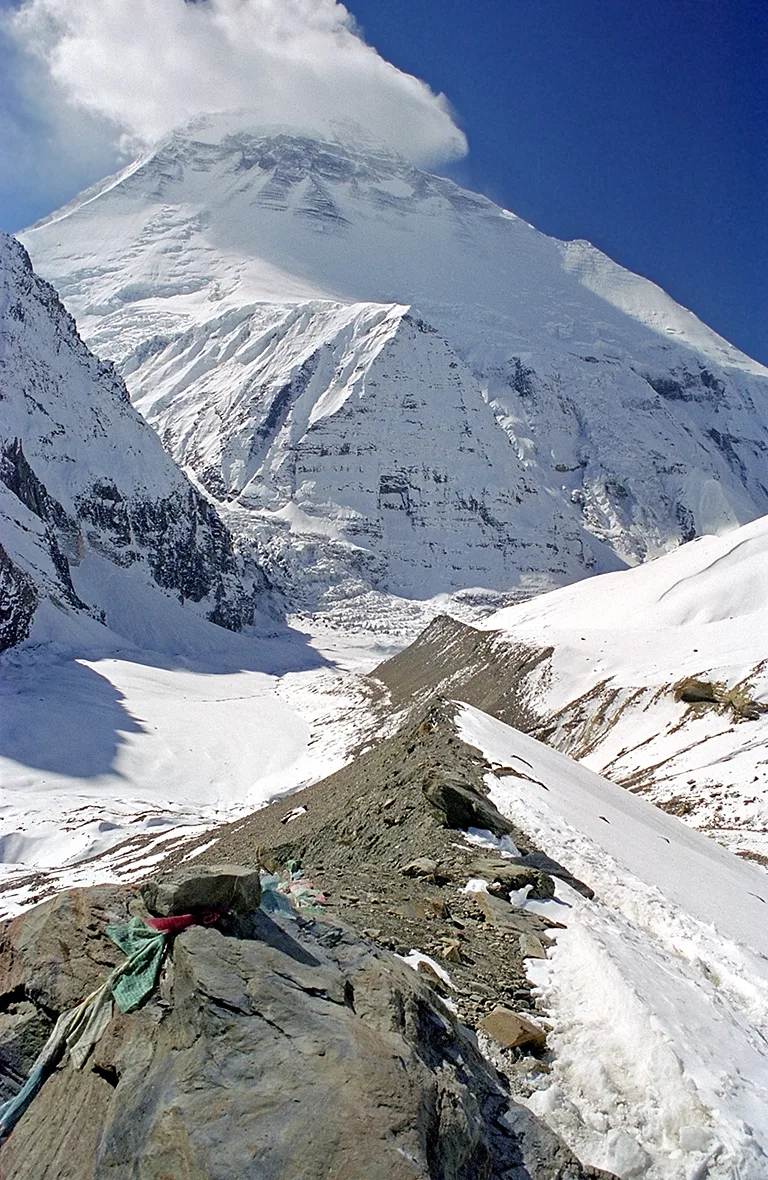
Rising 4,000 vertical meters in a terrifying sweep of splintered limestone, blue ice, and hanging serac barriers, the South Face of Dhaulagiri I (8,167m) is widely regarded as one of the most formidable alpine walls on Earth. First attempted in the late 1970s and 1980s by powerhouse international teams using heavy siege tactics, fixed lines, and dozens of high-altitude climbers, the wall had gained a deadly reputation for claiming lives in sweeping avalanches. To attempt it solo in pure alpine style seemed to defy human sanity.
Yet in October 1999, 30-year-old Slovenian alpinist Tomaž Humar arrived alone at the bottom of the wall with a radical vision. Having lost his close friend and mentor Janez Jeglič on Nuptse two years earlier, Humar possessed an almost spiritual intensity regarding high mountains. He refused fixed ropes, dismissed high-altitude porter support, and carried no supplemental bottled oxygen. On his back was a single lightweight rucksack containing minimal dried rations, a lightweight single-skin tent, two ice axes, and a few titanium screws.
The Crucible of the Lower Wall
On October 24, 1999, Humar stepped over the bergschrund onto the lower apron of the face. Temperatures plummeted immediately to -25°C. Moving with swift, rhythmic swings of his tools, Humar negotiated vertical ice flutings under constant bombardment from falling ice and spindrift. Within the first two days, he realized the central gully—the natural drain of the entire face—was a slaughterhouse of spontaneous avalanches.
Instead of retreating, Humar executed a daring rightward traverse across delicate 80-degree mixed slabs, balancing on crampon front-points above several thousand meters of clean exposure. Each evening, as darkness engulfed the Kali Gandaki valley far below, Humar had to carve out tiny notches in steep blue ice just wide enough to sit inside his sleeping bag, anchored only by ice screws.
The Battle with Spindrift and Delirium
By October 29, climbing above 7,000 meters, Humar was battling severe exhaustion and the debilitating effects of extreme altitude. A sudden Himalayan storm system enveloped Dhaulagiri, unleashing blinding snow squalls and hurricane-force winds. Spindrift avalanches poured directly over his tiny bivouac ledge, threatening to smother him inside his frozen nylon shelter.
Using a lightweight satellite phone, Humar established brief morning contact with his base camp team, led by medical officer Stipe Božić. His voice sounded calm but otherworldly: “I am not alone here. The mountain is talking, and I must listen carefully to every creak.” In Slovenia, millions of citizens followed his daily progress online in real time, mesmerized by one of the earliest live internet broadcasts of an extreme Himalayan ascent.
Reaching the Ridge and the Summit
On November 1, running dangerously low on food and fuel, Humar breached the upper rock band at 7,800 meters. The technical difficulties were ferocious—loose, shattered rock covered in unconsolidated powder that offered zero security for his ice axes. Summoning every ounce of mental resilience, he pulled onto the Southeast Ridge at 8,000 meters, leaving the terrifying vertical void behind him.
On November 2, 1999, after nine days of solitary combat on the wall, Tomaž Humar stood atop the 8,167-meter summit of Dhaulagiri I. Weeping with emotion and overwhelmed by relief, he radioed Base Camp: “I am on top. It is over.” Reinhold Messner, the father of modern alpine style, hailed the climb as “the greatest Himalayan achievement of the decade,” solidifying Humar’s place among the boldest high-altitude soloists in mountaineering history.
Key Statistics & Topographic Figures
- Category
- Extreme Himalayan Solos
Archival Subject
- Reading Time
- 15 min read
Narrative Length
- Key Mountain
- dhaulagiri
Objective
- Ascent Route
- dhaulagiri-northeast-ridge
Topography
- Verification
- Editorially Verified
Archival Standard
Archival Primary Source Quotations
“In the mountains, truth is etched in ice and granite; every step requires unwavering respect for the heights.”
Defined Alpine Terminology & Concepts
- Summit Push
- The final continuous climbing effort from the highest established camp to the mountain apex and back.
- Death Zone Chronicle
- A verified, research-backed historical narrative documenting the human, technical, and environmental realities of an alpine expedition.
Frequently Asked Questions: The Third Eye: Tomaž Humar's Audacious Solo of Dhaulagiri South Face
What is the core chronicle and subject of "The Third Eye: Tomaž Humar's Audacious Solo of Dhaulagiri South Face"?
In October 1999, Slovenian visionary Tomaž Humar spent nine solitary days ascending the lethal 4,000-meter South Face of Dhaulagiri without oxygen or ropes, creating the climb of the decade.
Which mountain peaks and routes are featured in "The Third Eye: Tomaž Humar's Audacious Solo of Dhaulagiri South Face"?
This narrative documents climbs on dhaulagiri along the dhaulagiri-northeast-ridge in Nepal.
Which documented expedition is chronicled in this story?
This historical chronicle captures the events of the 1999-tomaz-humar-dhaulagiri-solo, verified through contemporary journals and archival records.
Who authored and researched this archival chronicle?
Authored and researched by Mountainity Historical Research Desk, drawing on primary eyewitness testimonies, alpine club registries, and verified summit logs.
What makes this high-altitude chronicle historically significant?
Categorized under "Extreme Himalayan Solos", this chronicle preserves critical lessons in alpine leadership, survival, tactical speed, and human endurance in the death zone.
Related Mountains

Dhaulagiri I
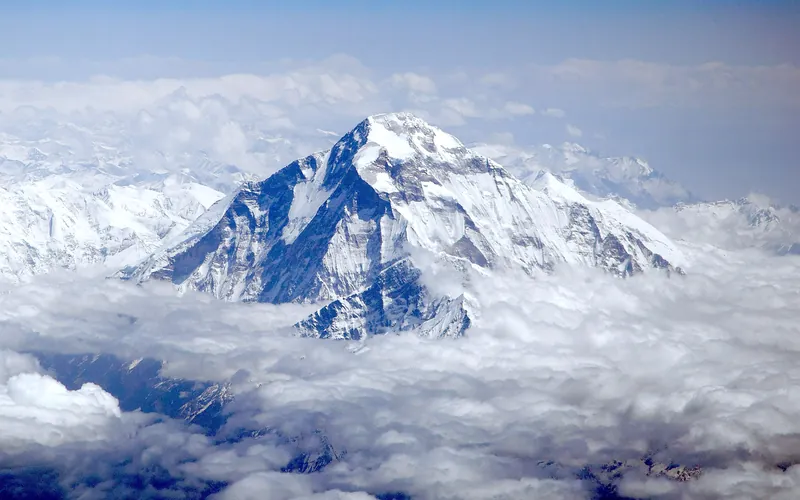
Dhaulagiri I, at 8,167 meters (26,795 ft), is the seventh-highest mountain on Earth and the highest peak situated entirely within Nepal. Rising steeply above the Kali Gandaki Gorge—the deepest gorge on Earth—opposite Annapurna, Dhaulagiri forms a staggering 7,000-meter vertical rise from the river valley.
Documented Sources & Archival Citations
- American Alpine Journal: Dhaulagiri South Face Solo by Tomaž Humar(American Alpine Club)
Supporting claim: Official expedition documentation and technical analysis of the 4,000-meter solo route
Accessed/Documented: 2000 - Dhaulagiri: Ni nemogočih poti (No Impossible Paths)(Tomaž Humar / Didakta Publishing)
Supporting claim: Personal journal entries, radio logs, and photographic records from the autumn 1999 solo climb
Accessed/Documented: 2001