The Inside Line: Mick Fowler & Paul Ramsden on Mount Siguniang
In April 2002, British alpinists Mick Fowler and Paul Ramsden scaled the sheer 1,500m Northwest Face of Mount Siguniang in pure alpine style, winning the Piolet d'Or.
Mountain Safety & Conditions Disclaimer: High-altitude climbing, glacial travel, and technical ascents entail severe objective risks including avalanches, serac collapses, rapid weather collapse, and altitude illness. Historical route descriptions and summit claims on Mountanity reflect documented archival sources and must not be used as live operational safety assessments. Local regulations, permits, and physical glacial topography change continuously.
Peer Review: Senior Editorial Board & Historical Reviewers • Editorial Standards
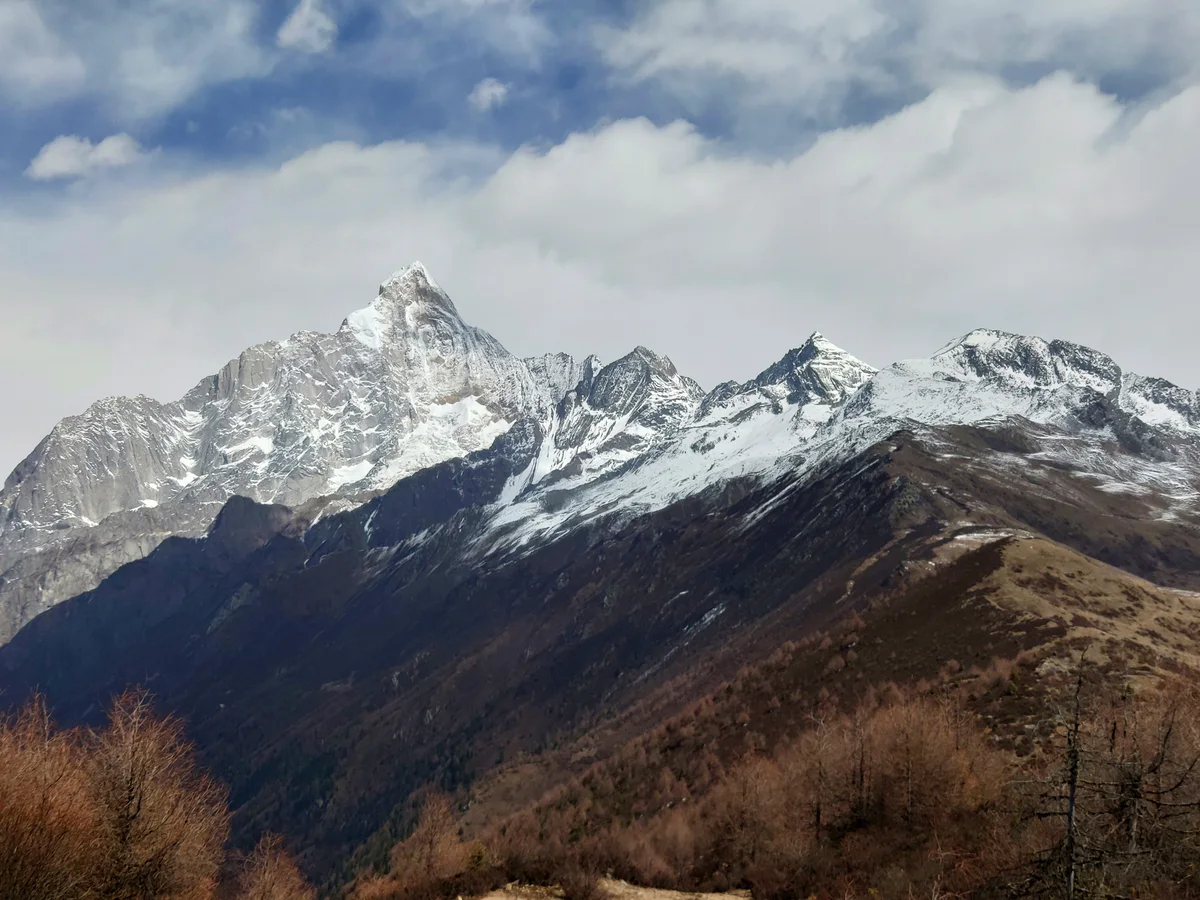
Deep in the Qionglai Mountains of Sichuan, China, Mount Siguniang (6,250m)—known as the ‘Four Sisters Mountain’—rises in a sensational fortress of granite needles and towering rock faces. While its lower summits had seen occasional ascents, the colossal Northwest Face of the highest summit remained one of Asia’s most feared mountaineering enigmas: a sheer 1,500-metre wall of smooth, compact granite cut by thin, discontinuous runnels of alpine ice.
In April 2002, British amateur alpinists Mick Fowler and Paul Ramsden arrived in the Changping Valley. Known for balancing full-time professional careers with daring expeditions to remote alpine big walls, the pair committed to a pure alpine-style approach: no pre-placed fixed ropes, no bolts, no supplementary oxygen, and no support teams on the face.
Entering The Inside Line
On April 20, 2002, Fowler and Ramsden crossed the bergschrund and stepped directly into the icy maw of the face. Their objective was a hidden system of ice runnels that threaded between smooth granite slabs, a line they christened ‘The Inside Line’.
The technical climbing was ferocious from the first day. Pitch after pitch demanded sustained water-ice climbing up to grade WI6, with ice axes scratching into veneer-thin verglas that barely supported their crampon front-points. Mixed sections reached Scottish VI and M6, where the climbers were forced to torque picks into blind granite cracks while hanging above thousands of feet of sheer void.
Seven Days in the Spindrift
Because the Northwest Face is largely vertical or overhanging, suitable bivouac ledges were virtually non-existent. For six consecutive nights, Fowler and Ramsden slept on narrow snow hummocks chopped out of sixty-degree ice slopes or hung from gear anchors, battered by constant spindrift avalanches that cascaded down the wall.
On April 26, 2002, low on rations and enduring severe cold, the pair surmounted the final precarious snow cornice and emerged onto the 6,250-metre summit of Mount Siguniang. Exhausted but triumphant, they navigated a complex and treacherous descent down the Southeast Ridge and Southwest Gully, returning to base camp on April 28 after an eight-day ordeal.
The ascent was hailed internationally as an uncompromising masterpiece of modern alpine style, earning Fowler and Ramsden the prestigious 2002 Piolet d’Or and setting a benchmark for exploratory climbing in the mountains of Western China.
Key Statistics & Topographic Figures
- Category
- Technical Big Wall Epics
Archival Subject
- Reading Time
- 14 min read
Narrative Length
- Key Mountain
- siguniang
Objective
- Ascent Route
- siguniang-northwest-face
Topography
- Verification
- Editorially Verified
Archival Standard
Archival Primary Source Quotations
“In the mountains, truth is etched in ice and granite; every step requires unwavering respect for the heights.”
Defined Alpine Terminology & Concepts
- Summit Push
- The final continuous climbing effort from the highest established camp to the mountain apex and back.
- Death Zone Chronicle
- A verified, research-backed historical narrative documenting the human, technical, and environmental realities of an alpine expedition.
Frequently Asked Questions: The Inside Line: Mick Fowler & Paul Ramsden on Mount Siguniang
What is the core chronicle and subject of "The Inside Line: Mick Fowler & Paul Ramsden on Mount Siguniang"?
In April 2002, British alpinists Mick Fowler and Paul Ramsden scaled the sheer 1,500m Northwest Face of Mount Siguniang in pure alpine style, winning the Piolet d'Or.
Which mountain peaks and routes are featured in "The Inside Line: Mick Fowler & Paul Ramsden on Mount Siguniang"?
This narrative documents climbs on siguniang along the siguniang-northwest-face in China.
Which documented expedition is chronicled in this story?
This historical chronicle captures the events of the 2002-fowler-ramsden-siguniang-northwest-face, verified through contemporary journals and archival records.
Who authored and researched this archival chronicle?
Authored and researched by Mountainity Historical Research Desk, drawing on primary eyewitness testimonies, alpine club registries, and verified summit logs.
What makes this high-altitude chronicle historically significant?
Categorized under "Technical Big Wall Epics", this chronicle preserves critical lessons in alpine leadership, survival, tactical speed, and human endurance in the death zone.
Related Mountains

Mount Siguniang
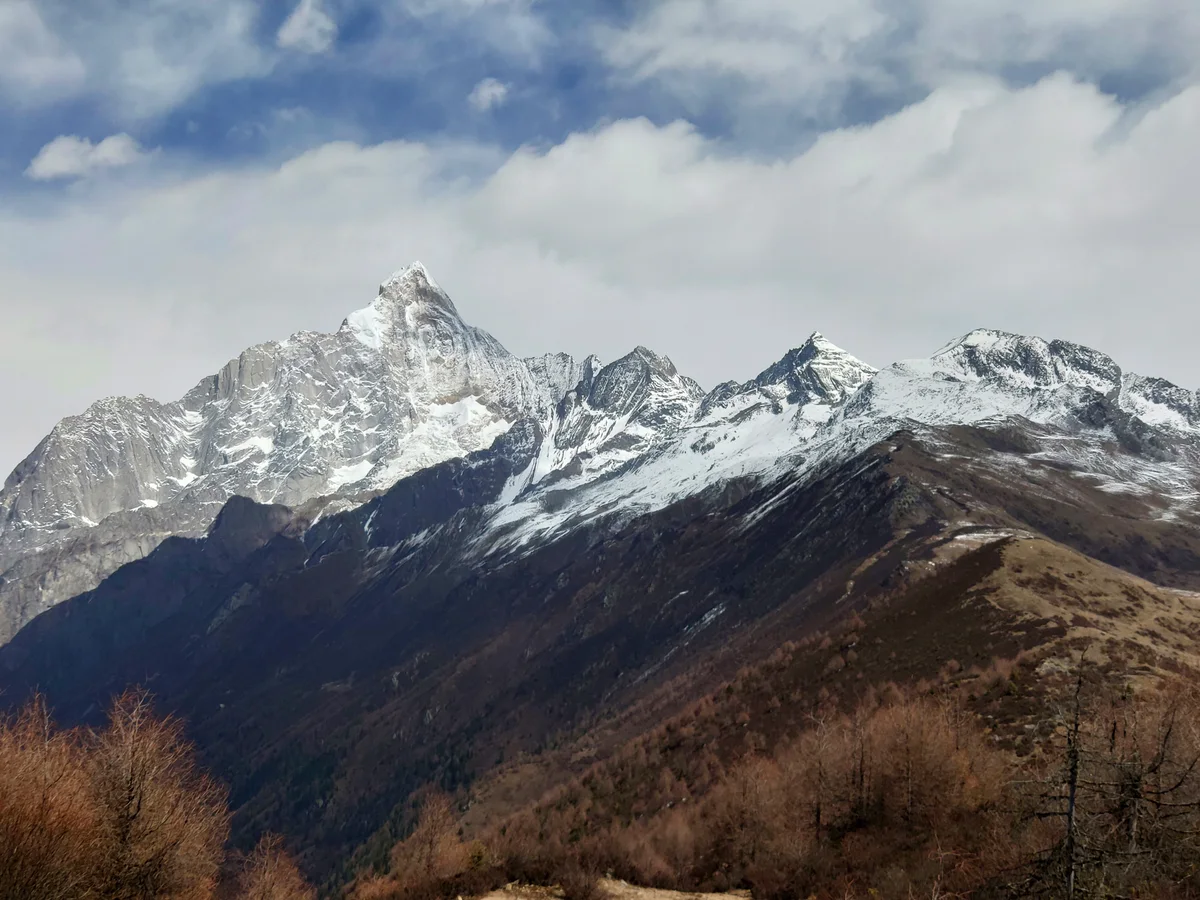
Mount Siguniang, specifically its highest fourth summit known as Yaomei Feng at 6,250 meters (20,505 ft), is a dramatic technical granite spire in the Qionglai Mountains of Sichuan, China. Revered by local Tibetan communities as a sacred goddess and often hailed as the Matterhorn of the East, its soaring granite buttresses and steep ice runnels present world-class alpine climbing challenges. In April 2002, British climbers Mick Fowler and Paul Ramsden completed the historic first ascent of the 1,500-meter Northwest Face in pure alpine style, earning the inaugural Piolet d'Or award.
Documented Sources & Archival Citations
- American Alpine Journal: Siguniang, Northwest Face, The Inside Line(Mick Fowler / American Alpine Club)
Supporting claim: Detailed route topo and narrative of the 2002 Piolet d'Or winning alpine-style ascent
Accessed/Documented: 2003 - On Xuefeng: British Mountaineering in Sichuan(Paul Ramsden / Alpine Journal)
Supporting claim: Paul Ramsden's technical breakdown of the seven-day climb up the Northwest Face
Accessed/Documented: 2003