The Sixty-Three Day Double: Karl Unterkircher's Oxygenless Odyssey on Everest and K2
In 2004, South Tyrolean alpinist Karl Unterkircher stunned the mountaineering world by summiting Mount Everest and K2 without supplemental oxygen in just 63 days.
Mountain Safety & Conditions Disclaimer: High-altitude climbing, glacial travel, and technical ascents entail severe objective risks including avalanches, serac collapses, rapid weather collapse, and altitude illness. Historical route descriptions and summit claims on Mountanity reflect documented archival sources and must not be used as live operational safety assessments. Local regulations, permits, and physical glacial topography change continuously.
Peer Review: Senior Editorial Board & Historical Reviewers • Editorial Standards
In the Val Gardena, deep in the Ladin-speaking heart of the Italian Dolomites, climbing is not viewed merely as a sport; it is an inheritance of soul and landscape. Karl Unterkircher grew up beneath the sheer vertical walls of the Sella Towers and the Langkofel. A master carpenter and certified mountain guide, Unterkircher was renowned for a quiet, luminous humility that masked one of the greatest high-altitude cardiovascular engines ever measured by sports scientists.
In early 2004, Unterkircher was invited to join the prestigious Italian ‘K2 2004: 50 Years Later’ project, celebrating the golden jubilee of the 1954 Italian first ascent. Led by veteran expedition organizer Agostino Da Polenza, the ambitious campaign envisioned a daring two-stage assault: first Everest in May, followed immediately by K2 in July. While most team members planned to utilize bottled oxygen, Unterkircher set himself an uncompromising personal challenge: to climb both giants strictly without supplemental oxygen.
The Roof of the World Without Gas
In May 2004, Unterkircher moved up the South Col Route on Mount Everest (8,848m). While foreign commercial clients gasped through pressurized masks, Unterkircher climbed with smooth, rhythmic efficiency. His lungs processed the oxygen-depleted air with astonishing natural tolerance.
On May 24, 2004, Unterkircher stepped onto the windswept summit of Mount Everest without supplemental bottled oxygen. Standing at the highest point on the planet, he looked down at the curvature of the Earth in quiet wonder. But there was no time to celebrate. The expedition had to pack down Base Camp, fly to Kathmandu, transfer to Islamabad, and embark on the long, grueling trek up the Baltoro Glacier toward the Karakoram.
Confronting the Savage Mountain
By late June, Unterkircher was at the foot of K2 (8,611m), staring up at the sheer pyramid of the Abruzzi Spur. Where Everest is an endurance trek in thin air, K2 is a relentless technical big-wall battle against vertical rock, falling ice, and catastrophic storms. The physical fatigue of an 8,000-meter summit normally takes months to recover from, yet Unterkircher was immediately back at work ferrying loads through House’s Chimney and fixing lines up the Black Pyramid.
In late July, a rare weather window opened over the Karakoram. Pushing upward through Camp III and across the Shoulder, Unterkircher joined teammates for the final summit assault. Once again, he left the oxygen mask behind. Pushing through the deep, shadowy couloir of the Bottleneck beneath the leaning serac, he emerged onto the summit snowfields under blazing Karakoram sunshine.
An Unprecedented Milestone
On July 26, 2004, Karl Unterkircher stepped onto the summit of K2. Exactly sixty-three days had elapsed since he stood on the summit of Mount Everest. He had become the first person in human history to climb the two highest mountains on Earth without supplemental bottled oxygen in a single climbing season.
Upon his return to Italy, Unterkircher was decorated by the Italian President as a Cavaliere of the Republic. Yet Unterkircher remained the same gentle, unassuming mountain guide from Val Gardena, proving that the greatest triumphs in alpinism are born not from commercial spectacle, but from pure, quiet dedication to fair means and the high summits.
Key Statistics & Topographic Figures
- Category
- Speed & Alpine Style
Archival Subject
- Reading Time
- 13 min read
Narrative Length
- Key Mountain
- mount-everest, k2
Objective
- Ascent Route
- south-col-route, abruzzi-spur
Topography
- Verification
- Editorially Verified
Archival Standard
Archival Primary Source Quotations
“In the mountains, truth is etched in ice and granite; every step requires unwavering respect for the heights.”
Defined Alpine Terminology & Concepts
- Summit Push
- The final continuous climbing effort from the highest established camp to the mountain apex and back.
- Death Zone Chronicle
- A verified, research-backed historical narrative documenting the human, technical, and environmental realities of an alpine expedition.
Frequently Asked Questions: The Sixty-Three Day Double: Karl Unterkircher's Oxygenless Odyssey on Everest and K2
What is the core chronicle and subject of "The Sixty-Three Day Double: Karl Unterkircher's Oxygenless Odyssey on Everest and K2"?
In 2004, South Tyrolean alpinist Karl Unterkircher stunned the mountaineering world by summiting Mount Everest and K2 without supplemental oxygen in just 63 days.
Which mountain peaks and routes are featured in "The Sixty-Three Day Double: Karl Unterkircher's Oxygenless Odyssey on Everest and K2"?
This narrative documents climbs on mount-everest, k2 along the south-col-route, abruzzi-spur in Nepal / Pakistan.
Which documented expedition is chronicled in this story?
This historical chronicle captures the events of the 2004-karl-unterkircher-everest-k2-double, verified through contemporary journals and archival records.
Who authored and researched this archival chronicle?
Authored and researched by Mountainity Historical Research Desk, drawing on primary eyewitness testimonies, alpine club registries, and verified summit logs.
What makes this high-altitude chronicle historically significant?
Categorized under "Speed & Alpine Style", this chronicle preserves critical lessons in alpine leadership, survival, tactical speed, and human endurance in the death zone.
Related Mountains


Mount Everest
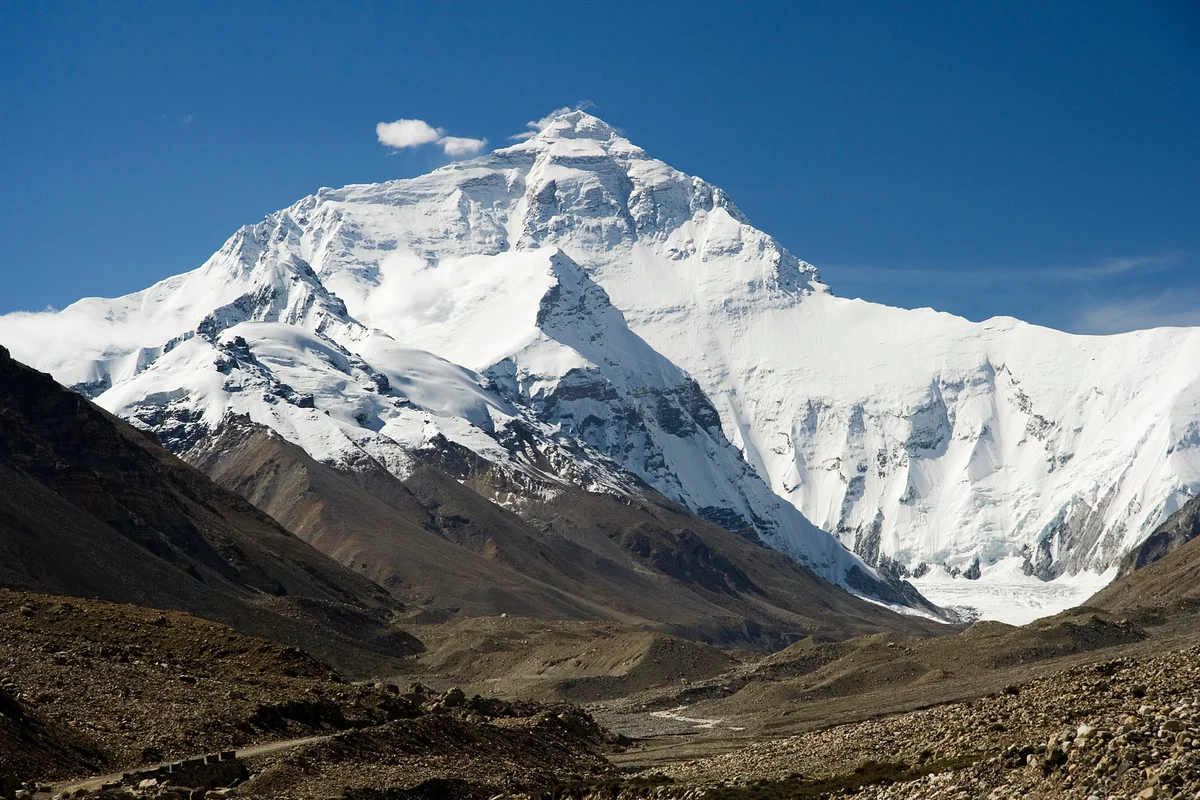
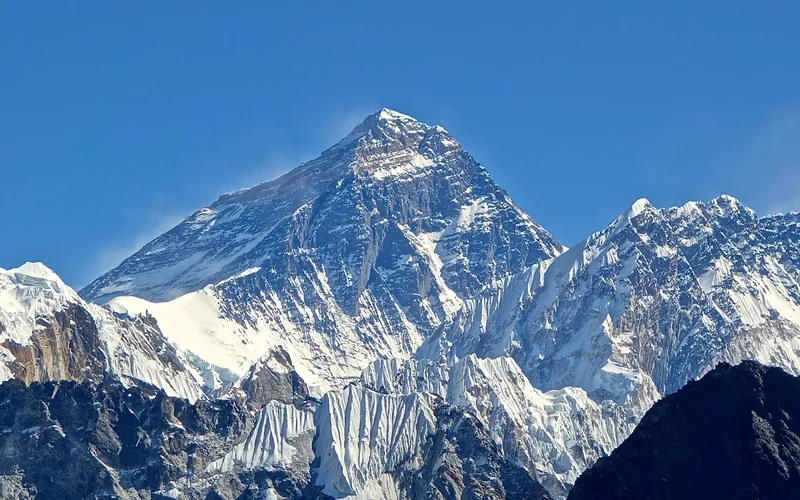
Mount Everest is the highest mountain above sea level on Earth, standing at an official elevation of 8,848.86 meters (29,031.7 ft). Straddling the international frontier between Nepal and China, it is known locally as Sagarmatha in Nepali ('Goddess of the Sky') and Chomolungma in Tibetan ('Mother Goddess of the World'). The peak rises into the extreme upper troposphere, where oxygen levels drop to barely one-third of sea-level pressure. Climbers face hurricane-force jet stream winds, severe frostbite conditions, shifting ice crevasses in the Khumbu Icefall, and the dangerous Death Zone above 8,000 meters.

K2
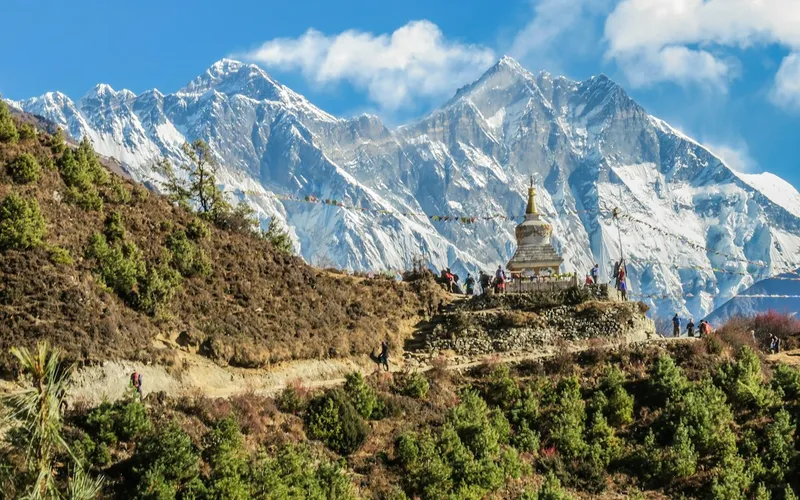
K2, at 8,611 meters (28,251 ft), is the second-highest mountain on Earth and widely regarded as the most technically demanding and lethal 8,000-meter peak. Located in the heart of the Karakoram on the border between Pakistan and China, K2 is characterized by sheer relief, severe weather anomalies, and persistent objective hazards including the notorious Bottleneck couloir.
Documented Sources & Archival Citations
- American Alpine Journal: Everest and K2 Without Oxygen in One Season(American Alpine Club)
Supporting claim: Official verification of Karl Unterkircher's 63-day oxygenless double on Everest and K2 in 2004
Accessed/Documented: 2005 - K2: Una Sfida ai Confini del Cielo(Agostino Da Polenza / Mondadori)
Supporting claim: Official expedition chronicle detailing Unterkircher's physiological monitoring and dual summits
Accessed/Documented: 2004