The Greatest Wall on Earth: Steve House and Vince Anderson on the Rupal Face
In September 2005, American alpinists Steve House and Vince Anderson conquered the 4,100-metre Rupal Face of Nanga Parbat direct in pure alpine style, earning the Piolet d'Or.
Mountain Safety & Conditions Disclaimer: High-altitude climbing, glacial travel, and technical ascents entail severe objective risks including avalanches, serac collapses, rapid weather collapse, and altitude illness. Historical route descriptions and summit claims on Mountanity reflect documented archival sources and must not be used as live operational safety assessments. Local regulations, permits, and physical glacial topography change continuously.
Peer Review: Senior Editorial Board & Historical Reviewers • Editorial Standards
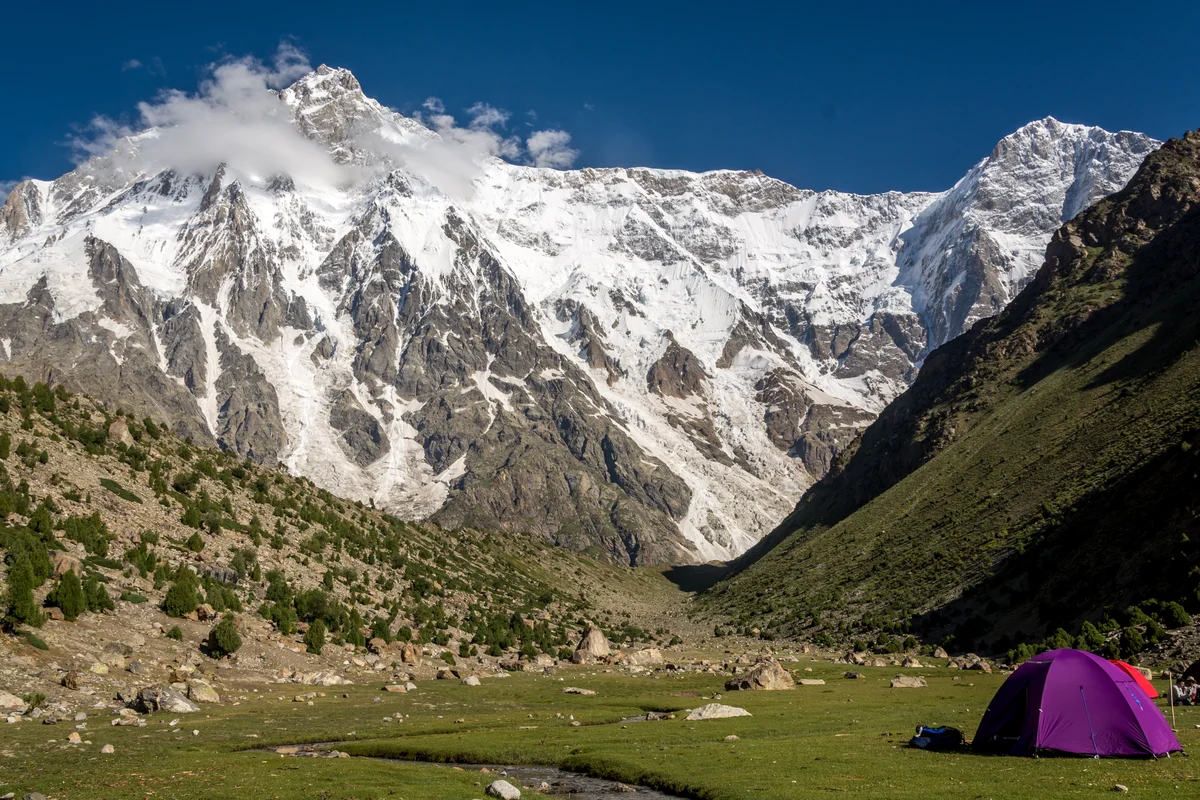
Standing in the green pastures of the Rupal Valley in northern Pakistan, looking upward at the south flank of Nanga Parbat (8,126m) is one of the most overwhelming visual experiences on Earth. The wall does not merely rise; it explodes into the sky. Spanning four thousand one hundred vertical meters of vertical granite headwalls, hanging glaciers, and shattered ice flutings, the Rupal Face is the single biggest mountain precipice in the world.
For thirty-five years, since Reinhold and Günther Messner made their tragic 1970 first ascent of the face via an indirect couloir on the far right, no one had climbed the Central Pillar direct. In late August 2005, American alpinists Steve House and Vince Anderson arrived beneath the wall. They brought no siege equipment: no miles of nylon fixed rope, no high-altitude porters, no established high camps, and no supplemental bottled oxygen. Their philosophy was pure alpine style—two climbers, two tiny packs weighing under twenty pounds each, and an absolute commitment to moving upward until they reached the top or perished trying.
The Committing Leap into the Vertical
On the morning of September 1, 2005, House and Anderson crossed the bergschrund and stepped onto the lower ice runnels. From the very first pitch, retreat was nearly impossible. The wall was so steep and crumbly that rappel anchors were practically nonexistent.
Over the next four days, they engaged in some of the most sustained, difficult mixed climbing ever performed in the high Himalaya. Anderson led pitches of sheer M5 mixed rock covered in brittle verglas; House led vertical pitches of chandelier water ice and delicate snow mushrooms that crumbled under their front-points. Each evening, as dusk cast long purple shadows over the Karakoram, they spent hours using their ice axes to hack tiny shelves out of the forty-five-degree ice slopes, sitting shoulder-to-shoulder inside a minimalist single-wall bivy tent while continuous spindrift avalanches hissed down around them.
Battling Hypoxia on the Central Headwall
By September 5, they had reached 7,400 meters, perched on an exposed rock rib deep inside the Death Zone. Physical exhaustion was overwhelming: their water supplies were severely limited because melting snow at that altitude consumed precious fuel, and their bodies were rapidly deteriorating from five days of non-stop exertion in sub-zero cold.
On the morning of September 6, beneath a crystal-clear sky, they launched their summit bid. Every step was an agony of will. Breathing four to five times for every single upward movement of a boot, they traversed beneath the summit trapezoid. House began hallucinating, seeing visions of friends encouraging him, but his crampons never wavered.
The Summit and the Piolet d’Or
At 5:45 PM on September 6, 2005, Steve House and Vince Anderson broke over the final snowcrest and stood on the 8,126-meter summit of Nanga Parbat. The setting sun bathed the peaks of the Karakoram—K2, Broad Peak, and the Gasherbrums—in fiery crimson light. They had accomplished the impossible: conquering the greatest mountain wall on Earth direct, in pure, uncompromised alpine style.
Their descent over the next two days down the Messner Route was a test of sheer survival, but on September 8, they walked back into Base Camp emaciated, frost-nipped, but triumphant. Awarded the 2005 Piolet d’Or, Steve House and Vince Anderson’s Rupal Face direct ascent remains heralded as the high-water mark of modern alpine-style high-altitude exploration.
Key Statistics & Topographic Figures
- Category
- Alpine Style Masterpieces
Archival Subject
- Reading Time
- 14 min read
Narrative Length
- Key Mountain
- nanga-parbat
Objective
- Ascent Route
- nanga-parbat-rupal-face-direct
Topography
- Verification
- Editorially Verified
Archival Standard
Archival Primary Source Quotations
“In the mountains, truth is etched in ice and granite; every step requires unwavering respect for the heights.”
Defined Alpine Terminology & Concepts
- Summit Push
- The final continuous climbing effort from the highest established camp to the mountain apex and back.
- Death Zone Chronicle
- A verified, research-backed historical narrative documenting the human, technical, and environmental realities of an alpine expedition.
Frequently Asked Questions: The Greatest Wall on Earth: Steve House and Vince Anderson on the Rupal Face
What is the core chronicle and subject of "The Greatest Wall on Earth: Steve House and Vince Anderson on the Rupal Face"?
In September 2005, American alpinists Steve House and Vince Anderson conquered the 4,100-metre Rupal Face of Nanga Parbat direct in pure alpine style, earning the Piolet d'Or.
Which mountain peaks and routes are featured in "The Greatest Wall on Earth: Steve House and Vince Anderson on the Rupal Face"?
This narrative documents climbs on nanga-parbat along the nanga-parbat-rupal-face-direct in Pakistan.
Which documented expedition is chronicled in this story?
This historical chronicle captures the events of the 2005-steve-house-vince-anderson-nanga-parbat-rupal-face, verified through contemporary journals and archival records.
Who authored and researched this archival chronicle?
Authored and researched by Mountainity Historical Research Desk, drawing on primary eyewitness testimonies, alpine club registries, and verified summit logs.
What makes this high-altitude chronicle historically significant?
Categorized under "Alpine Style Masterpieces", this chronicle preserves critical lessons in alpine leadership, survival, tactical speed, and human endurance in the death zone.
Related Mountains

Nanga Parbat
Nanga Parbat, at 8,126 meters (26,660 ft), is the ninth-highest mountain on Earth and the western anchor of the Himalayas in Pakistan. It boasts the Rupal Face, the highest vertical precipice in the world at 4,600 meters from valley floor to summit. Known for profound climbing history, highlighted by Hermann Buhl's legendary solo summit without supplemental oxygen in 1953.
Documented Sources & Archival Citations
- American Alpine Journal: Nanga Parbat, Rupal Face Direct in Alpine Style(American Alpine Club)
Supporting claim: Official climb report and technical analysis of the September 2005 Rupal Face direct first ascent
Accessed/Documented: 2006 - Beyond the Mountain(Steve House / Mountaineers Books)
Supporting claim: Detailed autobiographical account of the Rupal Face ascent and alpine philosophy
Accessed/Documented: 2009