The Iron Winter: Simone Moro and Denis Urubko Conquer Makalu
On February 9, 2009, Simone Moro and Denis Urubko completed the historic first winter ascent of Makalu at -40°C in pure alpine style without supplemental oxygen.
Mountain Safety & Conditions Disclaimer: High-altitude climbing, glacial travel, and technical ascents entail severe objective risks including avalanches, serac collapses, rapid weather collapse, and altitude illness. Historical route descriptions and summit claims on Mountanity reflect documented archival sources and must not be used as live operational safety assessments. Local regulations, permits, and physical glacial topography change continuously.
Peer Review: Senior Editorial Board & Historical Reviewers • Editorial Standards
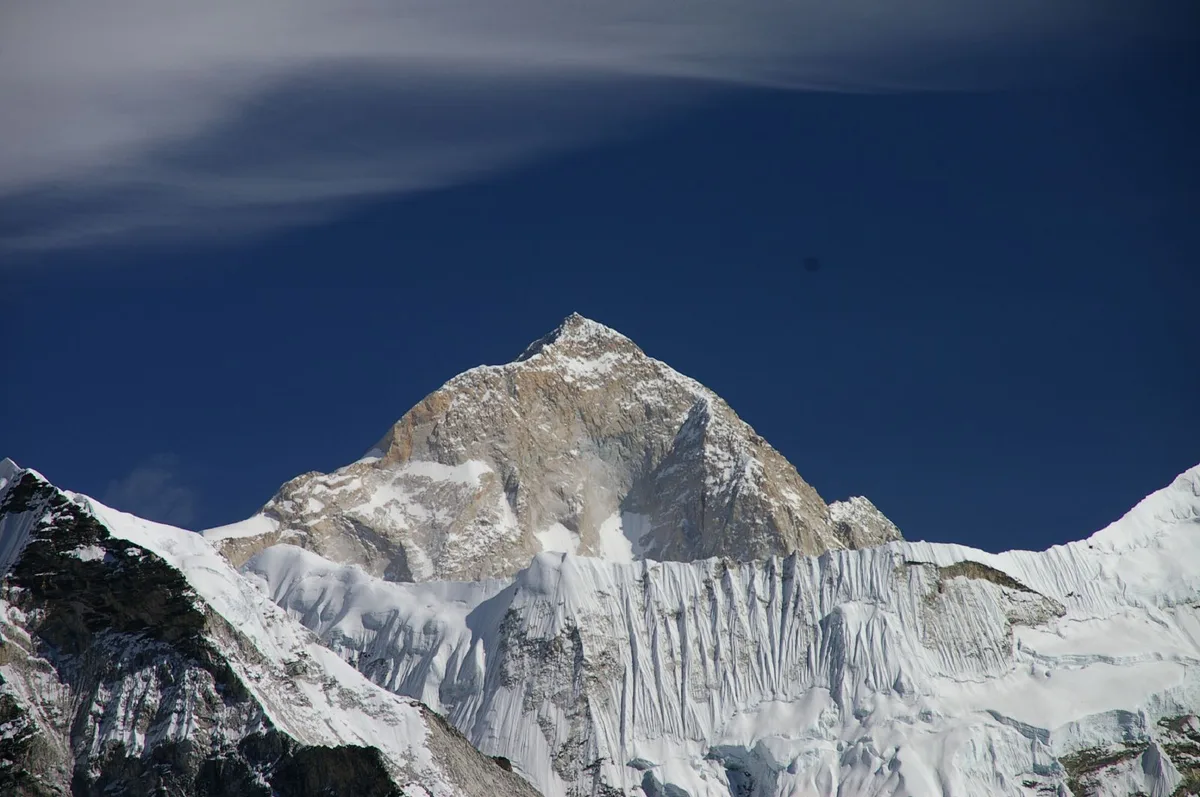
Among the world’s fourteen 8,000-meter giants, Makalu (8,485m)—the black granite pyramid rising along the border of Nepal and Tibet—stood as one of the most stubborn fortresses in winter. Over nearly thirty years, sixteen separate international winter expeditions led by some of the greatest alpinists on Earth, including Jean-Christophe Lafaille who perished on the peak in 2006, had been systematically shattered by the ferocious Makalu wind. The jet stream over Makalu regularly generates hurricane winds of over 120 km/h, stripping snow down to bullet-hard blue ice and dropping effective wind chill below -60°C.
In January 2009, Italian winter veteran Simone Moro and Kazakh high-altitude machine Denis Urubko decided to attempt the mountain. Rather than relying on a massive siege expedition with miles of fixed rope, they chose a minimalist, lightweight approach: just two climbers, minimal gear, and strictly zero supplemental bottled oxygen.
The War Against the Makalu Wind
Arriving at Base Camp at 5,700 meters in the desolate Barun Valley, Moro and Urubko faced immediate adversity. The jet stream roared overhead like an uninterrupted freight train. Setting up lightweight tents at Camp II (6,900m), they spent nights leaning their bodies against the bending aluminum poles to prevent the fabric from ripping to shreds.
Every step on the lower French Route required supreme concentration. The mountain was locked in winter armor—brittle blue ice where crampon points barely scratched the surface. To avoid debilitating frostbite, the pair carried specialized multi-layered high-altitude boots and insulated down suits, yet ambient temperatures inside their tents rarely rose above -25°C.
The Window of Steel
In early February, meteorologist Karl Gabl in Innsbruck, Austria, sent a critical satellite forecast: a brief, 36-hour drop in jet stream velocity was approaching. Moro and Urubko seized the opportunity immediately. Moving swiftly, they climbed up to the Makalu La at 7,400 meters on February 7, pitching their assault tent on a razor-sharp col exposed to the gale.
The night before the summit was a trial of endurance. Water froze solid within minutes of boiling. Sleep was impossible as sub-zero frost formed thick layers across their faces and sleeping bags. At 6:00 AM on February 9, 2009, in darkness and temperatures hovering near -40°C, the two men stepped out into the frozen wind.
Conquering the Black Pyramid
Climbing without artificial oxygen, every breath was an excruciating struggle for air in the hypoxic atmosphere. Denis Urubko led through the steep French Couloir, navigating technical rock slabs and hard ice with surgical precision. Simone Moro followed closely, maintaining a relentless pace to prevent hypothermia from setting in.
By midday, they breached the final rock band beneath the summit ridge. Negotiating the knife-edge crest above immense vertical drops into Tibet, Moro and Urubko stepped onto the highest point of Makalu at 2:00 PM local time. On top, wind gusted fiercely, whipping the Tibetan prayer flags into ribbons.
They embraced in silent triumph: Makalu, the last of the four Nepalese eight-thousander giants to resist winter, had finally been climbed. Their rapid, oxygen-free alpine ascent proved that extreme high-altitude winter mountaineering could be accomplished cleanly by two partners through pure speed, fitness, and brotherhood.
Key Statistics & Topographic Figures
- Category
- Winter Himalayan Pioneers
Archival Subject
- Reading Time
- 15 min read
Narrative Length
- Key Mountain
- makalu
Objective
- Ascent Route
- makalu-normal-route
Topography
- Verification
- Editorially Verified
Archival Standard
Archival Primary Source Quotations
“In the mountains, truth is etched in ice and granite; every step requires unwavering respect for the heights.”
Defined Alpine Terminology & Concepts
- Summit Push
- The final continuous climbing effort from the highest established camp to the mountain apex and back.
- Death Zone Chronicle
- A verified, research-backed historical narrative documenting the human, technical, and environmental realities of an alpine expedition.
Frequently Asked Questions: The Iron Winter: Simone Moro and Denis Urubko Conquer Makalu
What is the core chronicle and subject of "The Iron Winter: Simone Moro and Denis Urubko Conquer Makalu"?
On February 9, 2009, Simone Moro and Denis Urubko completed the historic first winter ascent of Makalu at -40°C in pure alpine style without supplemental oxygen.
Which mountain peaks and routes are featured in "The Iron Winter: Simone Moro and Denis Urubko Conquer Makalu"?
This narrative documents climbs on makalu along the makalu-normal-route in Nepal.
Which documented expedition is chronicled in this story?
This historical chronicle captures the events of the 2009-makalu-winter-first-ascent, verified through contemporary journals and archival records.
Who authored and researched this archival chronicle?
Authored and researched by Mountainity Historical Research Desk, drawing on primary eyewitness testimonies, alpine club registries, and verified summit logs.
What makes this high-altitude chronicle historically significant?
Categorized under "Winter Himalayan Pioneers", this chronicle preserves critical lessons in alpine leadership, survival, tactical speed, and human endurance in the death zone.
Related Mountains


Makalu
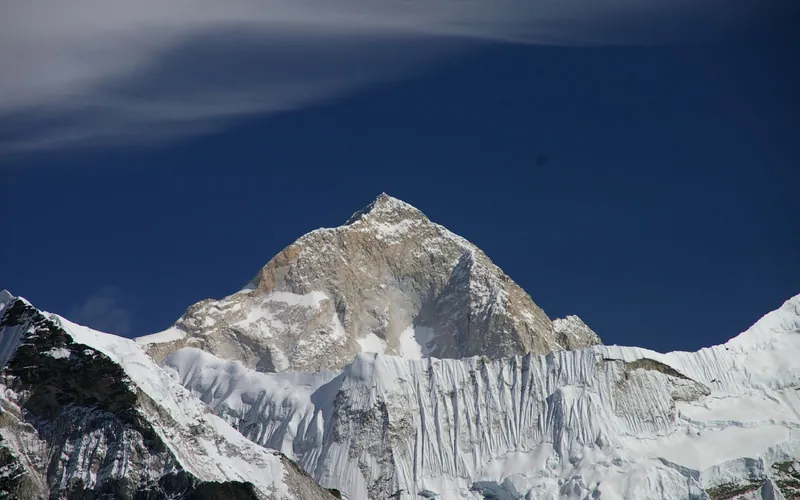
Makalu, at 8,485 meters (27,838 ft), is the fifth-highest mountain on Earth, located 19 km southeast of Mount Everest. An isolated four-sided granite pyramid, it is known for technical knife-edge ridges, severe exposure, and punishing weather, making it one of the most challenging eight-thousanders.
Documented Sources & Archival Citations
- American Alpine Journal: Makalu in Winter by Denis Urubko(American Alpine Club)
Supporting claim: Official expedition account and technical documentation of the 2009 Makalu first winter ascent
Accessed/Documented: 2010 - In Ginocchio sulle Cime (On Bended Knees on the Peaks)(Simone Moro / Rizzoli)
Supporting claim: Personal memoirs and weather logs detailing the bitter cold and summit push on Makalu
Accessed/Documented: 2011