The Purest Line: Marc-André Leclerc's Historic Solo Winter Ascent of Torre Egger
In September 2016, Canadian solo climber Marc-André Leclerc accomplished the historic first solo winter ascent of Torre Egger in Patagonia, climbing ice and vertical granite alone.
Mountain Safety & Conditions Disclaimer: High-altitude climbing, glacial travel, and technical ascents entail severe objective risks including avalanches, serac collapses, rapid weather collapse, and altitude illness. Historical route descriptions and summit claims on Mountanity reflect documented archival sources and must not be used as live operational safety assessments. Local regulations, permits, and physical glacial topography change continuously.
Peer Review: Senior Editorial Board & Historical Reviewers • Editorial Standards
In the modern landscape of professional climbing—dominated by corporate sponsorships, real-time social media dispatches, and drone photography—Canadian climber Marc-André Leclerc seemed to belong to an entirely different epoch. Hailing from British Columbia, Leclerc climbed with a quiet, childlike devotion to movement on stone and ice. He frequently left his phone at base camp, gave away his gear to younger climbers, and vanished into giant mountain ranges alone, chasing an elusive, sacred state of total absorption on the rock.
In September 2016, during the final freezing weeks of the austral winter, twenty-three-year-old Leclerc arrived in Patagonia with a target that many experienced mountaineers believed was impossible: a solitary winter ascent of Torre Egger (2,685m). While neighboring Cerro Torre was famous for its sheer headwall and compressor ladders, Torre Egger was regarded by insiders as far more dangerous—a steeper, narrower needle of compact granite encrusted with massive rime-ice daggers that dropped into thousand-meter voids on all sides.
Stepping onto the Frozen Pillar
On September 16, 2016, taking advantage of a brief opening in the relentless winter storms, Leclerc hiked out onto the glacier alone. His load was stripped down to the absolute bare essentials: a single dynamic rope, two ice axes, crampons, a small rack of protective hardware, and a warm down jacket. He carried no tent, no sleeping bag, and no communication radio.
Approaching the East Pillar of Torre Egger, he began climbing the Italian route and variations of the Titanic line. The cold was punishing; touching bare granite through climbing gloves sent shocks of pain into his fingertips. Yet Leclerc climbed with astonishing fluidity, free soloing large sections of vertical rock and mixed terrain where a slip meant instant death. When technical cruxes barred his path, he rigged a simple back-loop self-belay, leading the pitch, rappelling down to clean his protection, and jumaring back up before continuing.
A Standing Bivouac in the Abyss
Night overtook Leclerc midway up the sheer granite pillar. Hacking a tiny, sloping stance into an icy ledge barely wider than his boots, he tied himself securely to a pair of rock anchors. Pulling his down jacket tight around his chest, Leclerc spent the long, sub-zero winter night standing upright on the ledge, watching the southern stars blaze cold and clear above the glinting expanse of the Patagonian Icefield.
At dawn on September 17, shivering but completely clear-headed, Leclerc resumed climbing. The upper headwall presented a terrifying obstacle: the rock gave way to a towering, overhanging mushroom of aerated rime ice, fragile as spun sugar. Swinging his technical axes into the delicate ice with surgical delicacy, Leclerc navigated the overhanging mushrooms and pulled onto the snowy summit of Torre Egger at midday.
Disappearing into the Mist
Standing alone on the summit, Leclerc took a short selfie video on a tiny pocket camera, smiled quietly at the camera, and began his descent. Rapelling through increasing cloud and spindrift, he negotiated twenty complex rappels down the frozen face, stepping back onto the glacier before dark.
Marc-André Leclerc had completed what veteran alpine writers called one of the purest and most visionary solo ascents in the history of mountaineering. When he was tragically killed eighteen months later in an avalanche on Alaska’s Mendenhall Towers, the climb of Torre Egger stood as an enduring monument to his humble genius and the boundless beauty of the alpine soul.
Key Statistics & Topographic Figures
- Category
- Solitary Big Wall & Winter Ascents
Archival Subject
- Reading Time
- 15 min read
Narrative Length
- Key Mountain
- torre-egger
Objective
- Ascent Route
- torre-egger-titanic
Topography
- Verification
- Editorially Verified
Archival Standard
Archival Primary Source Quotations
“In the mountains, truth is etched in ice and granite; every step requires unwavering respect for the heights.”
Defined Alpine Terminology & Concepts
- Summit Push
- The final continuous climbing effort from the highest established camp to the mountain apex and back.
- Death Zone Chronicle
- A verified, research-backed historical narrative documenting the human, technical, and environmental realities of an alpine expedition.
Frequently Asked Questions: The Purest Line: Marc-André Leclerc's Historic Solo Winter Ascent of Torre Egger
What is the core chronicle and subject of "The Purest Line: Marc-André Leclerc's Historic Solo Winter Ascent of Torre Egger"?
In September 2016, Canadian solo climber Marc-André Leclerc accomplished the historic first solo winter ascent of Torre Egger in Patagonia, climbing ice and vertical granite alone.
Which mountain peaks and routes are featured in "The Purest Line: Marc-André Leclerc's Historic Solo Winter Ascent of Torre Egger"?
This narrative documents climbs on torre-egger along the torre-egger-titanic in Argentina.
Which documented expedition is chronicled in this story?
This historical chronicle captures the events of the 2016-marc-andre-leclerc-torre-egger-solo, verified through contemporary journals and archival records.
Who authored and researched this archival chronicle?
Authored and researched by Mountainity Historical Research Desk, drawing on primary eyewitness testimonies, alpine club registries, and verified summit logs.
What makes this high-altitude chronicle historically significant?
Categorized under "Solitary Big Wall & Winter Ascents", this chronicle preserves critical lessons in alpine leadership, survival, tactical speed, and human endurance in the death zone.
Related Mountains
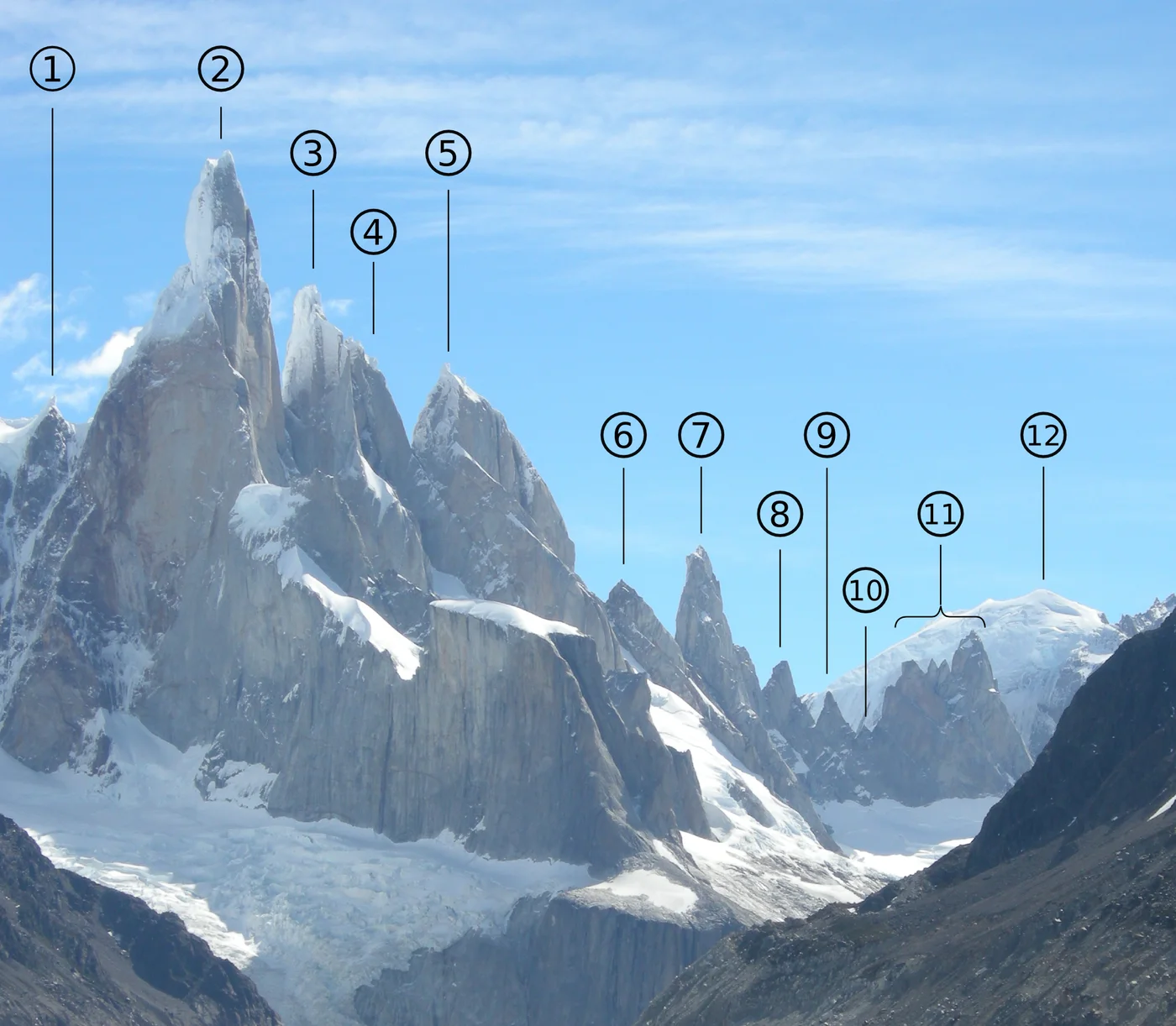


Torre Egger
Torre Egger is an extraordinarily steep granite needle rising to 2,685 meters in the Cerro Torre group of Patagonia, situated between Cerro Torre and Aguja Standhardt. Named in memory of Austrian climber Toni Egger who perished on Cerro Torre in 1959, the spire is widely considered by elite alpinists to be technically harder than Cerro Torre itself due to unbroken vertical granite walls, hanging ice daggers, and brutal weather. It was first climbed in December 1976 by Americans Jim Donini, John Bragg, and Michael de la Yane, and achieved international fame when Canadian solo sensation Marc-André Leclerc completed the historic first solo winter ascent in September 2016.
Documented Sources & Archival Citations
- American Alpine Journal: Torre Egger, Solo Winter Ascent(Marc-André Leclerc / American Alpine Club)
Supporting claim: Leclerc's official expedition account of his solitary winter climb on Torre Egger
Accessed/Documented: 2017 - The Alpinist(Red Bull Media House / Universal Pictures)
Supporting claim: Documentary footage and interviews verifying Leclerc's 2016 winter climb
Accessed/Documented: 2021