Into the Void: Élisabeth Revol's Winter Nanga Parbat and the Heroic Night Rescue
On January 25, 2018, Élisabeth Revol became the first woman to summit Nanga Parbat in winter, surviving a harrowing ordeal before a legendary night rescue by Denis Urubko and Adam Bielecki.
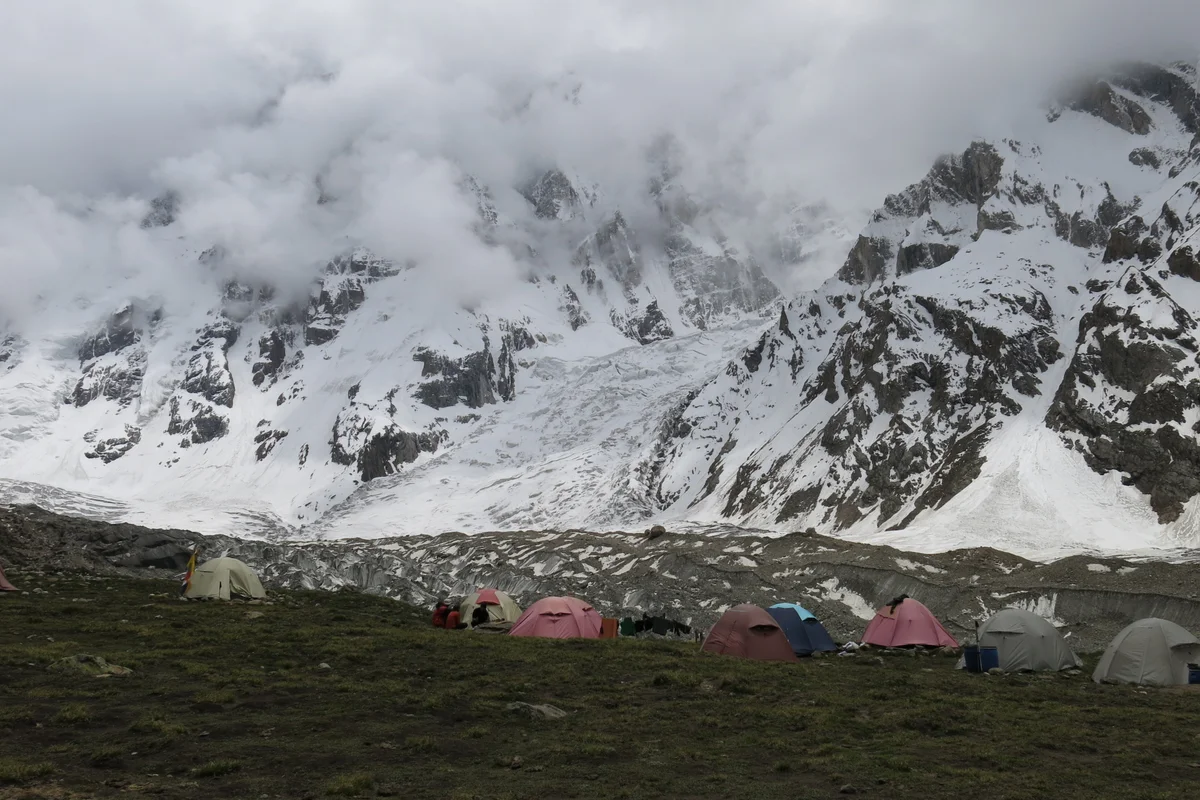
Mountain Safety & Conditions Disclaimer: High-altitude climbing, glacial travel, and technical ascents entail severe objective risks including avalanches, serac collapses, rapid weather collapse, and altitude illness. Historical route descriptions and summit claims on Mountanity reflect documented archival sources and must not be used as live operational safety assessments. Local regulations, permits, and physical glacial topography change continuously.
Peer Review: Senior Editorial Board & Historical Reviewers • Editorial Standards
Nanga Parbat (8,126m)—the western sentinel of the Himalaya rising above the Indus Valley in northern Pakistan—earned its grim title as the ‘Killer Mountain’ long before modern alpinism began. In astronomical winter, its colossal 4,000-meter Diamir Face becomes an amphitheater of extreme cold, where temperatures regularly crash beneath -50°C and hurricane jet stream winds rage for weeks. For decades, over thirty international expeditions had failed to climb it in winter, until a team led by Simone Moro, Ali Sadpara, and Alex Txikon made the first ascent in February 2016.
Yet for French schoolteacher Élisabeth Revol and Polish visionary Tomasz ‘Tomek’ Mackiewicz, Nanga Parbat in winter was an all-consuming passion. Between 2013 and 2017, the duo mounted three independent winter attempts on a shoestring budget, climbing in pure alpine style without fixed ropes, high-altitude porters, or supplemental bottled oxygen. In January 2018, they returned for their fourth winter attempt.
The Summit in the Frozen Sky
Climbing via the Messner-Eisendle route variation across the Diamir Face, Revol and Mackiewicz moved with remarkable rhythm. On January 24, they established an assault bivouac at 7,300 meters beneath the final summit pyramid. The morning of January 25, 2018, dawned with clear skies and bone-chilling cold. Pushing through deep snowdrifts and sub-zero wind chill exceeding -60°C, the two climbers reached the summit of Nanga Parbat at 6:15 PM local time.
Élisabeth Revol had made world history: the first woman ever to stand atop Nanga Parbat in winter.
The Descent into Nightmare
However, at the very moment of their greatest triumph, catastrophe descended. In the fading twilight at 8,120 meters, Tomek Mackiewicz suddenly turned to Revol and uttered devastating words: “Élisabeth, I can’t see the light anymore.” Mackiewicz had developed acute snow blindness and cerebral edema. Blood began to seep from his mouth, and he lost the ability to coordinate his legs.
Through the pitch-black, sub-zero night, Revol undertook a superhuman effort, physically holding, dragging, and guiding her blinded partner down the icy slopes. By the morning of January 26, they reached a sheltered crevasse at 7,280 meters. Mackiewicz was completely incapacitated. After wrapping him in his sleeping bag and leaving him what water she could melt, Revol made the agonizing decision to descend to summon help, transmitting desperate SOS coordinates via her satellite inReach tracker.
The Race Against Death
Revol’s distress signal mobilized an unprecedented international rescue operation. A crowd-funding campaign raised tens of thousands of dollars in hours to pay for military helicopter flights. Crucially, an elite Polish national expedition—including Adam Bielecki and Denis Urubko—was stationed at K2 Base Camp, ninety miles to the northeast.
In an operation authorized by the Pakistan Armed Forces, two Pakistan Army Aviation Eurocopter Ecureuil helicopters landed at K2 Base Camp, plucked Urubko, Bielecki, Jarosław Botor, and Marek Chmielarski from the glacier, and flew them across the Karakoram, dropping Urubko and Bielecki onto the lower Diamir Face at 4,800 meters just as twilight faded on January 27.
The Historic Night Sprint
What followed is etched among the most heroic chapters in the history of mountaineering. Tied to each other and carrying medical gear and hot thermos flasks, Denis Urubko and Adam Bielecki launched an astonishing night assault. Climbing the technical, ice-glazed Kinshofer Route in complete darkness with headlamps cutting through the howling blizzard, the pair ascended 1,200 vertical meters in under eight hours—a pace considered extraordinary even in summer daylight.
At 1:50 AM on January 28, 2018, climbing through 6,000 meters, Bielecki’s headlamp caught a silhouette shivering on an ice shelf. It was Élisabeth Revol. Having survived more than 48 hours without shelter or water, suffering from severe frostbite and hallucinations, she was at the absolute limit of human endurance.
Urubko and Bielecki administered medication, sheltered her inside a small tent, and fed her hot tea. With hurricane winds forecast to intensify within hours, the rescue pilots determined that ascending higher to 7,280 meters to reach Mackiewicz was impossible without losing everyone. At dawn, Urubko and Bielecki carefully lowered Revol down the vertical Kinshofer headwall to the awaiting helicopters. Élisabeth Revol survived, leaving Tomasz Mackiewicz resting forever in the eternal ice of the mountain he loved, while Urubko and Bielecki’s heroic night dash was recognized across the globe as the epitome of alpine courage.
Key Statistics & Topographic Figures
- Category
- High-Altitude Survival & Rescue
Archival Subject
- Reading Time
- 16 min read
Narrative Length
- Key Mountain
- nanga-parbat
Objective
- Ascent Route
- kinshofer-route
Topography
- Verification
- Editorially Verified
Archival Standard
Archival Primary Source Quotations
“In the mountains, truth is etched in ice and granite; every step requires unwavering respect for the heights.”
Defined Alpine Terminology & Concepts
- Summit Push
- The final continuous climbing effort from the highest established camp to the mountain apex and back.
- Death Zone Chronicle
- A verified, research-backed historical narrative documenting the human, technical, and environmental realities of an alpine expedition.
Frequently Asked Questions: Into the Void: Élisabeth Revol's Winter Nanga Parbat and the Heroic Night Rescue
What is the core chronicle and subject of "Into the Void: Élisabeth Revol's Winter Nanga Parbat and the Heroic Night Rescue"?
On January 25, 2018, Élisabeth Revol became the first woman to summit Nanga Parbat in winter, surviving a harrowing ordeal before a legendary night rescue by Denis Urubko and Adam Bielecki.
Which mountain peaks and routes are featured in "Into the Void: Élisabeth Revol's Winter Nanga Parbat and the Heroic Night Rescue"?
This narrative documents climbs on nanga-parbat along the kinshofer-route in Pakistan.
Which documented expedition is chronicled in this story?
This historical chronicle captures the events of the 2018-revol-mackiewicz-nanga-parbat-winter, verified through contemporary journals and archival records.
Who authored and researched this archival chronicle?
Authored and researched by Mountainity Historical Research Desk, drawing on primary eyewitness testimonies, alpine club registries, and verified summit logs.
What makes this high-altitude chronicle historically significant?
Categorized under "High-Altitude Survival & Rescue", this chronicle preserves critical lessons in alpine leadership, survival, tactical speed, and human endurance in the death zone.
Related Mountains

Nanga Parbat
Nanga Parbat, at 8,126 meters (26,660 ft), is the ninth-highest mountain on Earth and the western anchor of the Himalayas in Pakistan. It boasts the Rupal Face, the highest vertical precipice in the world at 4,600 meters from valley floor to summit. Known for profound climbing history, highlighted by Hermann Buhl's legendary solo summit without supplemental oxygen in 1953.
Documented Sources & Archival Citations
- American Alpine Journal: Nanga Parbat in Winter and Tragic Descent(American Alpine Club)
Supporting claim: Official climb report and comprehensive timeline of the summit and night rescue
Accessed/Documented: 2019 - To Live: Fighting for Life on the Killer Mountain(Élisabeth Revol / Vertebrate Publishing)
Supporting claim: Autobiographical account of the winter summit on Nanga Parbat and survival at 6,600 meters
Accessed/Documented: 2020