First Winter Ascent of K2: The 2021 Nepali Triumph
How a unified team of ten Nepali mountaineers conquered K2 in the dead of winter, with Nirmal Purja summiting without supplemental oxygen.
Mountain Safety & Conditions Disclaimer: High-altitude climbing, glacial travel, and technical ascents entail severe objective risks including avalanches, serac collapses, rapid weather collapse, and altitude illness. Historical route descriptions and summit claims on Mountanity reflect documented archival sources and must not be used as live operational safety assessments. Local regulations, permits, and physical glacial topography change continuously.
Peer Review: Senior Editorial Board & Historical Reviewers • Editorial Standards
The Last Winter Frontier
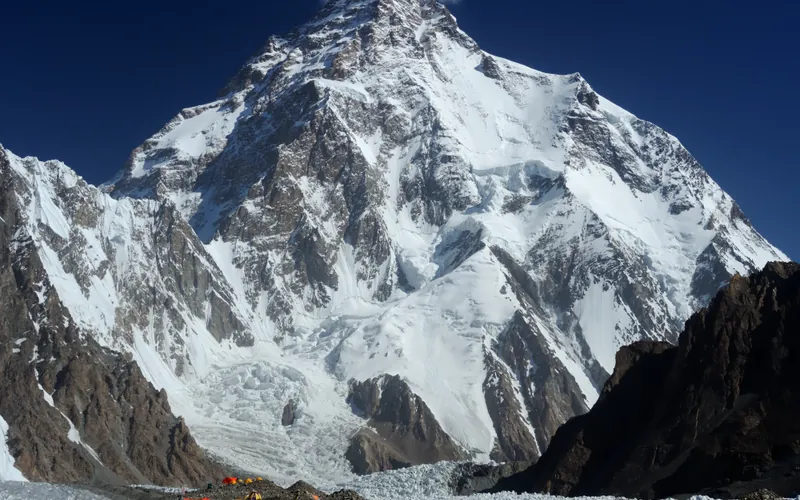
For three decades, K2 (8,611m)—the Savage Mountain—stood as the ultimate unsolved riddle in high-altitude mountaineering. While all other thirteen 8,000-meter peaks had succumbed to winter ascents between 1980 and 2016, K2 remained untamed. Battered by arctic jet-stream winds exceeding 200 km/h, sub-zero temperatures plunging below −65 °C, and punishing technical cruxes on rock and blue ice, more than thirty international winter expeditions had been turned back or suffered tragic losses.
By December 2020, three separate expeditions arrived at K2 Base Camp. Rather than competing for personal glory, two veteran Nepali leaders—Nirmal “Nimsdai” Purja MBE and Mingma Gyalje Sherpa (Mingma G)—made the historic decision to combine their resources, team strength, and tactical experience under a single flag.
Surviving the Calamity at Camp 2
Winter conditions on K2 proved ruthless from the outset. During initial acclimatization and route-fixing rotations, brutal hurricane-force winds tore through Camp 2 (6,700m), completely destroying tents, blowing sleeping bags and stoves into the abyss, and destroying essential technical gear.
Faced with a devastating setback that would have ended standard expeditions, Purja and Mingma G regrouped their climbers, pooled their surviving equipment, and pressed upward through the grueling mixed granite of the Black Pyramid. Establishing Camp 3 at 7,350m, they seized a microscopic, 48-hour calm weather window identified by high-altitude meteorological models.
Into the Death Zone
On January 15, 2021, the summit team pushed to Camp 4 (7,800m) at the edge of the Death Zone. Setting out at 1:00 AM on January 16 into temperatures hovering around −50 °C, the climbers entered the terrifying couloir of the Bottleneck, stepping beneath the colossal hanging serac wall in utter darkness.
Among the team, Nirmal Purja took on the ultimate personal challenge: climbing the entire summit push without supplemental oxygen. Despite suffering from severe cold and having only acclimatized up to Camp 2 due to destroyed gear, Purja relied on supreme physiological conditioning and tactical pacing, matching the pace of teammates using bottled oxygen.
Ten Climbers, One Nation
At 4:45 PM on January 16, 2021, roughly ten meters shy of the summit crest, all ten Nepali mountaineers halted. Refusing to let any single individual claim first place, the team—Nirmal Purja, Mingma G, Gelje Sherpa, Mingma David Sherpa, Mingma Tenzi Sherpa, Dawa Temba Sherpa, Pem Chhiri Sherpa, Kilu Pemba Sherpa, Dawa Tenjing Sherpa, and Sona Sherpa—linked arms shoulder to shoulder.
Singing the Nepali national anthem (“Sayaun Thunga Phool Ka”) in unison beneath the freezing Karakoram twilight, they stepped onto the 8,611-meter summit together at 4:58 PM.
The triumph resonated worldwide. By conquering the last great winter frontier of the Himalayas and Karakoram, and with Purja summiting without bottled oxygen, these ten Nepali mountaineers brought a profound historical balance to global mountaineering, claiming rightful ownership of their own mountains’ greatest triumphs.
Key Statistics & Topographic Figures
- Category
- Legendary Ascents
Archival Subject
- Reading Time
- 9 min read
Narrative Length
- Key Mountain
- k2
Objective
- Ascent Route
- abruzzi-spur
Topography
- Verification
- Editorially Verified
Archival Standard
Archival Primary Source Quotations
“In the mountains, truth is etched in ice and granite; every step requires unwavering respect for the heights.”
Defined Alpine Terminology & Concepts
- Summit Push
- The final continuous climbing effort from the highest established camp to the mountain apex and back.
- Death Zone Chronicle
- A verified, research-backed historical narrative documenting the human, technical, and environmental realities of an alpine expedition.
Frequently Asked Questions: First Winter Ascent of K2: The 2021 Nepali Triumph
What is the core chronicle and subject of "First Winter Ascent of K2: The 2021 Nepali Triumph"?
How a unified team of ten Nepali mountaineers conquered K2 in the dead of winter, with Nirmal Purja summiting without supplemental oxygen.
Which mountain peaks and routes are featured in "First Winter Ascent of K2: The 2021 Nepali Triumph"?
This narrative documents climbs on k2 along the abruzzi-spur in Pakistan.
Which documented expedition is chronicled in this story?
This historical chronicle captures the events of the 2021-k2-winter-first-ascent, verified through contemporary journals and archival records.
Who authored and researched this archival chronicle?
Authored and researched by Mountanity Research Desk, drawing on primary eyewitness testimonies, alpine club registries, and verified summit logs.
What makes this high-altitude chronicle historically significant?
Categorized under "Legendary Ascents", this chronicle preserves critical lessons in alpine leadership, survival, tactical speed, and human endurance in the death zone.
Related Mountains


K2
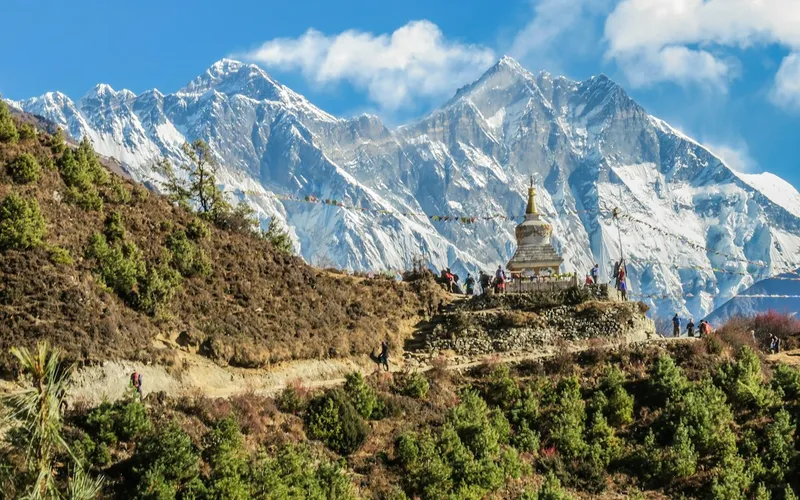
K2, at 8,611 meters (28,251 ft), is the second-highest mountain on Earth and widely regarded as the most technically demanding and lethal 8,000-meter peak. Located in the heart of the Karakoram on the border between Pakistan and China, K2 is characterized by sheer relief, severe weather anomalies, and persistent objective hazards including the notorious Bottleneck couloir.