The Son of the Mountain: Sajid Ali Sadpara's Oxygen-Free Alpine Triumphs Across K2 and the 8,000ers
Carrying the torch of his legendary father Muhammad Ali Sadpara, Pakistani alpinist Sajid Ali Sadpara has redefined modern high-altitude climbing by conquering K2, Nanga Parbat, Manaslu, and Annapurna without bottled oxygen.
Mountain Safety & Conditions Disclaimer: High-altitude climbing, glacial travel, and technical ascents entail severe objective risks including avalanches, serac collapses, rapid weather collapse, and altitude illness. Historical route descriptions and summit claims on Mountanity reflect documented archival sources and must not be used as live operational safety assessments. Local regulations, permits, and physical glacial topography change continuously.
Peer Review: Senior Editorial Board & Historical Reviewers • Editorial Standards
On the barren, windswept shores of Satpara Lake near Skardu in Gilgit-Baltistan, the men of Sadpara village have carried heavy loads into the Karakoram mountains for over a century. For decades, they worked in the shadows—hauling food, fuel, and ropes for foreign expeditions while foreign climbers claimed the international headlines and medals.
In the 2010s, Muhammad Ali Sadpara broke through that invisible ceiling, becoming a national hero and an international icon with his historic first winter ascent of Nanga Parbat in 2016. Walking beside him was his young, quiet, and athletically gifted son, Sajid Ali Sadpara.
Today, Sajid Sadpara has emerged not merely as his father’s successor, but as the standard-bearer for a revolutionary new era of Pakistani mountaineering: climbing the world’s most terrifying peaks strictly in pure alpine style, without supplemental bottled oxygen and without personal Sherpa support.
The Prodigy at Twenty
Sajid first caught the attention of the global mountaineering community in July 2019. At just twenty years of age, climbing alongside his father, Sajid reached the summit of K2 (8,611m)—the Savage Mountain—without using supplemental bottled oxygen. He became the youngest human being in history to accomplish the feat, displaying an extraordinary natural cardiovascular capacity and mental poise in the lethal Bottleneck couloir.
Then came the tragedy of February 2021. During the historic winter push on K2, Sajid climbed past the Bottleneck without oxygen alongside his father Ali, Icelandic partner John Snorri, and Chilean climber Juan Pablo Mohr. But at 8,200 meters, near the base of the massive overhanging summit serac, Sajid’s oxygen regulator (which he was carrying as emergency backup for the winter assault) malfunctioned, causing severe headaches and disorientation. Realizing the danger, his father ordered him to turn back to Camp III while the three elders continued toward the summit.
Sajid survived the descent. His father and companions disappeared into the winter storm, never to return alive.
The Sacred Search and Recovery
In the wake of unimaginable grief, lesser men might have turned their backs on the mountains forever. Sajid did the exact opposite.
In July 2021, Sajid returned to K2 on the ‘K2 Clean-up and Search Mission’ alongside Canadian filmmaker Sandro Gromen-Hayes and Bolivian climber Hugo Ayaviri. Climbing without supplemental oxygen, Sajid ascended directly into the Death Zone, located the bodies of his father, Snorri, and Mohr high above the Bottleneck, retrieved their personal cameras, GPS units, and wedding rings, and buried his father with solemn dignity on the icy slopes of K2 according to Islamic rites.
It was an act of profound filial love and physical bravery that earned Sajid universal admiration across the global mountaineering fraternity.
The Pure Alpine Campaign
Freed from the psychological burden of searching for his father, Sajid set out to prove what an independent Pakistani alpinist could accomplish at the highest level of world mountaineering. He committed to a strict, uncompromising ethic: no supplemental bottled oxygen, no personal support porters, and climbing to the true geographical summits.
In September 2022, Sajid climbed to the true summit of Manaslu (8,163m) in Nepal without bottled oxygen, navigating the razor-sharp knife-edge ridge that many commercial climbers bypass.
In April 2023, he tackled the avalanche-swept headwalls of Annapurna I (8,091m) without oxygen. Just three months later, in July 2023, he summited Nanga Parbat (8,126m) via the Kinshofer Route in pure alpine style without bottled gas, before returning to his beloved Karakoram to scale K2 once again without supplemental oxygen.
Through his humility, unbreakable physical strength, and ethical purity, Sajid Ali Sadpara has transformed the image of Pakistani mountaineers from humble high-altitude porters into elite world leaders of alpine style—carrying the name of Sadpara and Pakistan to the very top of the world.
Key Statistics & Topographic Figures
- Category
- Pakistani Mountaineering Heroes
Archival Subject
- Reading Time
- 11 min read
Narrative Length
- Key Mountain
- k2, nanga-parbat, annapurna-1, manaslu
Objective
- Ascent Route
- abruzzi-spur, kinshofer-route, annapurna-north-face, manaslu-northeast-face
Topography
- Verification
- Editorially Verified
Archival Standard
Archival Primary Source Quotations
“In the mountains, truth is etched in ice and granite; every step requires unwavering respect for the heights.”
Defined Alpine Terminology & Concepts
- Summit Push
- The final continuous climbing effort from the highest established camp to the mountain apex and back.
- Death Zone Chronicle
- A verified, research-backed historical narrative documenting the human, technical, and environmental realities of an alpine expedition.
Frequently Asked Questions: The Son of the Mountain: Sajid Ali Sadpara's Oxygen-Free Alpine Triumphs Across K2 and the 8,000ers
What is the core chronicle and subject of "The Son of the Mountain: Sajid Ali Sadpara's Oxygen-Free Alpine Triumphs Across K2 and the 8,000ers"?
Carrying the torch of his legendary father Muhammad Ali Sadpara, Pakistani alpinist Sajid Ali Sadpara has redefined modern high-altitude climbing by conquering K2, Nanga Parbat, Manaslu, and Annapurna without bottled oxygen.
Which mountain peaks and routes are featured in "The Son of the Mountain: Sajid Ali Sadpara's Oxygen-Free Alpine Triumphs Across K2 and the 8,000ers"?
This narrative documents climbs on k2, nanga-parbat, annapurna-1, manaslu along the abruzzi-spur, kinshofer-route, annapurna-north-face, manaslu-northeast-face in Pakistan.
Which documented expedition is chronicled in this story?
This historical chronicle captures the events of the 2023-sajid-sadpara-k2-no-oxygen, verified through contemporary journals and archival records.
Who authored and researched this archival chronicle?
Authored and researched by Mountainity Historical Research Desk, drawing on primary eyewitness testimonies, alpine club registries, and verified summit logs.
What makes this high-altitude chronicle historically significant?
Categorized under "Pakistani Mountaineering Heroes", this chronicle preserves critical lessons in alpine leadership, survival, tactical speed, and human endurance in the death zone.
Related Mountains


K2
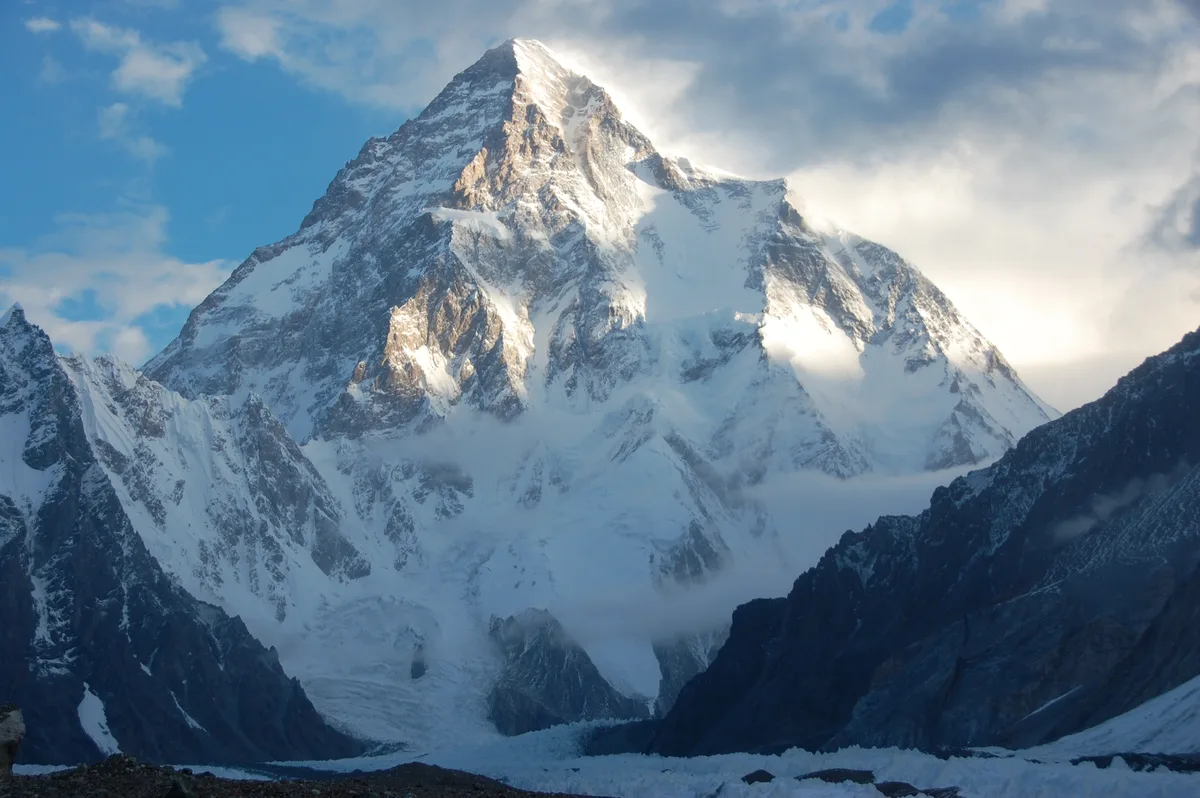
K2, at 8,611 meters (28,251 ft), is the second-highest mountain on Earth and widely regarded as the most technically demanding and lethal 8,000-meter peak. Located in the heart of the Karakoram on the border between Pakistan and China, K2 is characterized by sheer relief, severe weather anomalies, and persistent objective hazards including the notorious Bottleneck couloir.

Manaslu
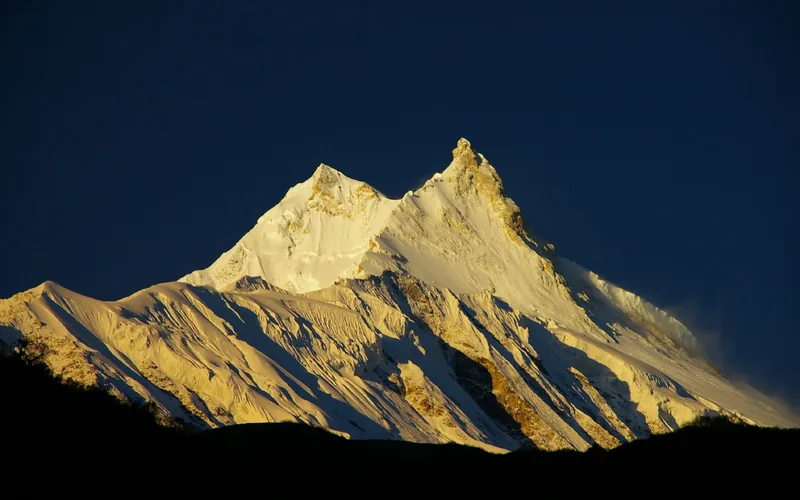
Manaslu, at 8,163 meters (26,781 ft), is the eighth-highest mountain in the world, situated in the Mansiri Himal of west-central Nepal. Known as the 'Mountain of the Spirit', its long ridges and valley glaciers offer dramatic topography culminating in a delicate, exposed knife-edge summit crest.
Nanga Parbat
Nanga Parbat, at 8,126 meters (26,660 ft), is the ninth-highest mountain on Earth and the western anchor of the Himalayas in Pakistan. It boasts the Rupal Face, the highest vertical precipice in the world at 4,600 meters from valley floor to summit. Known for profound climbing history, highlighted by Hermann Buhl's legendary solo summit without supplemental oxygen in 1953.
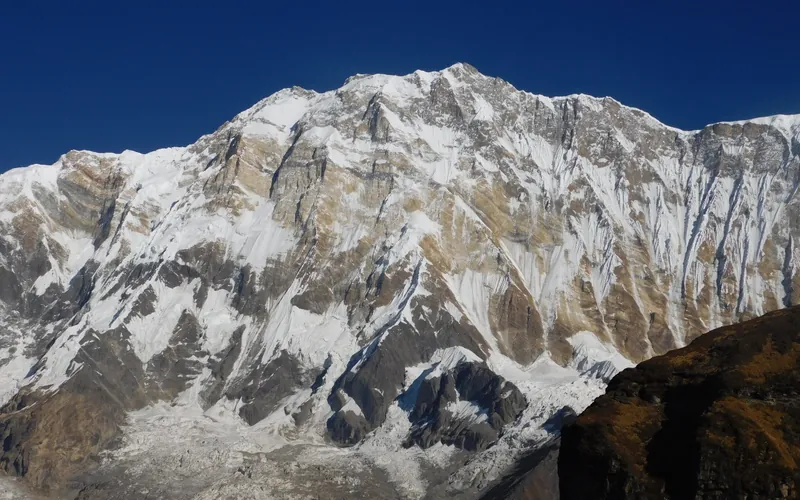
Annapurna I
Annapurna I, at 8,091 meters (26,545 ft), is the tenth-highest mountain in the world and historically the first 8,000-meter peak ever summited (June 3, 1950 by Maurice Herzog and Louis Lachenal). Rising above the Annapurna Sanctuary, its north and south walls present extreme avalanche and serac fall hazards.
Documented Sources & Archival Citations
- Dawn: Sajid Sadpara's Historic O2-Free Ascents(Dawn Newspaper)
Supporting claim: Documentation of oxygen-free ascents on K2, Nanga Parbat, and Annapurna I in 2023
Accessed/Documented: 2023-07-29 - Alpine Club of Pakistan: Official Expedition Dispatch 2023(Alpine Club of Pakistan)
Supporting claim: Official verification of pure alpine style and oxygenless summit certifications
Accessed/Documented: 2023-08-01 - The Himalayan Database & 8000ers.com: Sajid Sadpara Record(Eberhard Jurgalski / 8000ers.com)
Supporting claim: Verification of true summit coordinates reached without bottled oxygen
Accessed/Documented: 2023